Health & WellnessS


Health

Pesticide residues found in 70% of produce sold in US even after washing

  • Strawberries, spinach and kale among most pesticide-heavy
  • Conventionally farmed kale could contain up to 18 pesticides
Pesticide spraying plane
© Dave Martin/APAlexis Temkin of the Environmental Working Group said: ‘The Shopper’s Guide to Produce is building on a body of evidence that shows mixtures of pesticides can have adverse effects.’
About 70% of fresh produce sold in the US has pesticide residues on it even after it is washed, according to a health advocacy group.According to the Environmental Working Group's annual analysis of US Department of Agriculture data, strawberries, spinach and kale are among the most pesticide-heavy produce, while avocados, sweetcorn and pineapples had the lowest level of residues.

Comment: See also:


Bulb

Los Angeles County Board bans use of Roundup for all county departments

roundup
© Reed Saxon/AP
The Los Angeles County Board of Supervisors Tuesday directed all departments to stop using a popular weed killer until more is known about its potential health and environmental effects.

Supervisor Kathryn Barger recommended the moratorium on glyphosate -- a main ingredient in the herbicide brand Roundup.

"I am asking county departments to stop the use of this herbicide until public health and environmental professionals can determine if it's safe for further use in L.A. County and explore alternative methods for vegetation management," Barger said.

Roundup was developed decades ago by Monsanto Co., now owned by Bayer, and is believed to be the most widely used herbicide worldwide.

The motion, co-authored by Supervisor Sheila Kuehl, cites "a growing body of scientific study" of herbicide safety and the potential for negative impacts.

Info

Buyer beware: Dangers of gluten-free foods

bread
Technology as Servant

Whether for fun, for fad, or for health recovery, "gluten-free" is the word of the day.1 Going gluten-free is incredibly popular-over one-fourth of Americans report eating gluten-free foods at least some of the time.2 Among people who identify themselves as health-conscious or who espouse diets such as GAPS (Gut and Psychology Syndrome), paleo, or other similar dietary approaches, the numbers may be even higher.2,3 Market researchers expect the gluten-free industry to reach around five billion dollars by the beginning of the next decade, and North America ranks as the fastest growing segment of the world's gluten-free market.4

Unfortunately, there are a number of dark sides to eating a gluten-free diet. Gluten-free proponents and adherents may not have sufficient awareness or warning of these dangers, especially when it comes to consuming ready-made gluten-free products.

Comment: Dr. Davis: Ten reasons to never eat gluten-free processed foods


Dig

Fungi enthusiasts: Advocates for 'mycoremediation' use mushrooms to clean up waste

mushrooms
© Flickr / Katja Schulz“In nature, mushrooms break down all kinds of substances, and we’re just beginning to look at this more closely in the lab and in field studies,” says Theresa Halula, who teaches mushroom cultivation at Merritt College in Oakland, California
When wildfires burned across Northern California in October 2017, they killed at least 43 people and displaced another 100,000. The human toll alone was dire, but the fires also left behind a toxic mess. It wasn't just the record-breaking levels of air pollution. The blazes generated an untold amount of potentially dangerous ash, the remains of incinerated hazardous household waste and building materials. The charred detritus of paint, pesticides, cleaning products, electronics, pressure-treated wood, and propane tanks left a range of pollutants in the soil-including arsenic, asbestos, copper, hexavalent chromium, lead, and zinc.

Officials feared runoff from the toxic ash could pollute local creeks once the rainy season hit, potentially tainting the drinking water supply for the region's 700,000 residents.


Biohazard

Teen's bizarre sudden-onset schizophrenia caused by cat scratch disease

cat scratch
© DjelicS, Getty Images/iStockphotoCat-scratch disease, which is also known as “cat-scratch fever,” has more serious complications than researchers originally thought, according to a new study by the Centers for Disease Control and Prevention.
In 2015, a 14-year-old patient developed rapid-onset schizophrenia with hallucinations, thoughts of suicide and homicide. He also believed his cat was trying to kill him, which was closer to the truth than you might think.

His pet cat was not, in fact, a homicidal maniac but it did harbor the pathogen Bartonella henselae, which is associated with 'cat scratch disease.'

This bacterium is typically found in cat blood, particularly that of kittens, and just one bite or scratch can be enough to transmit the pathogen to humans, causing localized swelling and lesions, in addition to issues in the heart and nervous system.

Now, according to new research by scientists at North Carolina State University, in extremely rare cases, 'cat scratch disease' may also induce extreme schizophrenia.

Comment: The virulence of pathogens and the occurrence of outbreaks of all kinds appears to be on the increase, but it's not necessary to give up on our furry friends - even if cat plague is one of those that appears to be making a come back - because there are a number of other factors to take into account, such as the overall health and susceptibility of the individual, and their pet. And so some of our best protections lie in optimizing health, as well as staying informed: Also check out SOTT radio's: The Health & Wellness Show: The Devil's in the Details: Diet Dogma and Fine-Tuning Your Own


SOTT Logo Radio

SOTT Focus: Objective:Health: Keto Crotch - Weight Watchers Pathetic Attempt to Scare You Off Ketogenic Diets‌

O:H Keto Crotch header
You know when you're clipping along on the ketogenic diet, losing weight, healing your autoimmune symptoms, experiencing clearer thinking, curing your cancer and clearing your skin issues, but you notice a certain stink coming from your nether regions? Yeah, neither do we.

All across the internet in the last few weeks, mainstream media headlines decried a new side effect of the ketogenic diet, dubbed 'Keto Crotch'. Anyone who's ever done the ketogenic diet knows this isn't a thing, but it didn't stop the story from spreading far and wide. This represents yet another smear in a long line of disinformation programs against the ketogenic diet. But digging deep on the story's origins brings some disturbing revelations about how corporate interests are able to invent myths to control public behavior, getting viral hits and embedding views into the collective consciousness that have nothing to do with reality.

Weight Watchers, Coca-Cola, Kellogg's, Barilla - all have many things in common (including selling products diametrically opposed to the ketogenic diet). They all employ mega-PR firm Edelman Digital. Coincidence? Join us as we dig in to the nature of the Keto Crotch phenomenon and how corporate interests shape 'reality' to control the behavior of the masses.

And stay tuned for Zoya's Pet Health Segment, where she looks at the amazing healing effects of the ketogenic diet - for dogs!

♥Twitter: https://twitter.com/objecthealth
♥Facebook: https://www.facebook.com/objecthealth/


Running Time: 01:07:27

Download: MP3 - 61.4 MB


Health

Smell of skin could lead to early diagnosis for Parkinson's

hands
Scientists at The University of Manchester have found small molecules contained in a substance secreted by the skin, known as sebum, that are responsible for a unique scent in people with Parkinson's.

The results could lead to the development of an early diagnosis test for the neurodegenerative disorder. At present there are no definitive diagnostic tests currently available.

The research, which was led by scientists at The University of Manchester and funded by Parkinson's UK and the Michael J. Fox Foundation, is being published in the journal ACS Central Science on Wednesday 20th March.

Bacon n Eggs

New military study: "Remarkable" results among soldiers on a ketogenic diet

US military
A new study has found that US soldiers on a ketogenic diet for 12 weeks lost much more weight, significantly improved their body composition and insulin sensitivity, but suffered no loss in physical performance compared to matched controls.

The study, by researchers at the University of Ohio supervised by Jeff Volek, PhD, is the first to explore the feasibility and impact of a 12-week ketogenic diet on overweight US military personnel.

Military Medicine: Extended ketogenic diet and physical training intervention in military personnel

Comment: It's about time the military caught on to the impressive results achievable with the ketogenic diet. Given the reported problem the military are having with obese recruits, and the failure of standard low-calorie interventions, it seemed inevitable that they'd give keto a try eventually.

See also:


Info

A scientist's rebuttal to the recent MMR vaccine study

MMR vaccine
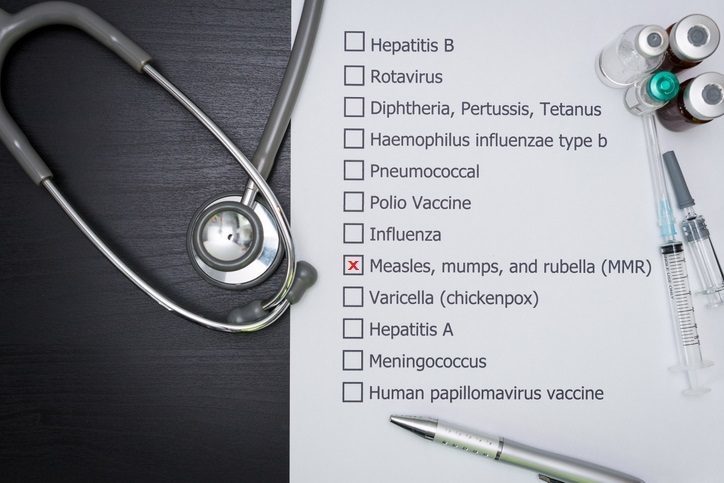
The MMR vaccine study recently published by Hviid et al. (2019, Annals of Internal Medicine) entitled, "Measles, Mumps, Rubella Vaccination and Autism: A Nationwide Cohort Study," leaves many more serious questions than definitive answers.

The authors claim that their work, "strongly supports that MMR vaccination does not increase the risk for autism, does not trigger autism in susceptible children, and is not associated with clustering of autism cases after vaccination."

This is an extremely broad claim that unfortunately is not supported by the evidence they present. There are eight fundamental flaws in the research study that lead to questions about the accuracy of the conclusions.

Comment: Courts quietly confirm MMR Vaccine causes Autism
At the center of the fifteen-year controversy is Dr. Andrew Wakefield of Austin, Texas. It was Dr. Wakefield that first publicized the link between stomach disorders and autism, and taking the findings one step further, the link between stomach disorders, autism and the Measles Mumps Rubella (MMR) vaccine.

For that discovery way back in 1996, and a subsequent research paper published by the doctor in 1998, Andrew Wakefield has found himself the victim of a world-wide smear campaign by drug corporations, governments and media companies.

And while Dr. Wakefield has been persecuted and prosecuted to the extent of being unable to legally practice medicine because of his discovery, he has instead become a best-selling author, the founder of the Strategic Autism Initiative, and the Director of the Autism Media Channel.

But in recent months, courts, governments and vaccine manufacturers have quietly conceded the fact that the Measles Mumps Rubella (MMR) vaccine most likely does cause autism and stomach diseases. Pharmaceutical companies have even gone so far as to pay out massive monetary awards, totaling in the millions, to the victims in an attempt to compensate them for damages and to buy their silence.


Cow

Another one bites the dust: Vegan blogger accused of being fake after caught eating fish in secret restaurant video

Rawvana
© Instagram/ Yovana Mendoza AyresYovana Mendoza Ayres pictured at a farmers market. Many of her followers are angered by her eating fish.
A vegan blogger is being criticised after she chose to eat fish at a restaurant.

Yovana Mendoza Ayres, 28, a vegan, fitness and lifestyle blogger who produces content under the name Rawvana.

The San Diego resident has more than 1.3 million Instagram followers and 1.9m YouTube subscribers. The 28-year-old has been a vegan for six years and has touted a number of different lifestyle, diet and health tips to her followers.

The blogger also claims veganism helped her overcome alcoholism and nicotine addiction. She also claims she's undertaken a 25-day water fast.

Comment: The vegan diet is a mistake, yet when popular vegan YouTubers realize this, and make a change back to dietary sanity, they're chastised and criticized. Is it any wonder they're so hesitant to 'come out of the closet'? Veganism is, straight up, a dangerous cult with all the detrimental effects that come with it.

See also: