Health & WellnessS


Cow

Frivilous lawsuit claims Kerrygold is not "grassfed"

kerrygold
The brand behind the second-best selling butter in the U.S. is facing a class action lawsuit for misleading labeling. Kerrygold's branding includes a photo of a cow grazing and the words "Milk from Grass-Fed Cows" in a banner at the top of the image. Many consumers are paying a premium price for the company's products, which include cheese and butter, because they believe the products are truly from grass fed cows. According to the lawsuit, consumers aren't getting the full truth.

The lawsuit is labeling Kerrygold as "false, misleading and deceptive," and alleging that during certain times of the year, Kerrygold cows are fed genetically modified grains instead of grass. As news about the lawsuit spreads, many consumers are pledging to boycott the brand for their dishonesty.

It turns out that the lawsuit has it right. Kerrygold's products are not 100 percent grass fed.

Comment: From: Class action suit against Kerrygold butter says 'Grass-Fed' claims are essentially lies:
Fat sources from grass-fed animals are far nutritionally superior to their grain-fed counterparts. As such, many knowledgeable consumers will make efforts to seek out, and pay a premium for, grass-fed sources of meat and dairy products. That Kerrygold has, allegedly, been misinforming their customers on the source of the animal feed for their products is essentially a scam. It's like labeling 10K gold as 24K in order to be able to charge more. That they are targeting the health-conscious, and in many cases people who are trying to deal with serious disease, makes it all the more shameful.
See also:


Arrow Down

Study raises questions about gluten, lactose in drugs

Pills
© Science News
Washington - A man with celiac disease felt sicker after starting a new drug, but it wasn't a typical side effect. It turns out the pills were mixed with gluten the patient knew to avoid in food - but was surprised to find hiding in medicine.

A new report says pills often contain so-called "inactive" ingredients capable of causing allergic or gastrointestinal reactions in small numbers of people sensitive to specific compounds.

And it's hard for those patients, or even their doctors, to tell if a pill contains an extra ingredient they should avoid, researchers from the Massachusetts Institute of Technology and Boston's Brigham and Women's Hospital said Wednesday. When the doctor sends a prescription, the pharmacist issues whatever the person's insurance covers - without discussion of inactive ingredients that are buried in the drug's labeling.

"There's a tremendous underappreciation of the potential impact that inactive ingredients may have," said Dr Giovanni Traverso, a Brigham gastroenterologist who spurred the research after his celiac patient's trouble.

Drugs contain an "active ingredient," that you hope will help your health. Patients may not realize that inactive ingredients make up the rest of the pill, substances that aren't supposed to directly affect your health. They're used to make it easier to absorb the drug, or to improve the taste or extend the shelf life.

Most people don't need to worry about inactive ingredients but the Boston researchers pointed to rare published reports of reactions in patients with allergies or intolerances to certain compounds - and called for more information about who might be at risk.

Cheeseburger

Impossible foods: The lab-grown meat industry just got the regulatory oversight it's been begging for

Impossible Foods
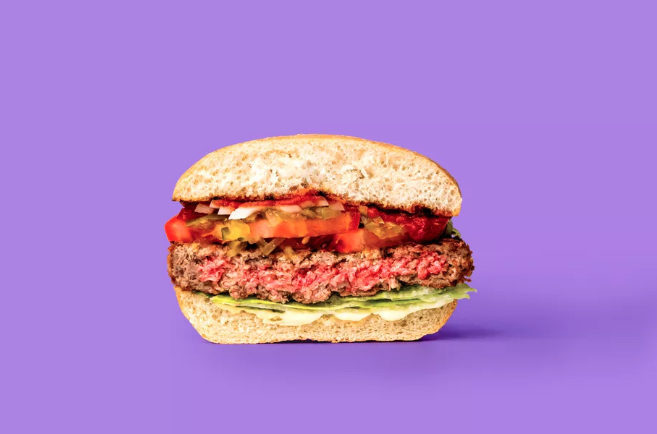
© Impossible FoodsThis non-meat “burger” looks like the real thing.
Taking cell-based meat products to market will require a regulatory framework. The FDA and USDA just announced one.

It's not every day you see companies rejoicing at an announcement that the government is figuring out how to regulate their product.

But that's exactly what happened Thursday, March 7, when the Department of Agriculture (USDA) and the Food and Drug Administration (FDA) announced that they'd established a framework for regulating cell-based meat and poultry. The companies working on those products were thrilled.

Why? Well, cell-based meat companies have been arguing for years that their product is meat and should be regulated like meat from slaughterhouses. And they've pointed out that, for America's "clean meat" industry to remain competitive with the clean meat industries in Israel, China, Singapore, the Netherlands, Japan, and other countries, companies need assurance that their product will be responsibly regulated by the USDA and the FDA.

Comment: You call that meat? Not so fast, cattle ranchers say
So what, "cultured animal cell patty" doesn't have a good ring to it? How about "tube-formed plant-based protein cylinders for BBQs"? Or "ground soy protein isolate bits"? "Textured vegetable protein" is already a thing, after all. The complaint from ranchers seems legit - if something isn't really meat, you shouldn't be able to call it meat. Why don't these companies practice a little truth in advertising and say what their products actually are, rather than what they're supposed to be imitating. Oh right, because then no one would buy them! Deceptive indeed!


Syringe

Toxins in vaccines: Are they really safe and effective?

vaccines
Vaccinations are one of the most controversial topics of the decade. It has left the world divided.

On one side, advocates claim vaccines are a necessity to stop the spread of preventable disease.

On the other side, people are more skeptical. They question the safety of vaccinations and have a deep concern for their potential toxicity.

What makes this controversy so challenging is that both sides are right. Vaccines can effectively prevent unnecessary disease and death. The problem is, vaccine manufacturers are not held accountable for what they put in their vaccines. They are also not required to individually test vaccine ingredients for safety.

As a result, vaccines often contain several ingredients that can cause considerable damage to your health.

Comment: The author is taking a 'middle of the road' stance on the vaccine issue, while highlighting the toxic compounds that cause concern. It should be noted that there is much more to consider when in comes to whether or not one should get vaccinated. Read the following for more information:


Clock

The Night Owl gene and circadian rhythms

clock
© chronoceuticals.com
A 46-year-old woman with a history of sleep disorder spent two weeks in a chamber with no clocks, no windows, television or internet - effectively nothing to let her know how much time had passed. The potentially crazy-making ordeal (subjects had regular check-ins with a psychologist throughout) helped scientists pinpoint the so-called night owl gene, a mutation in a gene called CRY1 that helps govern circadian rhythm, the 24-hour sleep/wake cycle present in all life on Earth.

The experiment, published in April, built on the work of Jeffrey C. Hall, Michael Rosbash and Michael W. Young, the three scientists who this year won the Nobel Prize in Physiology or Medicine for work they began more than 30 years ago. They isolated the master gene that controls circadian rhythm in fruit flies, which they called "period," and has since been found in all mammals.

Comment: Readjust your body clock to get more restive sleep, improved health and immune function


Gold Coins

Big Pharma's next goldmine? Poop

Big Pharma
The FDA is on the verge of deciding the future of fecal microbiota transplants (FMT), a promising new treatment that harnesses the power of the gut microbiome to fight illness. The agency is poised to regulate FMT as new drugs, which means patients will be paying thousands of dollars for human poop. This is yet another example of why medicine is so expensive in this country: the FDA takes affordable, natural treatments-as natural and humble as human feces!-and gifts them to Big Pharma to reap mega-profits.

What's at stake in the short term is the accessibility of a treatment for a debilitating bacterial infection (Clostridioides difficile, or C. diff) that hits 500,000 Americans a year and kills 30,000. FMT, which involves transferring fecal matter from a healthy donor into an infected patient to repair the gut microbiota, has proven remarkably effective at treating C. diff. FMT has an 80% success rate treating C. diff, with some patients requiring just a single dose.

Comment: Additional information on using FMT to treat illness:


Attention

Frankenfish Alert: US regulators clear path for genetically modified salmon

Frankenfish
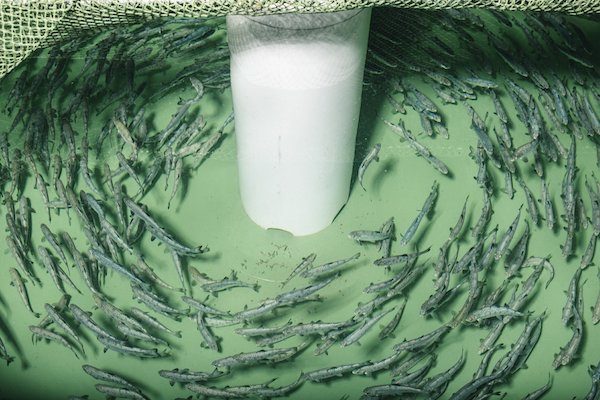
© Alexi Hobbs/AquaBountyTechnologies via APThis 2016 photo provided by Alexi Hobbs shows salmon raised at the AquaBountyTechnologies hatchery in Fortune, Prince Edward Island, Canada. On Friday, March 8, 2019, the U.S. Food and Drug Administration said it had lifted an alert had that had prevented AquaBounty from importing its salmon eggs to its Indiana facility, where they would be grown before being sold as food.
U.S. regulators on Friday gave the green light to salmon genetically modified to grow about twice as fast as normal, but the company behind it may face legal challenges before the fish can be sold domestically.

The Food and Drug Administration said it lifted an alert that had prevented AquaBounty from importing its salmon eggs to its Indiana facility, where they would be grown before being sold as food. The agency noted the salmon has already undergone safety reviews, and that it lifted its alert because the fish would be subject to a new regulation that will require companies to disclose when a food is bioengineered.

Comment: The GMO technology that created the Frankenfish is NOT a 10,000-year tradition of genetic manipulation by farmers. It is mad science, where animals are manipulated in a lab with untested consequences to human health, animal welfare and the environment. The following are just a few examples of biotech mad science gone wild:
The latest news on the Genetically Modified foods front is the FDA approval of the GMO salmon in the US, or "Frankenfish", as it's not-so-affectionately termed. This marks the first genetically modified animal food to be approved for entry into our food chain, and its approval in other countries is anticipated to follow, despite widespread public outcry.


Biohazard

Virus outbreak leaves US warship quarantined at sea for 2 months

USS Fort McHenry
The USS Fort McHenry warship (pictured) is currently operating in the Persian Gulf
A US warship has been quarantined at sea for two months due to a virus outbreak.

Of the 703 sailors and marines aboard the USS Fort McHenry, 25 have been diagnosed with parotitis, a viral infection similar to mumps, according to US military officials.

The ship is currently operating in the Persian Gulf in the Middle East.

The virus broke out in December and the most recent case was reported on March 9.

The patients were quarantined and treated in the ship's medical facility after the parotitis spread across the ship.

Comment: Outbreaks of all kinds appear to be on the increase all over the planet, check out the links below to see just how often these unusual outbreaks are being reported:


Books

Health censorship! Amazon bans books related to autism cures and vaccine truth

amazon ban
Amazon is removing books that promote supposed "cures" for autism, the Associated Press reports. It's part of an effort by several big tech companies to cut down on the spread of misinformation about vaccines.

The Centers for Disease Control and Prevention says there is no cure for autism spectrum disorder, only medications that can help some function better. Decades of medical research has also consistently shown there is no link between vaccines and autism.


Comment: Untrue. One of the CDC's own doctors, William Thompson, blew the whistle on the link between vaccines and autism -- using the CDC's own data -- back in 2014.


A spokeswoman for Amazon.com Inc. confirmed the books were no longer available on the site, but did not provide additional information, according to the AP.

Last week, fellow tech giant Facebook announced it is cracking down on the spread of vaccine misinformation. Facebook will now reduce the rankings of pages and groups that promote medical myths across the platform, taking action against verifiable vaccine hoaxes, the company said. According to the company, the steps it is taking will make misinformation appear less frequently in News Feeds, public and private pages and groups, search predictions and recommendations.


Comment: So many lies, so little real science. One thing is true: Facebook, YouTube and Amazon are establishment gatekeepers.


Attention

Child cancer clinic in Russia accused of infecting over 100 patients with Hepatitis C

Drawing blood
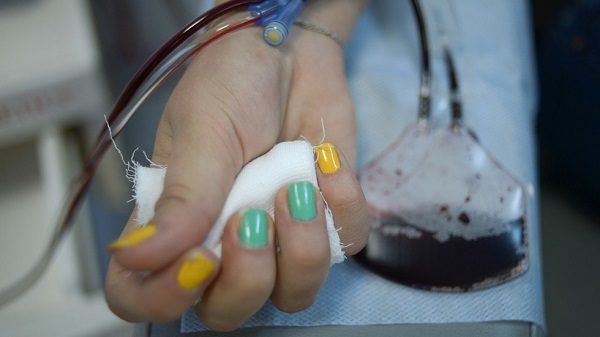
© Sputnik / Grigory Sysoev
A Russian hospital specializing in treating children with cancer stands accused of years of negligence, with over 100 patients reportedly infected with Hepatitis C. Management has denied responsibility.

The hospital, which is located in Blagoveshchensk in Russia's Far East, is currently being investigated by federal law enforcement. A probe was launched after parents who claimed their children had been infected filed a complaint. The scandal came to public attention last December, with the reported number of victims growing from a few to 26 to over 100 on Thursday.

The latest accusation comes from Kommersant newspaper, which cited one of the parents involved in the case, who asked for anonymity to shield her from possible pressure.

"After this got into the press, more parents came up saying their children got infected with Hepatitis C after being treated there. We stopped the list at 100 cases, which happened between 2013 and December 2018. In the last three years it was about 60 people."