Health & WellnessS


Bulb

Flashback Warning: Nicotine Seriously Improves Health

Image
Remember people, it's just another plant! They're the ones making a big deal out of it where none exists
Nicotine could soon be rehabilitated as a treatment for schizophrenia, Alzheimer's and Parkinson's diseases, as well as hyperactivity disorders.

Research shows that the chemical that has addicted millions to smoking has a powerful impact on brain activity in patients who suffer from psychiatric and degenerative disorders.

Some experiments have shown that nicotine can slow down the onset of Parkinson's symptoms; others have had revealed its power in curtailing the hallucinations of schizophrenics.

'A whole range of psychiatric conditions seem to be helped by nicotine,' said Dr Dan McGehee, a neurobiologist at the University of Chicago. 'However, such benefits do not justify smoking. The lethal effects of cigarettes far outweigh any help they provide. On the other hand, our research does suggest that derivatives of nicotine, administered medically, could help to alleviate a range of psychiatric problems.'

Nicotine is known to switch on receptors on the surface of cells in certain parts of the brain, causing these neurones to release the neuro-transmitter dopamine, a chemical that is associated with feelings of pleasure. This effect leads to a person's addiction.

Comment: On this paragraph:
'A whole range of psychiatric conditions seem to be helped by nicotine,' said Dr Dan McGehee, a neurobiologist at the University of Chicago. 'However, such benefits do not justify smoking. The lethal effects of cigarettes far outweigh any help they provide. On the other hand, our research does suggest that derivatives of nicotine, administered medically, could help to alleviate a range of psychiatric problems.'
The most effective and practical way to infuse nicotine into the brain is by smoking tobacco. Other commonly available methods are much less effective.

There is a BIG difference between smoking more or less pure tobacco and name brand cigarettes, specifically, the any number of over 200 chemicals that are added to name brand cigarettes that are not present in hand rolled tobacco. Is the scientific community so impotent that it cannot figure this out and at least do some studies on it?


Health

Dark-Skinned Immigrants to Canada Urged to Take Vitamin D Supplements

Image
© CBC NewsA researcher measures skin colour in Reinhold Vieth's University of Toronto lab. People with darker skin require longer sun exposure to make vitamin D.
Canadian doctors and nutritionists are urging dark-skinned immigrants coming to Canada to supplement with vitamin D in order to stay healthy. Many Canadian immigrants have relocated from countries with warmer, sunnier climates, and are exposed to far less natural sunshine in Canada than in their native lands. As a result, many of them have become deficient in vitamin D.

Immigrants come to Canada to work, to go to school, and simply to live, but few realize that the change in climate conditions could have devastating effects on their health. Darker-skinned people who come from places that receive more sunlight and are warmer for more months out of the year often have trouble maintaining healthy vitamin D levels in places like Canada that are colder and get less overall sunlight.

According to Dr. Kevin Pottie, nearly all of the immigrant and refugee patients he tests have low vitamin D levels, especially during the wintertime when the angle of the sun is at its lowest and the fewest ultraviolet-B (UVB) rays make their way to people's skin.

Health

Artificial Pancreas Breakthrough Offers Solution for Health Effects of Eating Artificial Food

Diabetic Man
© Natural News
It's downright amazing: A biomedical engineer at Boston University has developed a so-called "artificial pancreas" that helps diabetics maintain balanced blood sugar levels by monitoring the blood and releasing either insulin or glucagon as needed. Now all those people who eat artificial food advertised through artificial worlds on television can add an artificial pancreas to their artificial health care plan.

The mainstream media is all over this story, but what they're not telling anybody is that for type-2 diabetics, artificially using insulin injections to "balance" blood sugar levels only serves to convert blood sugar into body fat, increasing the obesity of the patient. This is one reason why most diabetics are obese.

The idea of an "artificial pancreas" gives false hope to diabetics by implying that they can replace their "failed" pancreas with a new medical device that will cure them of their diabetes. But that's just flat-out false: The only cure for type-2 diabetes is a radical lifestyle change that involves regular exercise, greatly enhanced nutrition and the elimination of refined carbohydrates and sugars from the diet.

What diabetics need isn't an artificial pancreas but real food to replace their processed, fabricated, factory-produced junk foods and sugary soft drinks. Real food, however, is hard to come by in a society where virtually everything is now artificial: Foods, boobs, lips, snacks, flavoring, food coloring, the television news and much more.

Attention

What Women Must Know To Protect Their Daughters From Breast Cancer

These days, young women are besieged by many challenges. Social pressures, economic concerns, health problems, schoolwork, and family tensions all tilt the stress barometer into the dangerous red zone. Skipping meals, eating junk food along with starvation diets have become a way of life for teenagers. More than ever, young women seem to be burning the candle at both ends.

Women's lifestyles and behaviors directly affect their physical and emotional wellbeing, both for the short and long term. It's no wonder that their hormonal health is under attack. Premenstrual Syndrome (PMS), painful periods, irregular or absent periods, ovarian cysts, polycystic ovaries, fibrocystic breast disease (lumpy, painful breasts) endometriosis, hormonal migraines, fibroids, acne, allergies, fatigue and mood swings are occurring in young women at epidemic rates. Many girls try to ignore their health problems hoping they will disappear. Others schedule appointments with their doctors. Odds on, they will leave the doctor's office with either a prescription drug or some version of the Birth Control Pill.

Target

Ten Good Reasons Why GMOs Are Not Compatible With Organic Agriculture

Image
Despite fundamental differences in what they represent, there are occasional calls to allow the use of genetic engineering (which produces genetically modified organisms, known as GMOs) within the USDA National Organic Program. GMO varieties are currently most widespread in corn, soybean, canola and cotton crops, in dairy production, and in minor ingredients, such as dairy cultures, used in food processing, but new products are being introduced and commercialized.

Smiley

Smiling could help you live longer

Image
© Getty ImagesA wide smile could add years to your life
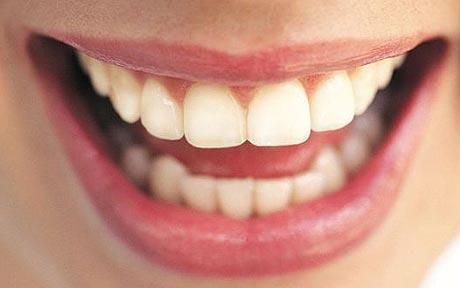
Smiling could add years to your life, according to researchers.

The wider you grin and the deeper your laughter lines, the more likely you are to have a long existence.

Broader smiles and wrinkles around your eyes point to a positive outlook on life which translates to better long-term health.

It has long been thought that a happy disposition can impact on life expectancy, and the recent study by experts at Wayne University in Michigan, America, seems to back this.

They came to their conclusions by studying 230 pictures of major league baseball players printed in the 1952 baseball register.

Red Flag

Aspartame: The Politics of Food

Image
Aspartame is consumed by over 200 million people around the world. Also known as NutraSweet, Equal, Spoonful, Canderel, Benevia, and E951, the chemical sweetener is found in more than 6,000 products, including carbonated soft drinks, dessert mixes, puddings, frozen desserts, yogurt, low calorie beer, vitamins and sugar-free cough drops. James S. Turner, Esq., a consumer rights lawyer and aspartame educator for over 30 years, tells us the story behind this popular ingredient, and why so many consumers are choosing to avoid it.

The Man Who Changed Our Food

Arthur Hayes Jr., who led the Food and Drug Administration when it approved aspartame in 1981 (NutraSweet) and 1983 (Equal), died February 11, 2010 in Danbury, Connecticut.

According to the February 15 issue of the New York Times, Dr. Hayes granted approval for the use of the sugar substitute aspartame in dry foods and as a tabletop sweetener in 1981. "Research had found," the Times said, "that aspartame was associated with high rates of cancers in rats that had been given large doses, starting at what would be the equivalent of four to five 20-ounce bottles of diet soda a day for a 150-pound person."

Bad Guys

What are the Health Consequences of the Tax Season Burden on American taxpayers?

Image
© NaturalNews
It's tax season in the U.S. again, and when it comes to discussions about the financial burden on the economy from the complexity of the current U.S. tax code, most of the criticisms focus on the number of dollars (or hours) spent in compliance. According to a study from the Tax Foundation, U.S. taxpayers spend over 6 billion hours and over $256 billion working to comply with the current tax code. That's a lot of dollars and hours, but it may pale in comparison to yet another cost: The health consequences of the stress caused by the U.S. tax code.

Preparing your taxes is stressful for lots of reasons. First, there's just the time and frustration in trying to track down receipts, fill out the forms and even translate IRS instructions into plain English. Nobody in their right mind enjoys this job, and it takes a toll on human physiology. Stress causes immune suppression, for one thing. Adrenal depletion can result in hormonal disorders, sleep disorders and even an increased risk of heart attacks.

But that's just the beginning of the story. The greater cost in tax code compliance may come from the fear factor.

Magnify

Happiness Prevents Heart Disease

Image
© iStockphoto
Sometimes it is the simple things in life that make all the difference in maintaining good health. A recent study published in the European Heart Journal revealed that people who are happy and have a positive outlook on life are less likely to develop heart disease than those who tend to be anxious and depressed.

Researchers evaluated 1,700 people over the course of ten years for the study. Each participant's emotions were rated categorically on a scale from one to five; these included feelings like hostility, joy, anxiety, enthusiasm, and contentment. At the completion of the study, less than one in ten participants developed heart disease, but for each increase on the "happiness scale", participants were 22 percent less likely to develop heart disease.

Though unable to explain precisely why happier people are less likely to become ill, researchers arrived at a few notable hypotheses. Because happier people tend to sleep better and have better sleeping patterns, their bodies are subject to less stress and, thus, less physical strain. Happier people are also better able to move on after a negative experience than unhappy people who tend to dwell longer on bad experiences.

Magnify

Coconut Water: Nature Provides Its Own Sports Drink

Image
© Getty Images
Coconut water has been a staple for tropical regions around the world for centuries. Recently it has been grabbing the attention of athletes, sports enthusiasts, and health-conscious individuals as a natural and healthy alternative to sports drinks.

Not to be confused with thick, white coconut milk that comes from mature coconuts, coconut water is the clear juice of a young green coconut. Refreshing and naturally sweet, this powerful antioxidant can be considered Nature's isotonic beverage.

The desire to replenish lost electrolytes and essential minerals after a heavy workout has sent many sectors of the Western world's soft drink industries on a frenzy to satisfy this demand. There has been enormous growth in experiments to find the perfect beverage that has sent new product development into the millions. Yet with the sugar and food coloring added to most of these energy drinks, lost minerals and electrolytes may not be the only thing being put into the body.