Health & WellnessS


Arrow Up

European Union Votes for Labels on Nano, Cloned and GM food

Image
EU MPs have voted strongly in favour of tougher rules on the labelling of GM, cloned and nano foods
UK and other member states expected to fight proposals to bring in compulsory labeling for consumers on novel foods

MEPs have voted almost unanimously in favor of introducing compulsory labeling on food containing nanoparticles, meat from cloned animals and animals fed on genetically modified (GM) feed.

Alarm Clock

New Alarm Bells About Chemicals and Cancer

Image
Toxic bodies, toxic world
The President's Cancer Panel is the Mount Everest of the medical mainstream, so it is astonishing to learn that it is poised to join ranks with the organic food movement and declare: chemicals threaten our bodies.

The cancer panel is releasing a landmark 200-page report on Thursday, warning that our lackadaisical approach to regulation may have far-reaching consequences for our health.

I've read an advance copy of the report, and it's an extraordinary document. It calls on America to rethink the way we confront cancer, including much more rigorous regulation of chemicals.

Traditionally, we reduce cancer risks through regular doctor visits, self-examinations and screenings such as mammograms. The President's Cancer Panel suggests other eye-opening steps as well, such as giving preference to organic food, checking radon levels in the home and microwaving food in glass containers rather than plastic.

Monkey Wrench

Feds on GMO Labeling: Don't Tell, Don't Ask

Image
© southerntabitha/flickr
If you were hoping there might be some change in the U.S. government's official position on genetically modified and genetically engineered (GM/GE) foods under the Obama administration, tough luck.

Last month there was the appointment of big-time GM/GE advocate (and former Monsanto lobbyist) Islam Siddiqui to Office of the United States Trade Representative as the country's chief agricultural negotiator . Now comes a position paper from the United States Department of Agriculture (USDA) and the Food and Drug Administration (FDA) that opposes labeling for genetically modified food. The U.S. claims that letting consumers know whether or not food contains GM/GE products is "false, misleading, or deceptive."

You read that correctly. In Obama Newspeak, telling the public the truth is false, misleading, or deceptive, while concealing facts is not. Incidentally, the language is identical to that used by previous administrations. How's that for change?

Attention

Toxic Chemicals: Neglected Threats to Health and Reproduction

Image
© Getty Images
The toothless Toxic Substances Control Act leaves us all at risk for serious illness. Take that plastic water bottle, for example -- no, please, take it.

America's bicentennial year, 1976, was one of phenomenal events and inventions: Apple Inc. was founded; West Point began to admit women; my husband was born; and the Toxic Substances Control Act (TSCA), our primary chemical safety law, was enacted. In the ensuing 34 years, much has changed. The boxy desktop computer bears almost no resemblance to the recently launched iPad; women are serving valiantly in both Iraq and Afghanistan; and my husband has gone from a pudgy baby to a gray-haired professor.

Unfortunately, despite the introduction of thousands of new chemicals into the products we use every day, TSCA has undergone no revisions. Scientists, health care providers, reproductive and environmental health advocates agree: TSCA has not kept up with the times.

Bad Guys

Companies Exploiting Socially-Networked Children to Push Junk Food Like Drug Dealers

Image
© Fanta-Coca-Cola
In response to recent bans on junk food advertising in the U.K., junk food manufacturers like Fanta, which is part of Coca-Cola, have found a loophole to the restriction. Producers are paying children the equivalent of roughly $40 a week to plug company products to their friends through social networking sites like Facebook and Twitter.

A recruitment site where thousands of kids as young as seven years old can take surveys to help companies formulate products is now luring them to promote brands and product lines to their friends in exchange for discount coupons and free samples. The site is encouraging children to put up flyers for products, write endorsements on message boards and social networking sites, and even host product parties for their friends.

While there are some safeguards in place for younger children, including mandatory parental consent for children under 12, many are concerned that the practice exploits children and promotes unhealthy food products that are causing widespread illness and obesity.

Bad Guys

Dead Doctors Still Making Millions from Medicare Billings

Image
© iStockphoto
Medicare issued as much as $92 million in payments between 2000 and 2007 for medical procedures or devices ordered under the names of doctors who had already died, according to a 2008 Senate committee report.

Prescriptions written in the names of deceased doctors are only one of the fraudulent techniques that plague the U.S. health care system, which has become a favorite target for organized crime.

"There are so many schemes involved," said John Gillies, a special agent for the Federal Bureau of Investigation (FBI). "Take any aspect of the healthcare industry and there's a fraud going on in there right now."

Medicare and other healthcare fraud have been targeted as major areas for reform by politicians seeking to reduce the country's medical spending. According to the FBI, between 3 and 10 percent of the country's yearly healthcare spending goes to fraud, or $200 billion. This is consistent with an October 2009 Thompson Reuters report, which estimated that fraud cost the U.S. healthcare system more than $220 billion in 2007, or 10 percent of its total spending.

Bad Guys

Raw Milk Battle Reveals FDA Abandonment of Basic Human Right to Choose Your Food

Image
© NaturalNews
The Farm-to-Consumer Legal Defense Fund (FTCLDF), an organization whose mission includes "defending the rights and broadening the freedoms of family farms and protecting consumer access to raw milk and nutrient dense foods", recently filed a lawsuit against the FDA for its ban on interstate sales of raw milk. The suit alleges that such a restriction is a direct violation of the United States Constitution. Nevertheless, the suit led to a surprisingly cold response from the FDA about its views on food freedom (and freedoms in general).

In a dismissal notice issued to the Iowa District Court where the suit was filed, the FDA officially made public its views on health and food freedom. These views will shock you, but they reveal the true evil intent of the FDA and why it is truly a rogue federal agency.

The FDA essentially believes that nobody has the right to choose what to eat or drink. You are only "allowed" to eat or drink what the FDA gives you permission to. There is no inherent right or God-given right to consume any foods from nature without the FDA's consent.

This is no exaggeration. It's exactly what the FDA said in its own words.

Arrow Down

Alzheimer's Drug Clinical Trial Halted After Nine Deaths

Image
© Getty Images
Elan Corp. and Transition Pharmaceuticals have called a premature halt on trials on the two highest doses of their experimental Alzheimer's drug ELND005 after the deaths of nine study participants.

"Greater rates of serious adverse events, including nine deaths, were observed among patients receiving the two highest doses. A direct relationship between ELND005 and these deaths has not been established," the companies said.

The announcement was greeted as particularly bad news for Elan, which recently had to update the safety label of its multiple sclerosis drug Tysabri after studies showed a heightened risk of death among patients taking it.

Elan and Transition had already completed a successful Phase I trial of the new drug, which showed that it built up in high concentrations in the brain and appeared to preserve higher levels of a key nerve-protecting enzyme. In the Phase II trial, the companies had been testing 353 people with either 250 milligram, 1,000 milligram or 2,000 milligram doses of the drug.

Magnify

Look at Medicine and its Cross-Eyed View of Nearsightedness

Image
© Getty Images
People prescribed glasses for myopia (near-sightedness) find their error of refraction to increase by an average of -.25 diopters per year. Glasses do not cure myopia but rather treat symptoms of dis-ease.

What is the cause of myopia?

One popular textbook cites research that showed that myopia "can be produced by changing refraction during development." This means that glasses are found to cause the problem they purport to correct. Fit an animal with glasses and they will misshape their eyes.

The textbook states, "The shape of the eye appears to be determined in part by the refraction presented to it," and later adds that, "extensive close work [and] studying accelerates the development of myopia." The paragraph concludes that the "defect" of myopia can be corrected by glasses.

How can glasses be recommended to correct the defect of myopia when glasses are known to cause myopia?

Health

Ingredient in Dark Chocolate Could Guard Against Stroke

Image
© Inknown
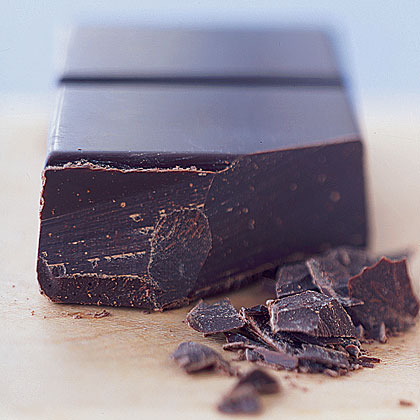
Something in dark chocolate seems to help protect the heart, and now researchers say they have identified the molecular mechanism by which a compound found in cocoa can guard against the damage of a stroke.

The compound, a flavanol called epicatechin, triggers two built-in protective pathways in the brain, according to a report published online last week in the Journal of Cerebral Blood Flow & Metabolism. The research team was led by Sylvain Dore, an associate professor of anesthesiology and critical care medicine and pharmacology and molecular sciences at John Hopkins University School of Medicine in Baltimore.

Animal studies raise the possibility that epicatechin may someday be used to treat strokes in humans, since its protective effect can be seen more than three hours after a stroke. Existing stroke treatments typically have a shorter window of activity.

While the cardioprotective effect of dark chocolate seen in several human studies appears to open the possibility that eating lots of chocolate is healthy, "I prefer to focus on cocoa," Dore said. "Cocoa is not like chocolate, which is high in saturated fat and calories. Cocoa can be part of a healthy diet, combined with fruits and vegetables."