Health & WellnessS


Heart

Stress-Relieving Tools to Quiet Your Mind

Image
In today's stressful world of bigger-better-faster, the demands can be overwhelming. Finding a way to unplug from the demands of work, school, family and everything else is crucial if you want to remain healthy and productive.

When stress builds up without a release valve, the results can be ugly.

Just about every illness is either directly caused, or made worse, by stress--and that includes:
  • Depression, anxiety and moodiness
  • Immune dysfunction
  • Weight gain or loss
  • Cardiovascular disease
  • Sleep problems
  • Stomach and digestive problems
  • Headaches and back pain
One way or another, your body will force you to slow down at some point - and you certainly don't want to wait until a major illness leaves you with no choice in the matter.

In this article, I'd like to share some of my favorite tools for quieting your mind - tools you can use to step away from the chaos for at least thirty minutes every day.

Comment: For more information about an effective approach to reliving stress and toxicity in the mind, body and spirit read about Éiriú Eolas (pronounced "AIR-oo OH-lahss") here

Éiriú Eolas Breathing and Meditation Program is the modern revival of an ancient breathing and meditation program which is being acclaimed around the world as THE TOOL that will help you to:
  • Relax from the stresses of everyday life
  • Gently work your way through past emotional and psychological trauma
  • Release repressed emotions and mental blockages
  • Detoxify your body and mind
Éiriú Eolas removes the barriers that stand between you and True Peace, Happiness, and ultimately a successful, fulfilling life.


Document

American Cancer Society Trivializes Cancer Risks: Blatant Conflicts of Interest

The May 6 report by the President's Cancer Panel is well-documented. It warns of scientific evidence on avoidable causes of cancer from exposure to carcinogens in air, water, consumer products, and the workplace. It also warns of hormonal risks from exposure to Bisphenol-A (BPA) and other toxic plastic contaminants, says Samuel S. Epstein, M.D., Chairman of the Cancer Prevention Coalition (CPC).

Concerns on avoidable causes of cancer have been summarized in a January 23, 2009 Cancer Prevention Coalition press release, endorsed by 20 leading scientists and public policy experts, who urged that President Obama's cancer plan should prioritize prevention. These concerns were further detailed in a June 15, 2009 press release. Warnings of the risks of BPA are also detailed in a May 6, 2010 CPC release.

Some of the more startling realities in the National Cancer Institute's (NCI) and the "non-profit" American Cancer Society's (ACS) long-standing failure to prevent a very wide range of cancers are illustrated by their soaring increases from 1975 to 2005.

Info

Genetically Modified Foods: More Reasons to Avoid Them

Image
Last week the New York Times wrote about an upcoming report from The President's Cancer Panel. The paper was "astonish[ed] to learn that [the panel] is poised to join ranks with the organic food movement and declare: [these] chemicals threaten our bodies."

If you doubt that Genetically Modified (GM) foods threaten your body, here is a recent report from Russian biologists. They conducted what they thought would be a "routine" study of the long-term effects of the consumption of GM soy feed among a hamster population. For the first generation, the only untoward effects seemed to be constipation. The second generation didn't seem too much the worse for wear either. But the third generation showed serious ill effects and turned out to be completely sterile.

Hampsters are not human beings and more research needs to be done, but other studies also point to reproductive ill effects. Eating frankinfoods would not seem to be the best form of birth control! In addition to the unknown but increasingly documented risks of ingesting organisms that are completely new to the human body, we also need to worry about contaminants found in GM foods such as Monsanto's "Roundup Ready" herbicide.

Magnify

Tibetans developed genes to help them adapt to life at high elevations

Researchers have long wondered why the people of the Tibetan Highlands can live at elevations that cause some humans to become life-threateningly ill - and a new study answers that mystery, in part, by showing that through thousands of years of natural selection, those hardy inhabitants of south-central Asia evolved 10 unique oxygen-processing genes that help them live in higher climes.

In a study published May 13 in Science Express, researchers from the University of Utah School of Medicine and Qinghai University Medical School in the People's Republic of China report that thousands of years ago, Tibetan highlanders began to genetically adapt to prevent polycythemia (a process in which the body produces too many red blood cells in response to oxygen deprivation), as well as other health abnormalities such as swelling of the lungs and brain (edema) and hypertension of the lung vessels leading to eventual respiratory failure. Even at elevations of 14,000 feet above sea level or higher, where the atmosphere contains much less oxygen than at sea level, most Tibetans do not overproduce red blood cells and do not develop lung or brain complications. The Utah and Chinese researchers found evidence that this might be related to at least 10 genes, two of which are specific genes strongly associated with hemoglobin, a molecule that transports oxygen in the blood.

Attention

Officials Say, Oil Spill May Endanger Human Health

New Orleans - With a huge and unpredictable oil slick drifting in the Gulf of Mexico, state and federal authorities are preparing to deal with a variety of hazards to human health if and when the full brunt of the toxic mess washes ashore.

The list of potential threats runs from minor nuisances such as runny noses and headaches to nausea. While waiting to see how bad things will get, public health agencies are monitoring air quality, drinking water supplies and seafood processing plants and advising people to take precautions.

"We don't know how long this spill will last or how much oil we'll be dealing with, so there's a lot of unknowns," said Dr. Jimmy Guidry, Louisiana's state health director. "But we're going to make things as safe as humanly possible."

Book

Book's Astounding Allegation: Chernobyl Radiation Killed Nearly One Million People

Image
© jemasmith, Flickr Creative Commons
Nearly one million people around the world died from exposure to radiation released by the 1986 nuclear disaster at the Chernobyl reactor, finds a new book from the New York Academy of Sciences published today on the 24th anniversary of the meltdown at the Soviet facility.

The book, Chernobyl: Consequences of the Catastrophe for People and the Environment, was compiled by authors Alexey Yablokov of the Center for Russian Environmental Policy in Moscow, and Vassily Nesterenko and Alexey Nesterenko of the Institute of Radiation Safety, in Minsk, Belarus.

The authors examined more than 5,000 published articles and studies, most written in Slavic languages and never before available in English.

Question

Making the World Safe for Cancer?

When it comes to increasing cancer rates, we've done everything right. We couldn't have done it better if we'd actually planned it.

That's the takeaway from the President's Cancer Panel. Legislatively mandated back in 1971, this prestigious panel just issued its 2009 report. Reading it is an eye-opening experience. I'll synopsize the basic findings here (along with others from other sources) so that if other societies (or other planets) want to replicate our outstanding results in making the world safe for cancer, they can roll up their sleeves and do just what we've done:
  • For 35 years, pour billions of dollars into vested institutions aiming to self-perpetuate via a perennial "war on cancer" featuring intense and costly treatments, which, according to a GAO report, failed to substantively increase actual survival rates once you factor in reductions in lung cancer deaths thanks to smoking cessation
  • Run massive P.R. campaigns to distract the gullible public (with more birthday cake?) until that lucky day when a "cure" is found. (According to AdWeek, the American Cancer Society, which disputes the Panel Report spends $17 million annually on ads.)
That's just for starters.

Ambulance

Flashback U.S. Patients Beware: Hospital Safety's a Wilderness of Data

Image
© Philip Kamrass Times UnionThough hospitals collect and send a vast amount of information about patient outcomes to the state and federal government, most of it is not shared with the public - making it difficult to assess the safety of an individual hospital.
Americans have more information about the safety of their cars than about the hospitals that treat them at their most vulnerable moments.

Retired Deputy Sheriff Allen Zurlo had no knowledge of the safety record at the hospital in Arlington, Wash., where he underwent routine surgery to cure loud snoring. The hospital administrator said Zurlo was injected with the wrong substance while under anesthesia. His heart stopped and he nearly died, on his 57th birthday.

Zurlo said he's grateful the staff revived him and treated him fairly after the November 2008 incident. But he wouldn't use the hospital again.

Zurlo is now a believer in public access to hospitals' safety records.

Pills

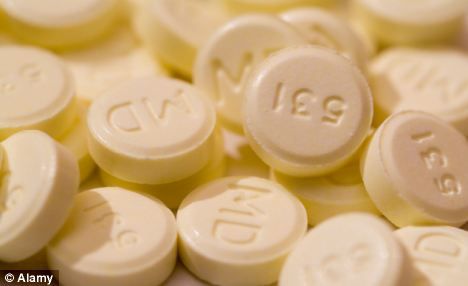
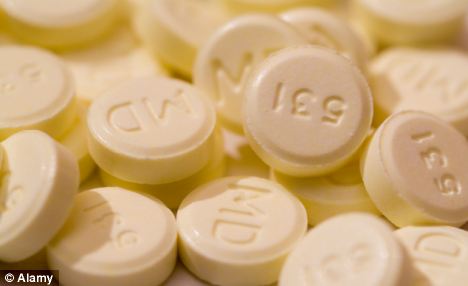
UK: NHS spending on 'chemical cosh' child-calming drugs soars by 60% to £31m

Image
© AlamyOver-use: prescribing drugs such as Ritalin to children is an 'easier' option than discipline at schools or parental support
NHS spending on 'chemical cosh' drugs to treat hyperactivity has soared by two-thirds to £31million in just four years, new figures revealed yesterday.

Nearly 750,000 prescriptions are now being doled out every year for Ritalin and similar drugs - most of them to children.

The surge triggered concerns that children are being unnecessarily drugged as poor discipline is increasingly seen as a medical issue.

Teachers warned today that prescribing calming drugs was often cheaper and easier than 'talking cures' and parenting support.

Three drugs are now routinely used to treat Attention Deficit Hyperactivity Disorder (ADHD), which is characterised by disruptive behaviour, impulsiveness and difficulties focusing on specific tasks.

These are drugs based on methylphenidate (Ritalin), atomoxetine (Strattera) and dexamfetamine (Dexedrine).

Figures released under the Freedom of Information Act show that NHS spending on the three drugs in England alone rose from £18.97million in 2005 to £31.14million in 2009.

Magnify

Influenza Vaccine Sends Children Into Convulsions

Image
© NaturalNews
Influenza vaccines have sent 57 children into life-threatening convulsions, reports The Age out of Australia. These influenza vaccines were being give to children under five to "protect" them from seasonal flu, but after receiving the shots, these children started going into convulsions.

An investigation has revealed that there is no quality control problem with any particular batch of influenza vaccines. They all pass quality control, in other words, so the convulsions are being caused by what is intentionally put into the vaccines, not by some mistaken chemical contaminant.

This, of course, baffles conventional doctors who have all been told that vaccines are perfectly safe and could never harm anyone. So rather than pausing to consider what might be contained in the vaccines that's causing children to go into convulsions, they charge ahead with the recommendation that even more people should get vaccines.