Health & WellnessS


Brick Wall

FDA Continues Dragging Its Feet on Bisphenol-A Decision

Image
© Food and Drug Administration
The FDA has missed three self-imposed deadlines to re-evaluate its approval of the endocrine-disrupting chemical Bisphenol-A (BPA), after originally promising in June 2009 to deliver a finding in "weeks not months."

BPA is a prevalent industrial chemical used to make plastics hard and transparent, as in food containers, baby bottles or water bottles. It is also an ingredient in resins used to line the inside of food and infant formula cans, and in dental sealants and composites. Evidence continues to mount that the chemical leaches easily from these containers, and that it is found in high amounts in the bodies adults and children. Research has linked the chemical to reproductive defects, behavioral problems, brain dysfunction, and increased risk of heart disease, cancer and diabetes.

In September 2008, the U.S. National Toxicology Program affirmed its concern over the health effects of the widespread chemical, especially in infants and children. The Canadian government has banned its use in infant products, and a number of manufacturers and retailers have voluntarily stopped making or carrying products that use it.


Magnify

Food in the U.S. is Still Tainted with Chemicals That Were Banned Decades Ago

Image
Thirty-eight years after DDT was banned, Americans still consume trace amounts of the infamous insecticide every day, along with more than 20 other banned chemicals.

In a photograph from a 1947 newspaper advertisement, a smiling mother leans over her baby's crib. The wall behind her is decorated with rows of flowers and Disney characters. Above the photo, a headline reads "Protect Your Children From Disease Carrying Insects."

The ad, for wallpaper impregnated with DDT, captures a moment of historical ignorance, before the infamous insecticide nearly wiped out many birds and turned up inside the bodies of virtually everyone on Earth.

The story of DDT teaches a lesson about the past. But experts say it also provides a glimpse into the future.

Health

Can You Stomach Wheat? How Giving up Grain May Better Your Health

Image
In the relatively short amount of time I have been on a gluten free diet, the wheat free and gluten free marketplace has become a booming business. It's not surprising, since Celiac Disease affects 1 out of 133 people. But, what is surprising is that 97 percent of people with Celiac Disease go undiagnosed. And according to the Mayo Clinic, "young people today are more than four times as likely to have Celiac Disease than was the case 60 years ago."

Celiac Disease should not be mistaken with a food or wheat allergy. It is an autoimmune disease and digestive disorder based on the severe intolerance of gluten found in all forms of wheat. And once you start looking, wheat is in everything - from less obvious foods like soups, soy sauce, licorice, ice cream and salad dressings, to obvious foods like bread, cereal and crackers.

While four years ago I scratched my head in bewilderment wondering what in the world I was going to eat, now I am able to find an ample amount of pre-made foods, companies, grocery stores and personal care products that cater to those with wheat and gluten intolerance. I had no idea (nor did a slew of specialists I visited in my search for the answer to my woes) that the culprit of my intense health maladies was an unsuspecting grain that looks so carefree blowing in the breeze. Turns out, I'm not alone. Most people with Celiac Disease as well as wheat allergy sufferers are clueless as to why they are in ill health.

Comment: For more information on Wheat and Gluten intolerance read the following articles:

The Dark Side of Wheat - New Perspectives on Celiac Disease and Wheat Intolerance

Opening Pandora's Bread Box: The Critical Role of Wheat Lectin in Human Disease

Gluten: What You Don't Know Might Kill You


Info

Food Safety Reform is a Mess

Image
My considered analysis regarding food safety in the U.S. is this: It's an unmitigated disaster.

Salmonella in peanut butter made by a single manufacturer causes deaths, sickness and the recall of thousands of different products from store shelves. Over 10 million pounds of beef have been recalled since President Obama took office. Indeed, the ongoing food-safety crisis that is industrial ground beef inspired NYT writer Michael Moss to win a Pulitzer.

New strains of microbes like the deadly E coli O157:H7 and antibiotic-resistant salmonella - bugs that didn't exist 30 years ago - raise the stakes as high as they can be. With food safety laws more or less unchanged since the 1930s, the long overdue push for reform seemed, compared to other legislative priorities, easy. What could be more of a no-brainer than safe food?

Red Flag

New Research Revealed: Environmentally Caused Cancers Are 'Grossly Underestimated'

Washington - Americans are being "bombarded" with cancer-causing chemicals and radiation and the federal government must do far more to protect them, presidential cancer advisers said on Thursday.

Although most experts agree that as many as two-thirds of cancer cases are caused by lifestyle choices like smoking, poor diet and lack of exercise, the two-member panel said many avoidable cancers were also caused by pollution, radon gas from the soil and medical imaging scans.


Comment: For more insight into the issue of smoking read Laura's Knight-Jadczyk's excellent article: Let's All Light Up!


Magnify

NIH Panel Foolishly Insists Alzheimer's Can't Be Prevented (Are They Demented?)

Image
© NaturalNews
An independent panel of supposed experts recently met at the National Institutes of Health near Washington, D.C., to discuss whether or not Alzheimer's Disease can be prevented through dietary and lifestyle changes. After evaluating a handful of studies that deal with the subject, the panel basically concluded that there is no way to avoid Alzheimer's Disease.

Either that, or they all forgot to bring their science notes and couldn't remember what to say, so they defaulted to their traditional "It's not proven" mantra and ended the conference early.

Interestingly, the studies in question all seemed to demonstrate how things like taking fish oil or doing crossword puzzles can help prevent Alzheimer's Disease, but the panel of doctors and PhDs decided all this evidence simply didn't count. When you work for the NIH, it's very important to filter out all scientific evidence that does not agree with your foregone conclusions.

Magnify

The Cleansing Effect on the Mind of Hand Washing

Image
© iStockphoto
Washing your hands "wipes the slate clean," removing doubts about recent choices.

That's the key finding of a University of Michigan study published in the current (May 7) issue of Science.

The study, conducted by U-M psychologists Spike W. S. Lee and Norbert Schwarz, expands on past research by showing that hand-washing does more than remove the guilt of past misdeeds.

"It's not just that washing your hands contributes to moral cleanliness as well as physical cleanliness, as seen in earlier research" said Lee, a doctoral candidate in social psychology. "Our studies show that washing also reduces the influence of past behaviors and decisions that have no moral implications whatsoever."

Magnify

Drink to Your Kidney Health with Lemonade to Avoid Kidney Stones

Image
© NaturalNews
Kidney stones are solid pieces of material that form in a kidney. They can stay there or they may travel down the urinary tract until they are eliminated naturally.

Unfortunately, kidney stones can also get stuck in the ureter, bladder or urethra. The result can be bleeding, blockage of urine flow and excruciating pain. Thankfully, there are natural ways to greatly reduce your risk of having this most common disorder of the urinary tract, including simply drinking lemonade.

If you've ever experienced the agony of having kidney stones stuck in your urinary tract, you know this is no minor problem. In fact, kidney stones can lead to serious infections and major surgery.

"Back and abdominal pain, blood in the urine, and nausea or vomiting, are the three classic symptoms of kidney stones," Roger L. Sur, MD, director of the University of California at San Diego Comprehensive Kidney Stone Center said in a press statement. "You don't have to have all three, but any of them will come on quickly and be hard to ignore. When you have extreme pain, you should see your doctor or go to an emergency room right away, especially if a fever is present. The presence of fever indicates that you may have an infection in your blood stream which can be life threatening."

Magnify

Diabetes Drugs Warning: They Cause Heart Problems

Image
© iStockphoto
Widely used diabetes drugs appear to increase patients' risk of potentially fatal heart problems, according to a study conducted by researchers from Imperial College London and published in the British Medical Journal.

Researchers examined patient and prescription records to examine rates of heart failure, heart attack and death from any cause among 900,000 patients taking all different kinds of diabetes drugs. Patients were followed for an average of seven years each.

Diabetes drugs fall into three classes: sulphonyureas, glitazones and biguanides. The sulphonyureas include chlorpropamide, glibenclamide (marketed as Daonil and Euglucon), gliclazide (marketed as Diamicron), glimepiride (marketed as Amaryl), glipizide (marketed as Glibenese and Minodiab) and tolbutamide. The glitazones, also called thiazolidinediones, include rosiglitazone (marketed as Avandia) and pioglitazone (marketed as Actos). Metformin is the only anti-diabetes biguanide on the market.

Magnify

More States Move to Ban BPA Even While FDA Does Nothing

Image
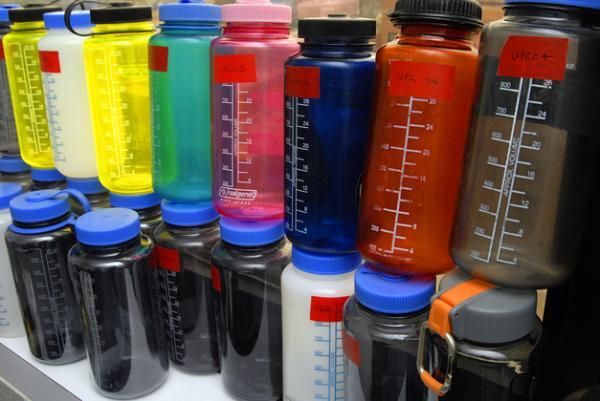
© University of CincinnatiPolycarbonate plastic bottles like these contain bisphenol A.
An increasing number of states are considering banning bisphenol-A (BPA) from food and drink containers in response to growing concerns that the chemical causes cancer, heart disease, diabetes, and other serious illnesses. Despite disregard by the U.S. Food and Drug Administration (FDA) about its potential dangers, states like Connecticut and Massachusetts have passed legislation outlawing the chemical from being used in food and drink containers.

For years, the FDA has denied that BPA is dangerous, even when numerous studies have indicated that the chemical leeches into food and disrupts hormones. After being pressed to reevaluate its position by the National Toxicology Program and others who disagreed with the FDA's position, the agency reluctantly agreed to take a look at the evidence once more.

Last month, the FDA announced that it now has "some concerns" about BPA's effect on brain development in children and babies, but would not admit that the chemical is dangerous or unsafe. The agency has stated it will not issue a ban on BPA, even though it agrees that the chemical is likely problematic.