Health & WellnessS


Brain

New study may explain why apathy is the first symptom of Alzheimer's

Alzheimer image
© DepositphotosNew research hypothesizes degeneration in a brain region called the nucleus accumbens could trigger apathy, the earliest psychiatric sign of Alzheimer's disease.
Compelling new research from the Indiana University School of Medicine has homed in on a degenerative mechanism that could explain why symptoms such as apathy are the first signs of Alzheimer's disease. The findings suggest disrupting this process could slow the progression of Alzheimer's-related dementia.

A growing body of research has recently indicated apathy is one of the earliest signs of dementia. Before cognitive decline becomes apparent and memory problems arise, apathy has been found to signal the onset of neurodegeneration. But what is actually going on in the brain to cause this neuropsychiatric symptom?

Pharmacologist Yao-Ying Ma spent most of her career investigating the neurological mechanisms of substance abuse. Her background in drug addiction led to a research focus on a part of the brain called the nucleus accumbens, a brain region that plays a strong role influencing motivation and reward pathways.

Ma's recent research focus has shifted to neurodegenerative disease. After all, the same psychiatric symptoms seen in addiction (mood swings, apathy and anxiety) are now known to be some of the earliest signs of dementia. So the question Ma wanted to answer was what was going [on] in the nucleus accumbens during the very earliest stages of neurodegenerative disease - before damage in other areas such as the hippocampus led to the more common cognitive decline seen in dementia?

People

Nearly 60% of US population had COVID by February: CDC

SARS-CoV-2
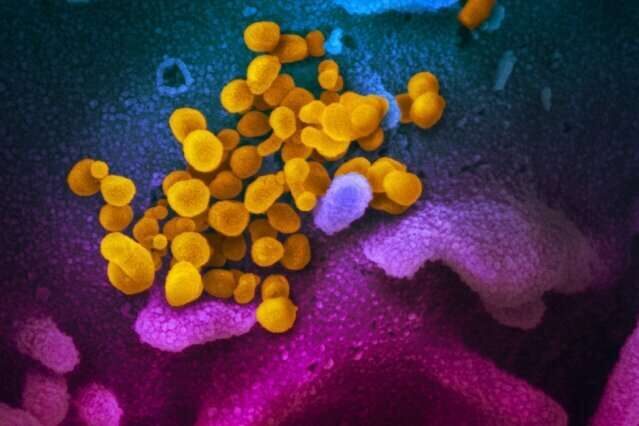
© NIAID-RMLThis scanning electron microscope image shows SARS-CoV-2 (yellow)—also known as 2019-nCoV, the virus that causes COVID-19—isolated from a patient, emerging from the surface of cells (blue/pink) cultured in the lab.
By February of this year, 58 percent of the US population — more than 190 million people — had been infected with COVID, according to an antibody survey by the Centers for Disease Control and Prevention (CDC) published Tuesday.

The figure is far higher than the 80 million officially recorded cases, with the majority of infections undiagnosed, asymptomatic or unreported.

Roughly 75 percent of people under 18 had been infected, according to a paper based on a nationally representative study of antibody levels.

There was a huge surge during the winter Omicron wave, particularly among children.

Each month from September 2021 to January 2022, the study examined some 75,000 blood specimens taken from across the country, as well as 45,000 samples in February.

The study examined only antibodies created in response to prior infection, not vaccination.

SOTT Logo Radio

SOTT Focus: Objective:Health - Sudden Surge in Liver Inflammation Around the World - Vaccines to Blame?

O:H header
On April 15 the WHO announced an outbreak of hepatitis of unknown origin in the UK. Since that time, they've specified that it seems to be centered on young children. And it's not limited to the UK.

As of April 21, there have been at least 169 cases of acute hepatitis reported from 11 countries (Cases have been reported in the UK (114), Spain (13), Israel (12), the United States of America (9), Denmark (6), Ireland (<5), The Netherlands (4), Italy (4), Norway (2), France (2), Romania (1), and Belgium (1).) The kids who have been tested have come up negative for hepatitis A through E, but some have tested positive for adenovirus.

So far they don't know what's causing it, but are explicitly stating it has nothing to do with vaccinations since most of the children infected were too young to have received the shots. We don't think that rules anything out.

Join us on this episode of Objective:Health as we speculate as to possible reasons we may be seeing this strange hepatitis outbreak.


And check us out on Brighteon!

For other health-related news and more, you can find us on:

♥Twitter: https://twitter.com/objecthealth
♥Facebook: https://www.facebook.com/objecthealth/
♥Brighteon: https://www.brighteon.com/channel/objectivehealth
♥LBRY: https://lbry.tv/@objectivehealth:f
♥Odysee: https://odysee.com/@objectivehealth:f

And you can check out all of our previous shows (pre YouTube) here:

https://docs.google.com/spreadsheets/d/16H-nK-N0ANdsA5JFTT12_HU5nUYRVS9YcQh331dG2MI/edit?usp=sharing

Running Time: 00:27:25

Download: MP3 — 25.1 MB


Pills

Expert panel refines guidelines for daily aspirin use to prevent heart attacks

Aspirin
© Pexels / Tookapic
An advisory panel of leading physicians no longer recommends daily low-dose aspirin for the prevention of heart attacks in adults age 60 and older, the group announced Tuesday.

The decision is based on new research suggesting that the net benefits of daily aspirin use in this age group are small, the panel, the U.S. Preventive Services Task Force, said in an article published Tuesday by JAMA.

However, for younger adults ages 40 to 59 years who have a greater than 10% risk for developing heart disease over the next decade of their lives -- and are at low risk for bleeding-related side effects associated with aspirin use -- the decision should be made on an individual bases, the group said.

In addition, the task force has concluded that existing evidence is unclear as to whether aspirin use reduces a person's risk for colon and rectal cancers, or for dying from tumors in these organs, it said.

"Based on current evidence, the task force recommends against people 60 and older starting to take aspirin to prevent a first heart attack or stroke," Dr. Michael Barry, task force vice chair, said in a press release.

"Because the chance of internal bleeding increases with age, the potential harms of aspirin use cancel out the benefits in this age group," said Barry, director of the Informed Medical Decisions Program in the Health Decision Sciences Center at Massachusetts General Hospital in Boston.

Comment: Always trust the science, even when it changes.


Book 2

Rhode Island senator proposes draconian bill: Monthly fines and DOUBLE income tax for the unvaccinated

Rhode Island
Rhode Islanders over age 16 who don't get the COVID-19 vaccine could face $50 monthly fines and have to pay twice as much state income tax under legislation introduced in the state Senate.

Senator Samuel W. Bell (D-Providence) said he proposed the bill (S 2552) because " ... we have a crisis with the pandemic."

Comment: The public opposition it has received already suggests that this bill could be dropped and dismissed, and whether it is successful or not remains to be seen. However, its clear at this point that these types of measures have nothing to do with health, but instead have everything to do with maintaining greater levels of control over the population.


Sheriff

Report: Over 200 Texas state troopers must lose weight or face discipline

texas state troopers
Over 200 state troopers must lose weight by the end of the year or face consequences under a policy by the Texas Department of Public Safety, the Dallas Morning News reported Monday.

Men whose waists exceed 40 inches and women whose exceed 35 inches must log and share their weight loss journey, according to documents obtained by the newspaper.

"I will drink no more than one diet soda each day," a DPS officer reportedly said in a fitness improvement plan. Meanwhile, those who fail to lose the weight, even while passing other fitness tests, may be denied promotions and overtime, or be taken off their duties.

Attention

FDA and Pfizer knew covid shot caused immunosuppression


With another batch of 11,000 Pfizer documents, released April 1, 2022, old suspicions have gained fresh support. As reported by "Rising" cohost Kim Iversen (video above), the first bombshell revelation is that natural immunity works, and Pfizer has known it all along.

The clinical trial data showed there was no difference in outcomes between those with previous COVID infection and those who got the shot. Neither group experienced severe infection. Natural immunity was also statistically identical to the shot in terms of the risk of infection.

Younger Adults More Likely to Experience Side Effects

The second revelation is that side effects from the shots were more severe in younger people, aged 18 to 55, than those aged 55 and older. (The risk of side effects also increased with additional doses, so the risk was higher after the second dose than the first.)

As many of us have said all along, the risk of severe COVID is dramatically lower in younger people than those over 60, which makes an elevated risk of side effects unacceptable.

Key

Here's why no one wants to talk about Sweden

swedish city sweden
© Oleksiy Mark//Shutterstock
When, the summer before last, the results of the first Covid wave began to be tallied in the media, there were different ways of measuring the devastation. One way of looking at the pandemic was to focus on how many people died — more than half a million around the world by the end of June. Another was to try assessing the complicated impacts of the various measures taken to combat the virus. When a lot of the functions in society were frozen, people struggled — especially the most vulnerable.

For those who preferred the first perspective, there was plenty of data to lean on. Meticulous records of the death toll were being kept in most countries, especially the wealthy ones, and presented in stylish graphs on various sites: the Johns Hopkins University website, Worldometer, Our World in Data.

It was a lot harder to measure the consequences of the lockdowns. They appeared here and there as scattered anecdotes and figures. Perhaps the most striking data point came from the US: by the end of the academic year, a total of 55.1 million students had been affected by school closures.

Comment: See also:


SOTT Logo Radio

SOTT Focus: Objective:Health - Microplastics are Everywhere, Including in Your Body

O:H header
Two recent studies have shown the microplastics, tiny pieces of plastic by definition less than 5 mm but can be microscopic, have been found deep in the tissues of most humans. One study from the Netherlands found microplastic particles in the bloodstream of 77% of healthy volunteers. Another study looked at the lung tissue of patients undergoing surgery and found 84% of the samples contained plastic.

Another study by the University of Newcastle, Australia estimated that the average person is eating about 5 grams of plastic per week - that's the equivalent of one credit card. But plastic also gets into the body via the airways. Aren't you glad you've been forced to wear plastic-containing face masks over your mouth and nose for the last 2 years? Animal studies have found that inhaled plastics quickly make their way from the lungs to the heart and spleen, as well as to the deep organs of the fetus in pregnant animals, including the fetal liver, lungs, kidney and brain.

It would be one thing if these plastic particles were benign, but they have been shown to damage human cells, although the extent of the damage at this point is unknown. Some studies have shown "coronary dysfunction, vascular perturbations, negative reproductive health outcomes, and neurological outcomes after maternal inhalation of engineered nanomaterials during pregnancy." It's also speculated to cause gut dysbiosis, greater oxidative stress and neurotoxicity. And this isn't even getting into the endocrine disrupting chemicals and carcinogens plastic loves to absorb and carry.

Join us for this episode of Objective:Health as we discuss the ubiquity and dangers of microplastics.


And check us out on Brighteon!

For other health-related news and more, you can find us on:

♥Twitter: https://twitter.com/objecthealth
♥Facebook: https://www.facebook.com/objecthealth/
♥Brighteon: https://www.brighteon.com/channel/objectivehealth
♥LBRY: https://lbry.tv/@objectivehealth:f
♥Odysee: https://odysee.com/@objectivehealth:f

And you can check out all of our previous shows (pre YouTube) here:

https://docs.google.com/spreadsheets/d/16H-nK-N0ANdsA5JFTT12_HU5nUYRVS9YcQh331dG2MI/edit?usp=sharing

Running Time: 00:36:17

Download: MP3 — 33.2 MB


Syringe

COVID vaccinations and Oxitec's 'flying syringes'

Mosquito Jabs
© Blue Moon of Shanghai
This essay is going to ramble a bit because we need to build a framework of links as a foundation for our main point. Some apparently disparate elements are closely connected as part of a broader agenda, but we need first to identify the relationships.

ZIKA South America, 2015
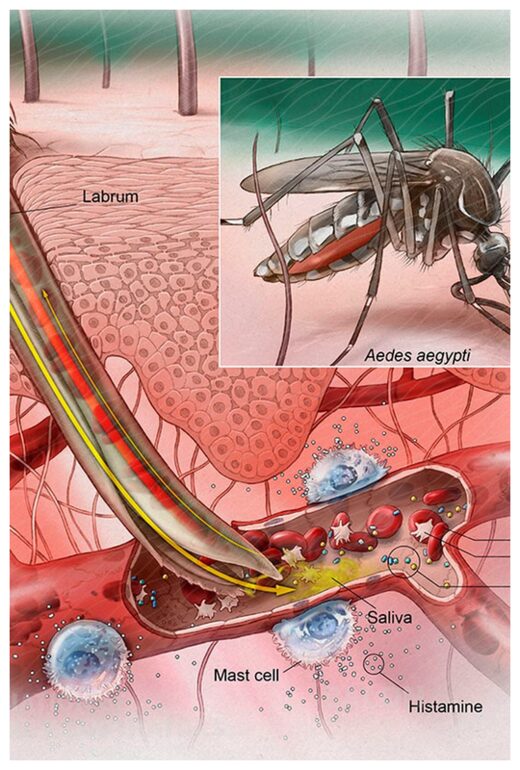
Aedes Mossquito
© Blue Moon of Shanghai
We begin with a brief review of ZIKA, this 2015 outbreak in South America of a virus so mild that it had never done anything to anybody. ZIKA normally produces symptoms such as a slight fever or conjunctivitis and sometimes joint pain, but typically so mild that the symptoms last for only a few days and most people don't even know they have it. ZIKA is not contagious but is transmitted by mosquitoes, which means you must be bitten by an infected mosquito to contract it.

There is much about the ZIKA outbreak that is important to our story. You may want to read my prior article on ZIKA to fully understand. (1) For now, we can note that the outbreak was accompanied by an intense flood of carefully-organised media propaganda with an astonishing amount of fear-mongering about a small number of unrelated birth defects (microcephaly), leading to enormous pressure on Latin American governments to eliminate their anti-abortion legislation. This appears to have been the entire purpose of the media flood, and it was rather successful in that three countries capitulated.

Perhaps the most important point is that there was never any explanation for ZIKA's sudden decision to travel more than 12,000 kilometers from Micronesia to abruptly appear in Brazil, nor for its ability to almost instantaneously infect countless millions of people in more than 20 countries covering nearly 20 million square kilometers. The official WHO version was that ZIKA was "believed to have been brought to Brazil by an infected visitor to the World Cup", a statement that appeared superficially credible but which constituted logical rubbish. There was no way that one or a few infected travelers could have been bitten by hundreds of millions of local mosquitoes who in turn became infected and then spread over 20 million square kilometers in a month. In any case, ZIKA was in Brazil long before the World Cup.

There was one crucial fact that was heavily suppressed by the mass media: A UK company named Oxitec had been conducting "trans-genic" mosquito trials in all these areas immediately prior to the mass regional outbreak. The theory was to release billions of sterile mosquitoes which would mate with the local species and produce sterile offspring, thereby eradicating the local mosquito population. I will expand on this later, but Oxitec's "trials" all proved to have been failures, with no resultant reduction in local populations and with a frightening gene transfer from the trans-genic insects to the local species. Since ZIKA was not endemic to Brazil or indeed to South-Central America, it had to be introduced from somewhere, and on a massive scale. In light of all the evidence, the only possible conclusion was that Oxitec's billions of mosquitoes were knowingly infected with the ZIKA virus prior to release in South America. No other conclusion is even slightly credible.