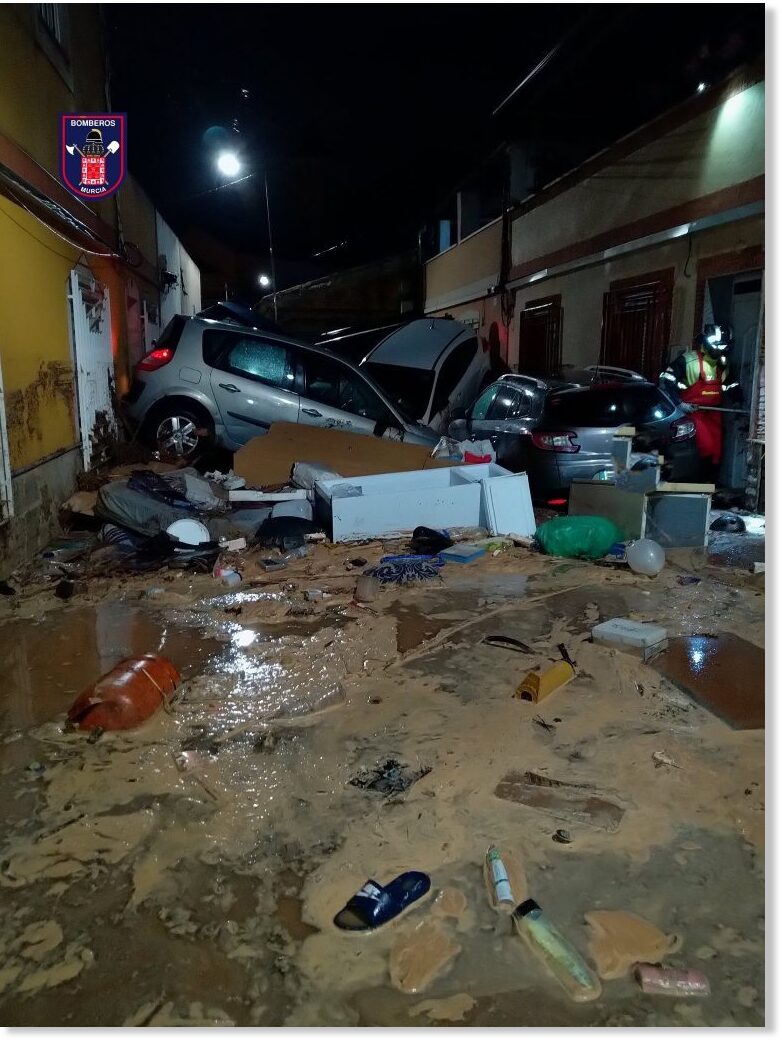
Torrential rain has caused devastation in parts of Murcia region in south-eastern Spain. Firefighters report one person died after floods destroyed a home, while emergency services responded to dozens of call-outs including flood rescues.
Heavy rain fell in the Murcia Region of Spain from late 25 September 2022. Spain's State Meteorological Agency AEMET reported more than 29 mm of rain was recorded in just 10 minutes at the Cabo de Palos weather station in the municipality of Cartagena, and more than 86 mm in an hour. More rain is forecast for 26 September.

At least 7 people lost their lives and 3 are still missing after raging floods took a group of tourists by surprise in Táchira State, Venezuela.
Táchira Civil Defence said teams carried out intense search and rescue operations for 27 members of a tourist group who were reported missing following sudden flash flooding along the La Molina creek in the Potrero de Las Casas sector of the Lobatera municipality, Táchira State on 23 September 2022.
By 24 September several members of the group had been rescued or found safe. Ten people remained missing however and search and rescue operations continued.
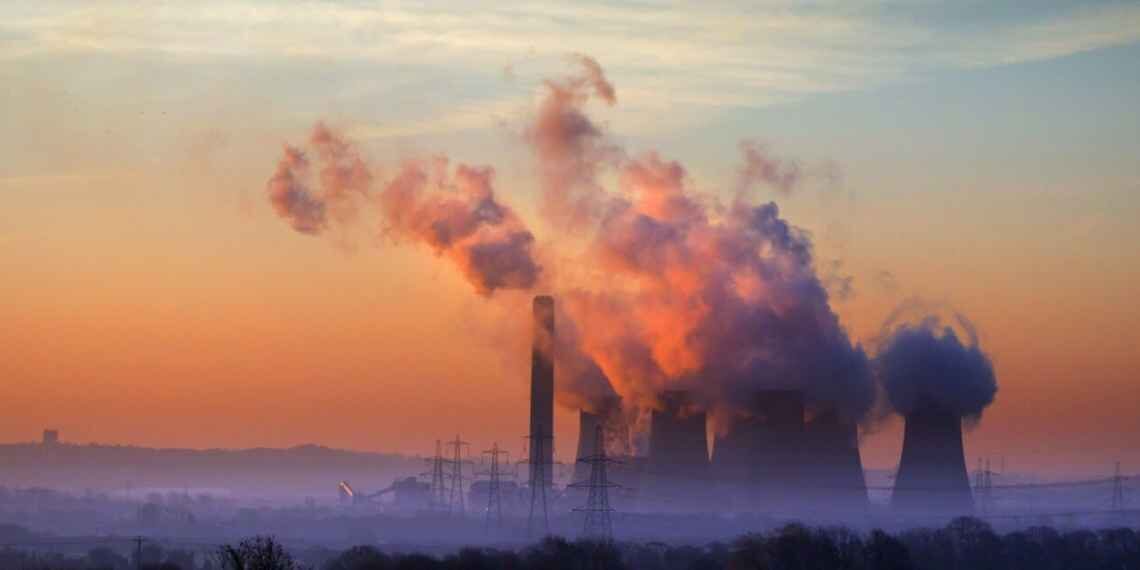
Forget 'settled' science or 'consensus' - that is a political construct designed to quash debate in the interests of promoting a command-and-control Net Zero agenda. One of the great drivers of continual changes in the climate is heat exchange within both the atmosphere and the Earth's surface. Current understanding of the entire picture is limited, and it seems the opportunity has been taken to fill this gap by blaming carbon dioxide almost entirely for the recent gentle warming. A new paper on the so-called 'greenhouse' effect highlights the vital role played by oceans and water vapour flows. CO2 is said to have "minimal effect" on the Earth's temperature and climate.
The paper has been published by the Global Warming Policy Foundation (GWPF) and is written by meteorologist William Kininmonth, a former consultant to the World Meteorological Organisation's Commission for Climatology and former head of the Australian Government's National Climate Centre. Kininmonth argues that the oceans are the "vital inertial and thermal flywheels" of the climate system. If one wants to control climate, it will be necessary to control the oceans, he argues. "Efforts to decarbonise in the hope of affecting global temperatures will be in vain," he adds.
Road users are advised to be cautious driving along Jalan Kepong heading to Sg Buloh after a van fell into a sinkhole around 6am today.
The van driver told The Star that he only realised what had happened when the back of the vehicle was sinking into the hole.
Eventually, the van was stuck, and water was flowing out of the sinkhole.
The van was removed safely at 9.15am with the help of another van and an excavator.
Meanwhile, Kepong MP Lim Lip Eng said police closed the road and diverted traffic.
"Police, Fire and Rescue Department, Kuala Lumpur City Hall (DBKL) and Air Selangor were quick to respond, and their officers were on site to look into the situation."
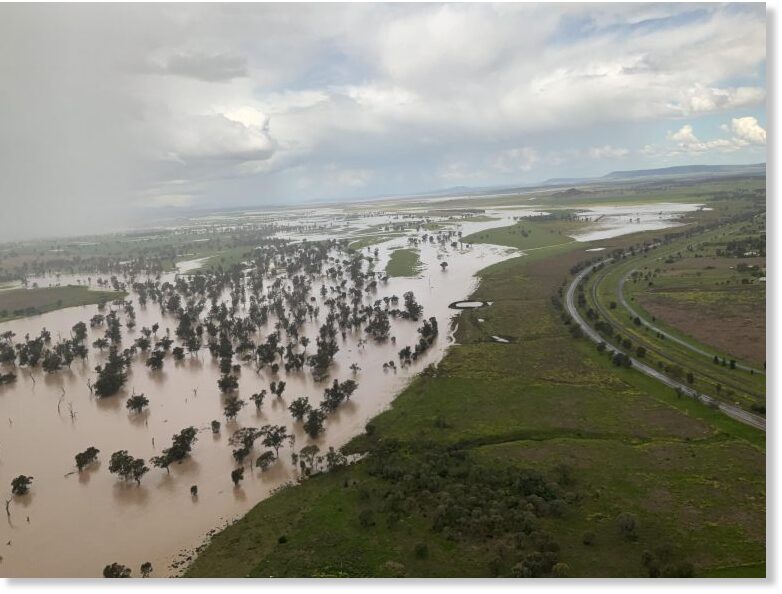
Parts of New South Wales (NSW) in Australia have seen heavy rain since 22 September 2022, triggering floods in several parts of the state. State Emergency Services (NSW SES) carried over 40 high water rescues. NSW Police reported one person died in flood waters in the Central West Region.
On 24 September NSW Police said the body of a young boy was located in a vehicle that was swept away in flood waters at the Genaren Creek in Tullamore near Parkes, in the state's Central West overnight.
Four occupants of the vehicle escaped and were able to cling to trees until they were rescued and taken to hospital. Tragically the five-year-old boy became trapped in the car before it submerged. A second vehicle was later swept away by floods in the same location but the occupants escaped unharmed.
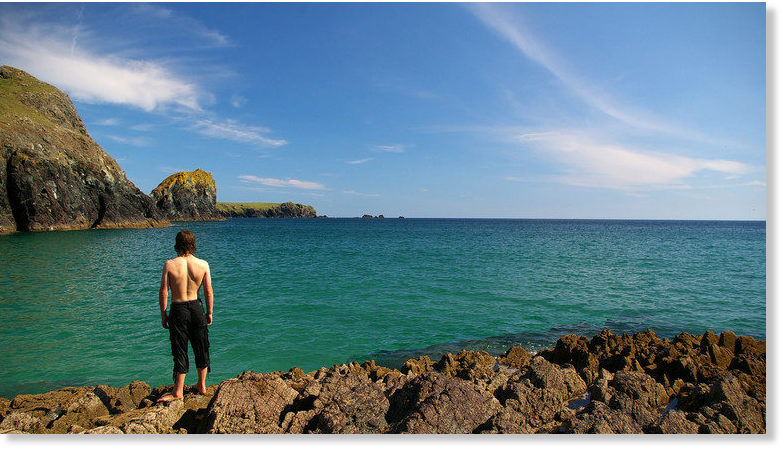
There was a report on the BBC Breakfast programme today (Friday 23 September) about the threat of rising sea levels to historic castles on our coast. The BBC bleated that these castles, which had protected Britain's coasts for hundreds of years, were now being destroyed by rising sea levels due to climate change. The BBC claimed that "scientists have predicted that sea levels could rise by a metre by the end of this century".
This reminded me of a BBC documentary Earth Under Water made by the BBC in 2010. In this documentary the BBC presented two scenarios - a 2-metre sea-level rise by 2100 and a 5 metre sea-level rise by 2200. Using these two 'scenarios' the BBC showed the terrifying consequences for coastal cities and low-lying land from these predicted sea-level rises.
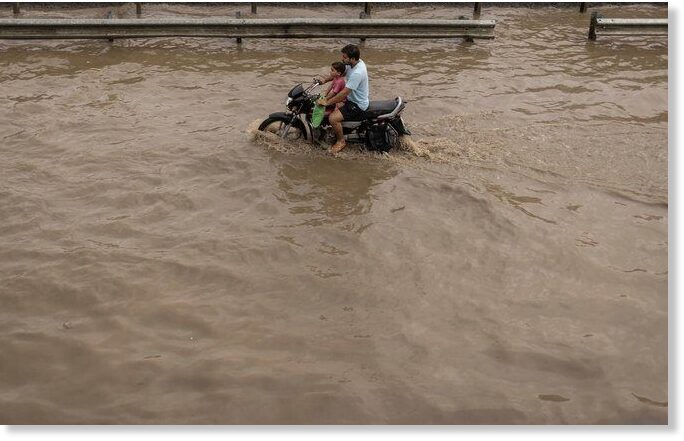
Hazardous weather has killed at least 36 people in northern India over the past 24 hours, including 12 who who were struck by lightning, officials said as they warned of more heavy downpours in the coming days.
Across the northern state of Uttar Pradesh, at least 24 people died after their homes collapsed amid unrelenting rains, Relief Commissioner Ranvir Prasad said.
Mohamed Usman, 15, was on his friend's roof in the city of Prayagraj when lightning struck Friday evening, killing him instantly. His friend Aznan, who goes by one name, was injured and is being treated in a hospital.
One of the strongest storms ever to hit Canada slammed into Nova Scotia's coastline early Saturday, leaving hundreds of thousands of people without power.
Former Hurricane Fiona made landfall early on Saturday morning over Guysborough county on the northeast corner of mainland Nova Scotia, Canada's weather service said. There were maximum sustained winds of almost 81 mph, while peak gusts of over 100 mph were detected, it added.
Previously a hurricane, the National Hurricane Center declared that Fiona morphed into a post-tropical cyclone as it bolted north, exhibiting characteristics of storms with both tropical and high-latitude pedigree.
A typhoon lashed central Japan on Saturday with torrential rain and fierce winds, killing two and leaving tens of thousands of households without power, the Kyodo news agency reported.
Shizuoka city, southwest of the capital Tokyo, was hit especially hard, seeing a record 417 mm (16.42 inches) of precipitation since the rain started on Thursday, the Japan Meteorological Agency (JMA) said.
Winds at the centre of the Typhoon Talas were blowing at about 65 kph (40 mph), with peak gusts of about 90 kph (56 mph), it said.
Comment: See also: