The carcasses of 30 whales that have stranded along the Gulf of Alaska and the Alaska Peninsula have puzzled scientists since the first discoveries this May, and now NOAA is giving the cases
"unusual mortality event" status.
That means that the stranding event is unexpected, involves a large number of marine animal deaths, and requires immediate attention. The designation gives the agency more resources for the investigation.
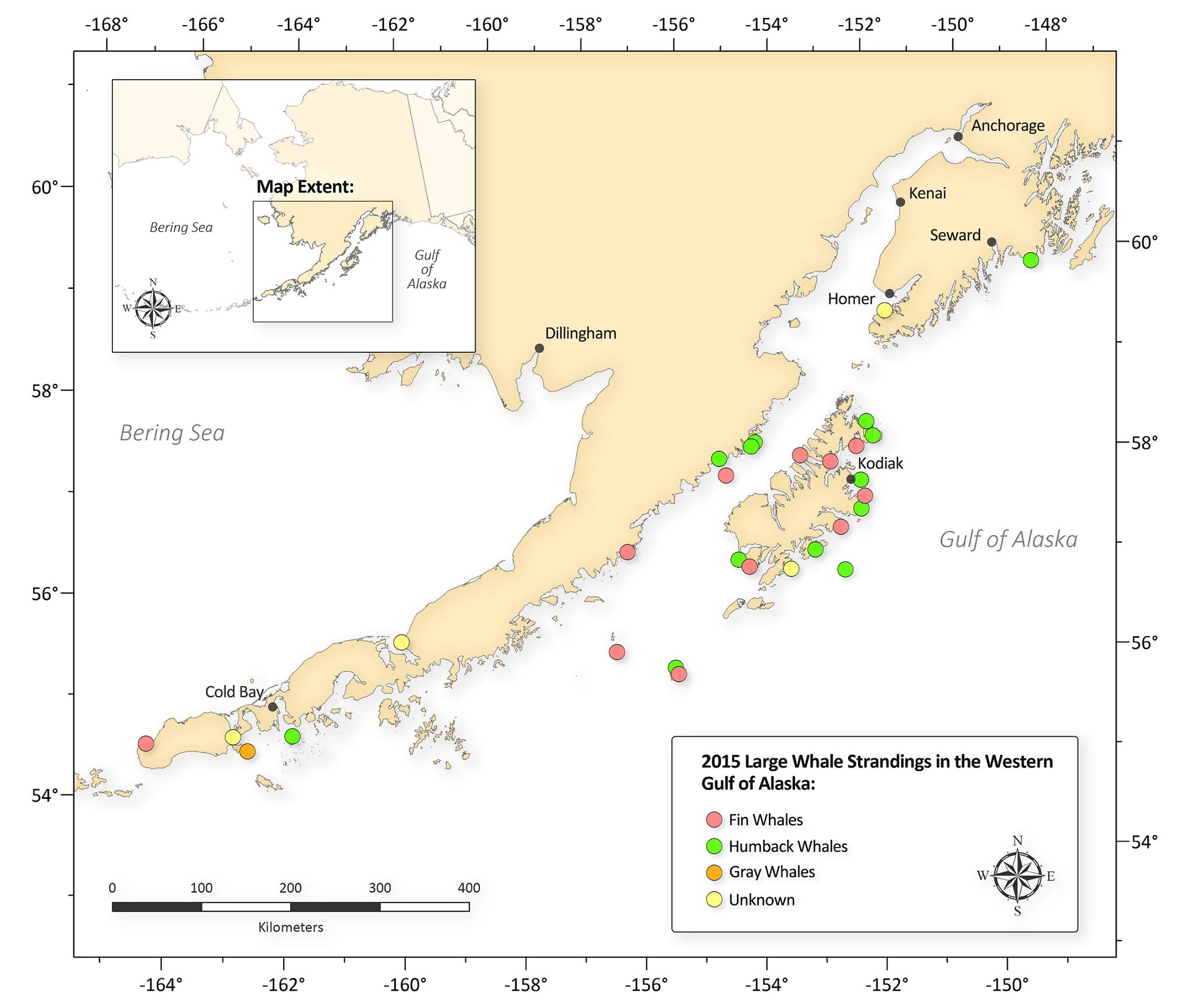
Since May 2015, 11 fin whales, 14 humpback whales, one gray whale, and four unidentified cetaceans have been found dead around the islands of the western Gulf of Alaska and the southern shoreline of the Alaska Peninsula, according to NOAA. Canadian authorities are also seeing an uptick in whale deaths off the coast of British Columbia.
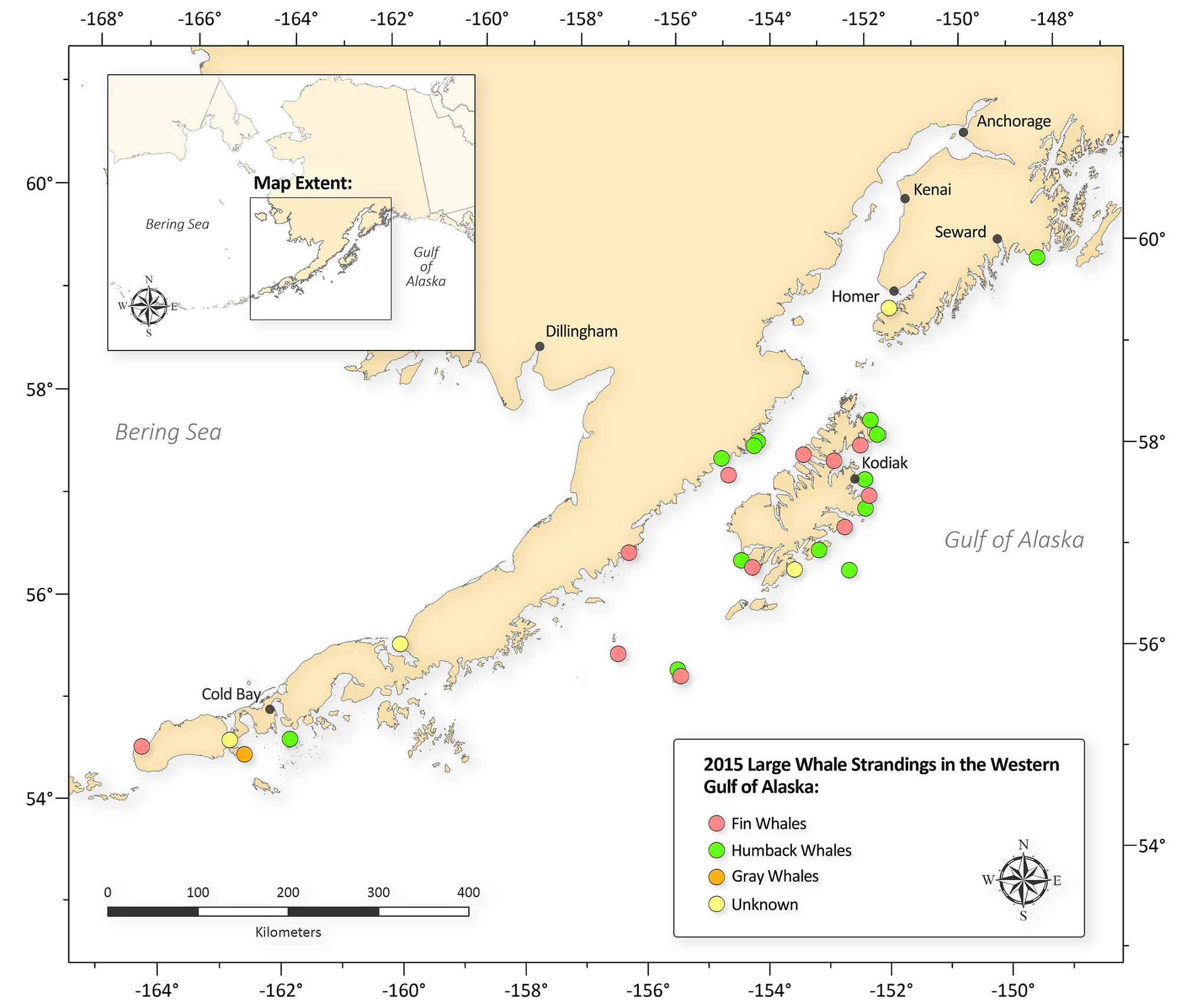
© NOAANOAA Fisheries is declaring the recent deaths of 30 large whales in the Gulf of Alaska an unusual mortality event, triggering a focused, expert investigation into the cause.
The reason for the whale deaths is unknown, but scientists are hypothesizing that biotoxins due to an unsually warm patch of seawater may be involved. At a media teleconference today to discuss the new UME status, NOAA Fisheries lead marine mammal scientist, Teri Rowles, says they've tested one whale out of the 30 reported.
"Most of the carcasses have been not retrievable. They've been floating and/or they've been stranded for a temporary period of time in inaccessible areas and a lot of those have been moderately to severely decomposed."













Comment: Europe has been undergoing a heatwave that has set historic records and there has been a wave of extreme temperatures all over the globe recently: