Earth ChangesS


Cloud Lightning

Lightning bolt kills 3 in Zambia

Image
Three people including a 10-year-old child of Chipepa village in Senior Chief Mwata Kazembe's area in Luapula Province, died on Independence Day after lightning struck them at a fishing camp.

Luapula Province commissioner of police Hudson Namachila identified the victims as John Chinyimba, 36, Good Kwempe, 41, and Mwelwa Katuba, 10, all of Chipepa village in Mwansabombombwe district.

Mr Namchila said the three met their fate at 18:25 hours.

"The three are believed to have died after lightning struck them at Nkalamo fishing camp in Luapula Province,'' Mr Namachila said.

Cloud Precipitation

Massive storm hits Chinchilla, Australia; golf-ball-sized hail reported

Image
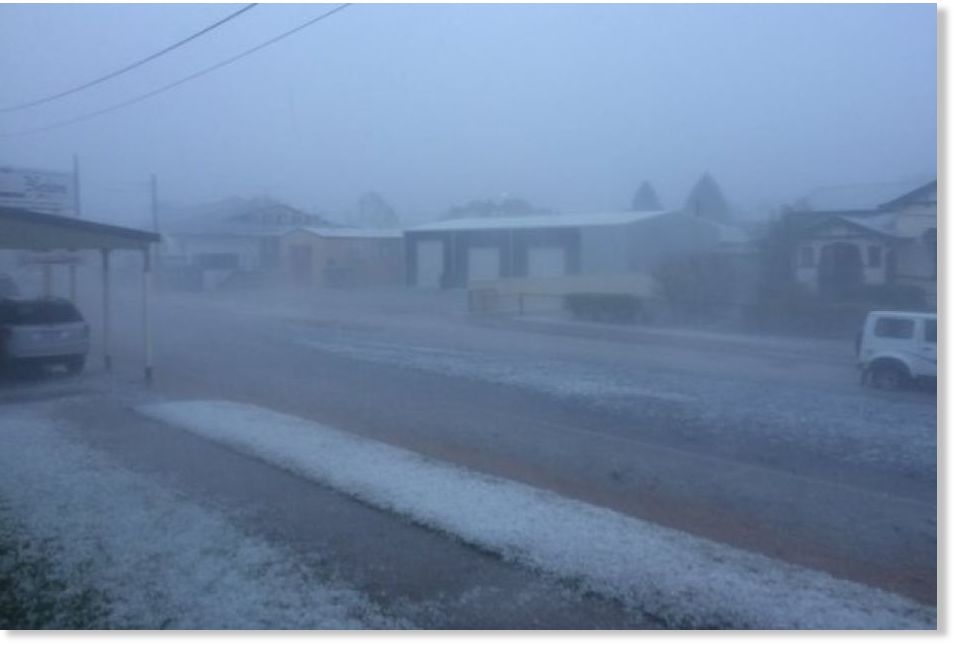
© Derek BarryLarge hail and destructive winds hit Chinchilla this afternoon.

The entire population of more than 5,000 people in the Queensland town of Chinchilla are without power and roofs have collapsed on several houses and community buildings after a severe hail storm.

The Bureau of Meteorology (BoM) said golf-ball-sized hail and destructive winds tore through the town, in the state's Western Downs, on Wednesday afternoon.

Ergon Energy said it hoped to restore power to some of those properties overnight.

The main evacuation centre was among the buildings damaged, but Western Downs Mayor Ray Brown said the building was not needed because those affected had found alternative accommodation.

Chinchilla Christian School will be closed on Thursday due to the extent of damage.


Binoculars

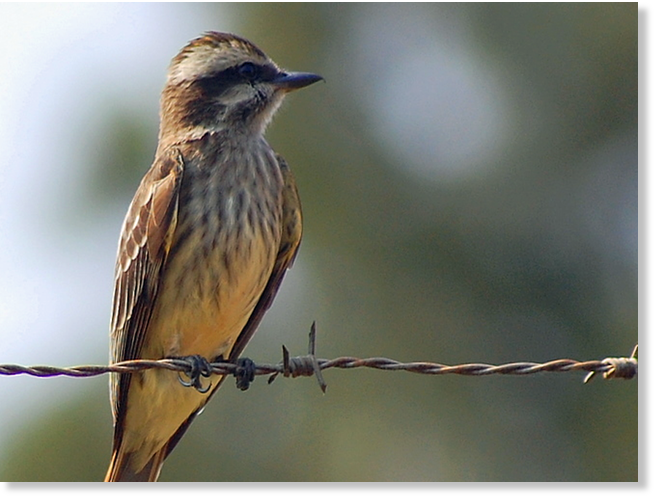
Completely lost Variegated Flycatcher from South America turns up in Fort Lauderdale, Florida

Image
Variegated Flycatcher
The city's latest tourist hot spot is a cemetery.

Birders have been flocking to Evergreen Cemetery since Saturday, when a South American bird only seen five previous times in the United States and Canada was spotted, sending online message boards a-twitter.

The variegated flycatcher has attracted several hundred people from across the country, who are delighted it's still hanging around the graveyard at the end of Southeast 13th Street east of Federal Highway. The bird hasn't been camera shy and is providing nice views for visitors.

But its notoriety stems more from its scarcity than its beauty.

"It doesn't look spectacular, but just think of how far this bird flew from South America," said Jacque Woodward, who drove a fair distance herself from near Lake Wales to see the bird on Tuesday.


Comment: See also the following selection of reports documenting some other extraordinary bird movements across the planet so far this year -

Flamingos migrating to Caspian Sea in mortal danger - lost in Siberia

North American flycatcher arrives on British shores for the first time at Dungeness

Lost hooded warbler a big draw for Calgary birdwatchers

Wrong place, wrong time: Yellow-rumped warbler and Hooded oriole seen in Alaska for the first time

Tropical Brown booby turns up near Cape Race in Canada

Rare endangered albatross seen off Maryland coast

Lost Tropical Kingbird turns up far north of normal range, near Savage, Minnesota

Lost yellow-nosed albatross from the South Atlantic turns up near Reykjavík, Iceland

Another albatross species turns up in the wrong hemisphere, this time on Suffolk coast, UK

Swainson's Thrush from North America turns up on Welsh island in June

Wayward bird turns up on the wrong side of the Rockies in Lodi, California

Rare tropical bird found in Scott State Park, Kansas

Non-migratory citril finch from mountains of mainland Europe found near beach in Holkham,UK

Another completely lost bird: Slate-throated redstart, resident of humid highland forests, turns up on South Padre Island, Texas

Eurasian shorebird (wader) turns up far inland near Winslow, Indiana

Dusky woodswallow seen for the first time in New Zealand


Fish

Tests required to determine abnormal fish deaths in Seychelles

Image
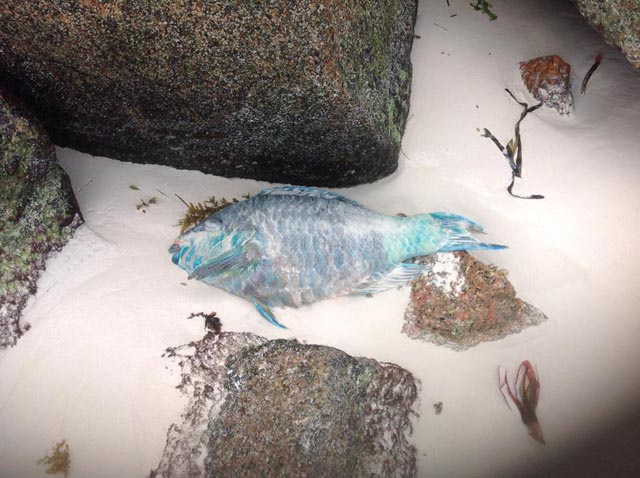
© Cindy EthevePeople in Seychelles an archipelago that relies heavily on fish as its main source of protein have been alarmed by the death of large amounts of coral reef fish in recent days and the discolouration of some parts of the sea.
The Seychelles authorities will be sending fish samples overseas either to Reunion island, a French overseas department in the Indian Ocean or to France to determine what exactly is causing a large number of fish to die in the Indian Ocean island nation.

A large amount of dead fish mainly coral reef fish and other marine species have been washed onshore in various parts of the main Seychelles island of Mahé, second most populated island of Praslin and other satellite islands, in recent days.

"We found it on Friday, and they could be found on almost all the beaches especially in the lagoons and where the water is usually shallow. There were all types of fish especially those that usually lives or frequents coral reef such as moray eels, parrot fish and others," Sam Hope, the Manager of Cousin, a special nature reserve, located off the west coast of Seychelles second most populated island of Praslin told SNA this morning.

"Today [three days later], we have only seen a handful but it seems whatever have cause the phenomenon has dispersed as there are not so many dead fish recorded. We have buried most of the dead fish because as you know Cousin is open to visitors throughout the week, but we have kept a few samples as well, which we hope to get analysed."

The same thing was reported by residents of several areas on Praslin including at Anse Kerlan, Amitie and Grand Anse.

Fire

Toxic haze threatens millions in southeast Asia, as Indonesia's wildfires continue

Indonesia wildfires
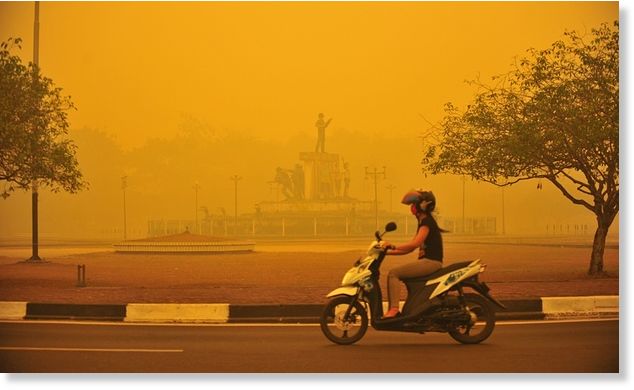
© Hugo Hudoyoko/EPAAn Indonesian woman rides a motorbike amid thick haze in Palangkaraya, Central Kalimantan province, Indonesia.
Indonesian President Joko Widodo is cutting short his visit to the US to deal with a growing environmental crisis back home.

Wildfires across the length of his country over the last few months have thrown up huge clouds of smoke that now hang over much of southeast Asia, from Malaysia and Singapore, across Indonesia, to Papua New Guinea.

The Indonesian Disaster Agency estimates 500,000 people have developed respiratory problems since the fires began in July. Millions of people are dealing with smoke levels roughly 10 times the level the World Health Organization considers hazardous.

"It's hard for people to imagine how serious this is," says Nigel Sizer, forests director for the World Resources Institute, an environmental research group in Washington. Sizer was in Indonesia for the summer and is heading back next week.

"This is literally almost off the charts in terms of air quality," adds Sizer. "It's like you're staring through thick bonfire smoke day after day. ... It's an extraordinary situation."

Comment: According to researchers some of the noxious components of the smoke include: ozone, carbon monoxide, cyanide, ammonia and formaldehyde, which is "extremely hazardous" for health, prompting child evacuation plans to be prepared.

Martin Wooster, Professor of Earth Observation Science at King's College London and National Centre for Earth Observation (NCEO) states:
"I've visited quite a few sites of biomass burning during my 10 years or so of research in the area. And I can certainly say this is the worst situation I've ever encountered for biomass burning or any form of combustion in a natural environment,"
All over the world we are witnessing extensive wildfires, which in some regions have been described as "unprecedented". The National Interagency Fire Center has described the 2015 wildfire season in the United States as a record breaker.

Could some of these wildfires have been fueled from outgassing, then possibly 'sparked' by an increase in atmospheric electric discharge events, such as lightning strikes and other 'cosmic' ignition sources? See also:

Study: Wildfire seasons are more destructive and lasting longer almost everywhere on Earth


Bizarro Earth

Record-breaking swarm of earthquakes hit California city

California Earthquakes
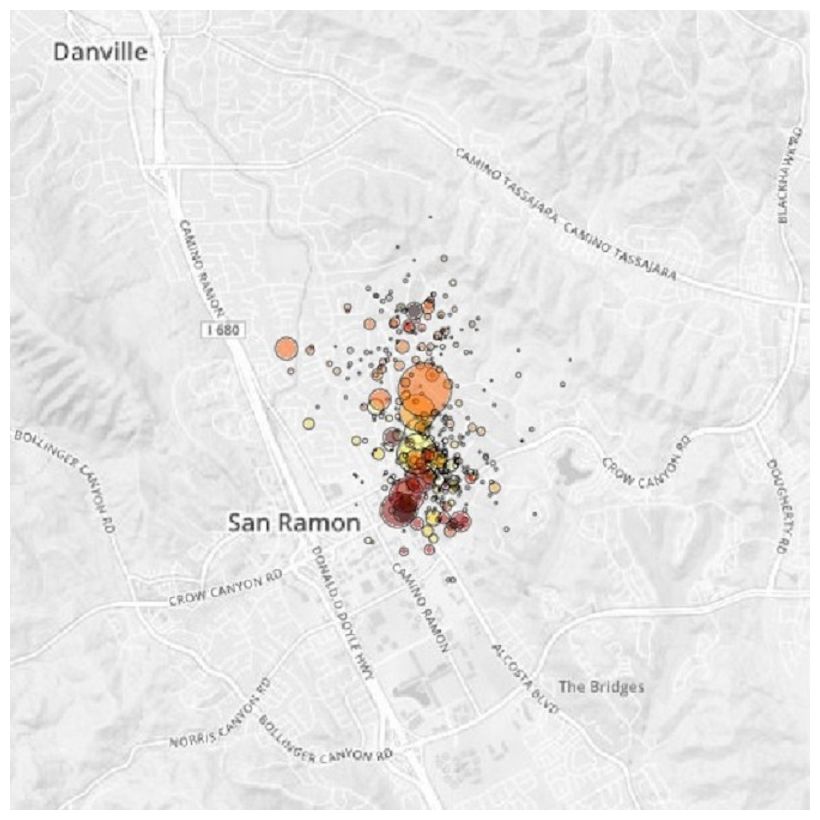
© USGS/ComCat catalogA map of earthquake locations in the San Ramon swarm.
A whopping 408 earthquakes have hit San Ramon, California, in the past two weeks, including 11 in one 24-hour stretch.

This record-breaking earthquake swarm is nothing to fear, however, according to the U.S. Geological Survey (USGS). Periods of tectonic unrest are common in the area and probably don't presage a larger quake, the USGS said.

Most of the quakes affecting this Bay Area city are tiny. The one that kicked off the swarm at 8:50 a.m. Pacific Time on Oct. 13 was a mere magnitude 0.8. People don't usually feel earthquakes until they reach a magnitude of 2.5; quakes between magnitude 2.5 and 5.4 can be felt but rarely cause much damage. Most of the quakes occur at depths of 5 to 6 miles (8 to 9.7 kilometers).

A handful of the San Ramon quakes have rattled locals, including a magnitude-3.6 quake that hit on Oct. 19 and a magnitude-3.1 quake recorded on Oct. 27, both causing weak to light shaking in the East Bay (the eastern part of the San Francisco Bay area). Between 11:30 a.m. PT on Oct. 22 and 11:30 a.m. on Oct. 23, 11 quakes hit the area. Five were between magnitudes of 2.0 and 2.9, and one was a magnitude 3.2.

Attention

Whale carcass washes up on beach in Lincolnshire, UK

Image
Six team members from the Mablethorpe Coastguard were called out after the carcass was first spotted.
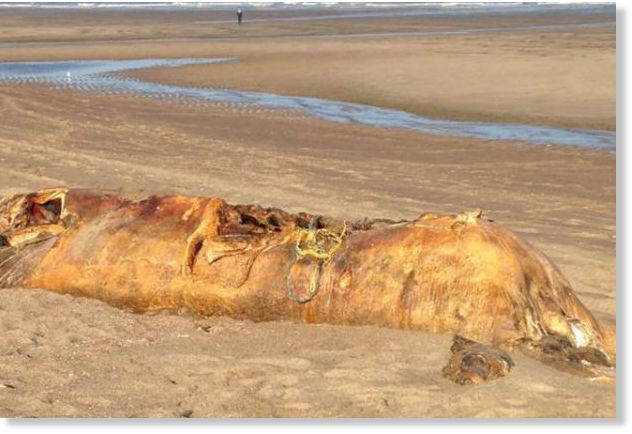
A warning has been issued to the public not to approach a dead whale which has washed up on a Lincolnshire beach.

Coastal experts have confirmed that the large brown carcass spotted on the beach at Huttoft is a whale, but cannot yet identify which species it is.

However they have warned that the carcass could leak bodily fluids which are harmful to dogs.

A maritime operations officer for the east coast and Humber, said: "The local [coastguard] team has been out to the whale.

Attention

Magnitude 4.3 earthquake recorded near Wanaka, New Zealand

Image
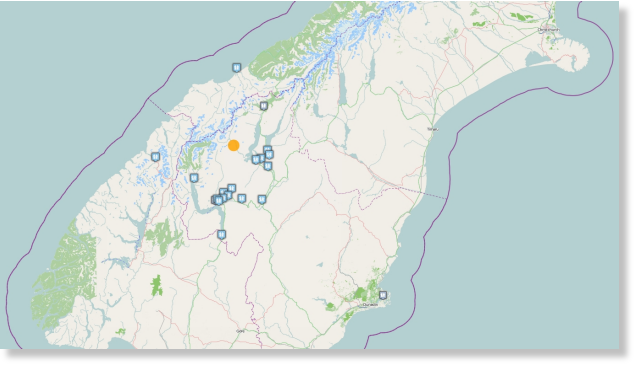
The earthquake struck about 25 km north-west of Wanaka on the South Island.
A magnitude 4.3 earthquake has struck 30 km north-west of Wanaka at 11.14am on Tuesday.

GeoNet reported the earthquake at a depth of 15km at first, which was updated to a much shallower 3km depth.

It was first reported as being 'moderate', which has since been changed to 'strong'.

Within 40 minutes of the quake there had been almost 160 'felt it' reports on the website. Most reporting it being 'light' intensity.

Attention

4.3 earthquake hits near Crete, Greece

Image
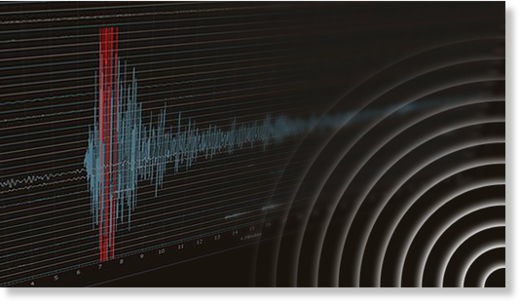
An earthquake measuring 4.3 on the richter scale hit the Southern Aegean sea, just north of the Greek island of Crete, on Tuesday afternoon.

The centre of the earthquake was in the Aegean Sea, around 44 kilometres north of the Cretan city of Chania according to the Institute of Geodynamics. The depth of the earthquake is estimated at 30 kilometres.

The earthquake lasted for a few seconds and there have not been reports of any injuries or damages in Crete thus far, according to Greek media reports.

Crete is Greece's largest island and the country's most southern land point.

Cloud Precipitation

3 successive hail storms hit Western Australia's eastern Wheatbelt, wreak havoc, destroy crops

Image
Hailstorm ruins crops
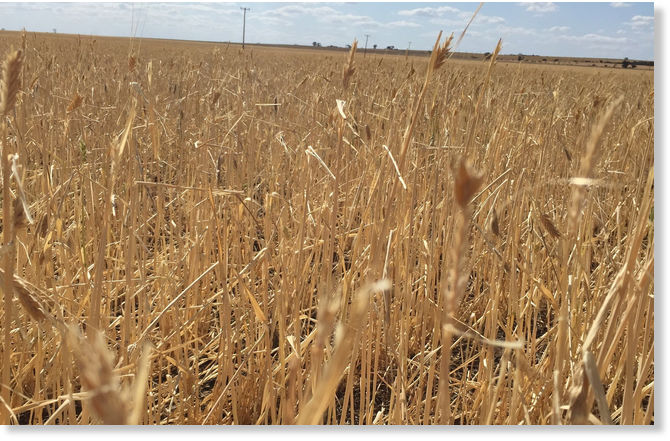
Crops have been destroyed in Western Australia's eastern Wheatbelt this weekend with a night of successive hail storms.

Three separate bouts of hail hit the town of Southern Cross and the surrounding farming district on Sunday night, wreaking havoc on crops ripe for harvest.

It was the second hail storm in as many weeks to dash the hopes of farmers at the end of what had been a relatively good season.


Agronomist Gary Kenwood of Southern Cross owns the only farm supply store in town.