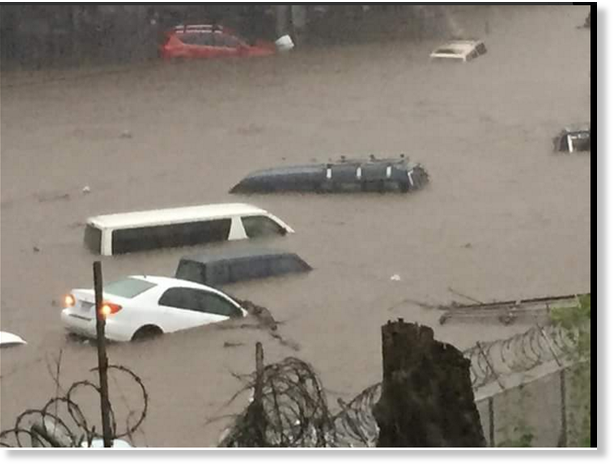
Heavy rain in parts of Costa Rica over the last 2 days has caused flooding in at least 11 cantons of the country, including the capital, San José.
Local media are reporting that 2 people have died as a result of the severe weather. One of the victims, a young girl, died in flood waters in Paramo de Perez Zeledon, about 30 km from San Isidro. The other victim died in a landslide in San Rafael de Naranjo.
Affected Areas
The National Emergency Commission (CNE) in Costa Rica say that flooding has been reported in San José, Desamparados, Aserrí, Alajuelita, Escazú, Montes de Oca, Tibás, Goicoechea, Cartago, Alajuela and Heredia.
CNE say there have been at least 125 incidents of flooding around the country so far. Seven families had to be evacuated from their homes near the María Aguilar river in the La Puñalada de Sagrada Familia area of San José.
In a statement yesterday, the Mayor of San José,Sandra García, said the city had seen over 60 mm of rain in 24 hours, which is more than twice the normal daily amount. She also acknowledged that work needs to be done in order to better protect the city from future flooding, including improvement of sewage and storm water systems and the clearing of drainage ditches and canals.
A series of light earthquakes have shaken the central North Island this morning.
Eight quakes rocked the areas around Turangi and Tokoroa between 3.14am and 3.43am, while two other quakes shook near Te Anau and St Arnaud in the South Island.
The rattles kicked off at 3.14am when a 3.4 magnitude quake shook 10km west of Turangi. At a depth of 7km, GeoNet classified the quake as moderate. Around 10 people reported feeling the shake.
It was followed a minute later by a 3.3 magnitude quake 5km south-east of Tokoroa, at a depth of 28km.
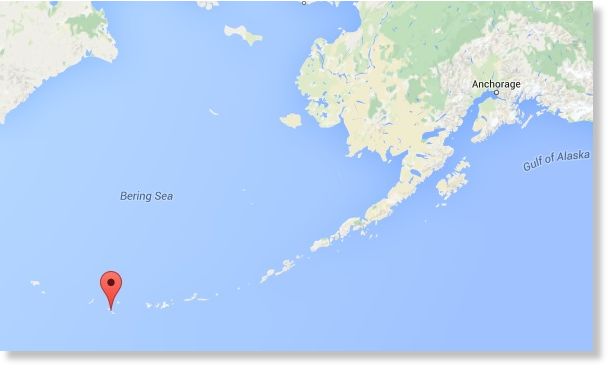
A moderate earthquake with a preliminary magnitude of 5.6 has struck near the islands of Amchitka and Little Sitkin in southwest Alaska, seismologists say.
The earthquake, which struck at 6:49 p.m. AKDT, was centered about 25 miles (40 kilometers) west of Amchitka, or about 32 miles (51 kilometers) west of Little Sitkin Island. It struck about 68 miles (110 kilometers) deep, making it a relatively deep earthquake, according to the National Tsunami Warning Center.
The warning center said a tsunami is not expected, and no tsunami warnings or watches are in effect.
Amchitka Island is a volcanic and tectonically unstable island in the Rat Islands group of the Aleutian Islands. It has had no permanent population since 1832.
Screen capture taken Monday showing the USGS interactive earthquake map. The swarm is makai of Highway 11, north of Pahala town.
A small increase in earthquake activity on the southwest rift of Kīlauea near Pahala has been observed over the past few days.
An interactive USGS map shows the location of the quakes, and the USGS Hawaiian Volcano Observatory had this to say in Tuesday's Kilauea status update:
"The increase in earthquake activity on the southwest rift of Kīlauea continues. Earthquake swarms in this area are not unusual, and have not correlated with any significant change in activity of the volcano. These deep earthquakes (20-40 km or 12-25 miles) are associated with the conduit supplying magma from the mantle hotspot to the volcano's summit. "
USGS Hawaiian Volcano Observatory on Oct. 27, 2015
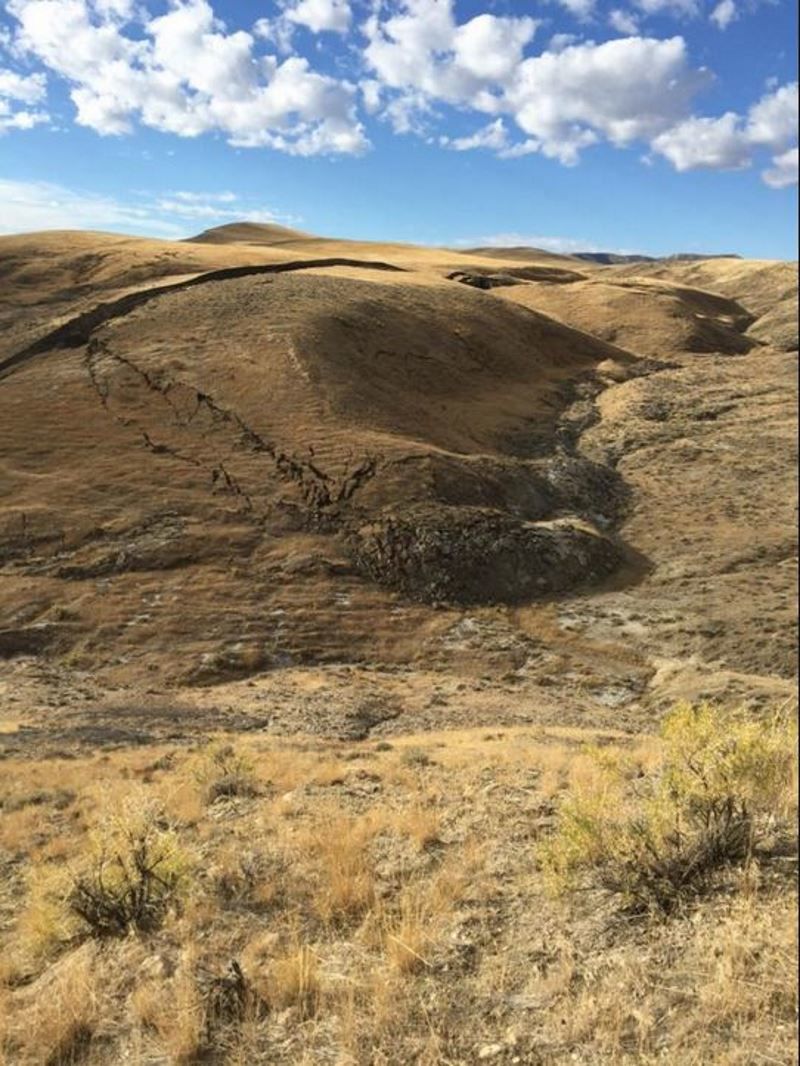
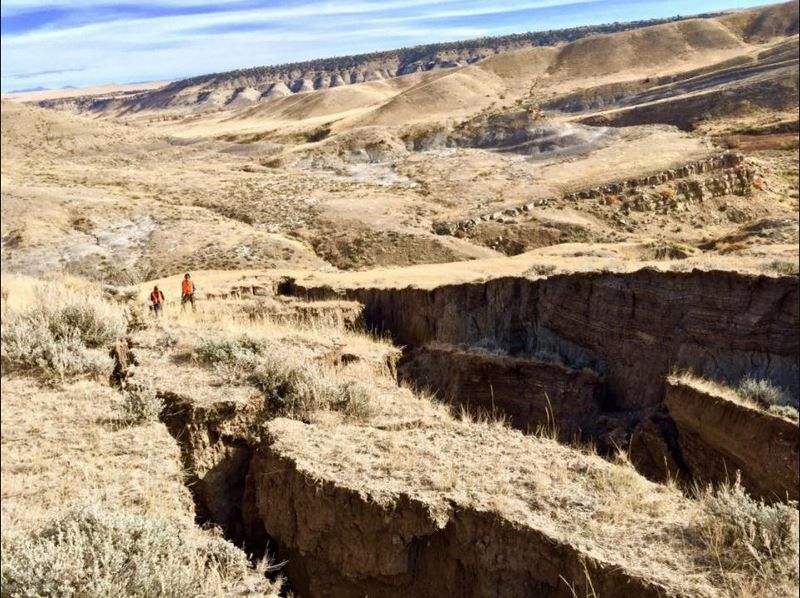
Over the weekend a number of reports came in about a crack in the earth showing up in the southern foothills of the Big Horn Mountains. A friend of ours, Randy Becker was in the area and captured the above images of the collapse and shifting of the soil and rock in the area. Estimates by some put the area at 750 yards long by 50 yards wide.
Comment: Though not much publicized, the Earth's rotation has been measured to be slightly slowing. Could this phenomenon have partly contributed to the Wyoming event?
Heavy rains down power lines, leave hundreds stranded in major cities in Sharon region
Residents of Herzliya, Ra'anana and Kfar Saba faced heavy floods Wednesday as a brief but intense winter storm swept the area, closing major roads and flooding whole neighborhoods.
Three days after a storm knocked out power for tens of thousands of Israeli homes, Wednesday's downpour left some 15,000 households in the dark for the second time in less than a week.
Ahead of the storm, police and fire crews raised their alert level and beefed up deployment, while the Israel Electric Company called on the public to report any fallen electrical wires and readied crews in case of electricity outages.
Despite preparations, severe disruptions were reported across the area.
Even as larvae, honey bees are tuned in to the social culture of the hive, becoming more or less aggressive depending on who raises them, researchers report in the journal Scientific Reports.
"We are interested in the general issue of how social information gets under the skin, and we decided to take a chance and ask about very young bees that are weeks away from adulthood," said University of Illinois entomology professor and Carl R. Woese Institute for Genomic Biology director Gene Robinson, who led the research with postdoctoral researcher Clare Rittschof and Pennsylvania State University professor Christina Grozinger.
"In a previous study, we cross-fostered adult bees from gentle colonies into more aggressive colonies and vice versa, and then we measured their brain gene expression," Robinson said. "We found that the bees had a complex pattern of gene expression, partly influenced by their own personal genetic identity and partly influenced by the environment of the colony they were living in. This led us to wonder when they become so sensitive to their social environment."
In the new study, the researchers again cross-fostered bees, but this time as larvae in order to manipulate the bees' early life experiences. The larvae were from a variety of queens, with sister larvae divided between high- and low-aggression colonies.
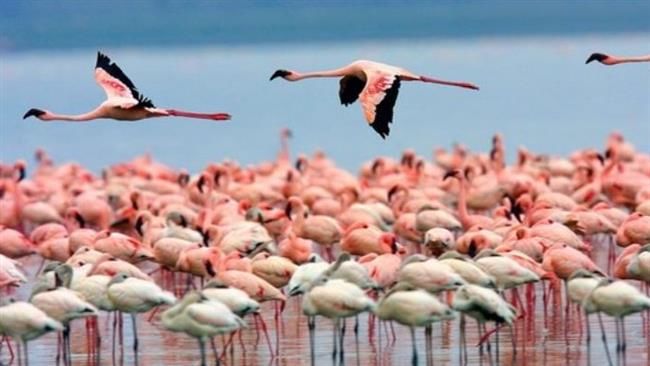
Around 1,500 birds have died around Lake Urmia in northwestern Iran for unknown reasons, an official with Iran's Department of Environment says.
"The reason behind this accident is not clear yet and is under investigation," said the director of wildlife protection organization of the province of West Azarbaijan on Tuesday.
Omid Yousefi ruled out the possibility of a bird flu outbreak, and added that samples had been sent to a number of veterinary diagnostic laboratories and research centers and universities for detailed analysis.
Referring to speculations that the birds may have been poisoned by the sewage and wastewater from treatment plants in the city of Urmia and other surrounding cities, he said, "A certain answer cannot be given without the results of the tests."
He added that there are still a large number of sick birds that may perish in the near future due to their small stature.
Meshaal Al-Enezi Kuwait Times Wed, 28 Oct 2015 21:11 UTC
Floodwater in Kuwait
A thunderstorm hit the country early yesterday, leading to the suspension of schools and universities and flooding in some areas and roads. The Interior Ministry cautioned motorists from the possible continuation of the thunderstorm, calling on people in Kuwait to contact the police and fire directorate's emergency teams in case of emergencies.
Officials from Kuwait University and the Ministry of Education released statements regarding the suspension of studies at schools and universities due to the bad weather conditions. The measure also took into consideration the safety of students and teaching staff at educational facilities.
The Kuwait Meteorological Center warned that the weather would remain unstable and cloudy, with moderate to strong southeasterly wind with speeds of 25-50 km/h, causing rising dust and low visibility of less than 1,500 m in some areas and a chance of rain that might be thundery at times.
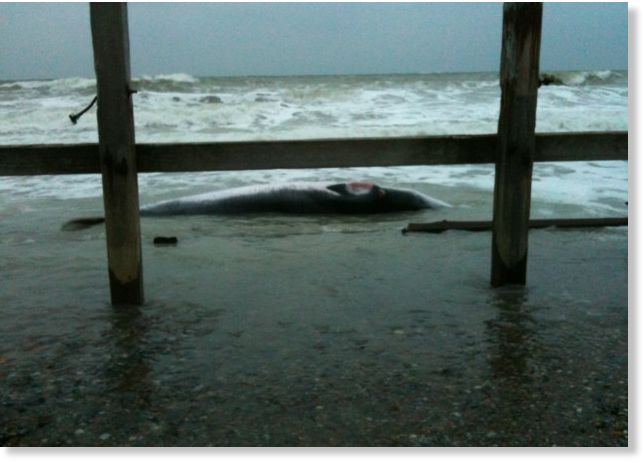
A dead minke whale that washed up on the Norfolk coast is set to be removed by council workers.
The body of the juvenile whale washed ashore on a beach near Bacton on Wednesday.
North Norfolk District Council said it was looking at how to remove the whale, which is beneath the Bacton Gas Terminal site.
The council said its environmental services team hoped to remove the whale "when the tide allows".
A spokeswoman said: "The location of the whale beneath the Bacton Gas Terminal site has caused some difficulty in terms of access, but working with local contractor Renosteel, the teams will be able to use specialist equipment which will be drafted in to bring an end to this sad situation."
Comment: Though not much publicized, the Earth's rotation has been measured to be slightly slowing. Could this phenomenon have partly contributed to the Wyoming event?