
© Virginia Beach Public Works
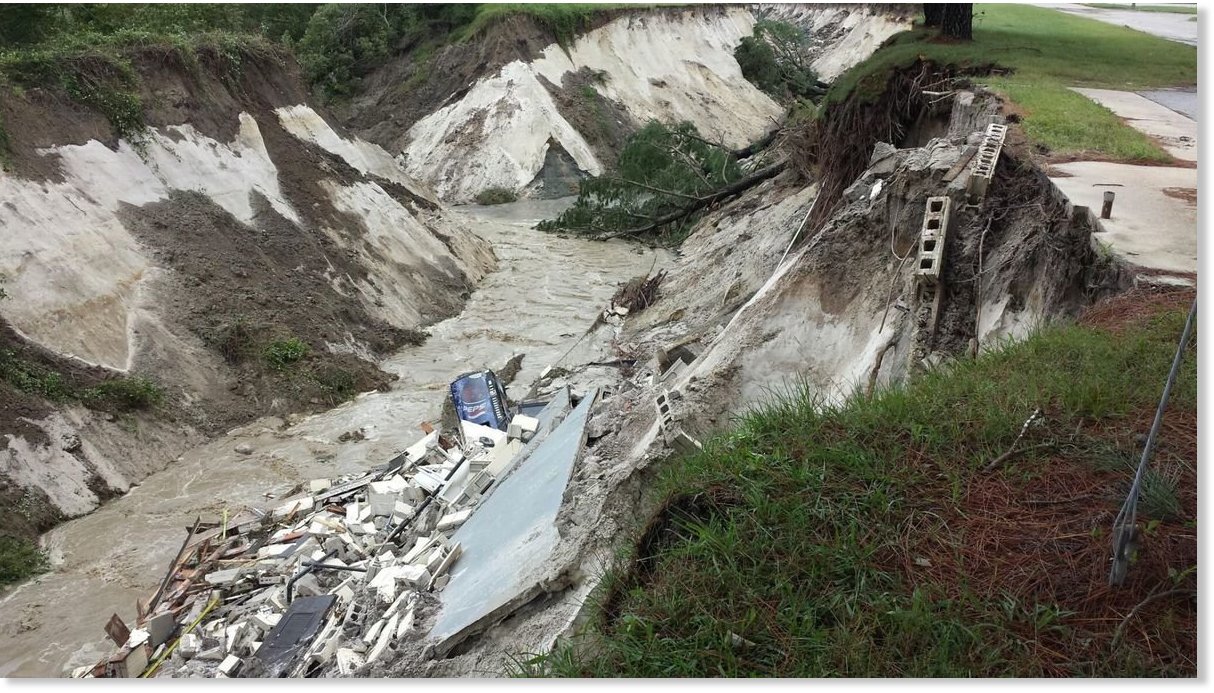
Water filled up a quarter-mile ditch that runs around the site off Centerville Turnpike, then spilled over into a borrow pit and caused "extensive damage," according to the Department of Public Works.
The ditch, which used to be 4 feet deep, now bottoms out at 30 feet.
A concrete-block bathroom was washed away, along with an exit road at the landfill and eight sections of 36-inch pipe. A pump that was in the pit has disappeared. An excavator and a horizontal grinder - two large pieces of construction equipment - are submerged up to their cabs.
Electricity has been shut off at the site, and the city has dammed up the water going into the borrow pit to slow the flow, said Drew Lankford, public works spokesman. Extra pumps have been added to drain the pit. The road will also need to be repaired.
"It's going to be several days before we're up and running," Lankford said.

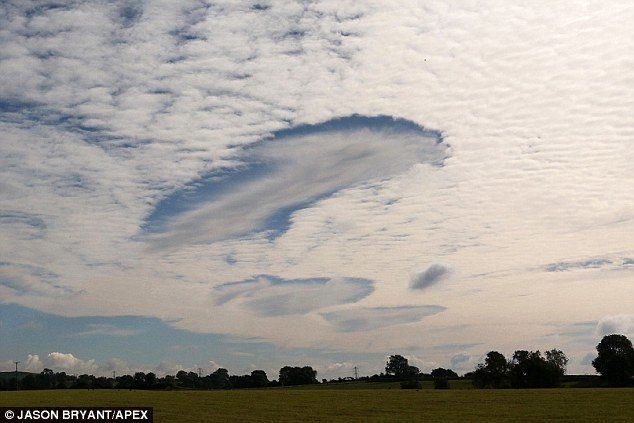










Comment: Earlier in the year this rare cloud phenomena appeared over Texas, Louisiana, Mississippi and Alabama.
Other strange cloud anomalies seem to be appearing globally with higher frequency and intensity. Factors which may contribute to these 'strange skies' are atmospheric dust loading from increased comet and volcanic activity and changes in the layers of the atmosphere.
An indicator of this dust loading is the intensification of noctilucent clouds we are observing. As explained in Pierre Lescaudron's book, Earth Changes and the Human-Cosmic Connection: See also: Chemtrails? Contrails? Strange skies