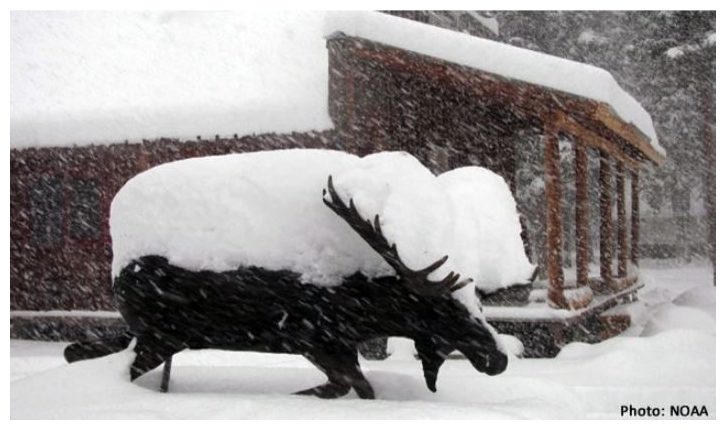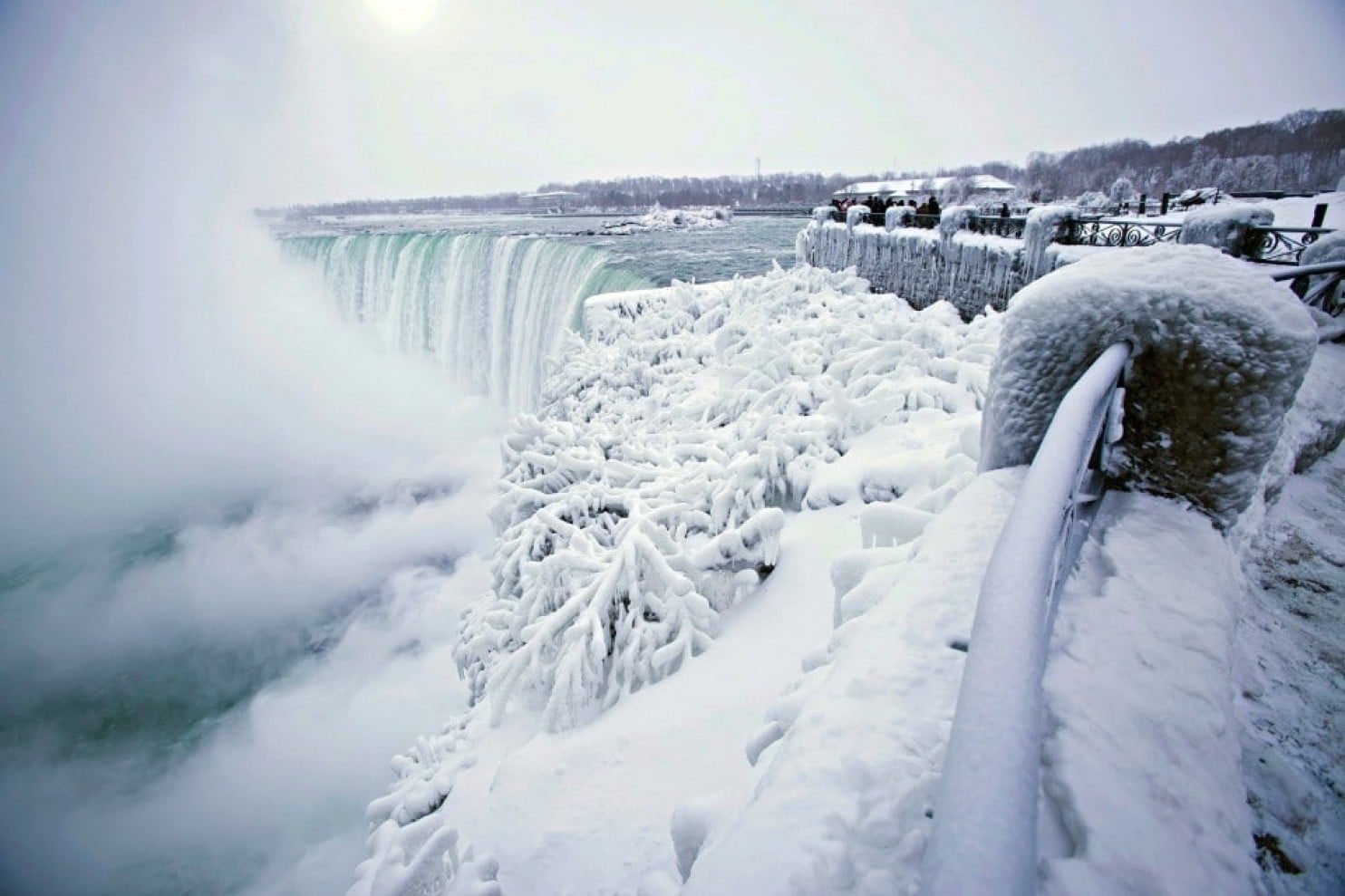
North America is currently experiencing a particularly severe and protracted cold snap resulting in major car accidents, a state of emergency, sharks freezing to death and even now Niagara Falls is experiencing the Arctic blast.
The water of the majestic falls themselves has yet to succumb to the polar winds, but the surrounding area has been transformed into a winter wonderland as temperatures plummet across Canada and the US, dropping to -34 degrees Fahrenheit in parts and dropping further to -89 degrees (-67 Celsius) when windchill is factored in.
The weather has wreaked havoc on US roads, with Michigan alone reporting up to 30 crashes due to the recent icy conditions, including a major pile-up involving at least 40 vehicles reports WGN.
Comment: See these related articles on the Arctic conditions currently gripping North America:
As climate change ushers in another year of extreme global temperatures, Canada and much of the United States has been hit with below freezing temperatures and heavy snowfall. It has been so cold that even sharks have washed up on beaches in Cape Cod.
In Canada, the federal weather agency has issued an extreme cold warning for Sunday morning as another blast of Arctic air moves across the provinces plummeting temperatures well below the seasonal mark. A wind chill of -30 degrees Centigrade ( -22 degrees Fahrenheit) will make it feel much colder, according to Environment Canada.
Needless to say, but quite a few New Years Eve events have been canceled, including many of the events in the New Year's Eve party on Parliament Hill in downtown Ottawa, which also was going to be the end of Canada's sesquicentennial celebrations. CBC News Canada suggests would-be celebrants check with their local media or websites to see if any activities are canceled.
Patrick Thorne Inthesnow.com Sat, 30 Dec 2017 13:12 UTC
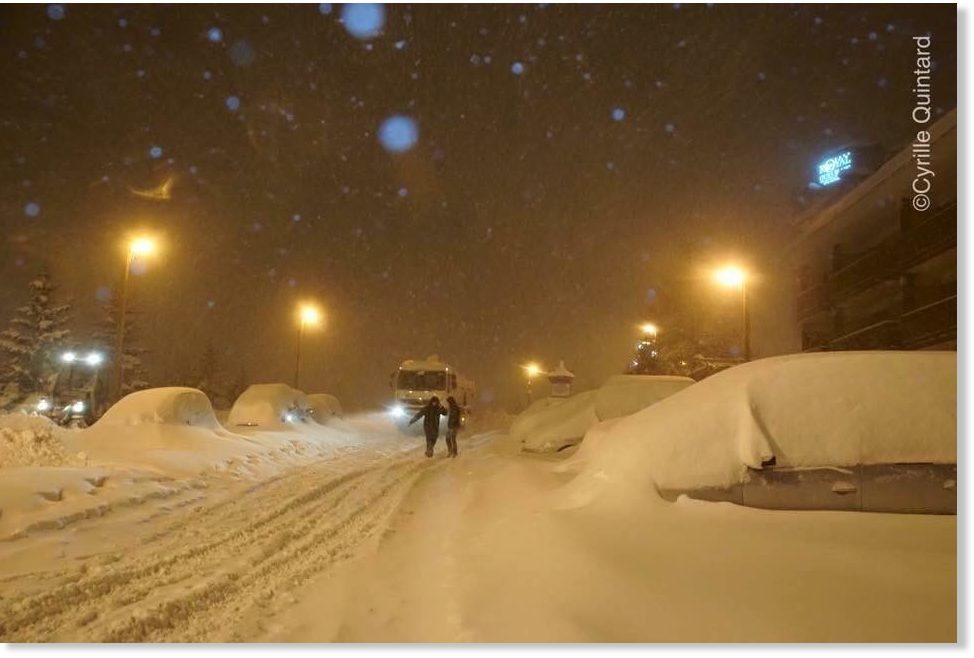
The exceptional snowfall that has been a feature of the start of the 2017-18 ski season on the Alps is continuing today with the second huge snowfall in four days hitting the Alps and other ski regions of Europe.
Forecasters are also now saying a third big snowfall will hit during the first 48 hours of 2018 at the start of next week.
All the snow is causing travel issues for skiers and boarders trying to get too and from ski resorts on what is, in any case, traditionally one of the busiest Saturdays of the year ahead of the peak New Year week.
However in most cases drivers have heeded warnings to be prepared including obligatory fitting of chains for the ascent to many resorts and traffic is getting through, if more slowly than usual.
You've heard of a white Christmas, but have you heard of a blue Christmas? (And no, we don't mean the Elvis Presley classic.)
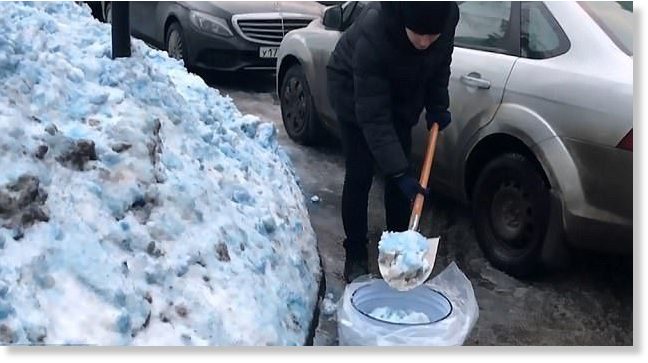
An extraordinarily bizarre event occurred in St. Petersburg, Russia, on Tuesday, December 26th: blue snow falling on the city. The freaky weather phenomenon sparked widespread fears that the snow was tainted with some kind of toxic pollutant. So far, no official explanation has been offered for the blue snow, though an investigation is underway, reports ABC News.
The predominant theory among residents seems to be that the blue snow was caused in some way by the recent demolition of the city's chemical-pharmaceutical research institute. Scientists have suggested that the tinted ice could be caused by cobalt, a metallic element, or methylene blue, a substance used in some medical treatments.
Residents were simply forced to attempt to go about their daily lives in spite of their shocking surroundings; shoveling the blue stuff, clearing roads and driveways.
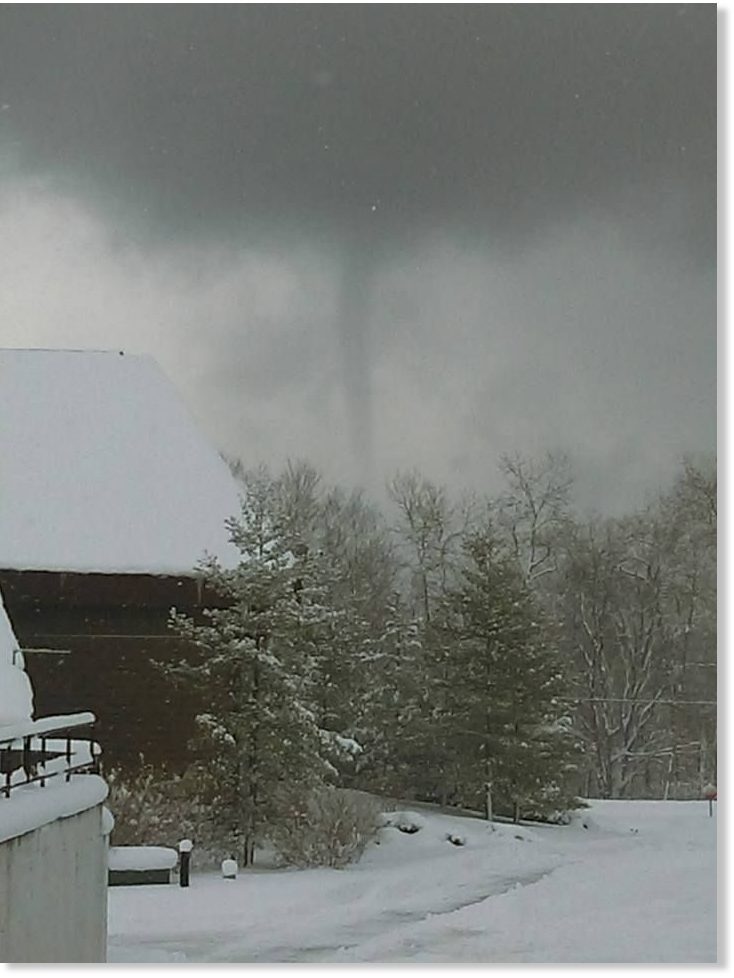
Visibility was near zero today as parts of Grand Traverse and Leelanau counties got socked with snow. But some people near Suttons Bay got to see a winter waterspout form over Grand Traverse Bay.
James Lawson took these shots behind the casino near Peshawbestown.
It was an unusual sight Saturday afternoon, amid the lake effect snow storm.
Some who saw the pictures on social media were calling it a "snow tornado."
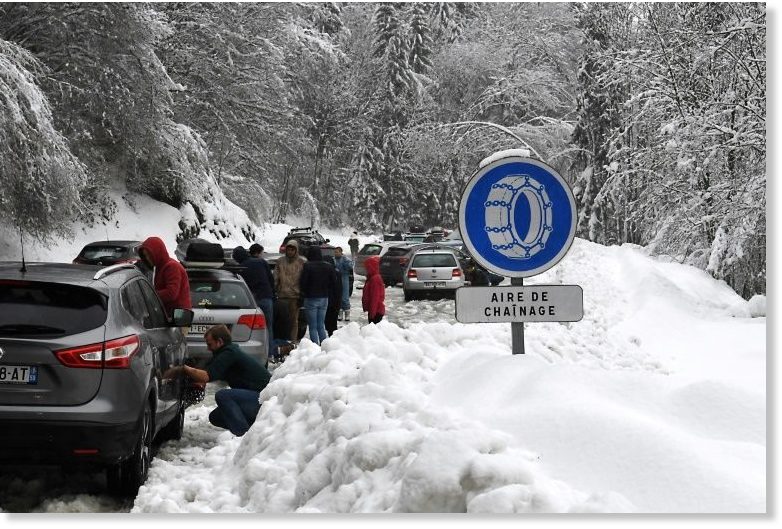
Snow made some roads impassable in the French Alps and forced these motorists to put chains on their wheels
Heavy snow stranded 4,000 travellers heading for resorts in the French Alps and killed one skier in an avalanche, authorities said on Sunday.
The Savoie department prefecture said 3,500 motorists spent the night in emergency shelters after the snow made the roads impassable.
A further 500 holiday-makers who landed at the airport in the city of Chambery also had to sleep in shelters.
The avalanche alert level in Savoie was at four on a scale of five, the national weather service said.
The mountain rescue service said a 22-year-old man died when an avalanche swept him away as he skied off-piste on Saturday in Val d'Isere, a resort popular with foreign visitors.
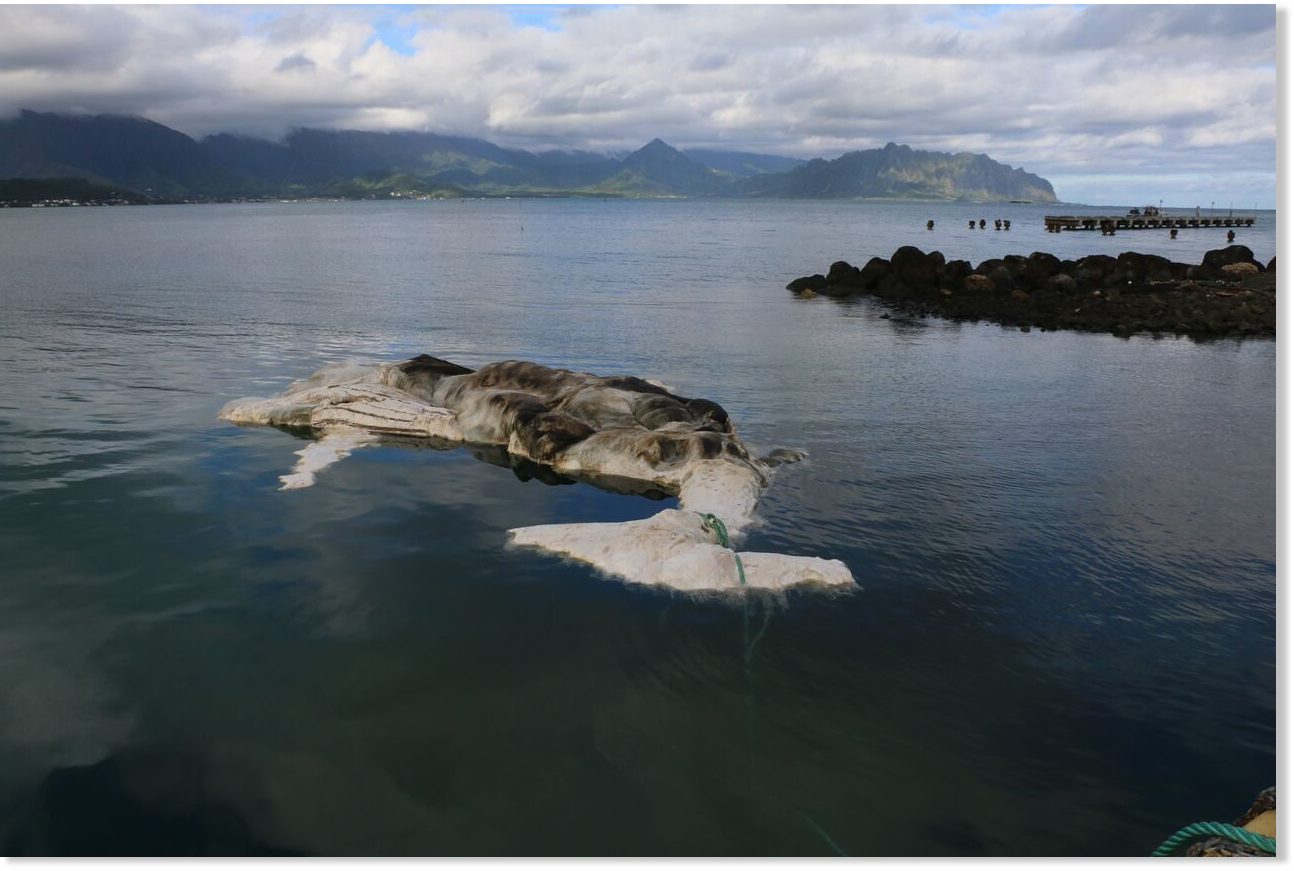
A humpback whale carcass that was seen washing up onto a reef near the Marine Corps Base Hawaii was brought to shore Saturday morning by salvage crews.
The Department of Land and Natural Resources says there's a good chance it's the same carcass that was seen off of Haleiwa on Christmas Day.
The carcass was towed eight miles offshore earlier this week. Weather stopped it from being towed farther.
The carcass entered bay waters late on Thursday. The DLNR reports that the carcass split into two major pieces, with the whale's skull sticking out of the water a short distance from the main carcass.
Officials felt since sharks often feed on whale carcasses, to protect the public, it made sense to get it out of the water as soon as possible.
Alex Sosnowski AccuWeather Sun, 31 Dec 2017 08:59 UTC
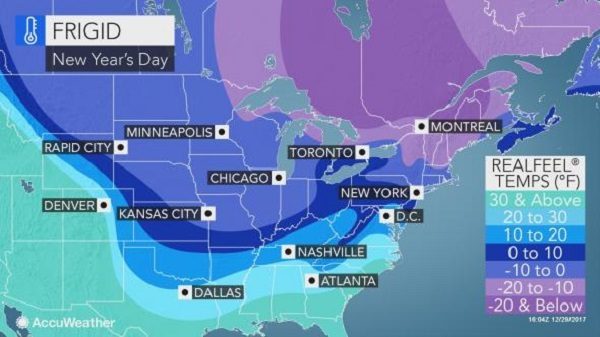
Cold air rivaling that of the past 100 years for late December and early January will make it painful to be outdoors and may lead to damage in the central and northeastern Unites States.
AccuWeather RealFeel® Temperatures are projected to be below zero over much of the Northeast and well below zero in much of the Midwest.
In the coming days, RealFeel temperatures 5 to 20 degrees below zero will be common. In the northern tier, RealFeel temperatures may dip as low as 30 to 40 degrees below zero.
Most low temperature records from the northern and central Plains to the mid-Atlantic and New England are likely to remain in tact.
However, in terms of the level of cold, actual temperatures in many locations will be in the lower 5 percentile for all years on record for late December and early January, according to the National Weather Service.
Comment: As Trump said, they could use a bit of that "good old global warming" everyone keeps talking about! See also:
It's getting ready to be seriously cold. Our local birds will be able to handle the weather just fine, but unusually cold weather will likely bring the birds to feeders in droves. It adds a little short-term stress to their winter lives. This is an opportunity to see some unusual species that normally will be foraging in the woods and brush nearby. If we get a bit of winter precipitation mixed in, the activity will be even more intense.
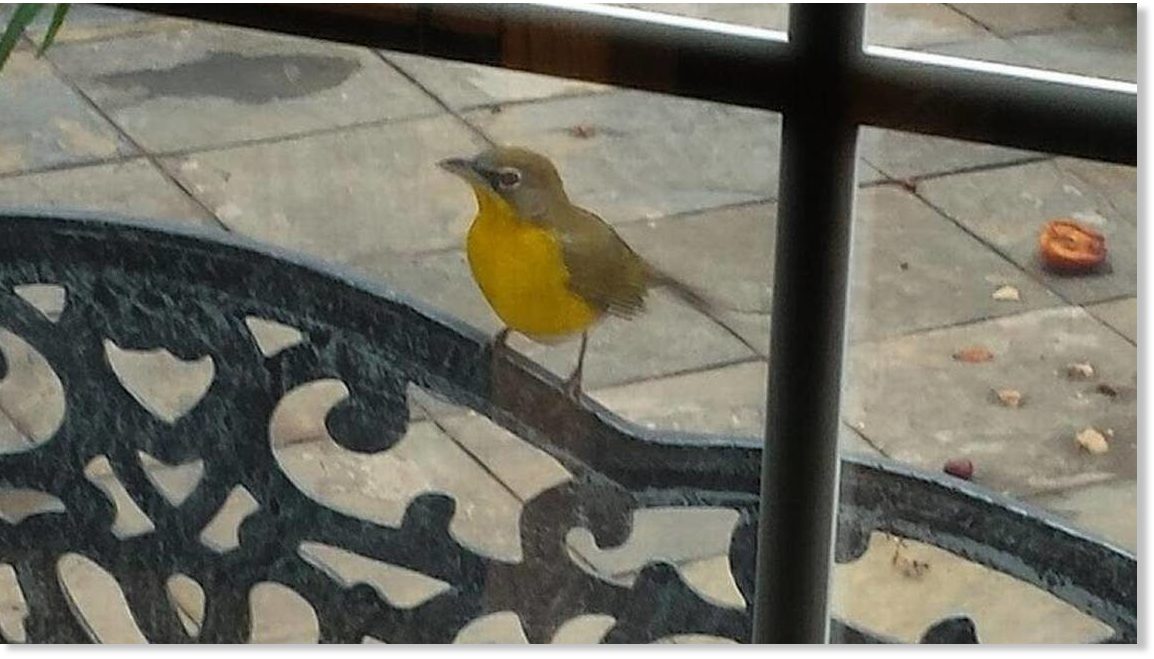
I have already gotten reports of some noteworthy things happening at feeders. In one of the more unusual area occurrences in recent memory, a yellow-breasted chat has been coming to feeders and showing winter territorial behavior by pecking at the host's windows. This is unusual in a couple of ways.
First, there are very, very few winter records of chats in the Piedmont. Coastal birders may encounter one very rarely in early winter, but reports from the Piedmont are almost unheard of. I have seen winter chats only three times, all coastal. There is one record from the Southern Lake Norman Christmas Bird Count from almost 15 years ago. This bird was counted on last week's Charlotte Christmas Count for a first count record.
Comment: See these related articles on the Arctic conditions currently gripping North America: