Earth ChangesS


Attention

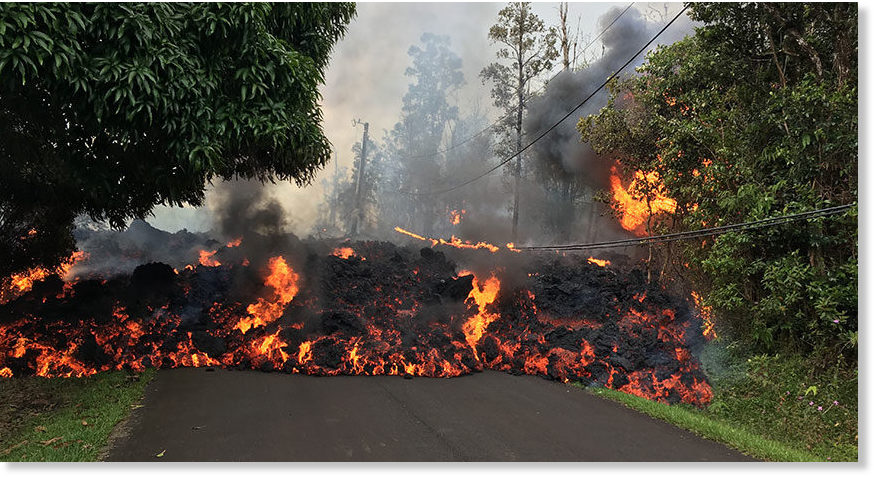
Adapt 2030 Ice Age Report: Possible tsunami threat if Big Island coast slips, eruptions expected at Hawaii's Kilauea volcano

Kilauea volcano fissures
© YouTube/Adapt 2030 (screen capture)
The lava conduit filling the crater with lava at Halemaumau is receding at a steady pace and if it continues it will reach the water table and a steam explosion will occur as in 1924, which sent multi ton boulders miles from the crater and multi pound debris five miles and blanketed the island in ash. This ash will reach the continental USA and Canada. There is a tsunami threat if any part of the slump breaks off and slides in to the Pacific. Break through fissures are continuing in a straight line which is unusual and geologists are puzzled as Pu'u' O vent collapses and no more magma emerges from the vent. Be aware the threats are real and this explosion if it takes place will be the biggest in 100 years.


Comment: See also:


Bizarro Earth

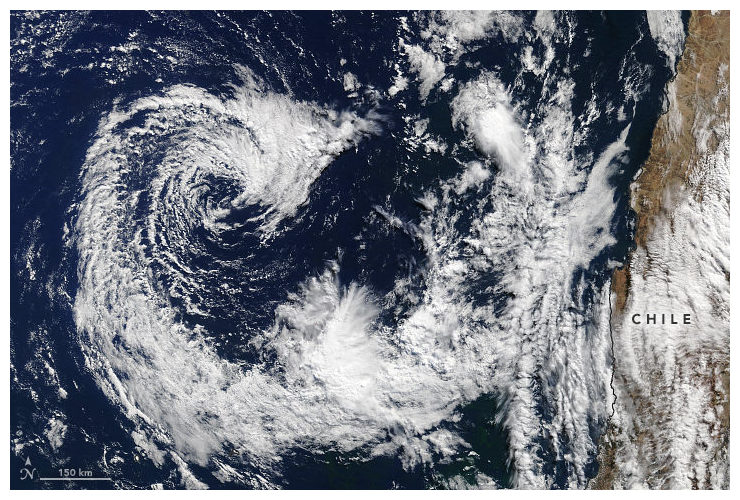
Extremely rare cyclone forms off the coast of Chile

Rare Cyclone off Chile
© MODIS/NASA
An extremely rare cyclone formed in early May 2018 about 160 kilometers (100 miles) off the coast of Chile-an area that almost never sees tropical cyclones. This image was acquired on May 9, 2018, by the Moderate Resolution Imaging Spectroradiometer (MODIS) on NASA's Terra satellite.

Cyclones are not typically found in this region because sea surface temperatures (SSTs) in the southeastern Pacific Ocean are usually too cold. The oceanographic process known as upwelling tends to bring cold water up from the deep ocean along the Chilean coast. (Similar conditions prevail offshore from California in the northern hemisphere.)

Hardhat

Mount Merapi volcano erupts in Java, Indonesia - Airport shut down, residents evacuated

Indonesia's Mount Merapi volcano erupts
The US state of Hawaii is already reeling under the effects of the erupting Kilauea volcano, and now hundreds of residents have been evacuated in Indonesia after Mount Merapi volcano, on the densely populated island of Java, erupted and sent a column of volcanic ash into the atmosphere Friday, May 11.

The disaster mitigation agency asked residents living within a radius of 5 km (3 mile) to move to safer locations and shelters.

After columns of ash and volcanic material as high as 5,500 meter (18,000 ft) were noticed, the airport in Yogyakarta, the nearest big city to the volcano, was also shut down, reported Reuters.


Sun

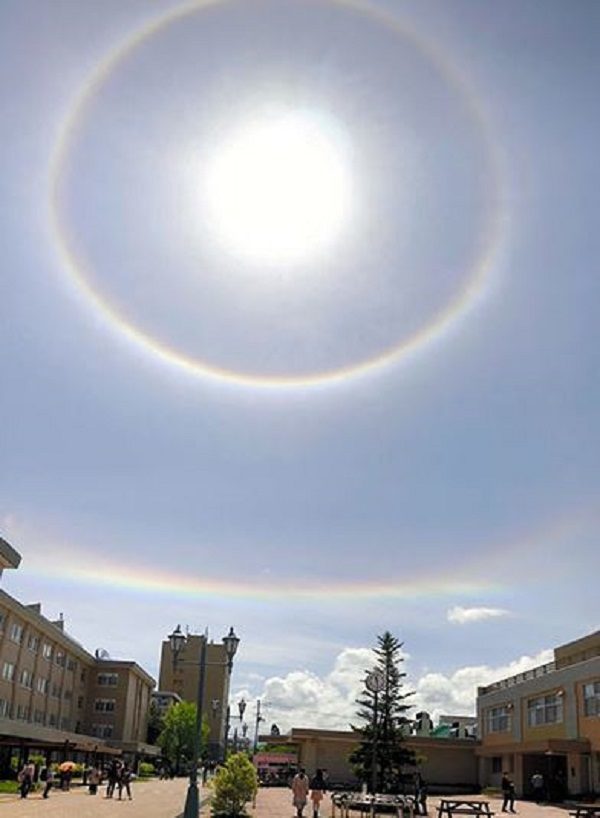
Rare solar show lights up the skies over Aomori Prefecture in Japan

Halo over Japan
© Takuto Usuda
Photos of a rare dual atmospheric phenomenon that produced a ring of light around the sun along with a horizontal rainbow in the skies over the prefecture at around noon on May 7 went viral on Twitter.

"It made me feel so lucky because it's rare to see such a phenomenon," said Takuto Usuda, 21, a fourth-year student at Hirosaki University, who posted photos to Twitter of the colorful spectacle.

It is extremely rare for an horizontal rainbow, known as a circumhorizon arc, and a sun halo, when a circle of light forms around the sun, to be seen in the sky at the same time, according to the Aomori Meteorological Observatory.

Rainbow

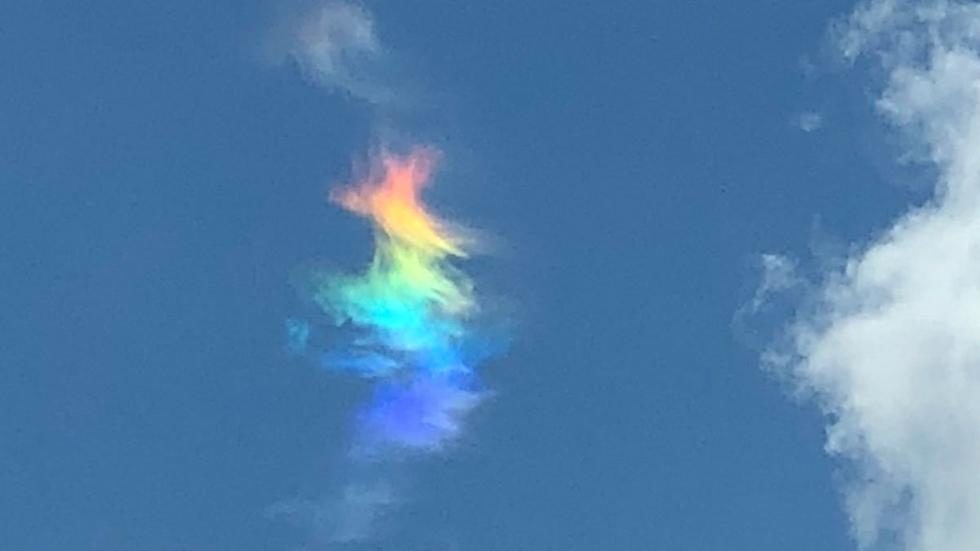
Stunning 'fire rainbow' appears in Kentucky sky

An unusual but spectacular sight, known as a fire rainbow, was spotted near Hazard, Kentucky, on Sunday.
Circumhorizontal arc
© Michael Herald
This phenomenon, which resembles a piece of a brightly colored rainbow, is also known as a circumhorizontal arc.

The name fire rainbow comes from its bright rainbow colors and almost flame-like shape.

Unlike rainbows, circumhorizontal arcs occur from the refraction of sunlight through hexagonal, plate-shaped ice crystals when the sun is 58 degrees above the horizon and no rainfall is involved. Sunlight enters these ice crystals and splits into individual colors, like a prism.

Attention

Volcanologist on future of Kilauea eruption: 'There's likely more to come' and 'Mauna Loa really scares us'

Lava flowing from new fissures along the eastern flank of Hawaii’s Kilauea volcano
© U.S. Geological SurveyCREEPING FIRE Lava flowing from new fissures along the eastern flank of Hawaii’s Kilauea volcano engulfed part of Makamae Street in a housing subdivision on May 6.
A volcanologist tackles that and other burning questions about the Hawaii volcano

Cracks open in the ground. Lava creeps across roads, swallowing cars and homes. Fountains of molten rock shoot up to 70 meters high, catching treetops on fire.

After a month of rumbling warning signs, Kilauea, Hawaii's most active volcano, began a new phase of eruption last week. The volcano spewed clouds of steam and ash into the air on May 3, and lava gushed through several new rifts on the volcano's eastern slope. Threatened by clouds of toxic sulfur dioxide-laden gas that also burst from the rifts, about 1,700 residents of a housing subdivision called Leilani Estates were forced to flee their homes, which sat directly in the path of the encroaching lava.

The event marks the 62nd eruption episode along Kilauea's eastern flank, which is really part of an ongoing volcanic eruption that started in 1983. The volcano is one of six that formed Hawaii's Big Island over the past million years. Mauna Loa is the largest and most central; Kilauea, Mauna Kea, Hualalai and Kohala occupy the island's edges. Mahukona is currently submerged. All six are shield volcanoes, with broad flanks composed of hardened lava flows.

Comment: The continued eruptions, lava flows and accompanying 'vog' are likely to have long term effects on Hawaii and perhaps even be a precursor to major changes around the entire ring of fire. We'll be keeping a close eye on these developments, so continue to check back for updates. See also:


Cloud Lightning

SOTT Focus: SOTT Earth Changes Summary - April 2018: Extreme Weather, Planetary Upheaval, Meteor Fireballs

snow us
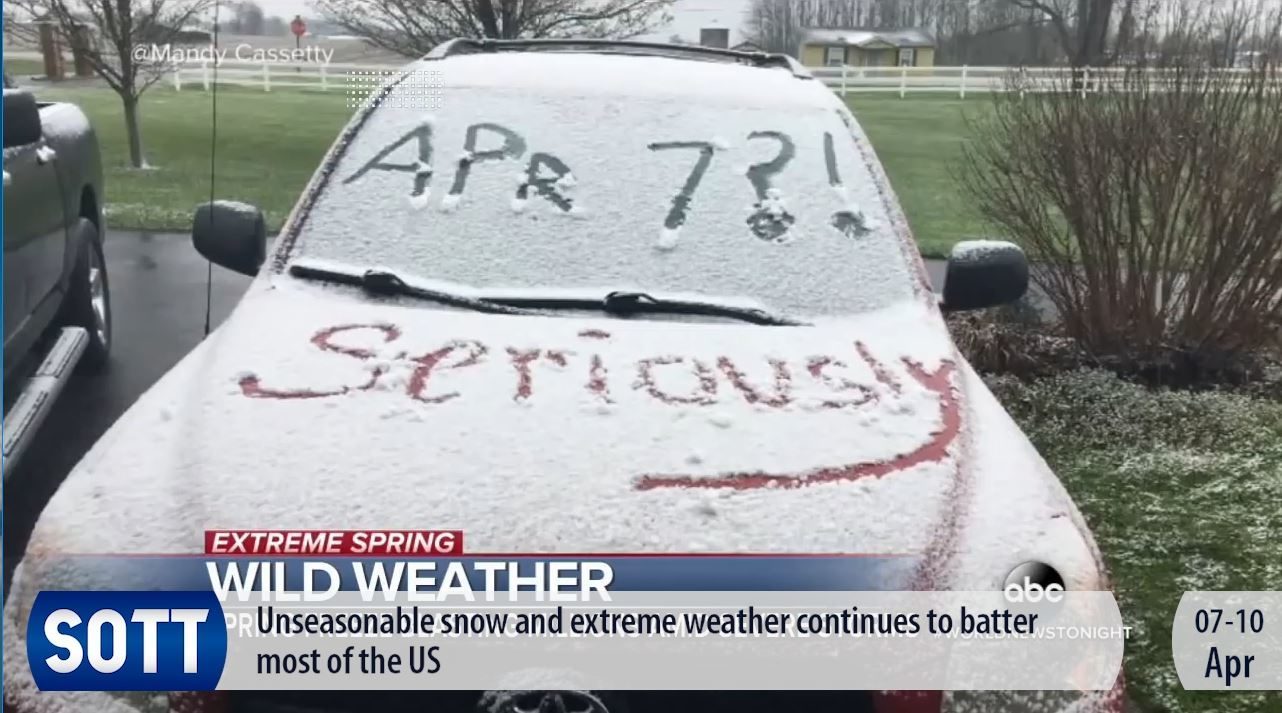
This past April saw record snow for the North, Northeast and the Midwest of the US, together with strong winds and snow-melt flooding, leaving hundreds of thousands without light and damaging homes. Some parts of Europe and Northern Asia also had their share of unseasonable snow and frigid temperatures... yes, all this in April, with spring supposedly well under way.

Sheets of rain, floods and huge hail-stones caused serious problems this April, with the Middle East, Kenya, South Africa, Central America and the South of the US all suffering the consequences.

While many sinkholes still made their appearance around the world, huge cracks in the earth also opened up, alarming many people. Some researchers attribute such cracks to the liquefaction of earth layers below the surface due to heavy rains and floods, but there is also the slow-down in the speed of Earth's rotation and cosmic rays to consider when assessing this upsurge in geological activity... the Earth's crust appears to be 'opening up'.

Volcanic activity in the Ring of Fire also remained high this April, and there is no sign that it will decrease in intensity.

It should always be remembered that the kind of destructive weather patterns we are seeing around the world has a significant damaging effect on crops and livestock, with knock-on effects for the global economy that are yet to manifest.

Check out the madness below!


Comment:
Check out the other recent releases :


Camera

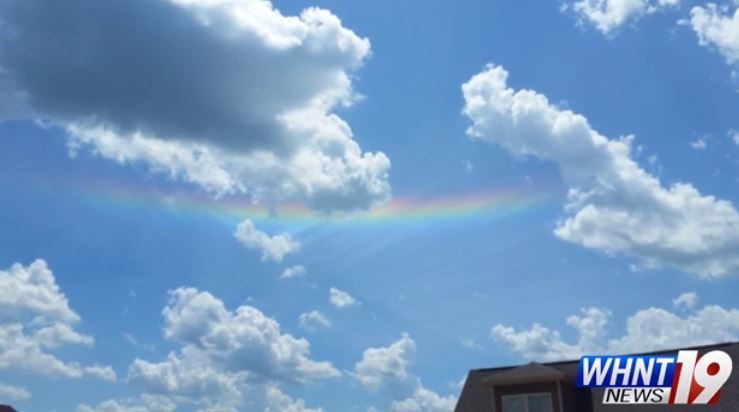
Circumhorizontal arc spotted over northern Alabama

Circumhorizon arc over Alabama
We receive a lot of great photos from our viewers, including pictures of cool phenomena like the circumhorizon arc sent in to us Tuesday afternoon by Willis Brannon!

The circumhorizon arc looks like an upside down rainbow, but it's formed differently. Rainbows occur when light is refracted by water droplets, usually just after rain. Circumhorizon arcs however are one of many halos that can be formed by light's interaction with ice crystals.

Ice crystals are found high in the sky and can refract light into a variety of halos and shapes depending on where the sun is in the sky relative to the ice crystals and what kind of crystals are present. To form a circumhorizon arc the light is refracted by plate crystals oriented so that the light can enter through the plate's side.

Bizarro Earth

Fears growing over possible eruption of Canary Island's Mount Teide, nearly 300 earthquakes have shaken the island within 10 days

Earthquakes Canary Islands
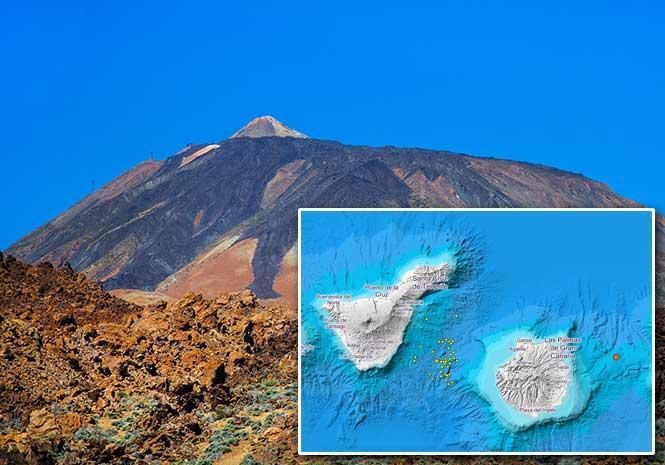
Nearly 300 earthquakes have been recorded in just ten days near Spain’s Canary Islands raising fears of a volcanic eruption.
Stepped-up tremors of unascertained reasons has scared one of the most popular holiday destinations, the Canary islands, ahead of summer high season, raising fears of devastating natural disasters. The local government held an urgent meeting to discuss why might happen.

Almost 300 earthquakes have shaken the territory of the biggest islands of the Canary archipelago, Tenerife and Gran Canaria, over the last ten days. According to the Spanish National Geographic Institute, the biggest one, a 3.2 magnitude on the Richter scale, happened 35 km away from the Port of Las Palmas de Gran Canaria.

The area is the home to the world's third-tallest volcano, Mount Teide and the National Park of the same name, which is one of the most visited tourist destinations, with lots of volcanos.

Cloud Precipitation

Thousands forced from their homes in British Columbia due to historic flood

Flooding in the north of Rock Creek in the Boundary region of the B.C. Interior
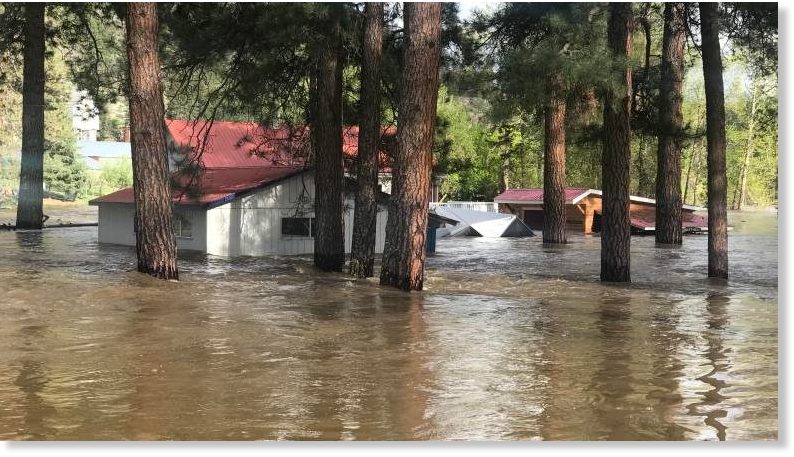
© Brady Strachan/CBCFlooding in the north of Rock Creek in the Boundary region of the B.C. Interior.
Thousands of British Columbians have been forced from their homes by what some officials are calling a once-in-200-years flood.

Swollen rivers in B.C.'s Interior have spilled their banks, leaving valleys dotted with small lakes and changing what is normally the province's prime ranch country into otherworldly, mirrored paddy fields.

In some places, roads have been washed out and the ground under electricity poles has been so eroded that power lines have come down.


Comment: Last week a similar situation arose on the other side of the country: By the numbers: The record-setting flood in New Brunswick, Canada - due to snow melt