Earth ChangesS


Cloud Lightning

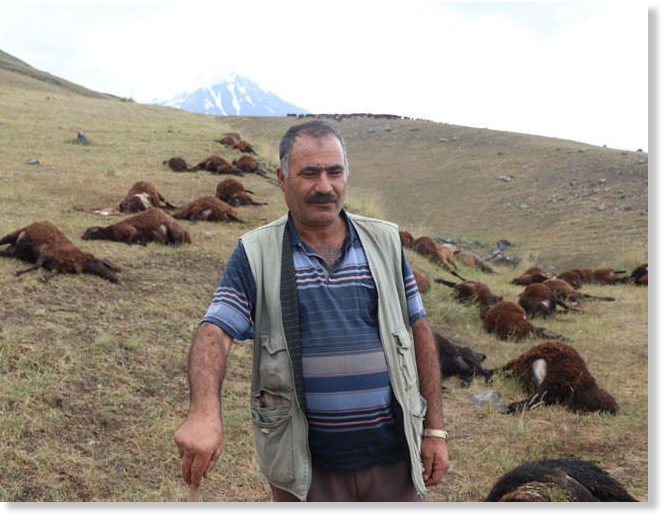
Lightning bolt kills 74 sheep in eastern Turkey

LIGHTNING KILLS SHEEP
A total of 74 sheep were killed by a lightning strike in Turkey's eastern province of Iğdır on July 23.

Two herds of sheep, belonging to a man named Mahmut Biter, were gathered together as protection against the torrential rain while they were out in the field at the 2,000-meter altitude Serbarbulak plateau in the Aralık district.

Lightning struck the animals, killing 74 of them. Saddam Aras, the shepherd, escaped the incident unharmed as he took shelter in a nearby rocky area.

Yusuf Süre, a local farmer, said the lightning caused a substantial financial damage.

In June this year, in a similar incident, 105 goats perished in the Kırkağaç district of the western Manisa province when a lightning struck as the animals were grazing in the field.

And in May, the lightning killed a total of 23 cattle in the Tut district of the southeastern province of Adıyaman.


Source: Anadolu Agency
Cloud Lightning

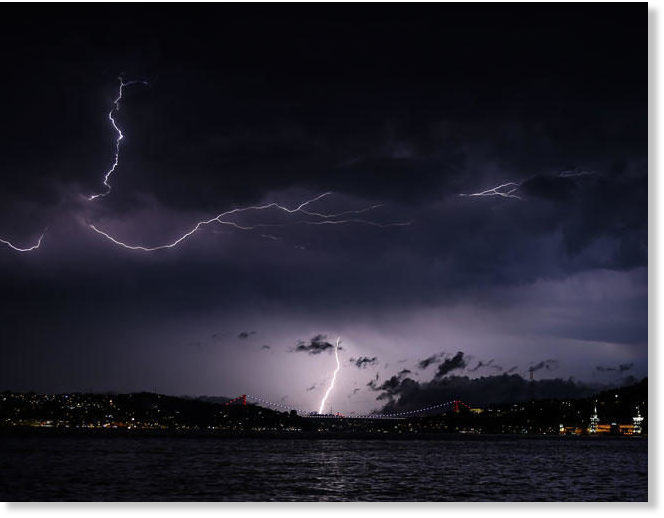
43,388 lightning strikes in 24 hours hit Istanbul region

lightning
Huge thunderclouds caused an electric storm in Turkey's Marmara region, particularly hitting Istanbul with thousands of lightning bolts in the early hours of July 24.

In total 43,388 flashes were observed in 24 hours as of 9 a.m. on July 24 especially in the northwestern provinces of Istanbul, Kocaeli, Edirne and Tekirdağ, according to the Turkish State Meteorological Service.

"There are various types of storms in the air. An electric storm is a phenomenon just like a dust storm, a snow storm or a rain storm ... If the important factor is the wind, we call it a wind storm whereas if the important factors are thunders and thunderbolts we call it a thunderstorm," Miktad Kadıoğlu, a faculty member of the Istanbul Technical University, told Demirören News Agency on July 24.


Fire

Scorched Sweden faces continued "extreme" fire risk in coming days

sweden wildfire 2018
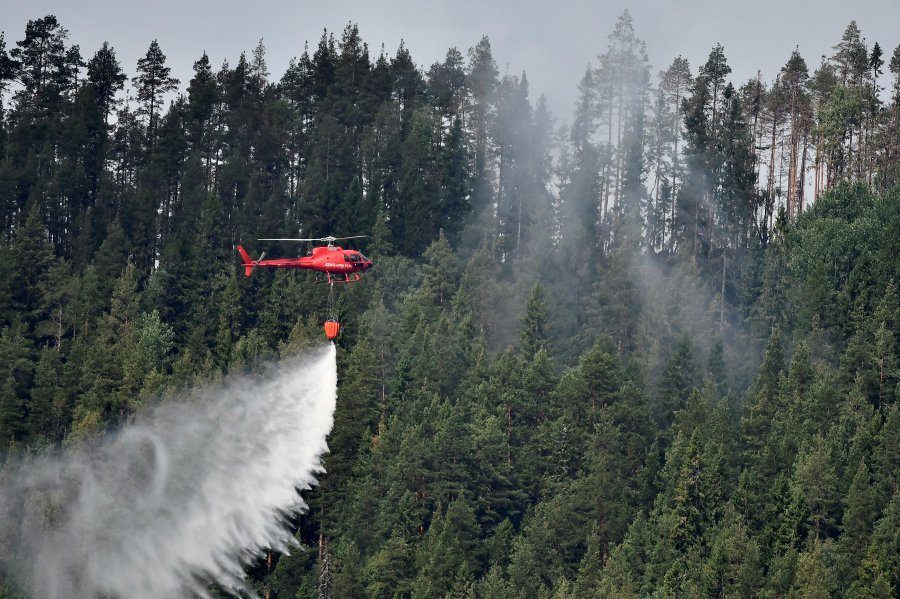
© EPA By AFPA chartered helicopter dumps a load of water ontio a smouldering spot in a forest near the village Grotingen in the Bracke municipality to fight one of many wild fires in central Sweden, 22 July 2018. Sweden meanwhile has called for emergency assistance from the European Union to tackle the dozens of wildfires raging across the country. Italian and French fire fighting planes as well as fire engines from Poland and firefighters from other EU countries joined in the efforts to contain and extinguish the wild fires. July 24, 2018 @ 2:00am
Sweden warned Monday of an "extreme" risk of fresh forest fires as much of Scandinavia baked in a heatwave and dozens of fires hit countries across northern Europe.

Sweden's civil protection agency MSB counted 27 active fires across the country on Monday, half the previous day's number, as temperatures were expected to soar as high as 35 Celsius (95 Fahrenheit) this week.

Other European countries including France, Italy and Germany have sent a mix of plane, trucks and firefighters to help tackle the blazes as Sweden, where usual summer temperatures are closer to 23 Celsius, has struggled to contain the crisis.

Some 25,000 hectares (62,000 acres) of land has already gone up in smoke or continues to burn - an area twice the size of the city of Paris.

Comment: After a brutally cold winter and epic flooding throughout spring, Europe is now on fire:


Sun

"Perfect storm": UK farming crisis as areas suffer worst drought for 225 years

Cracks in the ground on Hampstead Heath, London,
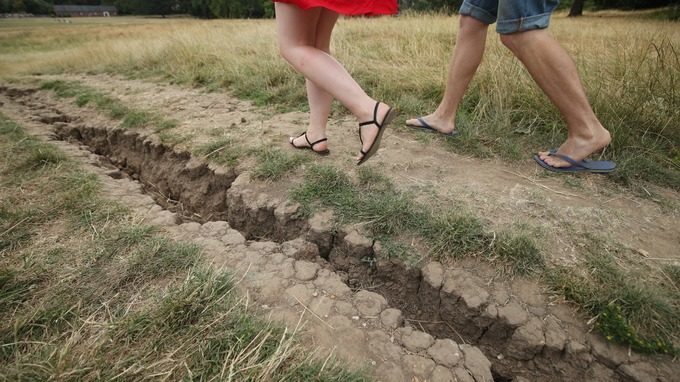
© PACracks in the ground on Hampstead Heath, London, as the hot weather continues across the country.

Britain may be enjoying the summer sunshine now - but the weather could soon have upsetting consequences for the nation's farmers, who are struggling to save both their crops and their animals.

Soaring temperatures have led to a heatwave bringing prolonged dry spells, meaning while Brits basked on the beaches, farmers were manually carrying water to cattle to try to keep them hydrated, on the hottest day of the year so far, on Monday.

Greg Cotterell, of Bank Top farm in Fenny Bentley, said to The Derby Telegraph the well he was forced to manually dug up for his cows is only producing a quarter of what they need.

The drastic way to get water to them was necessary because of the water shortage in seven villages in the area, he revealed.

Cattle are used to grazing on green grass with plenty of water but the drought conditions across the country are causing major problems for farmers

Seismograph

10 shallow and moderate earthquakes strike Southern Oregon coast over 5 hours

Gorda escarpment oregon 10 quakes coast
© USGS
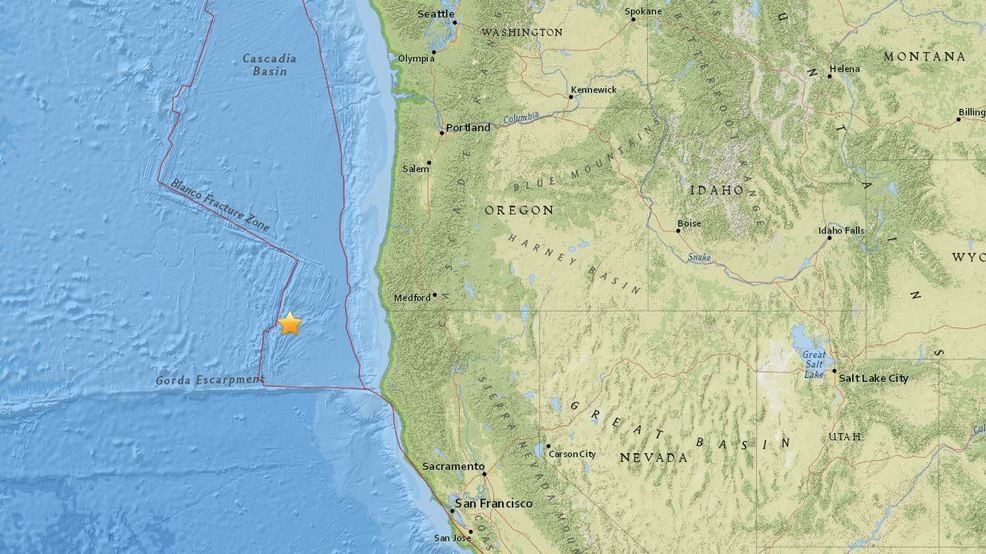
A 4.3-magnitude earthquake was recorded off the Southern Oregon Coast early Tuesday at 5:16 a.m. Within the following hours, nine more earthquakes were recorded in the same area.

The first tremor was detected about 200 miles west-southwest of Pistol River, Oregon, near the Oregon-California border. The next eight were recorded within a few miles of the first and the 10th was only 62 miles west-southwest of Brookings.

Comment: Our planet is experiencing an ominous rise in seismic and volcanic activity, along with a variety of other phenomena such as fissures, landslides and sinkholes:


Arrow Down

At least 3 killed by landslide after incessant rain in Rolpa, Nepal

3 members of a family among 4 killed in Bajhang landslide
At least three people were killed after a landslide buried a shed at Phuldhara in Sunil Smriti-8, of Rolpa district on Monday.

According to the District Police Office, the deceased have been identified as 18-year-old Chameli Pun, 12-year-old Obi Gharti and 18-year-old Hume Gharti. The victims were sleeping inside the shed were when the landslide buried them.

Police said that the landslide triggered by incessant rain of Sunday night buried the shed.

DSP Gyanendra Prasad Phuyal said they are preparing to bring the bodies of the deceased to the district headquarters for post-mortem. The incident site is around 12 kilometres away from Sulichaur, the administrative centre of rural municipality.

A month ago, three people were killed in a landslide at Runtigadhi Rural Municipality in Rolpa.

Red Flag

Flashback Methane time bomb: Study warns of 'apocalyptic' release of Arctic methane

methane
A scientific study published in the prestigious journal Palaeoworld in December issued a dire - and possibly prophetic - warning, though it garnered little attention in the media.

"Global warming triggered by the massive release of carbon dioxide may be catastrophic," reads the study's abstract. "But the release of methane from hydrate may be apocalyptic."

The study, titled "Methane Hydrate: Killer Cause of Earth's Greatest Mass Extinction," highlights the fact that the most significant variable in the Permian Mass Extinction event, which occurred 250 million years ago and annihilated 90 percent of all the species on the planet, was methane hydrate.

In the wake of that mass extinction event, less than 5 percent of the animal species in the seas lived, and less than one-third of the large land animal species made it. Nearly all the trees died.

Bizarro Earth

Flashback Escaping methane blasts blow craters into Siberian tundra

crater
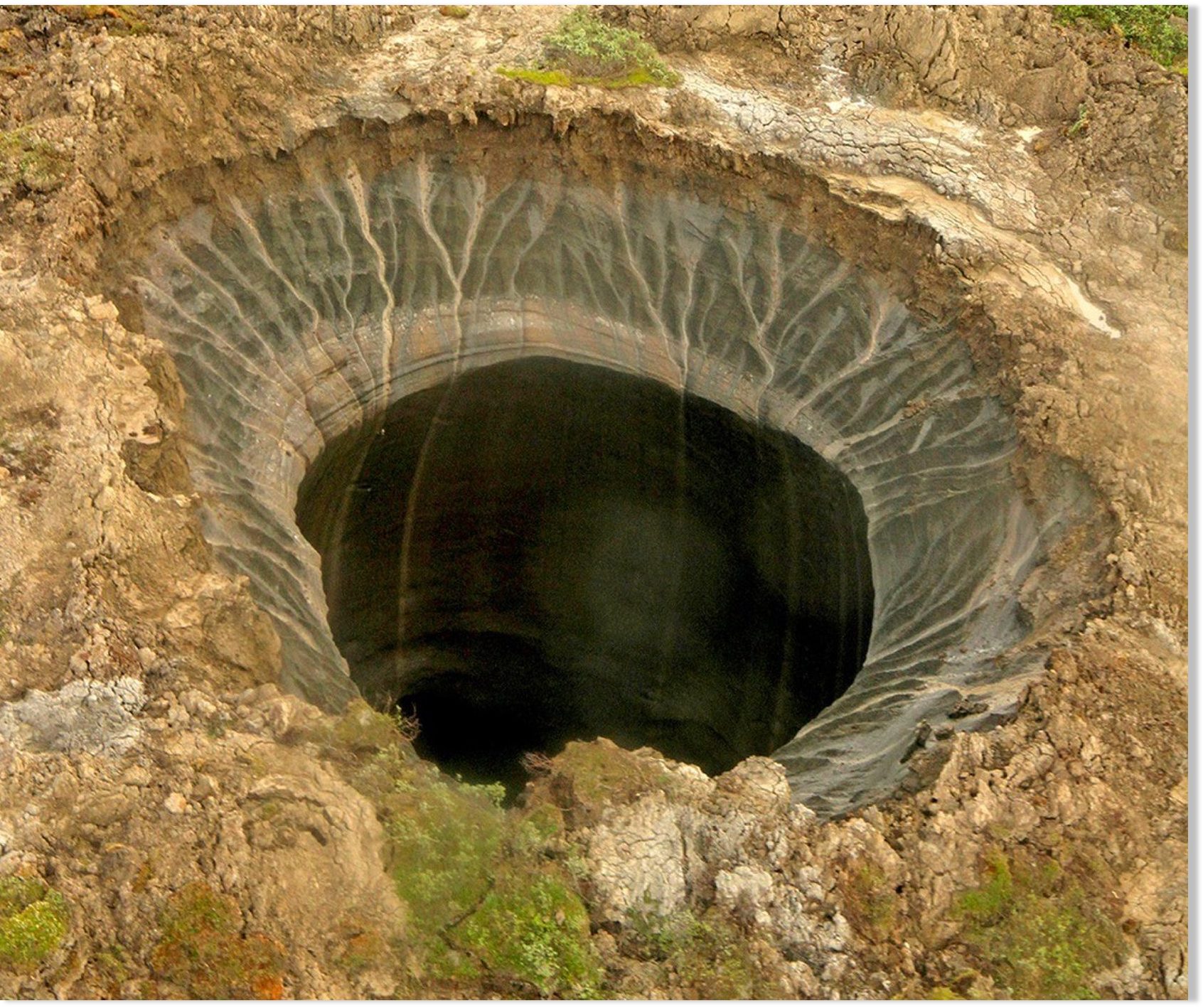
© Itar-Tass/ZumaA crater on the Yamal Peninsula in Siberia, reported in the spring of 2017
Escaping methane gas has blown at least two new holes in the Siberian tundra in the past few months, according to eyewitness accounts to the Siberian Times and the Russian Academy of Sciences.

Reindeer herders northwest of the village of Seyakha in Siberia's far north reported seeing an eruption of fire and smoke on the morning of June 28 - an event caught on seismic sensors at 11 a.m. local time, according to The Siberian Times. Scientists visiting the site photographed a fresh crater blown into the banks of a river.

Researchers also discovered a second, previously unknown crater in the Tyumen region of Siberia this month, the newspaper reported. Local herders told Aleksandr Sokolov, a researcher at the Institute of Ecology of Plants and Animals in Russia, that they'd observed fire in the area of that crater in the winter or early spring.

When permafrost melts, it releases large amounts of methane. According to Russian scientists, this sudden release could have led to the explosions. How fast and how frequently this is happening remain controversial topics in the scientific community, given that Siberia is so remote and unexplored. But scientists do agree that Siberia's permafrost is in danger of melting as the globe warms.

Info

Adapt 2030 Ice Age Report: How did the media overlook this in the northern hemisphere

Resolute Bay, NU
Resolute Bay, NU (Stock photo)
Record heat in Scandinavia brought by the remnants of a warm water hurricane pulled into the atmospheric flow, centering that heat over northern Europe. All the while 2000 miles west, its snowing in Canada with well below normal temperatures. Looking at temperatures across N. America, doesn't seem like the end of the world heat, at all. You decide if what you are being told in the news is true.


Sources

Red Flag

Flashback High levels of methane being released from beneath Canadian Arctic permafrost

methane permafrost
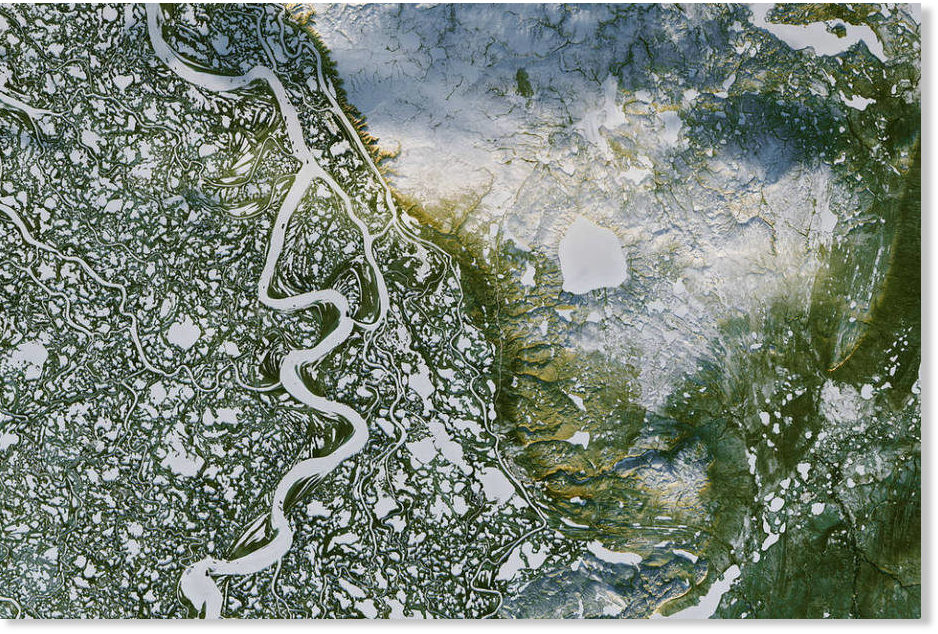
© NASA Earth ObservatoryIn parts of northern Canada's Mackenzie River Delta, seen here by satellite, scientists are finding high levels of methane near deeply thawed pockets of permafrost
Global warming may be unleashing new sources of heat-trapping methane from layers of oil and gas that have been buried deep beneath Arctic permafrost for millennia. As the Earth's frozen crust thaws, some of that gas appears to be finding new paths to the surface through permafrost that's starting to resemble Swiss cheese in some areas, scientists said.

In a study released today, the scientists used aerial sampling of the atmosphere to locate methane sources from permafrost along a 10,000 square-kilometer swath of the Mackenzie River Delta in northwestern Canada, an area known to have oil and gas desposits.

Deeply thawed pockets of permafrost, the research suggests, are releasing 17 percent of all the methane measured in the region, even though the emissions hotspots only make up 1 percent of the surface area, the scientists found.