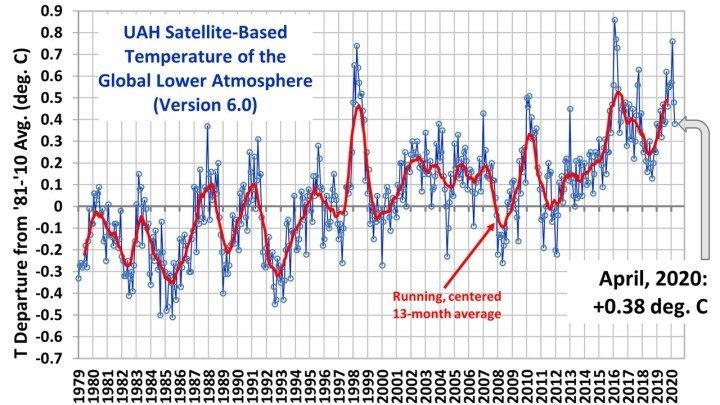
In April, 2020, the Northern Hemisphere experienced its 2nd largest 2-month drop in temperature in the 497-month satellite record.
The Version 6.0 global average lower tropospheric temperature (LT) anomaly for April, 2020 was +0.38 deg. C, down from the March, 2020 value of +0.48 deg. C.
The Northern Hemisphere temperature anomaly fell from +0.96 deg. C to 0.43 deg. C from February to April, a 0.53 deg. C drop which is the 2nd largest 2-month drop in the 497-month satellite record. The largest 2-month drop was -0.69 deg. C from December 1987 to February 1988.
The linear warming trend since January, 1979 has now increased to +0.14 C/decade (but remains statistically unchanged at +0.12 C/decade over the global-averaged oceans, and +0.18 C/decade over global-averaged land).
Various regional LT departures from the 30-year (1981-2010) average for the last 16 months are:
People are flouting coronavirus lockdown and starting fires, warn officials.
Disturbing pictures and video shows the scale of wildfires engulfing Siberia and the Russian Far East after the winter snow melt.
With the government's focus on coronavirus, President Vladimir Putin called for vigilance over the annual challenge from forest and steppe fires worsening due to climate warming.
Emergencies Minister Evgeny Zinichev warned in a video conference with the president that a combination of factors now poses a threat to many regions of Russia.
Looking at the horizon of life, protein shortages in both beef and pork send prices to record levels, precious metals fetching premiums well over spot price and Scotia Bank in the metals business since 1684 closes and RippleNet central bank digital currency in play. Should I even mention wheat planting in the USA at 1909 levels?
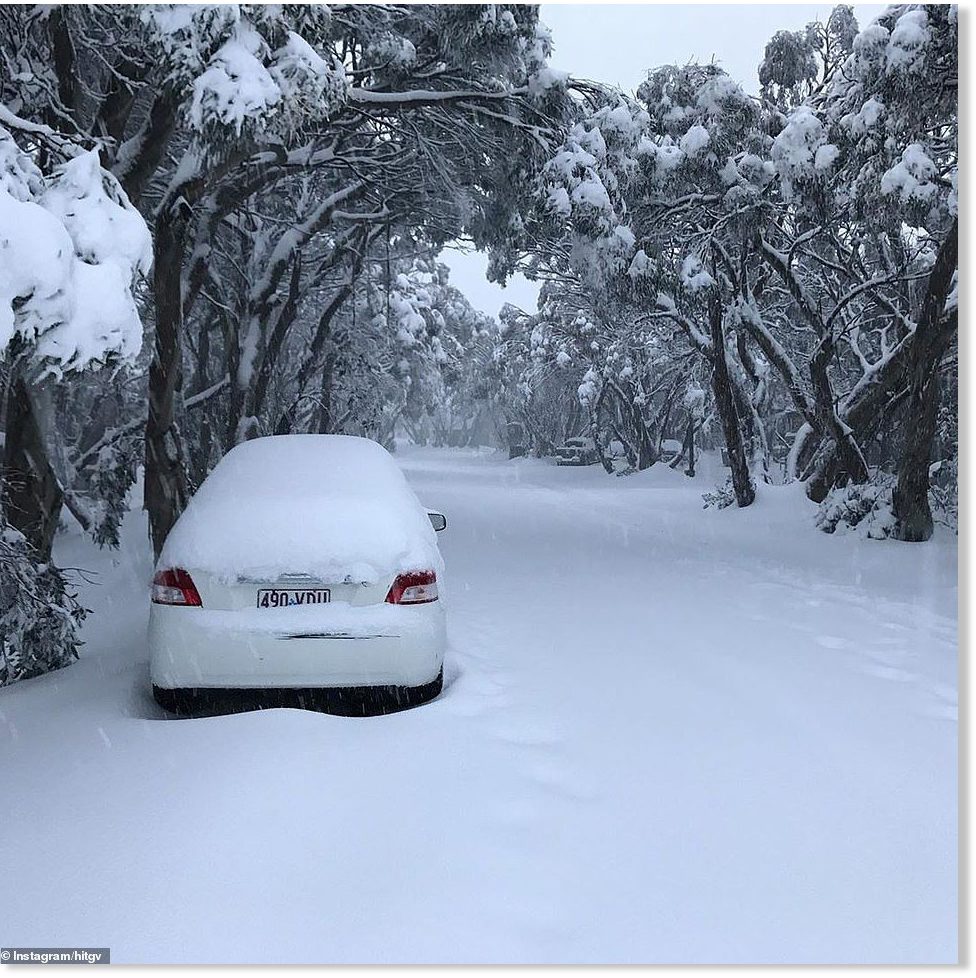
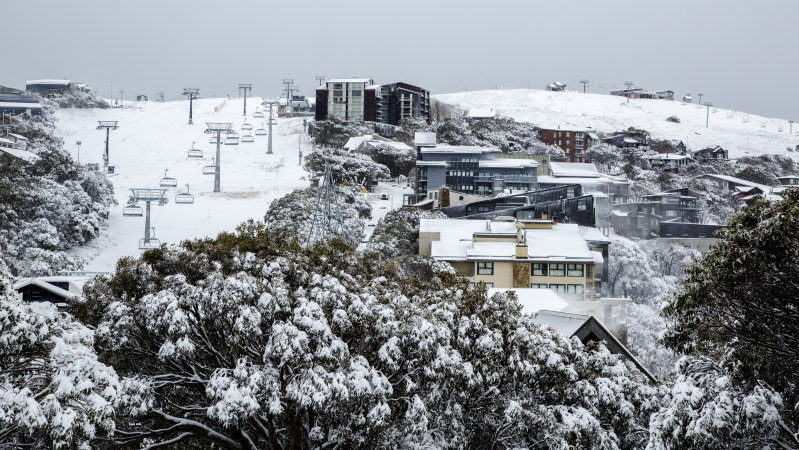
Snow blankets a road in Mount Buller in Victoria with footprints seen on the path. Blizzard conditions are expected across all of the state’s Alpine region, bringing up to 50cm of snow by the weekend
Parts of Australia will shiver through the coldest-ever start to May with temperatures below zero as an icy front originating from Antarctica sweeps the country.
People in New South Wales, Victoria, Tasmania, ACT, South Australia and even Queensland woke up to chilly temperatures on Friday morning - and it's set to get even colder over the next week.
'At the moment, we have a very cold outbreak across the south east from well south of the country from the Antarctic,' the Bureau of Meteorology's Dean Narramore said.
'It's one of those cases where all of the ingredients are coming together for a very cold outbreak.
An ozone hole over the Arctic that was the largest ever recorded there has closed, according to the Copernicus Atmosphere Monitoring Service (CAMS). And its beginning and end have nothing to do with climate change, global warming or a reduction in air pollution because of the coronavirus pandemic.
CAMS monitored the rather unusual ozone hole that formed over the Arctic this spring and was reported closed April 23. Ozone holes are more common over the Antarctic every year, according to CAMS, but "the conditions needed for such strong ozone depletion are not normally found in the Northern Hemisphere."
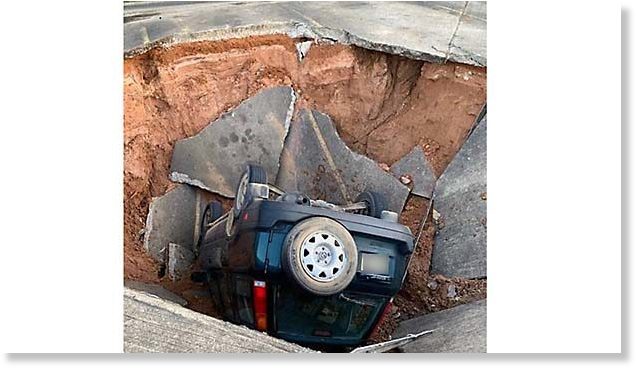
A sinkhole emerged in the back parking lot of the Oxford (Mississippi) Post Office on Thursday morning, damaging one vehicle in the process.
The incident took place around 6 a.m., according to witnesses. The vehicle belonged to a post office employee, but was empty at the time it fell in and no injuries were reported, according to Oxford Police Chief Jeff McCutchen.
McCutchen noted the size of the sinkhole was at least "12 feet by 12 feet," if not larger, and similar to the sinkhole that emerged on Highway 6 East before the Chucky Mullins Drive exit in 2015.
Daily headlines warn of food shortages and constraints, you should heed the warnings and grow your own. As the economy evaporates messages continue to fill the airwaves that stability will return next month, all the while elites slither off to their bunkers as the 2024 planetary alignment is set to bring extreme volcanism and global liquefaction. FYI: Romania has halted all grain shipments, Russia followed, what country is next?
Comment: The coronavirus crisis, in addition to earth changes affecting crop growth, and the losing value of currency which is set to get much worse in Western nations in particular, have made the production, availability, purchasing and distribution of food - a MAJOR global issue the likes of which we haven't seen in generations.
Melbourne has had its wettest April since 1960 and its wettest start to the year since 1924, as unseasonably low temperatures brought snow to the state's ski resorts.
More rain has fallen on the city in the first four months of the year than in the whole of last year, bringing much-needed relief to parched farmland on its outskirts.
Some 138 millimetres of rain fell in Melbourne in April, with the city set for 15 millimetres on the first day of May. In April 1960, 195 millimetres fell in Melbourne.
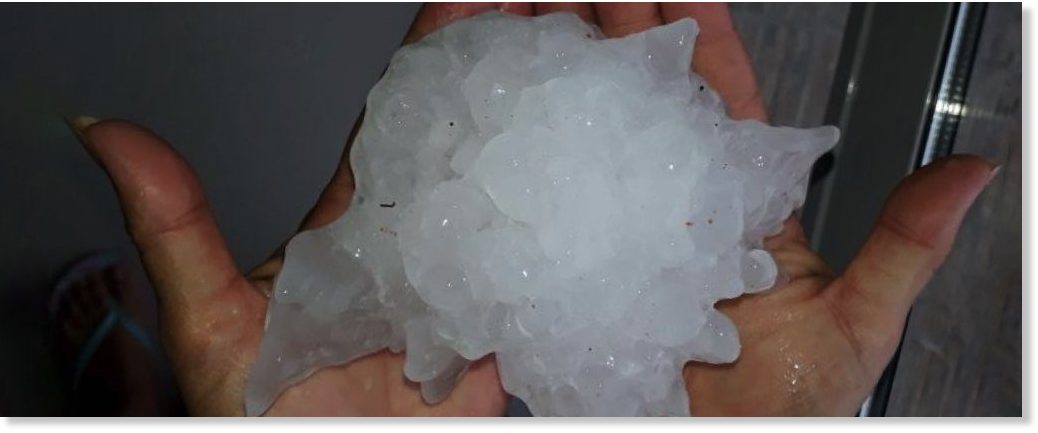
The hailstone is so massive it even stunned meteorologists.
"It's incredible," said meteorologist Matthew Kumjian from Penn State University in the US. "This is the extreme upper end of what you'd expect from hail."
The hefty ice lump smashed down from a supercell thunderstorm in Argentina two years ago, in the heavily populated town Villa Carlos Paz. In a recently published study, Kumjian and colleagues have concluded the hailstone is possibly the largest ever recorded - estimated to be up to 23.7 centimetres (over 9 inches).
However, as its dimensions were only gleaned from video evidence (below, 11 seconds in), and not direct measurements, they can't conclusively say it's the largest to be recorded.
Several houses have been destroyed by the hailstorm in Chhattisgarh's Pendra-Marwahi district.
Massive rains, accompanied by hailstorm wreaked havoc on the residents of Chhattisgarh's Pendra-Marwahi district last week. Tennis ball-sized hailstones landed everywhere, resulting in loss of property and damage to the crops. Videos and photos of big hailstones made the rounds on social media. People shared pictures of cars and sheds damaged in the hailstorm.
Even though the rain brought relief to the people, many people living in mud houses and huts had to face difficulties due to the hailstorm. A white layer of hailstones started appearing everywhere. Pictures shared on Twitter showed a car was badly damaged and a shed destroyed by the hailstones.
"A hailstorm in #Chhattisgarh - just look at the size of the hailstones and the damage it has caused! This was a couple of days in the Pendra area of the state!" a Twitter user Ananth Rupanagudi wrote on Twitter along with pictures of the hailstones and the damage caused by them.
Comment: See also: