Science of the Spirit
Niobe Way was a teenager when her younger brother Lucan had a terrible falling out with his best friend. John lived just across the street; the two boys were inseparable. One day her mother caught the boys cutting up a treasured childhood rag doll. She read both of them the riot act and then some. John slunk off.
Seven, eight times after, Lucan would knock on John's door. But he would always be told that John was not home or did not want to see him. The boys' rupture shook Lucan deeply. Even as a happily married adult, he does not like to talk about, as Dr. Way recounts, "the boy who broke his heart."
A study conducted by Daniel Bartels, Columbia Business School, Marketing, and David Pizarro, Cornell University, Psychology found that people who endorse actions consistent with an ethic of utilitarianism - the view that what is the morally right thing to do is whatever produces the best overall consequences - tend to possess psychopathic and Machiavellian personality traits.
In the study, Bartels and Pizarro gave participants a set of moral dilemmas widely used by behavioral scientists who study morality, like the following: "A runaway trolley is about to run over and kill five people, and you are standing on a footbridge next to a large stranger; your body is too light to stop the train, but if you push the stranger onto the tracks, killing him, you will save the five people. Would you push the man?" Participants also completed a set of three personality scales: one for assessing psychopathic traits in a non-clinical sample, one that assessed Machiavellian traits, and one that assessed whether participants believed that life was meaningful. Bartels and Pizarro found a strong link between utilitarian responses to these dilemmas (e.g., approving the killing of an innocent person to save the others) and personality styles that were psychopathic, Machiavellian or tended to view life as meaningless.
"One big difference between people who think intelligence is malleable and those who think intelligence is fixed is how they respond to mistakes," says Jason S. Moser, of Michigan State University, who collaborated on the new study with Hans S. Schroder, Carrie Heeter, Tim P. Moran, and Yu-Hao Lee. Studies have found that people who think intelligence is malleable say things like, "When the going gets tough, I put in more effort" or "If I make a mistake, I try to learn and figure it out." On the other hand, people who think that they can't get smarter will not take opportunities to learn from their mistakes. This can be a problem in school, for example; a student who thinks her intelligence is fixed will think it's not worth bothering to try harder after she fails a test.
For this study, Moser and his colleagues gave participants a task that is easy to make a mistake on. They were supposed to identify the middle letter of a five-letter series like "MMMMM" or "NNMNN." Sometimes the middle letter was the same as the other four, and sometimes it was different. "It's pretty simple, doing the same thing over and over, but the mind can't help it; it just kind of zones out from time to time," Moser says. That's when people make mistakes - and they notice it immediately, and feel stupid.
When the Christian missionaries of the last three or four centuries were evangelizing so-called "primitive people", they believed that they had only to destroy or burn the various cult objects of these people in order to eradicate their religions, superstitions, and customs.
Centuries after the conquistadors tried to stamp out the Inca culture, or the Inquisition tried to stamp out the protestant 'heresies', or the similar attempts to annihilate the Voodoo, or the many African and Asian religions, we know that such arrogant high-handedness does not work. These beliefs still continue today, sometimes under different guises, long after the objects of worship associated with them have been destroyed.
This lesson from history is not only valid for primitive people and their religions. It can equally be applied - if not more so - to aspects of our own modern society. Indeed, even a superficial study of contemporary culture will reveal that the supposed secularization of present day society is just an illusion. Even though most people do not conform to the outward show of religious custom and practice - mostly Judeo-Christian in western culture - the beliefs and superstitions remain deeply embedded in their subconscious, influencing many aspects of their daily lives without them realizing it.
And as several sociology studies have shown, the superstitious beliefs that used to be attached to the formal religions have in many cases simply been transferred to other objects, persons or events. The daily evening television news bulletins, watched by millions worldwide in their respective countries, the stars of show business and sport, humanitarian associations, cults and all sorts of other things in modern life, these have now become the new gods we venerate or fear, or the shrines at which we worship or curse, and where we still experience those primitive religious urges and feelings, where we can believe without necessarily having to think or rationalize.
The researchers, led by Hailan Hu from the Chinese Institute of Neuroscience, discovered that in social dominant mice, there were stronger electrical connections occurring in the medial prefrontal cortex, or mPFC, of the brain. This study was designed to test just what impact this activity had on social ranking.
To begin, the researchers had to determine which mice were the social dominant mice. Using a clear two, a mouse was placed at either end. The more dominant mouse would push through to get to the other end while the subordinate mouse would retreat.
"at what point does the personal sacrifice become too great?As one of our forum members succinctly put it: "A day without GLP is like a day without diarrhea." This website, more than any other, has played host to the most puerile, vicious slander and egregious defamation against Laura Knight-Jadczyk and her work, including this website, for nearly a decade. Others have connected the sinister dots behind this "conspiracy forum" that point to its being psy-ops...
when you put the life of my friends and family at risk.
I will not allow this website to cause my friends and family to live in fear
you won
hope you are happy
the last light of the world has been extinguished."

In a recently screened BBC documentary, UK neuroscientists suggested that the brains of Apple devotees are stimulated by Apple imagery in the same way that the brains of religious people are stimulated by religious imagery.
People have often talked about "the cult of Apple", and if a recent BBC TV documentary is to be believed, there could be something in it.
The program, Secrets of the Superbrands, looks at why technology megabrands such as Apple, Facebook and Twitter have become so popular and such a big part of many people's lives.
In the first episode, presenter Alex Riley decided to take a look at Apple. He wanted to discover what it is about the company that makes people so emotional. Footage of the opening of the Cupertino company's Covent Garden store in central London last year showed hordes of Apple devotees lining up outside overnight, while the staff whipped up customers (and themselves) into something of an evangelical frenzy. This religious-like fervor got Riley thinking - he decided to take a closer look at the inside of the head of an Apple fanatic to see what on earth was going on in there.
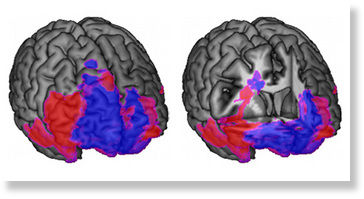
Riley contacted the editor of World of Apple, Alex Brooks, an Apple worshipper who claims to think about Apple 24 hours a day, which is possibly 23 hours too many for most regular people. A team of neuroscientists studied Brooks' brain while undergoing an MRI scan, to see how it reacted to images of Apple products and (heaven forbid) non-Apple products.
According to the neuroscientists, the scan revealed that there were marked differences in Brooks' reactions to the different products. Previously, the scientists had studied the brains of those of religious faith, and they found that, as Riley puts it: "The Apple products are triggering the same bits of [Brooks'] brain as religious imagery triggers in a person of faith."
As documented herein, an unbiased review of Ross' activities overwhelmingly supports the conclusion that Ross systematically engages in anti-social and often illegal activity and disguises this in the name of "help." "Deprogramming," which appears to be his main source of income, is such an activity.
In recent years, psychologists have used moral dilemmas like this one to explore the way human beings think about morality. Only about 10% of people, they tend to find, make the rational, utilitarian choice (in this case, killing one man to save five); the other 90% choose to abide by moral rules (here, "Thou shalt not kill"), no matter the consequences. Most psychologists have focused their energy on figuring out why 90% of people make the non-rational choice. But in a new paper, published this summer in Cognition, psychologists Daniel Bartels and David Pizarro ask the opposite question: What's up with the 10% of people who are willing to push an injured man overboard? In "The Mismeasure of Morals: Antisocial personality traits predict utilitarian responses to moral dilemmas," Bartels and Pizarro arrive at an uncomfortable truth: People who make rational, utilitarian moral choices also tend to have "psychopathic traits."
Comment: This is likely one more reason why psychopaths are very well represented at higher levels of power.
Who Does That? Part 1
Part of our goal at The Institute is not only to help survivors heal from the aftermath of a PLR (Pathological Love Relationship), but it is also to help prevent future relationships with pathologicals. In prevention, The Institute helps survivors to spot overt glaring pathology. The overt pathology is easy to identify.
These forms of pathology are recognizable by most of society and many would agree that these people are horribly disordered and probably dangerous for life.
- Few would argue that mothers who drown their children like Susan Smith or Andrea Yates aren't terribly disordered.
- Those that shoot people they don't know or commit a drive by shooting like the Beltway Snipers Muhammad and Malvo in the Washington D.C. and Virginia areas clearly have pathological motives.
- Those that sexually abuse children and hide the sexual offender like the Catholic Church are the face of evil.
- Horrendous hate crimes that torture hundreds, thousands, or millions of people like war crimes or the Holocaust are pretty easy to figure that severe pathology is behind the motivation of hate like that.
- Or the deranged that break into homes to beat the elderly for money like Phillip Garrett who terrorized those in assisted living facilities have a notable bent of sheer brutality.
- Terrorists who commit the taking of hostages and psychological torture like the infamous Stockholm Bank Robbery (resulting in the term Stockholm Syndrome) are identifiable as probable psychopaths.
- The rapist who preys on the vulnerable or the type of rapist who rapes a wife in front of her own husband is overtly vile.
- Or the violent anti-socials that are frequent gang members or thugs like James Manley who murdered my father.
- Serial killers like Ted Bundy who raped and killed at least 36 women leave no doubt that he was the worst of the worst psychopaths.
- Or the ordering of killing a pregnant woman and her unborn child like schizophrenic/psychopathic Charlie Manson makes our blood run cold.
- Cult leaders who lead hundreds to death like Jim Jones remind us of the power and persuasion of pathology.
- Chronic re-offending domestic violence abusers like O.J. and Mike Tyson convince us that all DV is not treatable and some abuser brutality increases with each crime and are obviously disordered.
- The babbling grandiosity of narcissism as seen in Charlie Sheen reminds us that even the rich and famous carry and display their pack of pathology for all to see.
- Or the robbing of millions of dollars from thousands of people like Bernie Madoff reminds us that not all pathology is physically violent, some do it with panache and a tie on.
But being able to spot pathology in less overt and even frequently hid, yet equally as damaging acts, is where most of us fall short-even professionals in the criminal justice and mental health systems. It's also where survivors of PLR's are likely to trip up yet again since the 'types' of behaviors pathologicals perpetrate can vary causing confusion to the unsuspecting, highly tolerant and emotionally understanding survivor.