Science of the SpiritS


Info

Brain's Decision-Making Spot Found

Brain
© Shutter/VLADGRIN
Damage to the brain's frontal lobe is known to impair one's ability to think and make choices. And now scientists say they've pinpointed the different parts of this brain region that preside over reasoning, self-control and decision-making.

Researchers say the data could help doctors determine what specific cognitive obstacles their patients might face after a brain injury.

For the study, neuroscientists at the California Institute of Technology (Caltech) examined 30 years worth of data from the University of Iowa's brain lesion patient registry and mapped brain activity in almost 350 people with lesions in their frontal lobes.

They linked these maps with data on how each patient performed in certain cognitive tasks.

With this information, the researchers could see exactly which parts of the frontal lobe were critical for different tasks like behavioral control (refraining from ordering a chocolate sundae) and reward-based decision making (trying to win money at a casino), a statement from Caltech explained.

Heart

Flashback Mind your body: Higher road to relaxation

kids at beach
© Unknown
You're under pressure. Deadlines are looming. Everyone is making demands on your time. Your anxiety level is rising. Your stomach is in knots. So you do what you've been well-trained to do. You make sure you get in your gym time.

But if neuroscientist Steven W. Porges is right, there's an even better way to counter stress. Exercise has its uses, but as a stress fighter it works primarily at a visceral level - and the operative word is fight. You're basically combating excess levels of cortisol, the hormone that spreads news of danger through your body and readies it to fight or flee.

You're better off working through higher - and more direct - channels, like the brain. The most efficient stress-reducer might just be a smile. Engaging socially with others triggers neural circuits that calm the heart, relax the gut, and switch off fear, Porges says.

Comment: There are others methods that naturally stimulate vagus nerve for relaxation.Éiriú Eolas stress-control, healing, rejuvenation Program is a proven program that stimulates the vagus nerve to control stress, pain relief and rejuvenate body/mind


Attention

Ethnic and political violence increases children's aggressive behavior

Ethnic and political violence in the Middle East can increase violence in families, schools, and communities, which can in turn boost children's aggressiveness, especially among 8-year-olds. Those are the findings of a new study that examined children and their parents in the Middle East.

"The study has important implications for understanding how political struggles can spill over into the everyday lives of families and children, and suggests that intervention might be necessary in a number of different social areas to protect children from the adverse impacts of exposure to ethnic-political violence," according to Paul Boxer, associate professor of psychology at Rutgers University and adjunct research scientist at the University of Michigan, who led the study.

The study, published in the journal Child Development, was conducted by researchers at Rutgers University, the University of Michigan, Bowling Green State University, Hebrew University of Jerusalem, the Palestinian Center for Survey and Policy Research, and the New School for Social Research.

Magic Wand

Mysterious Brain Region Processes Life, Death Information

Image
© Unknown
A mysterious region deep in the human brain could be where we sort through the onslaught of stimuli from the outside world and focus on the information most important to our behavior and survival, Princeton Univ. researchers have found.

The researchers report in the journal Science that an area of our brain called the pulvinar regulates communication between clusters of brain cells as our brain focuses on the people and objects that need our attention. Like a switchboard operator, the pulvinar makes sure that separate areas of the visual cortex - which processes visual information - are communicating about the same external information, explains lead author Yuri Saalmann, an associate research scholar in the Princeton Neuroscience Institute (PNI). Without guidance from the pulvinar, an important observation such as an oncoming bus as one is crossing the street could get lost in a jumble of other stimuli.

Saalmann says these findings on how the brain transmits information could lead to new ways of understanding and treating attention-related disorders, such as attention deficit hyperactivity disorder (ADHD) and schizophrenia. Saalmann worked with senior researcher Sabine Kastner, a professor in the Department of Psychology and the Princeton Neuroscience Institute; and PNI researchers Xin Li, a research assistant; Mark Pinsk, a professional specialist; and Liang Wang, a postdoctoral research associate.

Info

Multiple Personality Disorder Doubted

Richard McNally
© Kris Snibbe/Harvard Staff Photographer“Ultimately, this disorder is a way of expressing distress,” said Harvard Professor of Psychology Richard McNally. “What we have shown is that a fundamental idea behind the concept of DID — that there is amnesia between identities — there’s no convincing evidence for that.”
It's one of the most common plot twists in Hollywood - caught red-handed, the murderer claims to suffer from multiple personality disorder, says he has no memory of the crime, and points the finger at an alternate personality.

A new study, however, suggests such a scenario belongs strictly to the realm of fiction.

The study - conducted by Harvard's Richard J. McNally, Rafaele Huntjens of the University of Groningen, and Bruno Verschuere of the University of Amsterdam - casts doubt on the "amnesia barrier" that has long been a hallmark of what is now called dissociative identity disorder (DID) by demonstrating that patients do have knowledge of their other identities. Huntjens was lead author of the study, which was reported in a paper published in PLoS ONE on July 17.

"Ultimately, this disorder is a way of expressing distress," said McNally, a professor in the Department of Psychology. "What we have shown is that a fundamental idea behind the concept of DID - that there is amnesia between identities - there's no convincing evidence for that."

About a century ago, Morton Prince, a Harvard-educated neurologist working in the Boston area, coined the phrase "multiple personality disorder" to describe the case of Sally Beauchamp, an Arlington woman who appeared to have two personalities.

Reports of DID, which is sometimes confused with schizophrenia, were rare in the 20th century, with only a few dozen cases appearing in the literature. With the publication of Sybil (1973), however, the condition entered the mainstream. The story of Sybil Dorsett, a woman who claimed to have as many as a dozen personalities, became an international sensation. There were two film adaptations.

Magic Wand

Psychologists link emotion to vividness of perception and creation of vivid memories

Image
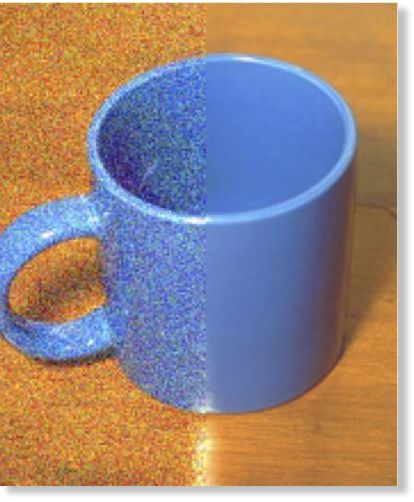
© Rebecca Todd, University of TorontoPsychologists overlaid images with visual noise to measure perception. After accounting for other features of images that contribute to perceptual vividness, such as contrast, color, and scene complexity, they found emotionally arousing images to be perceived more vividly, and thus contributing partly to more vivid memories of certain images later.
Have you ever wondered why you can remember things from long ago as if they happened yesterday, yet sometimes can't recall what you ate for dinner last night? According to a new study led by psychologists at the University of Toronto, it's because how much something means to you actually influences how you see it as well as how vividly you can recall it later.

"We've discovered that we see things that are emotionally arousing with greater clarity than those that are more mundane," says Rebecca Todd, a postdoctoral fellow in U of T's Department of Psychology and lead author of the study published recently in the Journal of Neuroscience. "Whether they're positive - for example, a first kiss, the birth of a child, winning an award - or negative, such as traumatic events, breakups, or a painful and humiliating childhood moment that we all carry with us, the effect is the same."

"What's more, we found that how vividly we perceive something in the first place predicts how vividly we will remember it later on," says Todd. "We call this 'emotionally enhanced vividness' and it is like the flash of a flashbub that illuminates an event as it's captured for memory."

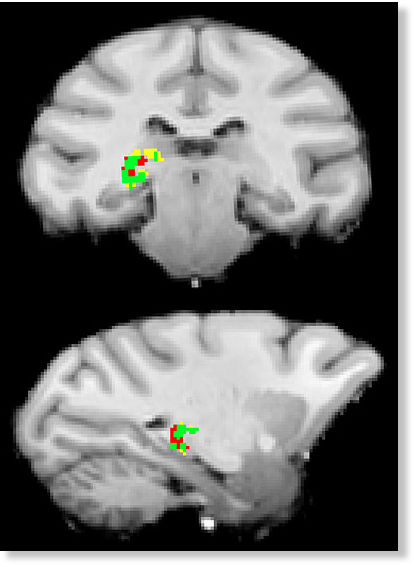
By studying brain activity, Todd, psychology professor Adam Anderson and other colleagues at U of T, along with researchers at the University of Manchester and the University of California, San Diego found that the part of the brain responsible for tagging the emotional or motivational importance of things according to one's own past experience - the amygdala - is more active when looking at images that are rated as vivid. This increased activation in turn influences activity in both the visual cortex, enhancing activity linked to seeing objects, and in the posterior insula, a region that integrates sensations from the body.

"The experience of more vivid perception of emotionally important images seems to come from a combination of enhanced seeing and gut feeling driven by amygdala calculations of how emotionally arousing an event is," says Todd.

Bulb

'Don't be such a crybaby': Young children often know when someone does not deserve sympathy, new study finds

Image
© Unknown
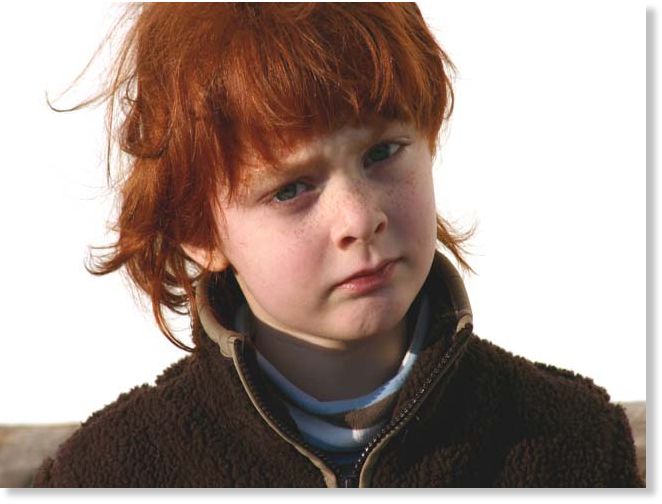
Children as young as 3 apparently can tell the difference between whining and when someone has good reason to be upset, and they will respond with sympathy usually only when it is truly deserved, according to new research published by the American Psychological Association.

"The study provides the first evidence that 3-year-olds can evaluate just how reasonable another person's distressed reaction is to a particular incident or situation, and this influences whether they are concerned enough to try to do something to help," said the study's lead author, Robert Hepach, MRes, of the Max Planck Institute for Evolutionary Anthropology. The study was published online in the APA journal Developmental Psychology.

The experiment involved 48 children, split evenly between girls and boys, from 36 to 39 months old. Researchers recorded reactions of each child as he or she witnessed an adult acting upset in one of three contexts: when the distress was justified, when it was unjustified and when the cause of the distress was unknown, the study said.

For the experiment, two adults met with each child and engaged in various situations in which one of the adults would display distress by frowning, whimpering or pouting. Their distress was in response to specific incidents of apparent physical harm, material loss or unfairness. In each case, the child witnessed the adult either experiencing something that should cause distress or reacting to something that occurred in a similar context but was much less serious. Children who witnessed the adult being upset due to a real harm or injustice showed concern for him, intervened on his behalf and checked on him when he later expressed distress out of their view.

Info

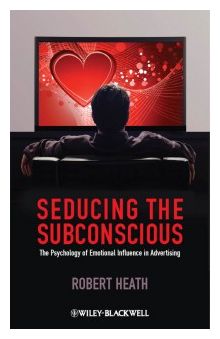
New Book Reveals How Advertising Seduces Our Subconscious

seducing subconscious
© n/aDr Robert Heath's new book explains how we can wise up and reduce the impact of advertising
Choosing to ignore advertising may lend it greater power, reveals a new book which explores how we process advertising - at both a subconscious and semi-conscious level.

Dr Robert Heath, a pioneer in the field of brand communications from the University of Bath's School of Management, explains the hidden power of advertising using the latest research in experimental psychology and cognitive neuroscience.

His book, entitled Seducing the Subconscious: The Psychology of Emotional Influence in Advertising exposes how much advertising affects our everyday decisions and how little we realise it is happening.

Dr Heath explains why the most successful advertising campaigns are not those we love or hate or those with messages that are interesting or new, but campaigns that are able to effortlessly slip under our radar and influence our behaviour without us knowing.

Dr Heath said: "It may seem counter-intuitive, but the best way to avoid advertising affecting us this way is to embrace it. The more attention you give it, the more you can counter-argue what you see and hear, and the less it will affect you."

"It may be tedious, it may be annoying, and it may make your life a bit uncomfortable. But at least you'll know you haven't been subconsciously seduced."

Comment: For further information see this Sott article: Unplug Yourself: How Advertising and Entertainment Shapes Your Subconscious


Family

Meditation Reduces Loneliness

Image
© byheaven / FotoliaMeditation. A simple meditation program lasting just eight weeks reduced loneliness in older adults.
Many elderly people spend their last years alone. Spouses pass and children scatter. But being lonely is much more than a silent house and a lack of companionship. Over time, loneliness not only takes a toll on the psyche but can have a serious physical impact as well.

Feeling lonely has been linked to an increased risk of heart disease, Alzheimer's disease, depression and even premature death. Developing effective treatments to reduce loneliness in older adults is essential, but previous treatment efforts have had limited success.

What to do? Researchers at UCLA now report that a simple meditation program lasting just eight weeks reduced loneliness in older adults. Further, knowing that loneliness is associated with an increase in the activity of inflammation-related genes that can promote a variety of diseases, the researchers examined gene expression and found that this same form of meditation significantly reduced expression of inflammatory genes.

In the current online edition of the journal Brain, Behavior and Immunity, senior study author Steve Cole, a UCLA professor of medicine and psychiatry and a member of the Norman Cousins Center for Psychoneuroimmunology at UCLA, and colleagues report that the two-month program of mindfulness-based stress reduction (MBSR), which teaches the mind to simply be attentive to the present and not dwell in the past or project into the future, successfully reduced the feelings of loneliness.

Comment: For more information about an easy to use approach to Meditation check out the Eiriu Eolas Stress Control, Healing and Rejuvenation Program here.


Info

Scientists Discover Previously Unknown Cleansing System in Brain


A previously unrecognized system that drains waste from the brain at a rapid clip has been discovered by neuroscientists at the University of Rochester Medical Center. The findings were published online August 15 in Science Translational Medicine.

The highly organized system acts like a series of pipes that piggyback on the brain's blood vessels, sort of a shadow plumbing system that seems to serve much the same function in the brain as the lymph system does in the rest of the body - to drain away waste products.

"Waste clearance is of central importance to every organ, and there have been long-standing questions about how the brain gets rid of its waste," said Maiken Nedergaard, M.D., D.M.Sc., senior author of the paper and co-director of the University's Center for Translational Neuromedicine. "This work shows that the brain is cleansing itself in a more organized way and on a much larger scale than has been realized previously.

"We're hopeful that these findings have implications for many conditions that involve the brain, such as traumatic brain injury, Alzheimer's disease, stroke, and Parkinson's disease," she added.

Nedergaard's team has dubbed the new system "the glymphatic system," since it acts much like the lymphatic system but is managed by brain cells known as glial cells. The team made the findings in mice, whose brains are remarkably similar to the human brain.

Scientists have known that cerebrospinal fluid or CSF plays an important role cleansing brain tissue, carrying away waste products and carrying nutrients to brain tissue through a process known as diffusion. The newly discovered system circulates CSF to every corner of the brain much more efficiently, through what scientists call bulk flow or convection.

"It's as if the brain has two garbage haulers - a slow one that we've known about, and a fast one that we've just met," said Nedergaard. "Given the high rate of metabolism in the brain, and its exquisite sensitivity, it's not surprising that its mechanisms to rid itself of waste are more specialized and extensive than previously realized."

While the previously discovered system works more like a trickle, percolating CSF through brain tissue, the new system is under pressure, pushing large volumes of CSF through the brain each day to carry waste away more forcefully.