Science of the SpiritS


Magic Wand

Rats to solve the mystery of depression

A team of Israeli scientists have experimented on rats to see how they cope with stress, and hope the study would contribute to understanding the cause of human depression and suicide.

Results of the study suggest that while exposure to stress in childhood increases the risk of depression, as one might expect, exposure to stress in adolescence may actually provide protection against depression and suicidal behaviour later in life.

Heart

Why Dogs Really Do Feel Your Pain: Comforting distressed humans may be hardwired in dogs' brains

Image
© Getty ImagesA toddler crying while embracing a foxhound. Dogs may be hard-wired to comfort humans.
Dogs may empathize with humans more than any other animal, including humans themselves, several new studies suggest.

The latest research, published in the journal Animal Cognition, found that pet dogs may truly be man (or woman's) best friend if a person is in distress. That distressed individual does not even have to be someone the dog knows.

"I think there is good reason to suspect dogs would be more sensitive to human emotion than other species," co-author Deborah Custance told Discovery News. "We have domesticated dogs over a long period of time. We have selectively bred them to act as our companions."

"Thus," she added," those dogs that responded sensitively to our emotional cues may have been the individuals that we would be more likely to keep as pets and breed from."

Custance and colleague Jennifer Mayer, both from the Department of Psychology at the University of London Goldsmiths College, exposed 18 pet dogs -- representing different ages and breeds -- to four separate 20-second human encounters. The human participants included the dogs' owners as well as strangers.

Heart

A Top Doc Explains Why Kind Love Beats Tough Love When Treating Addiction

Using punishment to try to rehabilitate people who have already suffered years of punishment doesn't work

Dr. Gabor Mate is renowned in Canada for his work in treating people with the worst addictions, most notably at Vancouver's controversial Insite facility, which provides users with clean needles, medical support and a safe space to inject drugs.

Canada's Conservative government has tried to shut Insite down, but the country's Supreme Court ruled late last year that doing so would contravene human rights laws because the program has been shown to save lives.

In Mate's book In the Realm of Hungry Ghosts: Close Encounters with Addiction, which was a No. 1 bestseller in Canada, he advocates for the compassionate treatment of addiction, a position that is increasingly receiving international attention. Healthland recently spoke with Mate about the causes and consequences of addiction and what to do about the problem.

Maia Szalavitz: How do you define addiction?

Dr. Gabor Mate: Any behavior that is associated with craving and temporary relief, and with long-term negative consequences, that a person is not able to give up. Note that I said nothing about substances - it's any behavior that has temporary relief and negative consequences and loss of control.

When you look at process or behavior - sex, gambling, shopping or work or substances - they engage the same brain circuitry, the same reward system, the same psychological dynamic and the same spiritual emptiness. People go from one to the other. The issue for me is not whether you're using something or not; it's, Are you craving, are you needing it for relief and does it have negative consequences?

Bug

Plants cry for help when an attack can be expected

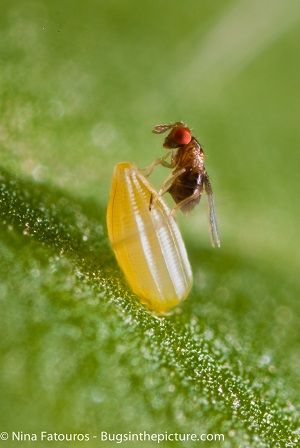
insect egg
© Nina Fatouros
Eggs of insect pests deposited on plants trigger the production of scents by plants that affect different plant community members probably helping the plant to get rid of the pest before it becomes harmful.

These results are reported the journal PLOS ONE by researchers, of the Laboratory of Entomology of Wageningen University and the Netherlands Institute of Ecology (NIOO-KNAW). The research team, led by Nina Fatouros, tested how parasitic wasps, natural enemies of a common cabbage pest, the large cabbage white butterfly, and gravid butterfly females respond to black mustard, a cabbage relative, emitting scents during the initial phase of herbivore attack, when eggs are laid.

They show that butterfly egg deposition triggers highly specific chemical and structural changes in the plant that attract different parasitic wasps attacking either butterfly eggs or caterpillars but repel egg-laying butterflies. However, egg deposition by a less common pest, the cabbage moth, does not trigger such changes. A specific plant response to butterfly egg deposition might help the plant defending itself before actual damage by hatching caterpillars starts.

Magic Wand

How language change sneaks in

Languages are continually changing, not just words but also grammar. A recent study examines how such changes happen and what the changes can tell us about how speakers' grammars work. The study, "The course of actualization", to be published in the September 2012 issue of the scholarly journal Language, is authored by Hendrik De Smet of the University of Leuven /Research Foundation Flanders. Apreprint version is available online here.

Historical linguists, who document and study language change, have long noticed that language changes have a sneaky quality, starting small and unobtrusive and then gradually conquering more ground, a process termed 'actualization'. De Smet's study investigates how actualization proceeds by tracking and comparing different language changes, using large collections of digitized historical texts. This way, it is shown that any actualization process consists of a series of smaller changes with each new change building on and following from the previous ones, each time making only a minimal adjustment. A crucial role in this is played by similarity.

Family

Fathers who sleep closer to children have lower testosterone levels

 father sleeping  with children
© INMAGINE
Closer sleeping proximity between fathers and children is associated with a greater decrease in the father's testosterone level, with possible implications for parenting behavior.

The full report is published Sep. 5 in the open access journal PLoS ONE.

Fathers' testosterone levels have been associated with parenting behavior and involvement across species, with higher levels generally associated with lower parental involvement. The authors of the current study, led by Lee Gettler of the University of Notre Dame, studied 362 fathers in the Philippines to determine whether their sleeping arrangements - either sleeping on the same surface as their children, in the same room, or separately - were related to their testosterone levels.

Bulb

Expressing Your Emotions Can Reduce Fear

Image
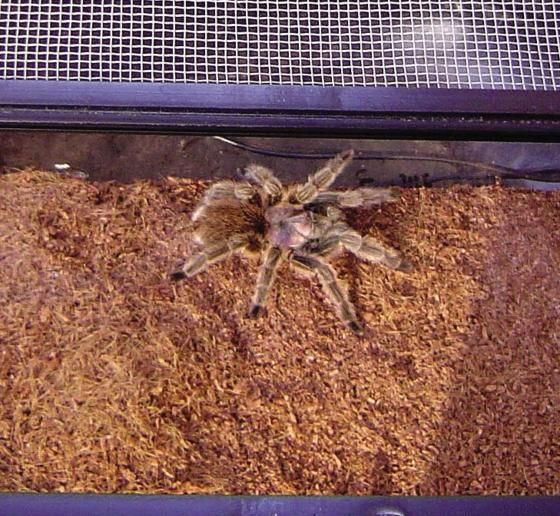
© Katharina Kircanski, Matthew Lieberman, Michelle CraskeA tarantula. Subjects in the study were told to walk close to it, and touch it, if they could.
"Give sorrow words." -- Malcolm in Shakespeare's "Macbeth"

Can simply describing your feelings at stressful times make you less afraid and less anxious?

A new UCLA psychology study suggests that labeling your emotions at the precise moment you are confronting what you fear can indeed have that effect.
The psychologists asked 88 people with a fear of spiders to approach a large, live tarantula in an open container outdoors. The participants were told to walk closer and closer to the spider and eventually touch it if they could.

The subjects were then divided into four groups and sat in front of another tarantula in a container in an indoor setting. In the first group, the subjects were asked to describe the emotions they were experiencing and to label their reactions to the tarantula -- saying, for example, "I'm anxious and frightened by the ugly, terrifying spider."

"This is unique because it differs from typical procedures in which the goal is to have people think differently about the experience -- to change their emotional experience or change the way they think about it so that it doesn't make them anxious," said Michelle Craske, a professor of psychology at UCLA and the senior author of the study. "Here, there was no attempt to change their experience, just to state what they were experiencing."

Better Earth

10 Signs That You're Fully Awake

Isn't it obvious that there is a significant global awakening happening? Just as the Mayans predicted so many years ago, the apocalypse would become apparent in 2012. But many misinterpret the apocalypse to be the end of the world, when in fact it actually means an "un-covering, a revelation of something hidden."

As many continue to argue the accuracy of the Mayan calendar, it can no longer be argued that a great many people are finally becoming aware of what has been hidden from them for so long. Of course this awakening is not an overnight process. It takes time to peel away the many layers of lies to get to the core of the ultimate truths.

It would be beyond pretentious for us to claim to know all of the secrets of the universe. We don't. Everyday we are humbled by what we don't yet know.

However, it is becoming clearer by the day what isn't true. And by that measure alone, it is possible to determine if you're one of the people beginning to wake up.

Info

Neuroscientists Successfully Control the Dreams of Rats. Could Humans be Next?

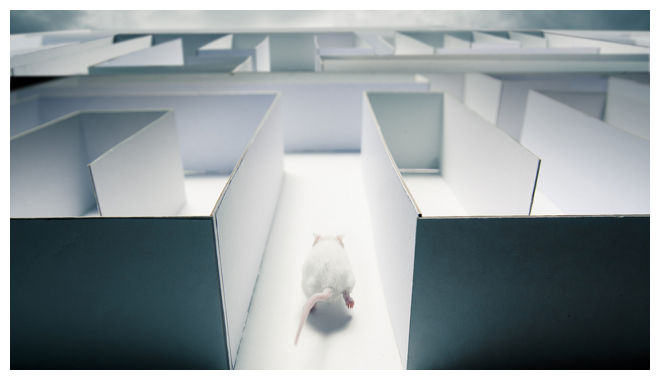
Mice in Maze
© Fer Gregory/Shutterstock.com
Researchers working at MIT have successfully manipulated the content of a rat's dream by replaying an audio cue that was associated with the previous day's events, namely running through a maze (what else).

The breakthrough furthers our understanding of how memory gets consolidated during sleep - but it also holds potential for the prospect of "dream engineering."

Working at MIT's Picower Institute for Learning and Memory, neuroscientist Matt Wilson was able to accomplish this feat by exploiting the way the brain's hippocampus encodes self-experienced events into memory.

Scientists know that our hippocampus is busy at work replaying a number of the day's events while we sleep - a process that's crucial for memory consolidation. But what they did not know was whether or not these "replays" could be influenced by environmental cues.

To see if this could be done, Wilson and his team trained a group of rats to run through a maze using two distinct audio cues. The rats quickly learned that the tones were helpful; one sound indicated that food could be found by going left, while the other sound indicated that a food reward awaited them on the right. And while the rats were doing this, the neuroscientists were recording their neural activity.

Info

Men and Women Really Do See the World Differently

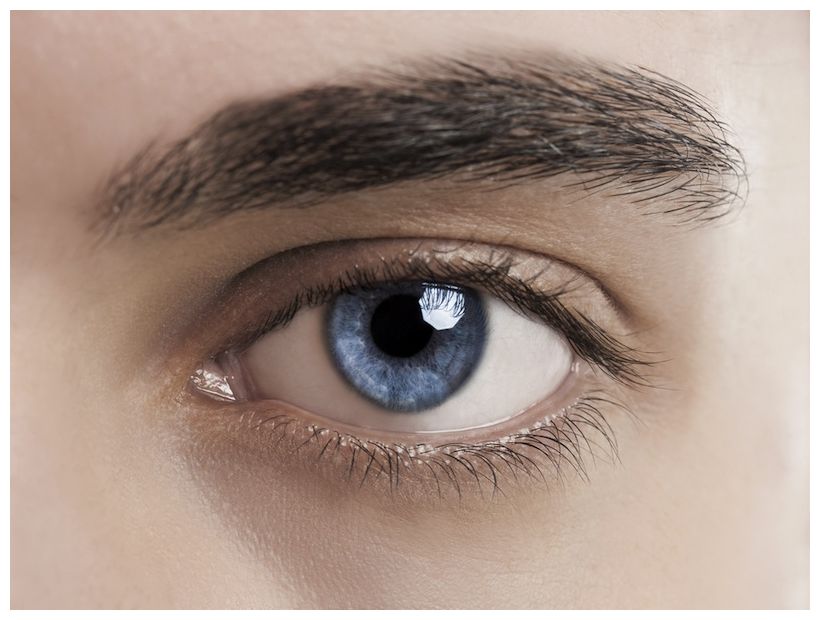
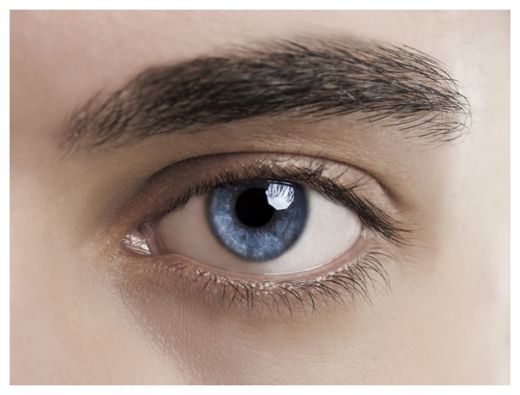
Eye
© IKO, Shutterstock
Guys' eyes are more sensitive to small details and moving objects, while women are more perceptive to color changes, according to a new vision study that suggests men and women actually do see things differently.

"As with other senses, such as hearing and the olfactory system, there are marked sex differences in vision between men and women," researcher Israel Abramov, of the City University of New York (CUNY), said in a statement. Research has shown women have more sensitive ears and sniffers than men.

"[A] recent, large review of the literature concluded that, in most cases females had better sensitivity, and discriminated and categorized odors better than males," Abramov and colleagues write Tuesday (Sept. 4) in the journal Biology of Sex Differences.

Abramov and his team from CUNY's Brooklyn and Hunter Colleges compared the vision of males and females over age 16 who had normal color vision and 20/20 sight - or at least 20/20 vision with glasses or contacts.

In one part of the study, the researchers asked the volunteers to describe different colors shown to them. They found that the guys required a slightly longer wavelength of a color to experience the same shade as women and the men were less able to tell the difference between hues.