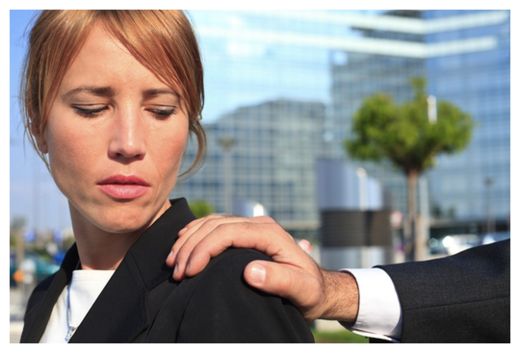
© aerogondo2, ShutterstockSexual harassment involves unwanted sexual advances in the workplace.
When a sexual harassment case hits the news, people often "blame the victim," arguing that the harassed person didn't do enough to deflect the unwanted attention. Now, new research finds that this victim-blaming stems from the human tendency to overestimate oneself.
The more people assume they'll stand up to a harasser, the more they
judge women who don't, a new study finds. The catch? Most evidence suggests people don't confront their harassers, even if they believe they would.
"They really falsely condemn them," said study researcher Ann Tenbrunsel, a professor of business ethics at the University of Notre Dame. "The basis of their condemnation is that they themselves would have done something differently, and chances are good they would not have."
Overestimating ourselvesPrevious studies have found that people assume they'll stand up for themselves more in a confrontation scenario than they really will, a psychological tendency called behavioral forecasting bias. In one 2001 study published in the
Journal of Social Research, for example, researchers asked women what they'd do if they were asked sexually inappropriate questions during a job interview. They all responded that they'd tell the interviewer off, report him or get up and leave. However, in an experiment that actually exposed women to sexual harassment in a fake job interview, not a single woman confronted or reported her harasser.
When you imagine standing up to a sexual bully, your main focus is on fighting back, said Kristina Diekmann, a professor of business ethics at the University of Utah and a co-researcher on the study. In a real job interview, however, other motivations become more important: avoiding an uncomfortable confrontation, getting along with others, getting the job.
"They're not thinking about taking action, they're thinking about just getting through this interview and getting the job," Diekmann told LiveScience.

















Comment: What happens to these woman, and many others, perhaps can be better understood in the context of a cycle of spiking, then crashing dopamine levels. At the top, orgasm spikes dopamine and creates a "high" in the reward center of the brain. At the bottom, when dopamine levels are low, one feels scarcity, separateness, craving, need and greed. This drives one to repeat the cycle to get that "high" to feel good again.
Read the following to learn more: