Science of the SpiritS


Rose

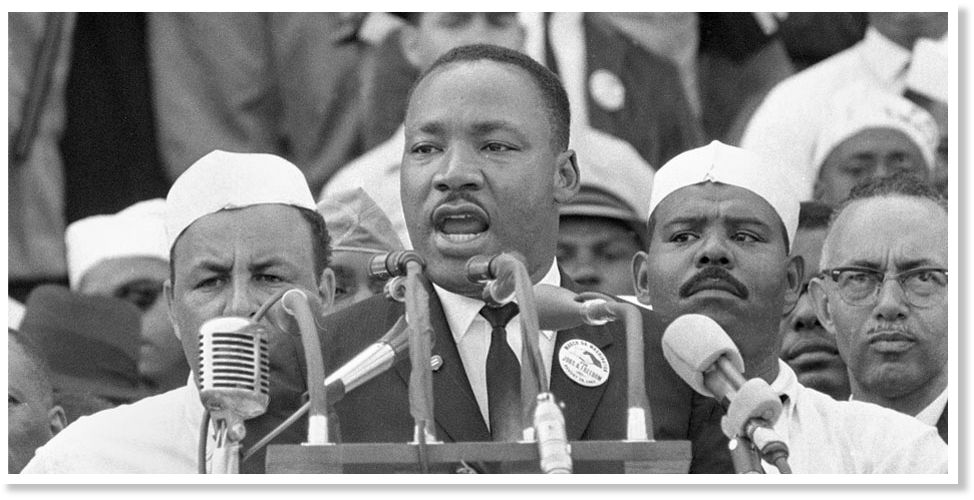
Decoding the Dream: The most powerful passages from Martin Luther King's famous speech

Martin Luther King's famous speech was so powerful because he described a peaceful and racially integrated world completely at odds with reality in the U.S. South at the time. Looking back 50 years later, some context is helpful to understand exactly what he was saying and why it was so revolutionary. It's also instructive to examine both the prepared portion of his 17-minute address - when he argues that full equality requires the removal of economic as well as legal barriers and the poetic "I Have A Dream" refrains, which he added on the spot.

MLK

Coffee

Researcher finds wealth shapes an ideology of self-interest and entitlement

Climbing the economic ladder can influence basic psychological processes within an individual.

Image
© Gage SkidmoreDonald Trump
According to a new study published in Personality and Social Psychology Bulletin this month, wealth tends to increase a person's sense of entitlement, which in turn can lead to narcissistic behaviors.

Paul Piff of the University of California at Berkeley told PsyPost "there is something about wealth that gives rise to a sense of entitlement, a sense that one deserves more good things in life than others, which in turn gives rise to an increased or inflated sense of self-importance, vanity, grandiosity, and omnipotence (narcissism)."

"Narcissism is a multi-faceted and complex construct, but that wealth is specifically associated with it suggests that as a person's level of privilege rises, that person becomes increasingly self-focused - in a sense, becoming the center of their own world and worldview," he explained.

People

Mood is influenced by immune cells called to the brain in response to stress

In Animal Study, Immune System Cells in Brain Lead to Anxiety Symptoms.

New research shows that in a dynamic mind-body interaction during the interpretation of prolonged stress, cells from the immune system are recruited to the brain and promote symptoms of anxiety.

The findings, in a mouse model, offer a new explanation of how stress can lead to mood disorders and identify a subset of immune cells, called monocytes, that could be targeted by drugs for treatment of mood disorders.

The Ohio State University research also reveals new ways of thinking about the cellular mechanisms behind the effects of stress, identifying two-way communication from the central nervous system to the periphery - the rest of the body - and back to the central nervous system that ultimately influences behavior.

People

Anthropologists study the genesis of reciprocity in food sharing

Image
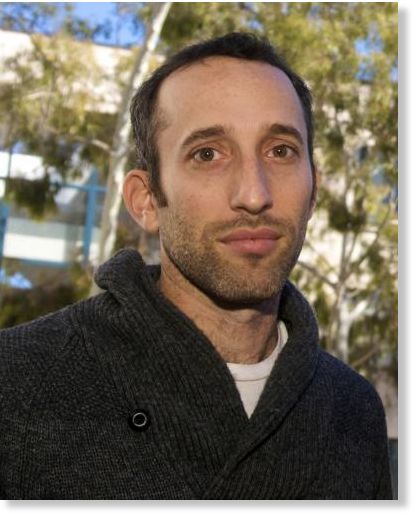
© Rod RolleThis is Michael Gurven.
When you share your lunch with someone less fortunate or give your friend half of your dessert, does that act of generosity flow from the milk of human kindness, or is it a subconscious strategy to assure reciprocity should you one day find yourself on the other side of the empty plate?

And how do those actions among humans compare to those of our chimpanzee cousins and other nonhuman primates?

Through two separate studies, UC Santa Barbara anthropologists Adrian Jaeggi and Michael Gurven found that reciprocity is similar among monkeys, apes, and humans, even when considering other factors that might otherwise predict helping behavior. However, they also found that only humans showed evidence of reciprocity in food sharing. Their research appears in the current issues of the Proceedings of the Royal Society B and of the journal Evolutionary Anthropology.

"Reciprocity Explains Food Sharing in Humans and Other Primates Independent of Kin Selection and Tolerated Scrounging: A Phylogenetic Meta-Analysis," the Proceedings of the Royal Society B article, compiles quantitative date on cooperative behavior from all existing studies in a number of primate species. "Natural Cooperators: Food Sharing in Humans and Other Primates," the article in Evolutionary Anthropology, goes into greater detail about the origins and maintenance of cooperation among a wide range of primate species, with particular attention to the human case.

People

Social giving makes us happier

Pro-social spending boosts happiness, especially when spending allows for social connection.

People usually feel good when they make a charitable donation, but they feel even better if they make the donation directly to someone they know or in a way that builds social connection. Research to be published in the International Journal of Happiness and Development investigates for the first time how social connection helps turn generous behavior into positive feelings on the part of the donor.

Lara Aknin of Simon Fraser University, in Burnaby, British Columbia, Canada, and colleagues at the University of British Columbia, Vancouver and Harvard Business School, Massachusetts, USA, wanted to examine when the emotional benefits of giving to charity become manifest. They carried out three studies of charitable donations, or more precisely pro-social spending, and found that spending money on others or giving money to charity leads to the greatest happiness boost when giving fosters social connection. The overarching conclusion is that donors feel happiest if they give to a charity via a friend, relative or social connection rather than simply making an anonymous donation to a worthy cause.

Music

Odd Hallucination: Woman hears forgotten songs

Woman
© Shutterstock
One night as she lay down to sleep, a 60-year-old woman suddenly started having strange hallucinations. She told her doctors she heard music that seemed like it was playing from a radio at the back of her head.

Within a few months, she was hearing music all the time, with some songs on repeat for up to three weeks. Curiously, she did not recognize many of the tunes that dogged her, but they had full vocals and instrumentals; and when she sang or hummed the melodies for her husband, he identified them as popular songs.

Her experience was described in a case report in Frontiers in Neurology, and researchers say it seems possible that these familiar songs were locked away in her memory and inaccessible, expect during hallucinations.

"To our knowledge, this is the first report of musical hallucinations of non-recognizable songs that were recognized by others in the patient's environment," neurologists Danilo Vitorovic and José Biller of Loyola University Medical Center wrote. "This raises intriguing questions about musical memory, as well as mechanisms of forgetting."

Info

Willpower is all in your head, study suggests

Willpower
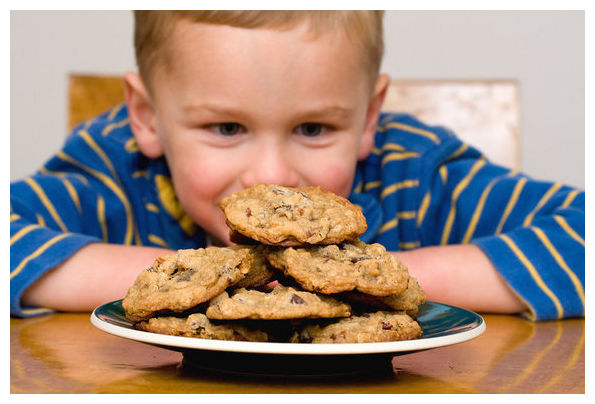
© B Calkins/ShutterstockSome people believe that they need a sugar boost after completing a challenging task.
Willpower may be plentiful - as long as you believe it is.

People who consider willpower a finite resource tend to need a sugar pick-me-up to continue working on a hard task, whereas those who believe willpower is abundant don't, new research suggests. Moreover, nudging people's beliefs about willpower in one direction or the other can influence how they behave.

The findings, published today (Aug. 19) in the journal Proceedings of the National Academy of Sciences, contradict earlier studies that suggested that willpower is quickly depleted.

People

Giving preschoolers choice increases sharing behavior

Getting kids to share their toys is a never-ending battle, and compelling them to do so never seems to help. New research suggests that allowing children to make a choice to sacrifice their own toys in order to share with someone else makes them share more in the future. The new findings are published in Psychological Science, a journal of the Association for Psychological Science.

These experiments, conducted by psychological scientists Nadia Chernyak and Tamar Kushnir of Cornell University, suggest that sharing when given a difficult choice leads children to see themselves in a new, more beneficent light. Perceiving themselves as people who like to share makes them more likely to act in a prosocial manner in the future.

Previous research has shown that this idea - as described by the over-justification effect - explains why rewarding children for sharing can backfire. Children come to perceive themselves as people who don't like to share since they had to be rewarded for doing so. Because they don't view themselves as "sharers" they are less likely to share in the future.

Chernyak and Kushnir were interested in finding out whether freely chosen sacrifice might have the opposite effect on kids' willingness to share.

"Making difficult choices allows children to infer something important about themselves: In making choices that aren't necessarily easy, children might be able to infer their own prosociality."

Info

Researchers debunk myth of right-brain and left-brain personality traits

Left and Right Brain
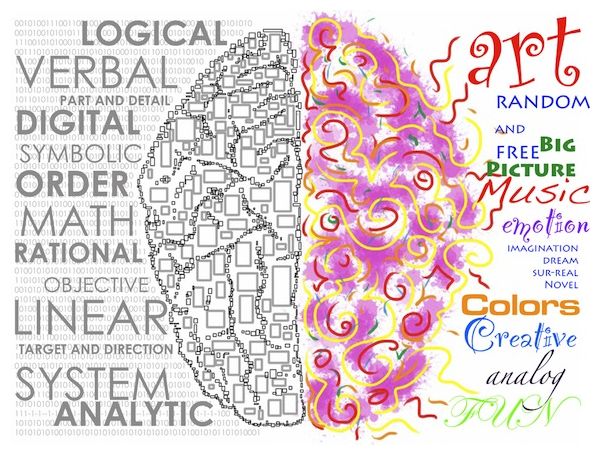
© Shutterstock / RakkandeeLeft and right brain function illustration.
For years in popular culture, the terms left-brained and right-brained have come to refer to personality types, with an assumption that some people use the right side of their brain more, while some use the left side more.

Chances are, you've heard the label of being a "right-brained" or "left-brained" thinker. Logical, detail-oriented and analytical? That's left-brained behavior. Creative, thoughtful and subjective? Your brain's right side functions stronger - or so long-held assumptions suggest.

But newly released research findings from University of Utah neuroscientists assert that there is no evidence within brain imaging that indicates some people are right-brained or left-brained.

For years in popular culture, the terms left-brained and right-brained have come to refer to personality types, with an assumption that some people use the right side of their brain more, while some use the left side more.

Following a two-year study, University of Utah researchers have debunked that myth through identifying specific networks in the left and right brain that process lateralized functions.

Cult

Reza Aslan: Atheist Richard Dawkins is 'the worst kind of zealot'

Reza Aslan
© Malin FezehaiReza Aslan: 'Jesus and I are like a married couple that are divorced but will always be friends – more than friends.'
When a video goes viral on the internet, you might expect it to feature a kitten dancing on a hippo, or Russell Brand telling an awards ceremony about breasts. Not a theologian putting a Fox News interviewer bang to rights on why he, a Muslim, had dared to write a book about Jesus. Yet a clip of Reza Aslan doing just that went viral this month, pushing his book to the top of bestseller lists.

"Just to be clear, this is not some attack on Christianity," he said of Zealot, a book describing Jesus of Nazareth as an illiterate, trouble-making social revolutionary (and a very inspirational one at that), to an anchor who could not get past his suspicious Muslimness. "My mother is a Christian, my wife is a Christian, my brother-in-law is an evangelical pastor." The anchor was undeterred, determined to reveal a secret Muslim agenda. "My job as a scholar of religions with a PhD in the subject is to write about religions," he insisted. The clip was watched and cheered by millions - it was extraordinary.