Science of the SpiritS


Info

Baby elephant in China can't stop crying after being stomped by mom

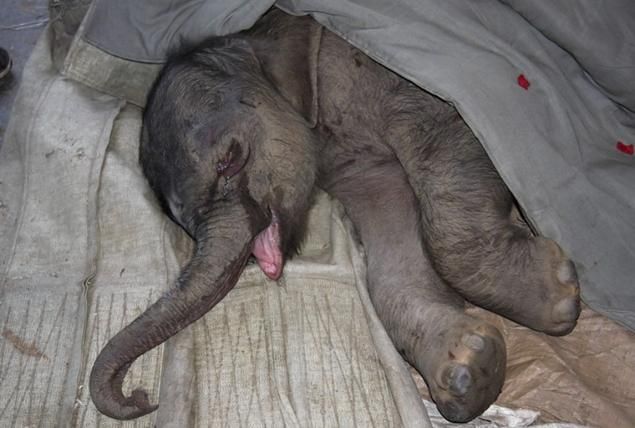
Newborn elephant cried for five hours after mom tried to kill him. Chinese zookeepers forced to keep him away from momma.

Image
Despondent baby elephant weeps for hours after mom gives birth, then attacks him at game preserve in China.
Poor baby.

Little Zhuangzhuang, a newborn elephant at a wildlife refuge in China, was inconsolable after his mother rejected him and then tried to stomp him to death.

Tears streamed down his gray trunk for five hours as zookeepers struggled to comfort the baby elephant.

They initially thought it was an accident when the mom stepped on him after giving birth, according to the Central European News agency.


Chalkboard

Science confirms: Politics wrecks your ability to do math

Image
Everybody knows that our political views can sometimes get in the way of thinking clearly. But perhaps we don't realize how bad the problem actually is. According to a new psychology paper, our political passions can even undermine our very basic reasoning skills. More specifically, the study finds that people who are otherwise very good at math may totally flunk a problem that they would otherwise probably be able to solve, simply because giving the right answer goes against their political beliefs.

The study, by Yale law professor Dan Kahan and his colleagues, has an ingenious design. At the outset, 1,111 study participants were asked about their political views and also asked a series of questions designed to gauge their "numeracy," that is, their mathematical reasoning ability. Participants were then asked to solve a fairly difficult problem that involved interpreting the results of a (fake) scientific study. But here was the trick: While the fake study data that they were supposed to assess remained the same, sometimes the study was described as measuring the effectiveness of a "new cream for treating skin rashes." But in other cases, the study was described as involving the effectiveness of "a law banning private citizens from carrying concealed handguns in public."

The result? Survey respondents performed wildly differently on what was in essence the same basic problem, simply depending upon whether they had been told that it involved guns or whether they had been told that it involved a new skin cream. What's more, it turns out that highly numerate liberals and conservatives were even more - not less - susceptible to letting politics skew their reasoning than were those with less mathematical ability.

Info

Some brains may be hard-wired for chronic pain

Chronic Pain
© Dreamstime
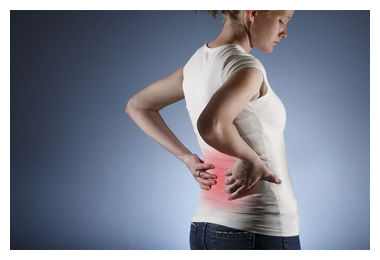
Structural differences in the brain may be one reason why one person recovers from pain while another develops chronic agony, a new study suggests.

The researchers scanned the brains of 46 people who had lower back pain for about three months, and then evaluated their pain four times over the following year. About half of the patients recovered during the year; the other half continued to have persistent pain throughout the study.

Looking back at the brain scans, the researchers found structural differences in the brains of people who recovered compared with people who developed chronic pain. The differences were found in the brain's white matter, which mostly consists of long connections between neurons and brain regions.

Specifically, the differences lay in the connections between brain regions thought to be involved in pain perception, the researchers said.

"We may have found an anatomical marker for chronic pain in the brain," study researcher Vania Apkarian, professor of physiology at Northwestern University Feinberg School of Medicine in Chicago, said in a statement.

Clipboard

The more a society coerces its people, the greater the chance of mental illness

Image
Miserable marriages, unhappy families and severe emotional and behavioral problems all have a root cause.

Throughout history, societies have existed with far less coercion than ours. While these societies have had far fewer consumer goods and less of what modernity calls "efficiency," they also have had far less mental illness. This reality has been buried, not surprisingly, by uncritical champions of modernity and mainstream psychiatry. Coercion - the use of physical, legal, chemical, psychological, financial, and other forces to gain compliance - is intrinsic to our society's employment, schooling and parenting. However, coercion results in fear and resentment, which fuel miserable marriages, unhappy families, and what we call mental illness.

Societies with Little Coercion and Little Mental Illness

Shortly after returning from the horrors of World War I and before they wrote Mutiny on the Bounty (1932), Charles Nordhoff and James Norman Hall were given a commission by Harper'smagazine to write nonfiction travel articles about life in the South Pacific. Their reports about the islands of Paumoto, Society and the Hervey group were first serialized in Harper's and then published in the book Faery Lands of the South Seas (1921). Nordhoff and Hall were struck by how little coercion occurred in these island cultures compared to their own society, and they were enchanted by the children such noncoercive parenting produced:
"There is a fascination in watching these youngsters, brought up without clothes and without restraint. . . . Once they are weaned from their mothers' breasts - which often does not occur until they have reached an age of two and a half or three - the children of the islands are left practically to shift for themselves; there is food in the house, a place to sleep, and a scrap of clothing if the weather be cool - that is the extent of parental responsibility. The child eats when it pleases, sleeps when and where it will, amuses itself with no other resources than its own. As it grows older certain light duties are expected of it - gathering fruit, lending a hand in fishing, cleaning the ground about the house - but the command to work is casually given and casually obeyed. Punishment is scarcely known. . . . [Yet] the brown youngster flourishes with astonishingly little friction - sweet tempered, cheerful, never bored, and seldom quarrelsome."

People

Diminishing fear vicariously by watching others

Phobias - whether it's fear of spiders, clowns, or small spaces - are common and can be difficult to treat. New research suggests that watching someone else safely interact with the supposedly harmful object can help to extinguish these conditioned fear responses, and prevent them from resurfacing later on.

The research, published in Psychological Science, a journal of the Association for Psychological Science, indicates that this type of vicarious social learning may be more effective than direct personal experience in extinguishing fear responses.

"Information about what is dangerous and safe in our environment is often transferred from other individuals through social forms of learning," says lead author Armita Golka of Karolinska Institutet in Sweden. "Our findings suggest that these social means of learning promote superior down-regulation of learned fear, as compared to the sole experiences of personal safety."

Considerable research has shown that social forms of learning can contribute to the acquisition of fears, which led Golkar and colleagues to wonder whether it could also help to extinguish learned fears.

Sun

Our genes respond positively to the right kind of happiness

Image
© Dennis Holzberg
The right kind of happiness doesn't just feel great, it also benefits the body, right down to its instructional code.

New research suggests the right kind of happiness can change the code that defines our very being: our genes.

The study, published in the journal Proceedings of the National Academy of Sciences, examined the pattern of gene expression within the cells responsible for fighting off infectious diseases and defending the body against foreign materials (Fredrickson et al., 2013).

The 80 participants in the study also reported their levels of two different types of happiness:
  1. Feeling good or hedonic happiness: the kind you get from straightforward self-gratification, like having a good meal, or buying yourself a new car.
  2. Doing good or eudemonic happiness: the kind you get from working towards a noble goal and searching for meaning in life.

Info

Dreams: Full of meaning or a reflex of the brain?

Dreams
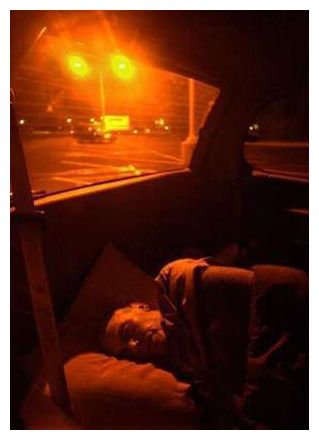
© Don Bartletti/August 29, 2002What makes us dream? A new study suggests the impulse to dream during sleep may come from signals in the brainstem, not from the brain's higher-order regions.
It's a question that has long fascinated and flummoxed those who study human behavior: From whence comes the impulse to dream? Are dreams generated from the brain's "top" -- the high-flying cortical structures that allow us to reason, perceive, act and remember? Or do they come from the brain's "bottom" -- the unheralded brainstem, which quietly oversees such basic bodily functions as respiration, heart rate, salivation and temperature control?

At stake is what to make of the funny, sexual, scary and just plain bizarre mental scenarios that play themselves out in our heads while we sleep. Are our subconsious fantasies coming up for a breath of air, as Sigmund Freud believed?

Is our brain consolidating lessons learned and pitching out unneeded data, as neuroscientists suggest? Or are dreams no more meaningful than a spontaneous run of erratic heartbeats, a hot flash, or the frisson we feel at the sight of an attractive passer-by?

A study published this week in the journal Brain suggests that the impulse to dream may be little more than a tickle sent up from the brainstem to the brain's sensory cortex.

The full dream experience -- the complex scenarios, the feelings of fear, delight or longing -- may require the further input of the brain's higher-order cortical areas, the new research suggests. But even people with grievous injury to the brain's prime motivational machinery are capable of dreams, the study found.

The latest research looked for sleep-time "mentation" -- thoughts, essentially -- in a small group of very unusual patients. These patients -- 13 in all -- had suffered damage within their brains' limbic system, the seat of our basic desires and motivations -- for sex, for food, for pleasurable sensations brought on by drugs and friendship and whatever else turns us on.

Question

Friday the 13th: Why humans are so superstitious

Evil Eye
© Matej Hudovernik | ShutterstockThroughout the Middle East, the use of a nazar to ward off "the evil eye" is a commonly held superstition.
Despite having well-developed brains, complex technologies and centuries of scientific progress, the human species remains a fearful, superstitious lot. And what better day to revisit the nature of superstition than Friday the 13th?

Superstition, it seems, is one thing that binds all of humanity throughout history and across cultural divides. Anthropologist Claude Lévi-Strauss once wrote that superstitions and belief in magic "are so frequent and so widespread that we should ask ourselves if we are not confronted with a permanent and universal form of thought."

Even in the modern world, superstitions hold immense sway over people's daily lives. "Several surveys of Americans suggest that roughly half say they are at least slightly superstitious," said Stuart Vyse, professor of psychology at Connecticut College. "A 2007 Gallup poll found that 13 percent of Americans would be bothered by staying on the 13th floor of a hotel. Nine percent would be bothered enough to ask for a different room."

The root of superstition is a lack of control, according to Vyse, the author of Believing in Magic: The Psychology of Superstition (Oxford, 2013). "Generally, [superstition] is aimed at achieving greater control," Vyse told LiveScience. "When something important is at stake yet the outcome is uncertain, then superstitions are likely to be used to fill the gap and make us feel more confident."

Black Cat

"Dark Tetrad" of personality traits: Everyday sadists take pleasure in others' pain

Most of the time, we try to avoid inflicting pain on others - when we do hurt someone, we typically experience guilt, remorse, or other feelings of distress. But for some, cruelty can be pleasurable, even exciting. New research suggests that this kind of everyday sadism is real and more common than we might think.

Two studies led by psychological scientist Erin Buckels of the University of British Columbia revealed that people who score high on a measure of sadism seem to derive pleasure from behaviors that hurt others, and are even willing to expend extra effort to make someone else suffer.

The new findings are published in Psychological Science, a journal of the Association for Psychological Science.

"Some find it hard to reconcile sadism with the concept of 'normal' psychological functioning, but our findings show that sadistic tendencies among otherwise well-adjusted people must be acknowledged," says Buckels. "These people aren't necessarily serial killers or sexual deviants but they gain some emotional benefit in causing or simply observing others' suffering."

Based on their previous work on the "Dark Triad" of personality, Buckels and colleagues Delroy Paulhus of the University of British Columbia and Daniel Jones of the University of Texas El Paso surmised that sadism is a distinct aspect of personality that joins with three others - psychopathy, narcissism, and Machiavellianism - to form a "Dark Tetrad" of personality traits.

To test their hypothesis, they decided to examine everyday sadism under controlled laboratory conditions. They recruited 71 participants to take part in a study on "personality and tolerance for challenging jobs." Participants were asked to choose among several unpleasant tasks: killing bugs, helping the experimenter kill bugs, cleaning dirty toilets, or enduring pain from ice water.

Participants who chose bug killing were shown the bug-crunching machine: a modified coffee grinder that produced a distinct crunching sound so as to maximize the gruesomeness of the task. Nearby were cups containing live pill bugs, each cup labeled with the bug's name: Muffin, Ike, and Tootsie.

Info

Brain's opiate addiction 'switch' discovered

Addiction
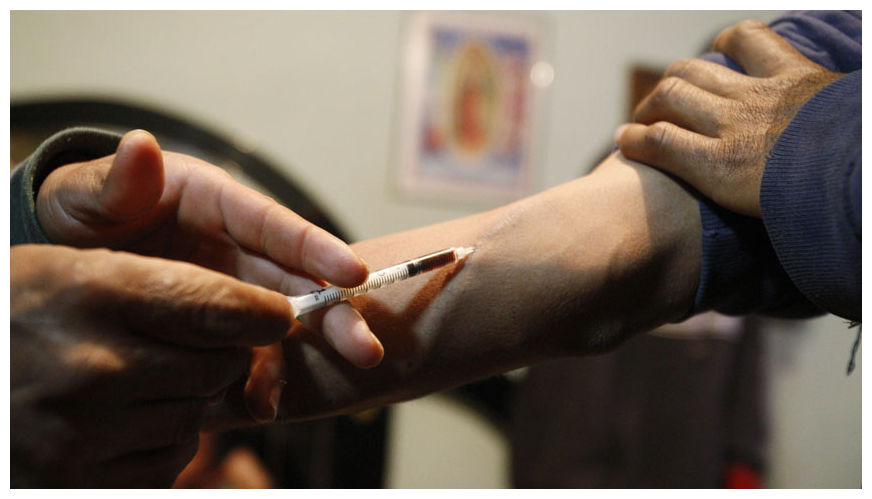
© ReutersThe study on how heroin addiction develops in the brain involved lab rats, but the lead researcher said there is most likely a common molecular system within the mammalian brain in general that forms pleasurable memories of opiate intake.
Researchers studying heroin addiction have discovered how the drug triggers a switch in an area of the brain associated with learning and memory, fuelling compulsive cravings for the opiate-class drug.

The work in finding the underlying molecular process by which opiate addiction develops in the brain was carried out by scientists at the University of Western Ontario in London, Ont.

Opiate addiction is largely controlled by the formation of powerful reward memories that link the pleasurable effects of opiates to environmental triggers, reinforcing dependence and relapse.

The team led by Dr. Steven Laviolette was able to identify how exposure to heroin induces a specific switch in a memory molecule in the basolateral amygdala.

During the early stages of opiate exposure, there is a specific molecular pathway in the amygdala that is responsible for the formation of those reward memories. The scientists call it the ERK (extracellular signal-related kinase) pathway.