
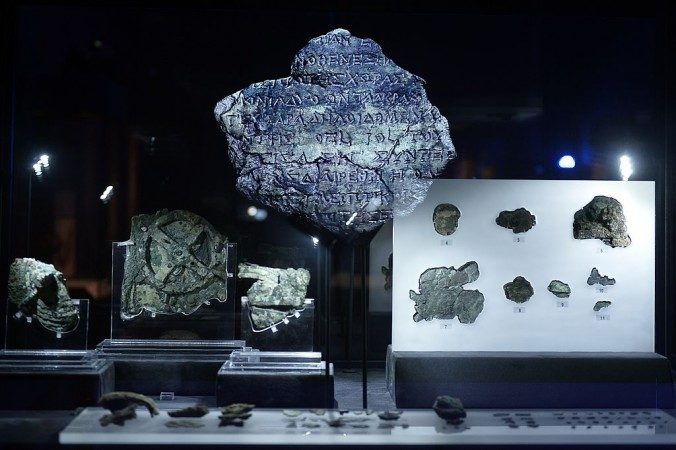
© Louisa Gouliamaki/Agence France-PresseArtifacts found at the so-called Antikythera shipwreck off a remote Greek island in 1900, as displayed at the Archaeological Museum in Athens on Sept. 14, 2014. The remains of a young man who was on the ship 2,000 years ago were found on Aug. 31, 2016. (/Getty Images)
The Antikythera wreck, located off the island of Antikythera in the Aegean Sea, is a famous underwater archaeological site thrown into the spotlight in 1900 when researchers discovered an incredible mechanical device, now known as the Antikythera mechanism.
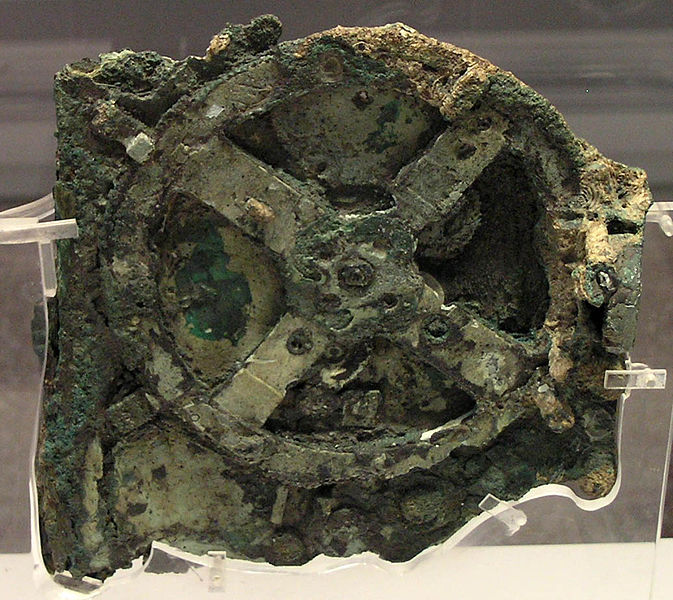
© Marsyas via Wikimedia CommonsPart of the Antikythera Mechanism.
Along with the discovery of this unique form of ancient technology, archaeologists have found other treasures, including finely carved bronze and marble statues, glassware, jewellery, a bone flute, game pieces, and coins.
Now, according to Nature.com, researchers have made another significant finding with the recovery of a partial skull, two arm bones, several ribs and two femurs from a man in his late teens to early 20s. The skeleton was found buried under around two feet of pottery shards and sand.
He was trapped on board when the ship went down, The Guardian explained. The ship hit rocks, bashed along an undersea cliff and became buried in sediment.














Comment: See also: CIA declassifies records of Project Star Gate experiments involving supernatural abilities