
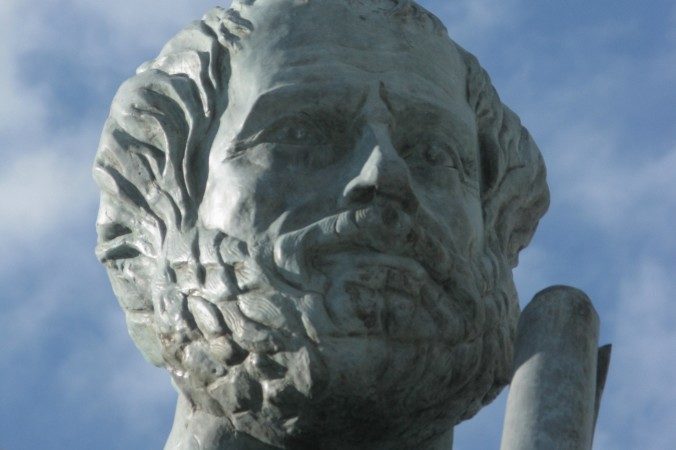
© Tilemahos Efthimiadis via Compfight cc
The archaeologist, Konstantinos Sismanidis, began excavating the birthplace of Aristotle in northern Greece in the 1990s.
Sismanidis revealed his discovery at the "Aristotle 2400 Years" World Congress, which marks the anniversary of the philosopher's birth.
He says a destroyed structure he discovered may have been the final resting place of the philosopher after his death.
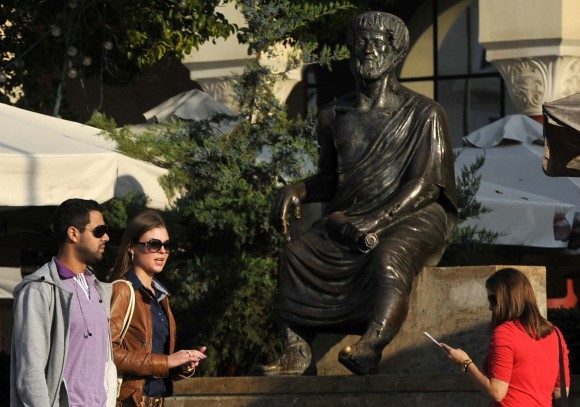
© AP Photo/Nikolas GiakoumidisA statue of Aristotle, in the northern port city of Thessaloniki, Greece.
Sismanidis says the structure that was excavated in the ruins of Stageira, 70 kilometers (43 miles) east of Thessaloniki, was once a public monument where the philosopher was honored after his death. No human remains were found in the location.
The ancient philosopher was born in Stageira, Macedonia, in 384 B.C. and died of natural causes in 322 B.C. in Chalcis.
The archaeologist says the location matches a physical description of the philosopher's tomb from an arabic-language biography from the 11th Century. The biography claims the people of Stageira placed Aristotle's ashes into a bronze urn and brought them back to his hometown, according to Greek Radio station Sto Kokkino.
The ancient philosopher is one of history's most influential thinkers and was a student of Plato. Aristotle was also the teacher of the Macedonian King, Alexander the Great.
The Associated Press contributed to this report.



Reader Comments
to our Newsletter