Pavel Durov (
lead image)
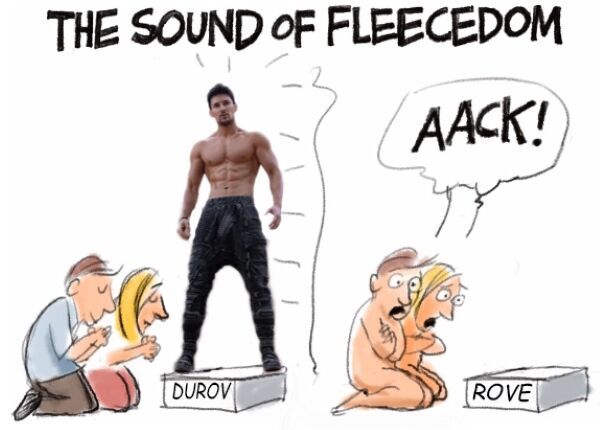
aka Paul du Rove ("vagabond" in French) doesn't put his money where his mouth is.
This is because
more than half the assets and almost half the revenues of Durov's Telegram group of companies are digital units which Telegram itself programmes, stores, trades, values, and revalues, so the potential for concealment, deception and fraud is unaccountably large. This is the reason Durov has failed to secure the US regulator's permission to sell shares in his $30 billion valuation of Telegram in a US initial public offering (IPO). In short, the freedom and privacy Durov claims his Telegram social media platform represents is not at all what the financial reports reveal of his money-making.
The first fraud flag was waved by the US Securities and Exchange Commission (SEC) in October 2019 after more than a year of Durov's money-raising through digital tokens he called Grams which he offered to sell for
$1.5 billion. At the time, cornerstone investors in Durov
included the Russian oligarch Roman Abramovich and other oligarchs.
Durov — announced the SEC — "seeks to obtain the benefits of a public offering without complying with the long-established disclosure responsibilities designed to protect the investing public... the defendants have failed to provide investors with information regarding Grams and Telegram's business operations, financial condition, risk factors, and management that the securities laws require."
In the five years since then, Durov claims to have sold another billion-dollar bond in
2021; $210 million in fresh securities in
2023; and $330 million in paper which Durov floated in March of this year. "The increased demand for our bonds shows that global financial institutions value Telegram's growth in audience and monetization", he
said (telegrammed) at the time.














Comment: It makes sense given that China is working to increase its population, and so facilitating adoptions by its own citizens would benefit both the country, and, given research on child development, potentially the child themselves. Notably, Russia stopped such adoptions back in 2012.
Furthermore, with regards to safeguarding, China is better able to ensure sufficient monitoring of the child, and to take action should it need to do so. Which, given the various scandals surrounding adoption, particularly in relation to child trafficking, is extremely pertinent. The West has also made it clear that its concept of an LGBT+ family is at odds not only with China's, but also potentially at odds with the best interests of a child.
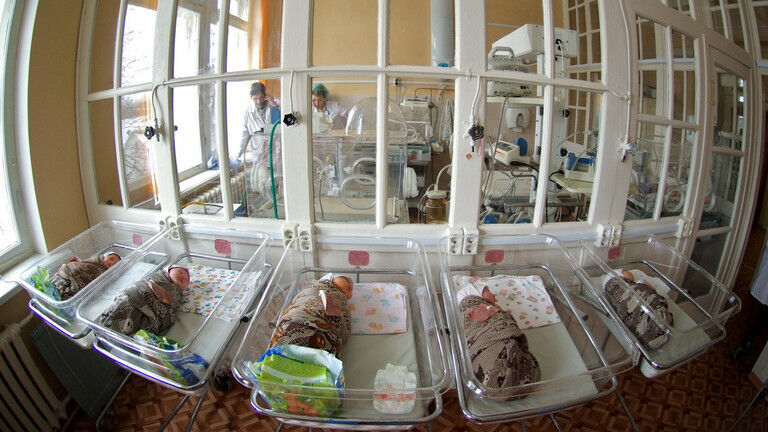
Tellingly, the West's control of the Kiev-junta in Ukraine has resulted in it becoming the surrogacy, and child trafficking capital of the world: