Puppet MastersS


Question

Kurdish Autonomy in Syria - Putin and Assad in serious discussions

kurdish fighters
© South FrontKurdish fighters
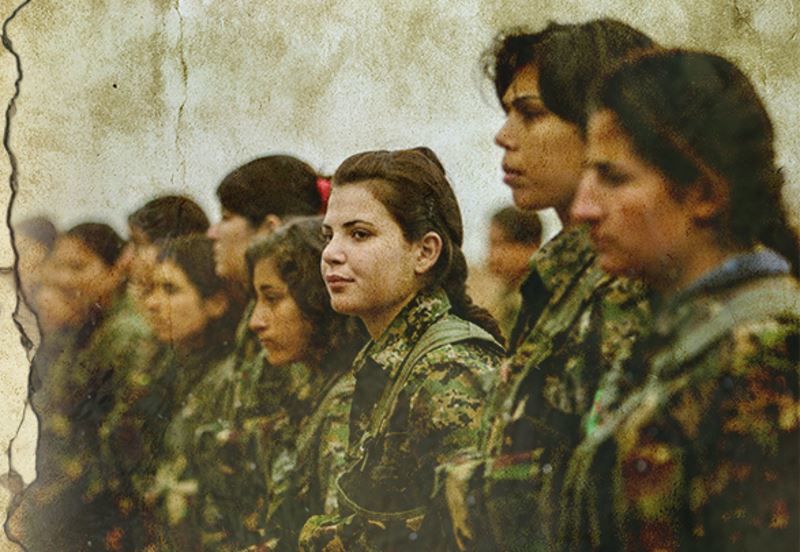
A few days ago B. Assad paid a landmark visit to Moscow. According to the South Front: Analysis & Intelligence's information, the agenda of extended Kurdish autonomy in Syria, which Syrian Kurds from the Party of Democratic Union proposed, was discussed and partially agreed during the visit. We use a cautious term "partially agreed" as foreign policy has consistently demonstrated that even concluded treaties are often fragile. The history of relations between the Kurds and Arabs is complex. Even before the civil war, the idea that the next war will be not with Israel but with the Kurds had been promoted to the Syrian cadets in military academies. Such sentiments are common to most of the Arab population of Syria, both to Sunni, Shia and Alawite.

However, today the situation has changed significantly. The government army is actually fighting not against the Kurds, but against a common enemy - Salafi extremists. In this situation, apparently, Damascus decided to make the first step towards the possibility of Kurdish autonomy. Such political decisions will certainly lead to even greater aggravation of relations with Turkey, but it will create a "safety zone" for a large part of the Syrian-Turkish border, through which the main flow of the material and technical support to terrorist groups goes. From the air, the control of the zone will implemented by the Russian Air-Space Forces as per agreement with the government in Damascus and with the Kurds. Receiving from the Syrian Kurds the latest information on the battleground targets will significantly increase the effectiveness of air strikes.

Of course, there is discontent among the Arab population, which supports a unity of Syria, but the "of two evils choose the lesser." Moreover, it gives Assad the opportunity to solve the issue of Kurdish autonomy within the Syrian state. In addition, the Kurdish autonomy would put the United States before a difficult dilemma. If Washington accepts the very fact of such autonomy, it will jeopardize its relations with Ankara. If not, the chance for the US to count on the Iraqi Kurds fighting on the ground with the common enemy Salafi extremists will be negligible, especially in eyes of the Kurdish people. As for the elite, the trust between the Americans and the Kurdish leadership will be significantly reduced.

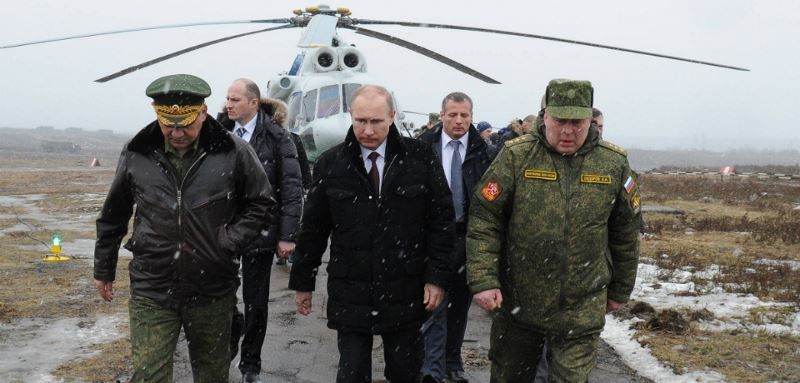
Comment: Keeping to his style, Putin has again made discussion and agreement the means to begin to solve what has been a decades-long sore spot in the Middle East, hitherto overshadowed by the troubles caused by Israel. A process which involves all the interested parties has a far better chance of a permanent solution, as opposed to fiat proclamations by the Empire.


Evil Rays

Putin's high-tech war in Syria - next-generation surveillance and signal blocking turning the tide

Putin armed forces
© Getty Images
Russian airplanes are battering rebel targets throughout Syria, but Moscow's use of next-generation surveillance and communications-blocking equipment is packing a growing punch.

Russia has been sending fighter jets, drones, and bombers to Syria to bolster the regime of Bashar al-Assad, generating concern and outrage among the United States and its allies. Far less attention has been paid to Moscow's simultaneous deployment of advanced surveillance, signals intelligence, and electronic warfare equipment that could deal a new blow to the beleaguered, American-backed rebels working to oust him.

In recent weeks, Russia has deployed the IL-20 surveillance aircraft, better known by its NATO name "Coot" and roughly equivalent to the U.S. Navy's P-3 Orion, a mainstay of the Pentagon's spy tools. The Russian plane is bristling with high-tech equipment like surveillance radar, electronic eavesdropping gear, and optical and infrared sensors. One of the Kremlin's premier spy planes, it provides Russian forces with a powerful tool for locating rebel units and assigning targets to its fighter planes. In late September, Syrian rebels posted a video purporting to show the plane flying over a battlefield.

The Russian buildup of intelligence assets and tools of electronic warfare also includes the deployment of the Krasukha-4, an advanced electronic warfare system used to jam radar and aircraft. Its presence in Syria was reported by Sputnik News, the Russian state outlet, which claimed to have spotted the distinctive jamming system in a video report on Russian jets at a Syrian airfield in Latakia. The system and its parabolas are visible at the 6-second mark in the video below.

Magnify

Turkey: Who benefited from the Ankara terror attacks?

Ankara terror attack
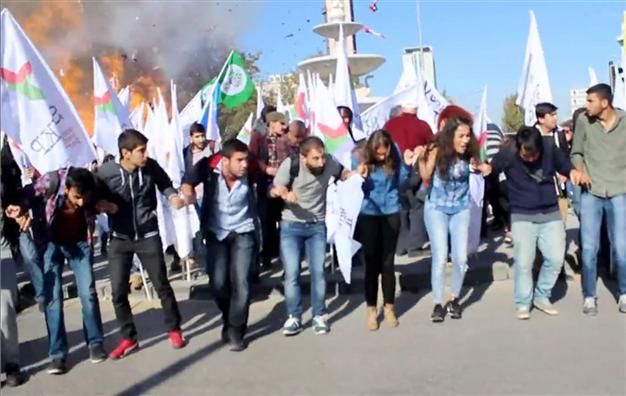
© AFP photoThis video grab image taken from footage made avaliable by local source 'Dokuz8 Haber' shows the moment an explosion ripped through a gathering ahead of a planned peace rally in Ankara on Oct 10.
Introduction: The October 12, 2015 terror bombing in Ankara, resulting in the death of 127 trade unionists, peace activists, Kurdish advocates and progressives, has been attributed either to the Recep Tayyip Erdogan regime or to ISIS terrorists.

The Erdogan regime's 'hypothesis' is that ISIS or the Kurdish Workers Party (PKK) was responsible for the terrorist attack, a position echoed by all of the NATO governments and dutifully repeated by all of the Western mass media. Their most recent claim is that a Turkish member of ISIS carried out the massacre - in a 'copy-cat action' after his brother, blamed by the Turkish government for an earlier bombing which left 33 young pro-Kurdish activists dead in July in Suruc, on the Syrian border.

The alternative hypothesis, voiced by the majority of the Turkish opposition, is that the Erdogan regime was directly or indirectly involved in organizing the terrorist attack or allowing it to happen.

In testing each hypothesis it is necessary to examine which of the two best accounts for the facts leading up to the killing and who benefits from the mayhem.

USA

A time bomb waiting to explode (Part II): Democracy, American exceptionalism and Russian propaganda

Image
© Carlos Allegri/Reuters
Last week I compared the US - and by extension all economies based on the same model - to Semtex. My exploration of this analogy both ruffled feathers and raised questions. This week, I want to address five of the most common criticisms the article generated.

Semtex seems stable. You can throw it, burn it, jump on it. But when you put the right detonator in it, everything blows up.I think this is a fair analogy for the US at this time. Not everyone agreed.In this follow-up to last week's article, I want to address just five of the criticisms this assertion received.

1. I am anti-American

I'm not quite sure what that means, but if we are to take the founding documents of the country of America as indicative of what the US stands for - the Constitution and the Bill of Rights - then I am all for them.The problem is that the Republic that America was created to be has been usurped by something else called Democracy.

In a Republic there are laws set in stone. There exist immovable principles, no matter how many fools can be drummed up to vote against their own interests.In Democracy there are no principles other than how many fools you can drum up.

Yes, it's true. I don't believe in Democracy. To me, Democracy is a form of corporatized, Satanic hypocrisy the object of which - at least currently - is to mask a Cultural Marxist agenda designed to destroy you not only in this life, but also in the life to come.

But a Republic? Sure, I can get behind that. My problem with America is that it has ceased to be one.

Comment: See also:


Yoda

Russia is ready to provide military backing to legitimate Syrian opposition forces

Lavrov
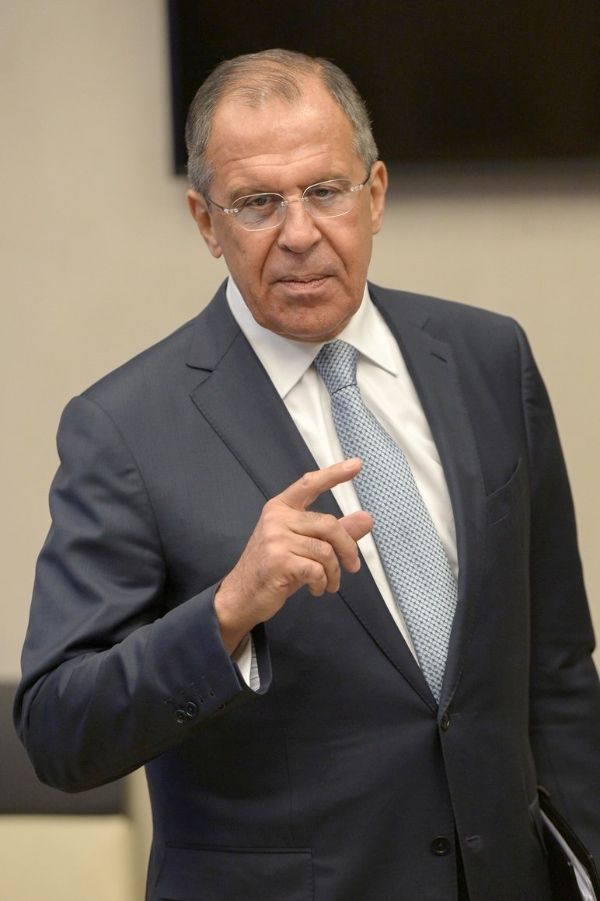
© XinhuaLavrov on Saturday had a phone conversation with his U.S. counterpart John Kerry to discuss organizing talks between the Syrian government and opposition, the Russian foreign ministry said
In a significant development, Russian Foreign Minister Sergey Lavrov has said Moscow is ready to provide backing, in the form of airstrikes, to help Syrian opposition forces, like the Free Syrian Army, who are fighting terror groups like the Islamic State. The statement comes days after Russian President Vladimir Putin said his Syrian counterpart Bashar al-Assad is willing to talk to some armed opposition groups if they are genuinely committed to dialogue and to combating the terror spread by the Islamic State. Lavrov said Russia can aid the Free Syrian Army if it knew their locations.
"We are ready to back the patriotic opposition, including the so-called Free Syrian Army, with our air support. However, Washington is refusing to inform us of the locations of the terrorists and where the opposition is based," Lavrov told state broadcaster Rossiya on Saturday. "The most important thing for us is to find people who will be true representatives of the armed groups who will confront terrorism among other things," he added.
Syria needs to prepare for parliamentary and presidential elections, said Lavrov. Moscow is intensifying efforts to seek a political settlement in the war-torn country.

Comment: See also: Are Syria and Russia more democratic than the US?


Network

Assad discusses willingness to talk with some armed opposition groups for resolution during meeting with Putin

Image
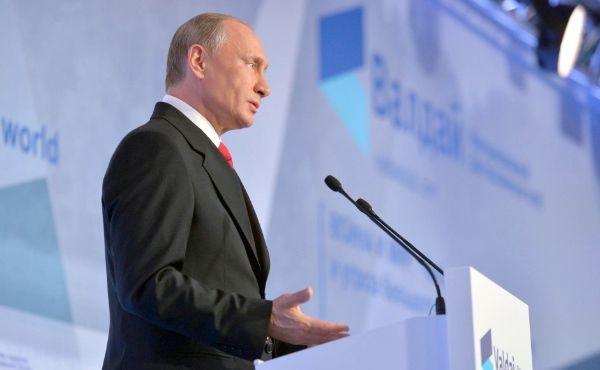
© PPIOPutin delivers Speech at the final plenary session of the 12th annual meeting of the Valdai International Discussion Club in Sochi, Russia on 22 October 2015
Syrian counterpart Bashar al-Assad is willing to talk to some armed opposition groups if they are genuinely committed to dialogue and to combating the terror spread by the Islamic State, Russian President Vladimir Putin announced in Sochi.
"I asked him: 'What view would you take if we found, now in Syria, an armed opposition which nonetheless was ready to oppose and really fight against terrorists, against Islamic State? What would be your view if we were to support their efforts in fighting Islamic State in the same way we are supporting the Syrian army'," Putin said. "He answered: 'I would view that positively'," Putin said of Assad.
Syrian President Assad flew into Moscow on Tuesday for a meeting with Putin. The leaders discussed their joint military campaign against rebels in Syria, Kremlin spokesman Dmitry Peskov told reporters on Wednesday, calling the meeting a "working visit". The Syrian presidency confirmed that Assad and Putin held three meetings in which Russia's Foreign Minister Sergey Lavrov and Defence Minister Sergey Shoigu were present.

Comment: The Russian-Syrian strategy in Syria is markedly different than that of the West's. If there are legitimate opposition groups, meaning those who are truly opposed to terrorism, then Syria is willing to work to integrate them into a valid political process. This is a necessary step in rebuilding, and is something that does not happen in US 'intervention'.


Eye 1

Syria's White Helmets: War by way of deception - Part 1


Comment: In this article, author Beeley outlines why NGOs, in particular the White Helmets - one of the largest NGOs operating in Syria - are merely instruments used by Anglo-American warmongers to further their agendas. Considering that American and English taxpayers (unknowingly) fund these particular NGOs posing to be 'independent' and 'humanitarian', this article is one not to be missed.


Image
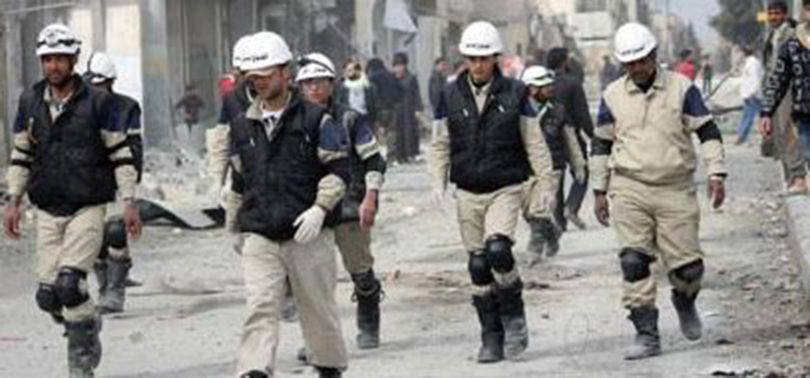
The White Helmets in Syria, whose side are they really on?
"The Ivy League bourgeoisie who sit at the helm of the non-profit industrial complex will one day be known simply as charismatic architects of death. Funded by the ruling class oligarchy, the role they serve for their funders is not unlike that of corporate media. Yet, it appears that global society is paralyzed in a collective hypnosis - rejecting universal social interests, thus rejecting reason, to instead fall in line with the position of the powerful minority that has seized control, a minority that systematically favours corporate interests." ~Cory Morningstar

In his recent speech Hezbollah leader, Sayyed Nasrallah, alluded to a multi-phase "soft war" which relies upon the mass media complex to disseminate propaganda and bias, propelling the Middle East into, primarily, a sectarian crisis before descending even further into regionalism and finally a devastating individualism.

Cory Morningstar's body of work does more than any other to expose the bare bones of the non-profit propaganda industry that governs both our reactions - and inactions, through a network of multi-layered and multi-faceted media manipulation campaigns, of which the end result is mass thought control. She explains:
"The 21st century NGO is becoming, more and more, a key tool serving the imperialist quest of absolute global dominance and exploitation. Global society has been, and continues to be, manipulated to believe that NGOs are representative of "civil society" (a concept promoted by corporations in the first place). This misplaced trust has allowed the "humanitarian industrial complex" to ascend to the highest position: the missionaries of deity - the deity of the empire."
In a paper entitled, Foreign Aid and Regime Change: A Role for Donor Intent, written just prior to NATO intervention in Libya, Prof. Sarah Blodgett Bormeo describes the "democratization" process for target nations. Unwittingly or wittingly, Bormeo perfectly outlines the role played by NGOs in this process. Bormeo even goes so far as to pinpoint the lack of impartiality rife among NGOs large and small, the majority of whom, receive their funding directly from western government and major corporation sources - all of whom have a vested interest in the outcome of their NGO's activities and 'intervention' in a particular location. Bormeo emphasises the importance of "picking winners" in this scenario, as opposed to respecting and supporting the will of the people in any sovereign nation.

Attention

Austrian magazine - Russian airstrikes show great results

Russian Pilot
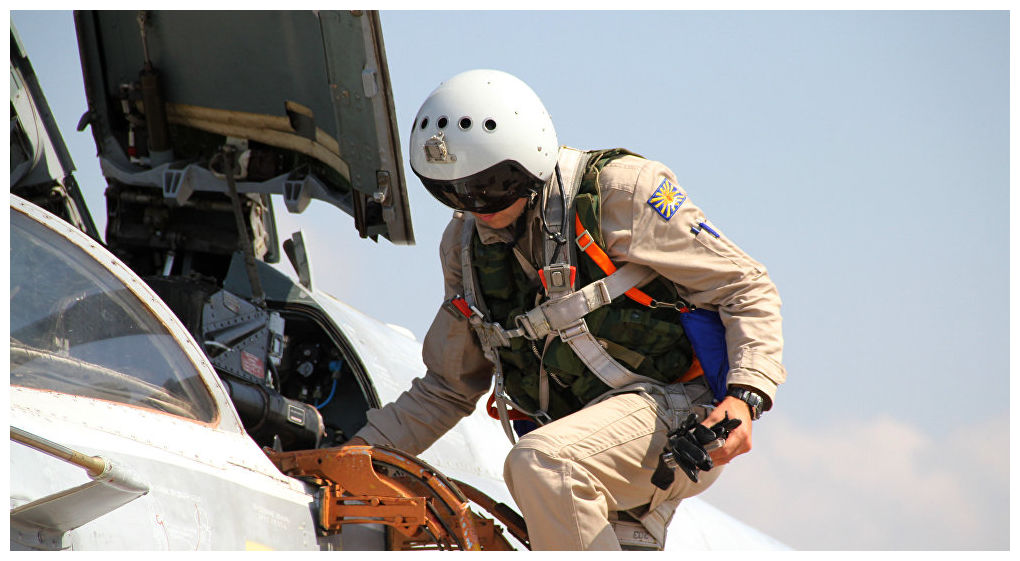
© Sputnik/ Dmitriy VinogradovRussian military air group at Hmeymim airbase in Syria.
Just a few days after the beginning of the Russian anti-ISIL campaign in Syria, it became clear that the situation in the country would soon change for better, Contra Magazin wrote.

Russia successfully destroyed several bases of various terrorist gangs and made them flee in panic. And this happened after five long years while the so-called "international community" silently watched the war to escalate, the magazine wrote.

Meanwhile, the US and its allies financed various terrorist groups and carried out military trainings in such states as Qatar, Saudi Arabia, the United Arab Emirates, Bahrain and Turkey. And once a few of the dirty deals became public, they started to justify their actions by saying that they were well-meant or designed to only support the "moderate rebels," Contra Magazin noted.

SOTT Logo Radio

SOTT Focus: Behind the Headlines: What's the real cause of war? Ask Tony Blair

Sott Talk Radio logo
As far back as the historical record goes, human existence on planet earth has been shaped and arguably defined by war. On the most significant level, i.e. the experience of those most directly and painfully affected by it, war is nothing more than the wanton slaughter of large numbers of human beings, the majority of them civilians, for no good reason. Aldous Huxley pointed out the absurdity of war when he said:

"The most shocking fact about war is that its victims and its instruments are individual human beings, and that these individual beings are condemned by the monstrous conventions of politics to murder or be murdered in quarrels not their own."

If war is not then in the interest of the average human being, why does it keep happening and what do the "mostrous coventions of politics" referred to by Huxley have to with this repeating pattern of war-making?

In early 2003, at least 11 million people in cities around the world took to the streets to protest against the planned invasion of Iraq. But their voices, and that of the silent majority they represented, were completely ignored by the political elite. Less than 10 years later, 1.5 million Iraqis lie dead and world wide terrorism has increased. So who benefits?

Join your hosts on Behind the Headlines this Sunday October 25th 2015 3-5pm EST 8-10pm CET as we explore the hidden hand behind the push for perpetual war.

Running Time: 01:58:00

Download: MP3


Document

America's heroin crisis: Obama unveils new federal initiative to combat opioid addiction

Image
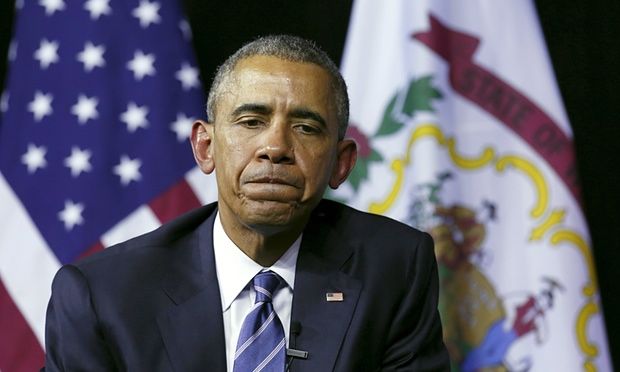
© Kevin Lamarque/ReutersPresident Obama listens to remarks while hosting a community discussion on drug addiction during a visit to Charleston, West Virginia, on Wednesday.
The president traveled on Wednesday to West Virginia to detail his plan to take action on the opioid crisis that has ravaged communities across the US.

Barack Obama has unveiled a new federal initiative to combat the opioid crisis that has ravaged communities across the United States, causing more annual deaths in some states than car accidents.


The president traveled on Wednesday to West Virginia, an epicenter of the nation's opioid and heroin epidemic, to detail his plan to try to reverse some of the harrowing statistics that have recently created a sense of urgency around substance abuse. In 2013 alone, more than 37,000 Americans died of a drug overdose, according to the Centers for Disease Control and Protection, and prescription painkillers accounted for 16,000 of those deaths.

Comment: Interesting that Obama is not addressing Big Pharma's role in America's opioid addiction: Failed war on drugs: Doctors create more heroin addicts than street dealers
Faced with a growing nationwide opioid addiction, health and consumer advocates say it's time to identify and sever ties with the culprits behind the scourge—pain medication manufacturers and the companies who promote their products.

In Massachusetts, which recently saw a spike in deaths related to heroin overdoses, police and community organizations in Gloucester implemented a new program this year - known as the Angel Initiative - to help addicts get clean in favor of arresting them for illegal drug use.

But on Wednesday, the Gloucester police force added a new effort to the initiative: laying bare the links between opioid abuse and the country's largest pharmaceutical companies.

In a widely-shared Facebook post, the department listed the contact information of chief executives of Eli Lilly, Abbott Labs, Merck, Johnson & Johnson, and Pfizer and encouraged its followers to "politely ask them what they are doing to address the opioid epidemic in the United States and if they realize that the latest data shows almost 80% of addicted persons start with a legally prescribed drug that they make."