OF THE
TIMES

"There is no truth to this idea of restructuring the intelligence community infrastructure," Trump spokesman Sean Spicer told reporters in a conference call. "All transition activities are for information gathering purposes and all discussions are tentative."Trump has tweeted his response to the negative feedback he's been getting for his criticisms of the intel community:

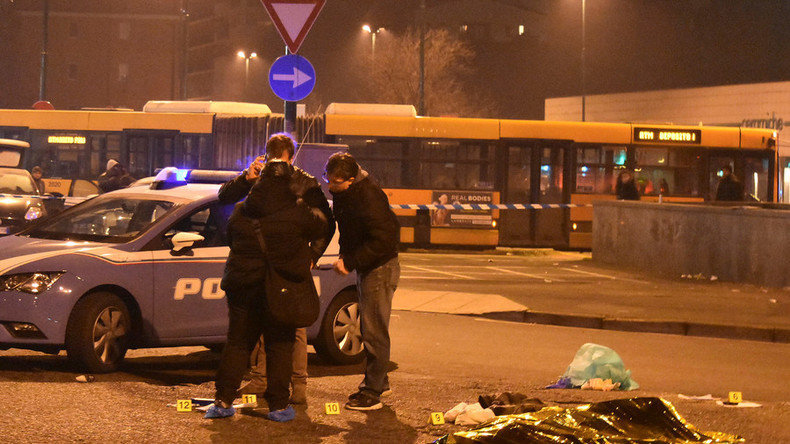
The 24-year-old Tunisian, Anis Amri, was killed following a dramatic encounter in the Piazza I Maggio in the Sesto San Giovanni area outside Milan, after a two-man patrol stopped him for questioning around 3:15 a.m. on suspicion of burglary.
One of the officers requested his identification. Amri responded by pretending to fish in his backpack for documents. Instead, he pulled a gun, shooting one officer in the shoulder.
Amri, who spoke Italian, then ducked behind a car, shouting "poliziotti bastardi" — or police bastards. The second patrolmen — trainee Luca Scatà — fired back, killing Amri, according to Italian officials.
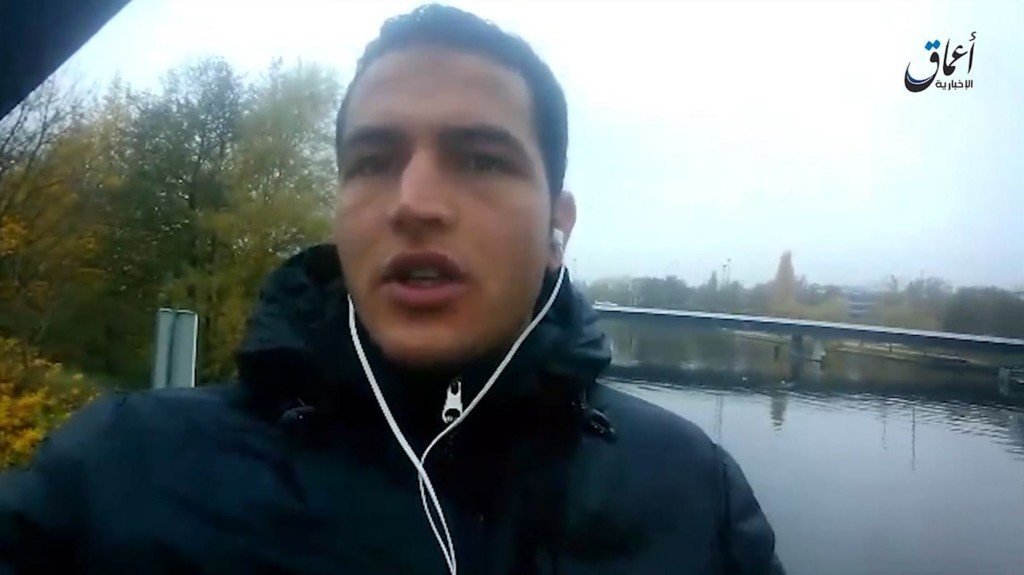
Hours after the shootout, the Islamic State-linked news agency, Amaq, released a video the purports to show Amri swearing allegiance to Abu Bakr al-Baghdadi, the self-proclaimed caliph of the Islamic State.Update (Dec. 24): Tunisian authorities have arrested three people connected to Amri, including his nephew and what they say are two members of the same "terrorist cell".Speaking in black-hooded windbreaker on an iron bridge with white railing and scrawled graffiti, he called on Muslims in Europe to rise up and strike at "crusaders."© AFP/Getty ImagesAn image grab taken from a propaganda video bearing the logo of Islamic State group -linked Amaq News Agency and released on a crypted website on Dec. 23, 2016 shows Anis Amri pledging allegiance to the Islamic State.
"God willing, we will slaughter you like pigs," he said in the video, whose date and location was not given.
He added, "to my brothers everywhere, fight for the sake of Allah. Protect our religion. Everyone can do this in their own way. People who can fight should fight, even in Europe."
The authenticity of the video could not be independently confirmed, but previous material released by Amaq has been credible.
The ministry said that Amri, a Tunisian national, had sent his 18-year-old nephew Fedi money to join him in Europe and encouraged him to pledge allegiance to the Islamic State (IS) extremist group.German police think Amri may have been involved in the murder of a 16-year-old German, Victor E., 2 months ago in Hamburg. ISIS had claimed responsibility for the attack.
The Tunisian Interior Ministry said that the "terrorist cell" was "active" between Fouchana, south of Tunis, and Oueslatia, the hometown of Amri's family in central Tunisia.
Amri, 24, is suspected of having driven a truck into a Berlin Christmas market late on December 19, killing 12 people and injuring dozens. Police say his fingerprints and wallet were found in the truck.
...
Meanwhile in Spain, police say they are investigating whether Amri was in contact with another possible extremist in Spain.
Spanish police are looking into a tip passed on by German authorities that Amri had developed a contact in Spain, Interior Minister Juan Ignacio Zoido said on December 24.
"We are studying all possible connections [between Amri] and our country, above all with one specific person," the minister told Spanish radio station Cope.
His father, Mustapha, said he was later jailed for arson in Italy when he burned down a migrant reception centre during a violent protest on the island of Lampedusa - the entry point into Europe for hundreds of thousands of migrants fleeing north Africa and the Middle East.
Amri was one of a number of migrants who set fire to their mattresses, which burned the migrant centre holding 1,200 refugees to the ground.
Many refugees were given permission to travel freely through Europe but Amri was ordered to stay in the overcrowded camp because he claimed to be an unaccompanied minor.
The fire, which destroyed three buildings, was reported to have been started by Tunisians, including Amri, who were told to go home after some were ordered to return to Tunisia.
Amri was released four months early from his four year sentence, arriving in Germany in July 2015 where he remained under the surveillance of the intelligence services for several months.
He had been arrested three times this year and his asylum application was rejected, but deportation papers were never served and he disappeared.
The Tunisian radical was known to be a supporter of Islamic State and to have received weapons training. He tried to recruit an accomplice for a terror plot - which the authorities knew about - but still remained at large.
He was under investigation for planning a 'serious act of violence against the state' and counter-terrorism officials had exchanged information about him last month.
With nowhere to go after his release, ISIS recruiters offered him protection before convincing him to sneak into Germany as a Syrian refugee, a source within Tunisia's anti-terror police revealed.
The source told MailOnline: 'Whatever he decided to do in Germany was started while he was in Italy. They gave him food and shelter and persuaded him to carry out a mission for them. It was in Italy that he was radicalised. He entered Germany posing as a Syrian refugee. He was a vulnerable young man and they showed kindness to him.
On Friday evening, the ARD television program "Focus" ("Brennpunkt") cited a file according to which an "informant" ("VP") for the North Rhine-Westphalian state criminal office had already made contact with Amri at the end of 2015. "In the ensuing days, Amri stated that he wanted to carry out attacks in Germany using weapons of war (AK 47s, explosives)," the notation reads.Update (Dec. 29): The truck's onboard computer apparently triggered the truck's automatic brakes, preventing an even larger death toll. A spokeswoman for the German Federal Prosecutor confirmed the information, adding that the weapon Amri used on the Italian policeman was the same calibre as that used on the Polish truck driver in Berlin. More details:
Between February and March of 2016, Amri was driven from Dortmund to Berlin by a "secret informant for the Intelligence Service" to whom he related his plans. The note in the file adds: "He was driven by VP and stated that his mission was to kill on behalf of Allah."
According to the Süddeutsche Zeitung, at about the same time, the state criminal agency of North Rhine-Westphalia sent a report on the Islamic network in which Amri was active to the prosecutor's office in Karlsruhe. The top German criminal prosecutor commenced investigations into Amri on suspicion of support for and membership in a terrorist group. In November, he ordered the arrest of the head of the group, Abu Walaa, as well as other hard-core members.
Amri, however, remained free. Apparently, shortly after Amri had moved to Berlin with the help of agents of the state, the prosecutor's office handed over his case to the Berlin judiciary and encouraged it to investigate him on suspicion of preparing a major state-threatening act of violence—a lesser form of terrorism. The Berlin public prosecutor's office then began its own investigation on the suspicion that Amri was merely planning a burglary to obtain money for the purpose of buying weapons.
Amri was subsequently supervised and monitored by the Berlin security authorities until September. Then the surveillance was reportedly stopped, supposedly because there was no evidence pointing to an imminent offence. The authorities in Berlin refrained from arresting him, although they had ample legal authority given the fact that Amri was an asylum-seeker whose application had been rejected and who was suspected of terrorism.
It is totally beyond belief that the failure to arrest Amri was an "accident," or was due to a lack of legal authority to take him into custody. Even Heribert Prantl, a lawyer who heads the internal affairs department of the Süddeutsche Zeitung, presumed on Friday that Amri was intentionally left alone.
He wrote: "Did the authorities accept the risks associated with Amri because they hoped that their surveillance would provide information? And did the supervising authority say nothing to other authorities because it wanted to keep the knowledge to itself?"
As the investigation goes on, new details of the terrorist attack come into the spotlight. According to a Spiegel report, Amri was active in social media just a few minutes before he rammed the truck into the Christmas market. "My brother, everything's alright," he reportedly wrote to one of his contacts via Telegram messenger. "Thank God, I'm in the car now, do you understand me? Pray for me, brother, pray for me."Update (Jan. 5): German police revealed that Amri used 14 different identities.
Meanwhile, revelations that the security services had monitored Amri for months and were aware of his radical views are fueling anger in Germany. The Tunisian national had a remarkable criminal record, links to Islamist circles and even researched ways of assembling an improvised explosive device.
The 24-year-old Tunisian man, who was killed by Milan Police two weeks after the Berlin attack happened, arrived in Germany in the summer of 2015. While there, he constantly registered under new names, the head of North Rhine-Westphalia (NRW) state's criminal police, Dieter Schuermann, told regional lawmakers Thursday, according to local media.
The German authorities know of 14 of them, including the one he was reported under as the perpetrator of the truck attack. Among other things, this allowed the man to receive social benefits under different names in different municipalities, the police chief said.
In February 2016, he was classified as a potential threat to public safety, but authorities failed to collect evidence against Amri that would stand in court. Schuermann said they "exhausted all legal powers to the limit to ward off potential dangers." Seven separate probes targeting the Tunisian had been conducted by the German authorities, but they could not come to a consensus that he would commit an actual terrorist attack.
"At that time the authorities weren't aware that Anis Amri will actually commit the attack," said the NRW police chief, cited by ARD state TV.
In addition to suspecting him of welfare fraud, the police caught him in possession of drugs and fake documents, Schuermann said. His communications had been under surveillance for six months. He was also investigated on suspicion that he had tried to obtain explosives, but no evidence was found.
As details of the German security blunder surface, NRW lawmakers are increasing pressure on state Interior Minister Ralf Jaeger to take personal responsibility for failing to prevent the Berlin attack. So far he has been focusing on investigating the causes of the Amri mishap.
"The attack was carried out by a person, who had been very well known to security authorities," admited Jaeger, according to WDR radio.
The report comes a day after the German Police reported detaining a possible accomplice of Amri. The 26-year-old Tunisian man identified as Bilel A. allegedly had dinner with the perpetrator a day before the attack, and the two had "very intense discussions," according to police spokeswoman Frauke Koehler.
"He who controls the past controls the future. He who controls the present controls the past." ― George Orwell, 1984
Comment: Part 1 of Kovacevic's series: Security Threats to Russia: FSB Counterespionage Successes of 2016