
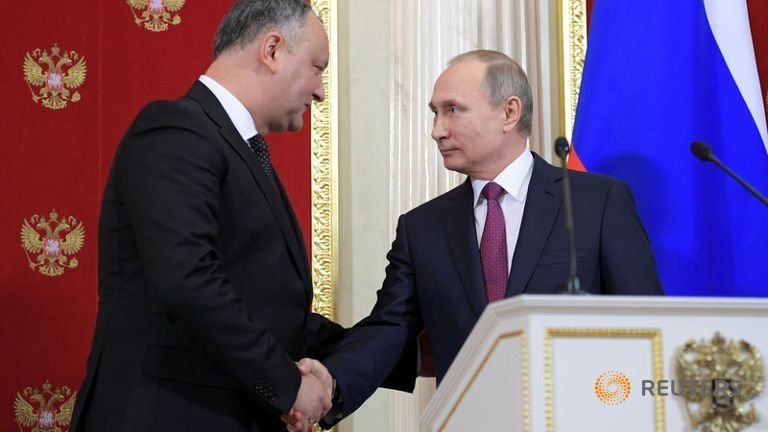
© ReutersRussian President Vladimir Putin (R) shakes hands with his Moldovan counterpart Igor Dodon during a news conference at the Kremlin in Moscow, Russia
Speaking in Moscow at a news conference with Russian President Vladimir Putin, Dodon said it was "curious" that Moldova's trade turnover with the EU had wilted since signing a political and trade pact with the bloc in 2014.
"We gained nothing from this agreement," he told reporters.
"We are not against the EU, we have common borders, but you cannot build a relationship on anti-Russia rhetoric," news agencies quoted Dodon as saying after meeting with Putin.
Dodon was elected in November with just over 50 percent of the vote after calling in his campaign for a referendum on Moldova's relationship with the EU, which came at the expense of ties with Russia. No referendum has yet been announced.













Comment: Correction to the Ukraine comment above: the move prompted an illegal coup backed by the United States. People don't take to the streets because they have a burning desire to be plundered by the EU. The events in Ukraine served as a threat to Moldova, and as such they were forced into signing the agreement with the EU. Things have not turned out well, which is no surprise. Despite the West leaning on Moldova, many of their people still have strong ties with Russia, and a large portion of their countrymen identify themselves as Russian. The days of the pro-Western political class may be numbered, but they will likely not go quietly.