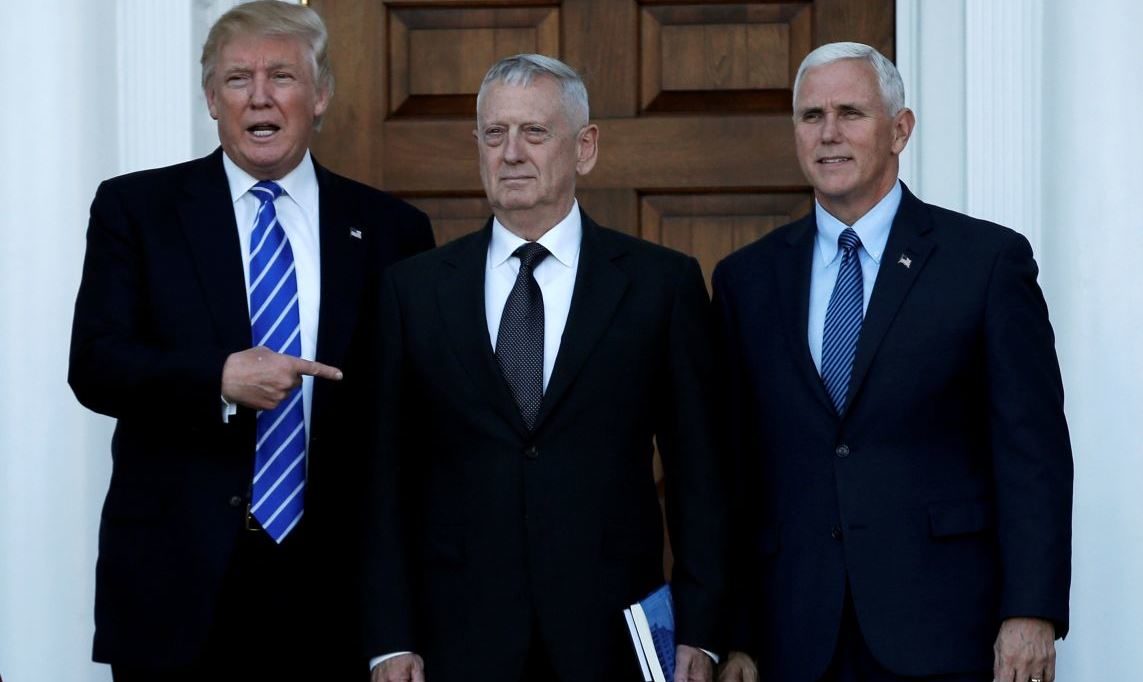
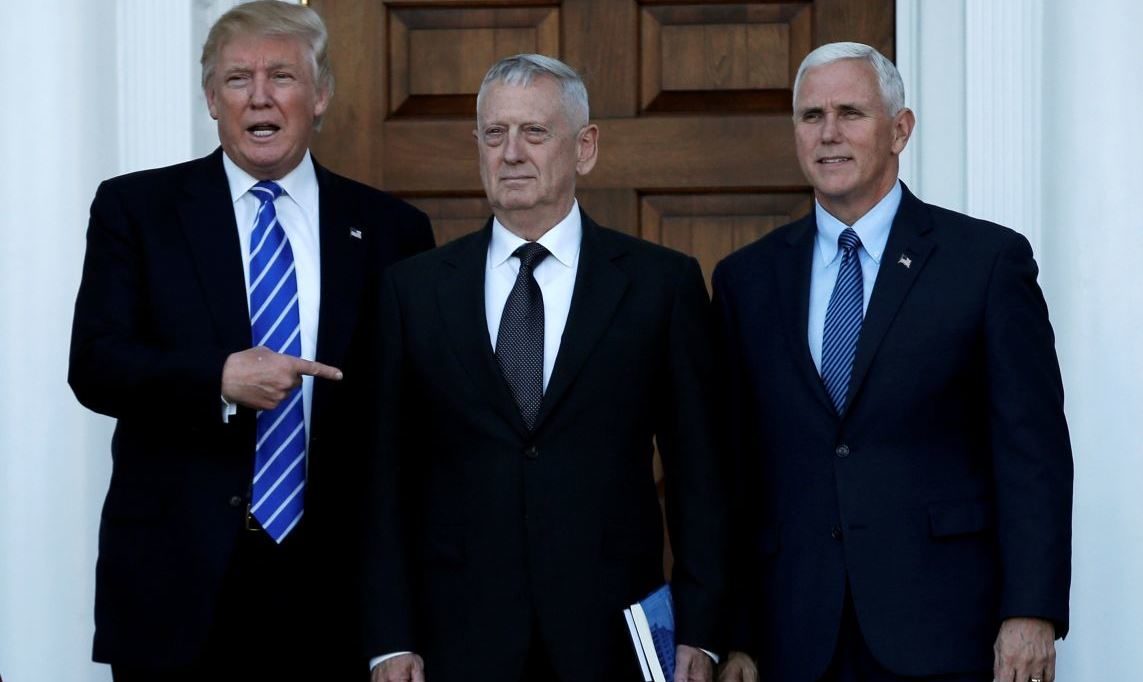
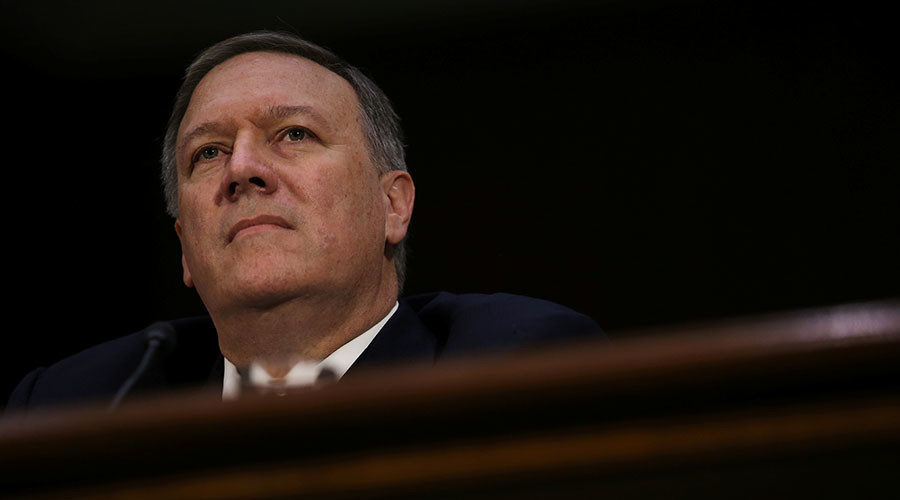
© Carolyn Kaster / Associated PressDonald Trump, James Mattis, Mike Pence
The confirmation hearings for the members of incoming President Donald Trump's national-security team show that neoconservatism dominates the U.S. government today: neoconservatism didn't end after George W. Bush's alleged certainty that "Saddam's WMD" existed in 2002, turned out to have been merely
an excuse —not an authentic reason — to invade Iraq, and so to spread death and mass-misery (as every invasion does).
Today's confirmation hearings are, in fact, making clear that virtually all of Congress is neoconservative — at least as much as was the case back in 2002, when Congress authorized the President to invade Iraq before weapons inspectors finished their work (and so Bush was able to order them out, and to invade Iraq).
These hearings are displaying 100% neoconservative U.S. Senators — no Senator who isn't a neoconservative. These Senators, of both Parties, in their questioning and comments, are all far to the right of the incoming President, Donald Trump. (Democrats might be to the 'left' of Republicans on some domestic matters, but both Parties are neoconservative, which is a far-right foreign-affairs ideology.)
This fact is shown clearly, as the Senators probe each appointee with questions that challenge him (since all of these nominees are males) as being insufficiently hostile toward Russia, and also (though to a lesser extent) insufficiently hostile toward Iran, and toward other countries (especially Syria and China) that have friendly relations with Russia. This obsessive hatred of Russia is the standard neoconservative position — neoconservatism's
defining reality, regardless of whether neoconservatives admit to being haters at all, of anything.
Each one of these nominees has, in turn, provided responses which indicate that he, too, is far to the right of Trump. The Senators are apparently satisfied with each one of the nominees, on that basis — a neoconservative basis.
















Comment: We differ with the writer of this article - the suggestion in the last paragraph is certainly not the only way Trump can successfully defend against his attackers.