OF THE
TIMES


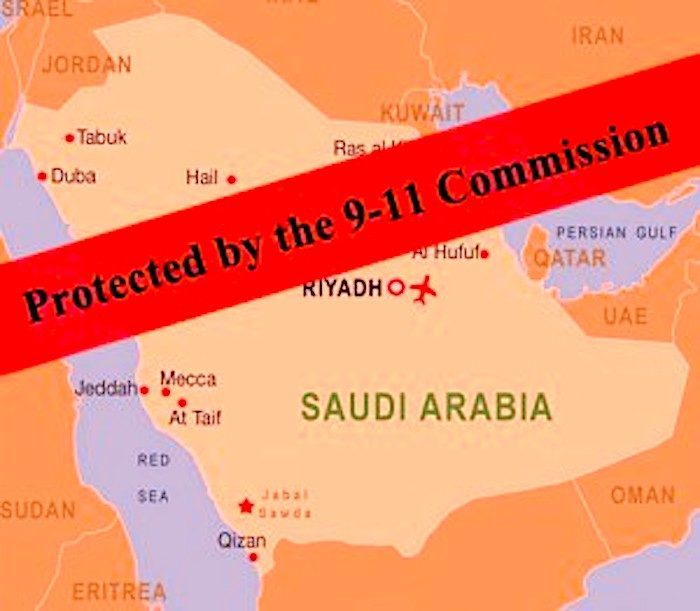
I've stopped calling what our government has done a cover-up. Cover-up suggests a passive activity. What they're doing now I call aggressive deception.With the recent arrival of our new baby daughter, free time for reading has been in extremely short supply as of late. That said, I did find some time yesterday while she was napping to read a fascinating and infuriating article published at Politico about a New York attorney's mission to hold Saudi Arabia accountable for its role in financing the September 11, 2001 terrorist attacks.
- Former Senator Bob Graham, co-chair of Congress's 9/11 Joint Inquiry
Shortly after the release of the infamous 28-pages earlier today, the White House issued a statement dismissing allegations of Saudi involvement in the attacks of 9/11. I believe such assurances are intended to prevent people from reading it in the first place, because if you actually read them, your mouth will be wide open the entire time in disbelief. There are only two conclusions any thinking person can come to after reading the 28-pages.If you missed that post the first time around, you should definitely check it out.
1. Elements within the Saudi government ran the operations behind the 9/11 attack.
2. The U.S. government covered it up.
But don't take my word for it. You should read it yourself.
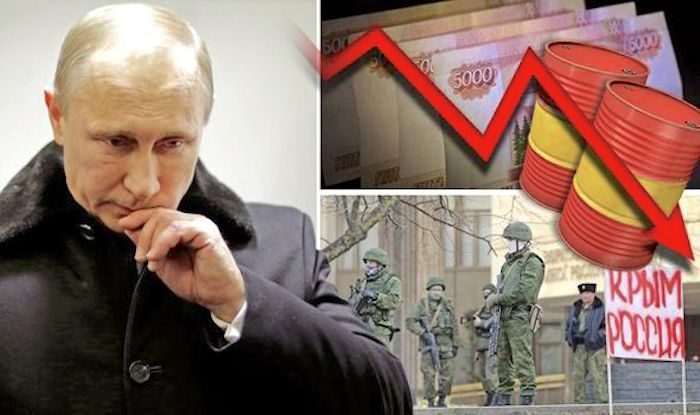
We see the Russian economy growing after those few years of difficult times...Indeed Russia's handling of the economic storms which assailed it in 2014 could serve as a text-book case study of how a modern economy should handle such storms. Not only have the Russian government's actions (as Lagarde says) been comprehensively vindicated by events, but they have confounded Western predictions of what would happen to Russia's economy, nearly all of which predicted disaster.
When the price of oil went very suddenly, from almost sometimes I think more than $100 per barrel, to a low, $27/$28 per barrel, the response by the Russian economy was very comprehensive. They took the right fiscal measures. They kept inflation under control. They adopted a very good monetary policy, which included the floating of the currency, making sure that the financial sector was stable.


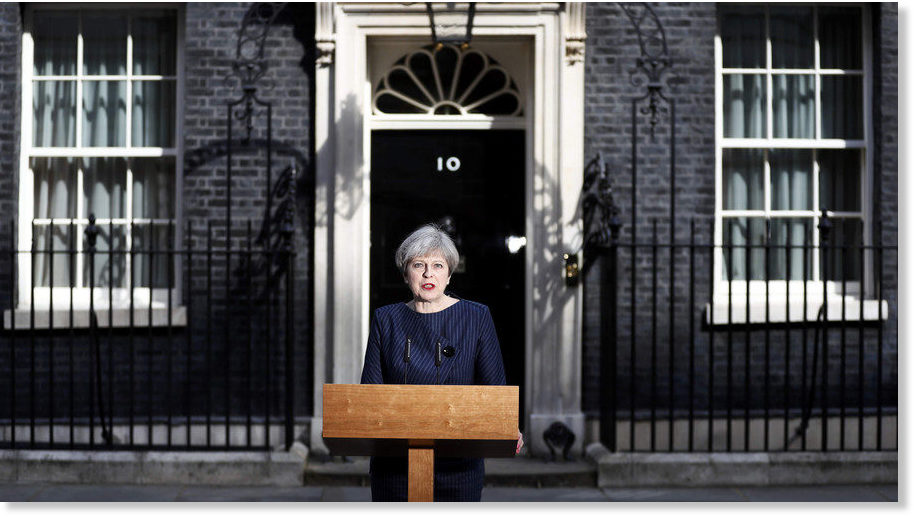
The Labour Party reacted with shock to Conservative Prime Minister Theresa May's call for a snap general election scheduled for June 8.Update 18 Apr, 2017 11:52: Resignations, outrage, optimism: MPs react to Theresa May's call for snap general election
Britain's main opposition party is well behind May's Tories in the polls. In a statement, however, Labour leader Jeremy Corbyn greeted the announcement with optimism.
His MPs however, were far more sanguine, accusing the PM of putting the popularity of her party before the nation's interests.
"Tory Party puts its own interests before the national interest," added her fellow MP and aspiring Manchester Mayor Andy Burnham.
Labour critics, however, were skeptical about the party's capacity to turn the election into a chance for government. From all sides of the political spectrum there were doubts that Corbyn and the party have it in them to take down the Tories.
"There is a degree of delusion among some Corbyn supporters which means they're setting themselves up for massive demoralization," said Richard Seymour, the author of 'Corbyn: The Strange Rebirth of Radical Politics'.
A YouGov voting intention poll published earlier this week predicted a 44 percent victory for the Tories in the event of a snap election, with 23 percent backing Corbyn's Labour.
Following Prime Minister Theresa May's call to hold a general election on June 8, politicians of all parties took to Twitter to vent their frustration, rattle their sabers, and even resign outright.Update 18 Apr, 2017 12:44: British pound hits 10wk high as May calls for early election
Reactions varied across the political spectrum.
Labour MP Tom Blenkinsop announced he would not be running almost immediately after May's announcement, citing "significant and irreconcilable differences" with his party's leadership.
Labour leader Jeremy Corbyn meanwhile appeared to embrace the move, saying it was a chance for the British people to be properly represented.
Labour's David Lammy MP said he would fight to hold his Tottenham constituency.
Jess Phillips MP, also of Labour, blasted May's decision in light of her previous statements that national interest came before partisan politics.
Tory MP Andrew Stephenson was one of a number of Conservatives who embraced the decision.
Fellow Tory MP Stephen Crabb said it was an ideal moment for an election.
Former Labour MP George Galloway, who is currently running in the Manchester Gorton by-election, tweeted that the election itself might be under threat because of the new situation.
Liberal Democrat leader Tim Farron also appeared to be spoiling for a fight, in his case on the basis of keeping the UK in the EU single market and avoiding the prospect of a 'Hard Brexit.'
Scottish National Party (SNP) leader Nicola Sturgeon argued that the election was being called to push for more austerity and urged voters to fight along national lines
Green Party London Assembly member Sian Berry urged people to donate to offset the main parties' wealthy backers.
In an official statement put out on Twitter, UKIP leader Paul Nuttall called the move "cynical."
Prominent UKIP-backer Arron Banks tweeted he would definitely be standing for election.
Sterling rose to the highest level since February after UK Prime Minister Theresa May announced she would seek to hold a snap general election on June 8.
The British currency had dropped by almost one percent against the US dollar ahead of May's surprise announcement. The pound jumped as she spoke.
Before to the speech, the British currency dropped to $1.25, the lowest in a week.
As of 12:00pm GMT, sterling rose 0.84 percent to $1.2675, hitting a two-and-a-half month high against the US dollar.
Ten-year British government bond yields rose slightly as May spoke.
Britain's blue-chip index FTSE-100 is 1.76 percent in the red.
The FTSE 250 index, which represents the 101st to the 350th largest companies listed on the London Stock Exchange, was down one percent.
"The market reaction was extremely volatile on the back of this event. The currency recovered all the losses while she was making her speech," Naeem Aslam, chief market analyst at Think Markets UK told Business Insider.
The pound is still more than 15 percent down since the Brexit referendum in June 2016, when it was trading at $1.50.
"The initial selloff in the pound was likely a bit of nervousness that Theresa May could be about to resign, once that fear was put to bed we have seen the pound surge to fresh highs above 1.2600, the highest level since early February...Pound traders obviously see PM May as a stabilizing force," said Kathleen Brooks, research director at City Index Direct.
Comment: See also: Washington raising red flag over possible Russian control of US energy supplier