OF THE
TIMES

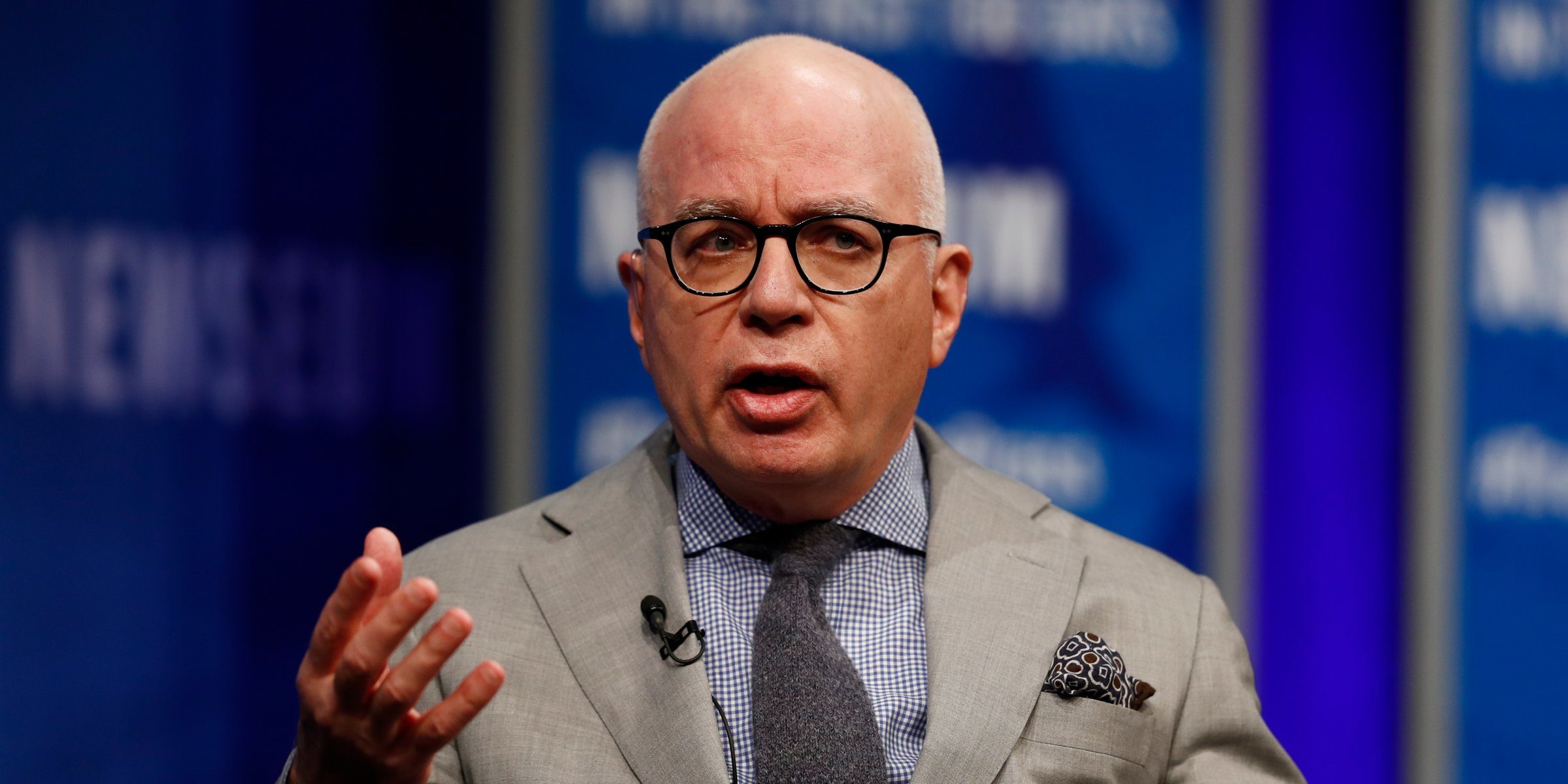
The morning show host repeated her question: "Well, let me ask you, did you talk to President? Did you interview him for this book?" Rather than simply say yes, Wolff gave this equivocating response: "I absolutely spoke to the President. Whether he realized it was an interview or not, I don't know, but it certainly was not off the record."And the Washington Post made an unlikely ally for Trump in their questioning of Wolff's credibility:
She pressed: "Do you have recordings of some of these interviews and some of these conversations?...Would you release any of those recordings, since your credibility is being questioned?" Wolff sneered: "My credibility is being questioned by a man who has less credibility than perhaps anyone who has ever walked on Earth at this point."
Wrapping up the exclusive sit-down, Guthrie pointed out: "Your former editor at Vanity Fair, Graydon Carter, said he wasn't surprised you'd written this explosive book, he was surprised they let you in the door at the White House. Are you surprised?" Wolff remarked: "You know, no. I'm a nice guy." She replied: "Did you flatter your way in?" Wolff proclaimed: "I certainly said what was ever necessary to get the story."
Wolff, for example, writes that Thomas Barrack Jr., a billionaire friend of Trump's, told a friend that Trump is "not only crazy, he's stupid." Barrack on Wednesday denied to a New York Times reporter that he ever said such a thing.
Katie Walsh, a former White House adviser, has also disputed a comment attributed to her by Wolff, that dealing with Trump was "like trying to figure out what a child wants."
White House press secretary Sarah Huckabee Sanders added her own skepticism during her daily briefing on Wednesday. "We know the book has a lot of things, so far that we've seen, that are completely untrue," she said. She was not specific, but Sanders added that Wolff's characterizations of White House operations were "the opposite of what I saw."
...
His reliability has been challenged before - over quotes, descriptions and general accounts he's provided in his many newspaper and magazine columns and in several books. Wolff has even acknowledged that he can be unreliable: As he recounted in "Burn Rate" - his best-selling book about his time as an early Internet entrepreneur - Wolff kept his bankers at bay by fabricating a story about his father-in-law having open-heart surgery.
"How many fairly grievous lies had I told?" he wrote. "How many moral lapses had I committed? How many ethical breaches had I fallen into? . . . Like many another financial conniver, I was in a short-term mode." Wolff's business collapsed in 1997.
"Burn Rate" came under siege from critics who challenged its credibility, including the long verbatim conversations that Wolff recounted despite taking scant notes. Brill's Content, a now-defunct media-review publication, cited a dozen people who disputed quotes attributed to them in the book.
Wolff followed up "Burn Rate" by taking over the media column at New York magazine, where he almost immediately ran into trouble. Judith Regan, then a hotshot book editor who had been a classmate of Wolff's at Vassar, vigorously disputed almost every paragraph of Wolff's column about her. She said she hadn't had a personal conversation with Wolff in 30 years.
Wolff's response: "She doesn't speak to me. . . . I suppose the world is full of people who no longer speak to me."
New Republic columnist Andrew Sullivan accused Wolff of putting words in his mouth when Wolff wrote in 2001 that Sullivan "believes that he is the most significant gay public intellectual in America today." Sullivan said he never made any such claim.
In a 2004 cover story for the New Republic, Michelle Cottle wrote that Wolff had become the "It Boy" of New York media after winning two National Magazine Awards for his commentary: "His quick wit, dizzying writing style, and willingness to say absolutely anything about anybody made his column a must-read," she wrote.
But she added, "Much to the annoyance of Wolff's critics, the scenes in his columns aren't recreated so much as created - springing from Wolff's imagination rather than from actual knowledge of events. Even Wolff acknowledges that conventional reporting isn't his bag." An editor who worked with Wolff told Cottle, "He is adroit at making the reader think that he has spent hours and days with his subject, when in fact he may have spent no time at all."
Even Wolff's anecdote about Trump being unaware of who Boehner was last year seems a bit suspect. The reason? Trump had tweeted about Boehner multiple times since 2011. In September 2015, for example, Trump tweeted this: "Wacky @glennbeck who always seems to be crying (worse than Boehner) speaks badly of me only because I refuse to do his show - a real nut job!"
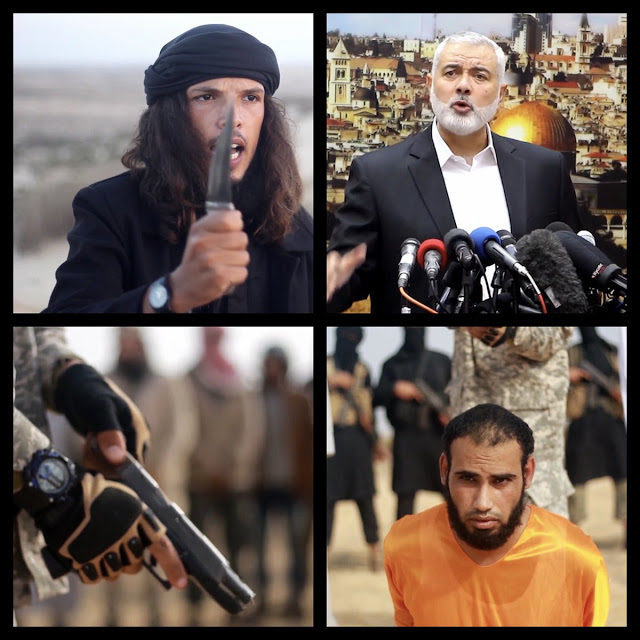
[It] begins with footage of US President Donald Trump's December 6 announcement on Jerusalem. The propaganda footage, initially released Wednesday, culminates in the execution of a former IS member pictured on his knees in an orange jumpsuit.So an ex-Hamas member kills an ex-ISIS member for supporting Hamas, because Hamas only attacks Jews in Israel, while ISIS doesn't attack Jews anywhere and gets along just fine with Israel... Yep, makes total sense. Oh, and the video was released by what is essentially an arm of Israeli intelligence.
The victim in the video, referred to as Musa Abu Zamat, is accused by his terrorist captors of smuggling weapons to Hamas' military wing from Egypt. An IS preacher, named as Abu Kazem al-Maqdisi, originally from Gaza himself, calls on IS followers to attack Hamas sites and courthouses in the Gaza Strip. Hamas is also blamed for its cooperation with Western countries and fighting Jews only in Israel. Minutes later the captor is executed by a shot to the head. The terrorist who carried out the execution was identified in news reports as being Muhammad al-Dajani, a former member of Hamas' military branch in Gaza.
Comment: It doesn't appear that Putin will have much to worry about in terms of serious competition.