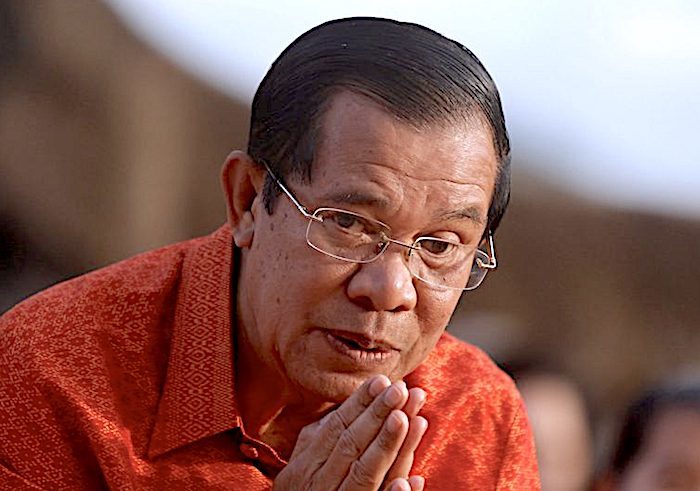
© Asia TimesCambodian Prime Minister Hun Sen Wai
During the Soviet period the USSR cooperated actively with the Association of Southeast Asian Nations (ASEAN), supporting them in their struggles for independence and in their opposition to the policies of Western countries. Following the fall of the USSR and the end of the 'Cold War', the level of cooperation between the USSR (and its successors) and the ASEAN group declined significantly. However, in the last few years the
Russian leadership has taken a number of important measures to restore the country's former relationship with the ASEAN group. As in the past, these measures relate to
economic cooperation, and to a joining of forces to resist Western countries' attempts to dictate terms to the ASEAN countries. One example of an ASEAN country that Russia is developing successful relationships with, is Cambodia.
The kingdom of Cambodia is on the southern side of the Indo-China peninsula and is
one of the least economically-developed countries in the region. Nevertheless Cambodia has voting rights in ASEAN, which makes it an attractive partner for countries wishing to obtain influence in the ASEAN group.
The West is trying to develop cooperation with Phnom Penh, but since the
USA's influence in the Asia-Pacific region as a whole is declining, while China's power is increasing, Cambodia is, increasingly, choosing to work with the latter. China is clearly taking active steps to strengthen its positions in Cambodia, and is developing trade links with it and investing large sums in its economy.
However,
Russia is also paying considerable attention to Cambodia and is widening its economic, as well as its political relations with this country. It should be pointed out that the USSR also actively cooperated with Cambodia and provided it with a significant amount of aid. One important issue in the current relations between Cambodia and Russia is the talks between the two countries on
writing off, or at least reducing, Cambodia's $1.5 billion debt. Considering the friendly relations between the two countries, there are grounds for hoping that this debt will be written off.

















Comment: Further reading: