Puppet MastersS


Info

Russian MoD: East Ghouta militants 'deliberately' undermine humanitarian & reconciliation efforts

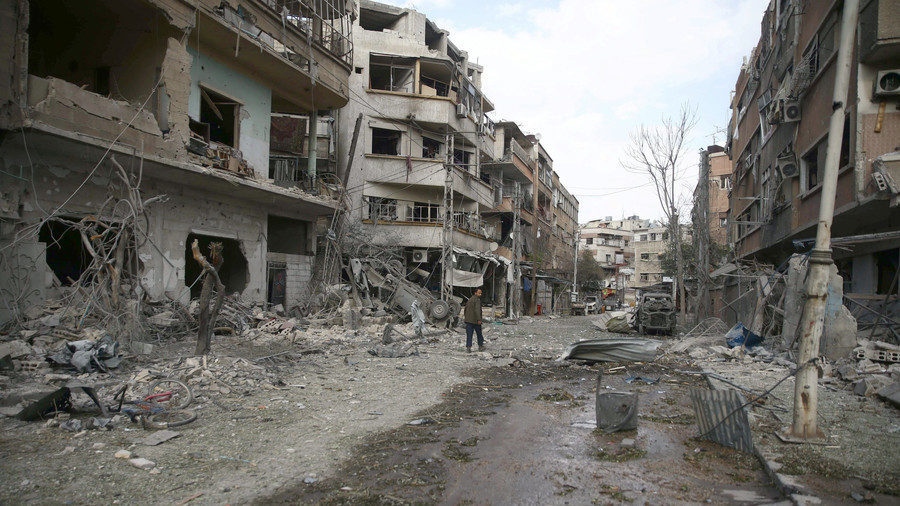
Eastern Ghouta, Damascus, Syria
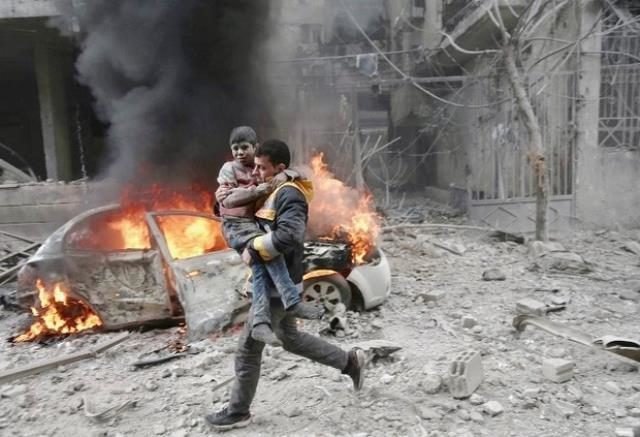
© Bassam Khabieh / ReutersEastern Ghouta, Damascus, Syria, February 23, 2018
Jihadists in control of East Ghouta are "deliberately exacerbating" the humanitarian crisis in the Damascus suburb, hindering all government attempts to help civilians, according to the Russian Center for Reconciliation in Syria.

"The humanitarian, social and economic situation in Eastern Ghouta is deliberately exacerbated by the leaders of the al-Islam, Failak Ar-Rahman and Jabhat al-Nusra illegal armed groups," Maj. Gen. Yuri Yevtushenko said on Saturday. "All attempts by the government of the Syrian Arab Republic to provide assistance to civilians in the Eastern Ghouta region are blocked by militants."


The Russian Center for Reconciliation in Syria specifically noted that Jeyish al-Islam militants continue to terrorize the local population and prevent civilians from leaving the militant-controlled areas by blocking a humanitarian corridor near Muhayam al-Waffedin.

Comment: See also: UN Security Council unanimously votes in favor of 30-day Syria ceasefire


Quenelle

UN Security Council unanimously votes in favor of 30-day Syria ceasefire

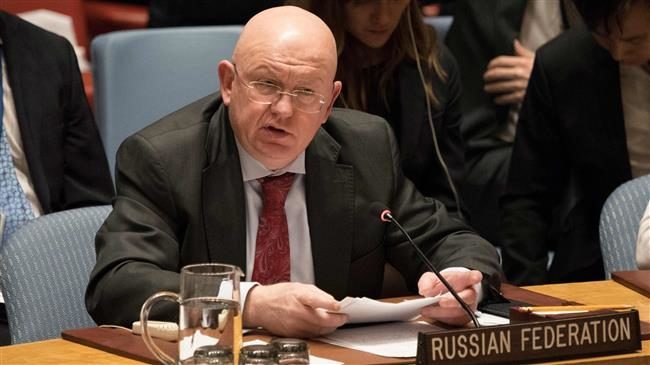
Russia's Ambassador to the UN Vasily Nebenzya
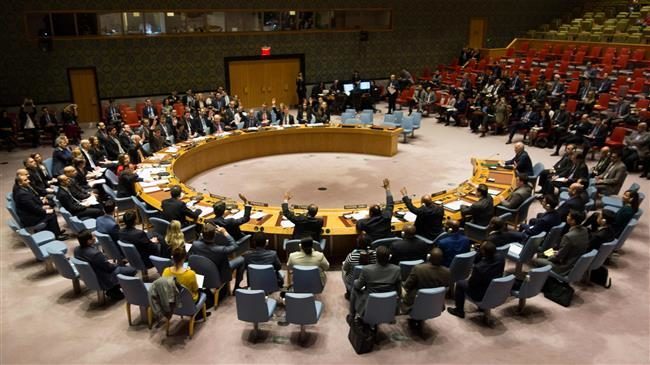
© Photos by AFPRussia's Ambassador to the UN Vasily Nebenzya speaks after a Security Council vote during a United Nations Security Council meeting on a ceasefire in Syria February 24, 2018 in New York
The United Nations Security Council unanimously votes in favor of a resolution demanding a 30-day truce in Syria 'without delay' to allow aid access and medical evacuations.

The resolution was adopted on by 15 votes to none, after several delays and a flurry of last-minute negotiations.

"It would be naïve to think that internal Syrian questions can be solved by a resolution," said Russia's Ambassador to the UN Vassily Nebenzia.

He added that Russia had "supported the intentions" behind the document, but stresses that a ceasefire was not possible "without agreement from warring parties."

Members of the Security Council vote during a United Nations Security Council meeting
Members of the Security Council vote during a United Nations Security Council meeting on a ceasefire in Syria February 24, 2018 in New York

Comment: See also:


Light Saber

Philippines leader summons US envoy to clarify 'threat to democracy' remark about Duterte in intelligence report

Duterte
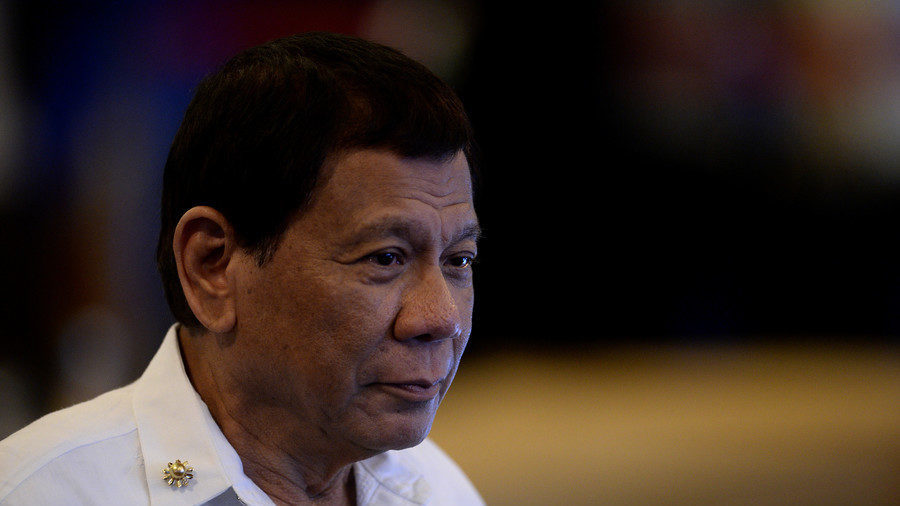
© Noel Celis / ReutersPhilippine President Rodrigo Duterte.
The US envoy in Manila has been summoned in anger and the Phillipines' embassy in the US told to give an "accurate picture" of their country to US intelligence, after a report flagged the Filipino leader as a threat to democracy.

Last week, the US intelligence community, in their Worldwide Threat Assessment report, listed President Rodrigo Duterte as one of the leaders in Southeast Asia who continue to pose a "threat" to democracy and human rights. The assessment suggested the 72-year-old leader could "suspend" the country's constitution and impose nationwide martial law. It also accused Duterte of using social media to spread government views and to counter online criticism of the government.

The tiny mention of Duterte in the 28-page report struck the heart of the Philippine administration. Taking it as an insult, Manila summoned the US ambassador to the Philippines on Thursday to explain the US intelligence assessment and to preserve a thaw in relations witnessed under Trump.

Comment:


Bad Guys

Israel, the US and Palestine: The puppets and puppeteers who maintain the status quo

Poster
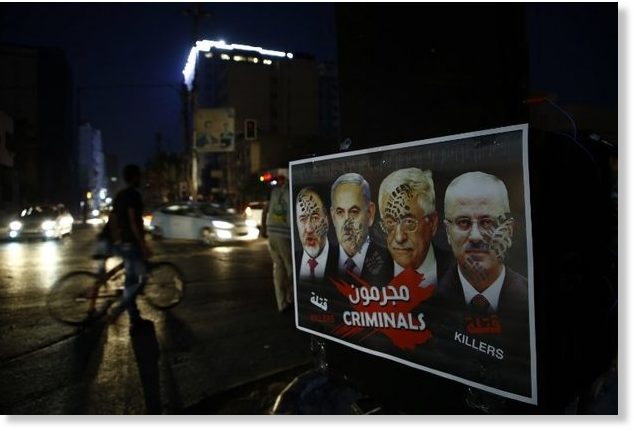
© AFPA poster showing portraits of Israeli Defence Minister Avigdor Lieberman, Israeli Prime Minister Benjamin Netanyahu, Palestinian President Mahmoud Abbas and Palestinian Prime Minister Rami Hamdallah covered in footprints is seen during a protest against the blockade on Gaza in 2017
The United States has added its weight to the Israeli side of the scales, accentuating the imbalance and deepening Palestinian hopelessness

In 1956, Israel colluded with Britain and France to invade Egypt. In the course of the Suez War, Israel defeated the Egyptian army and captured the entire Sinai Peninsula all the way up to the Suez Canal.

David Ben-Gurion, Israel's prime minister, was drunk with victory. On 7 November, he proclaimed the establishment of the Third Kingdom of Israel, which incorporated the Sinai Peninsula and the Gaza Strip. Two days later, in an abrupt reversal of policy, he announced Israel's withdrawal.

The reason for the reluctant retreat was strong pressure from the superpowers. The Soviet premier threatened rocket attacks and the deployment of volunteer forces to help the Egyptian army to deal with the tripartite aggression. President Dwight D Eisenhower issued an ultimatum: if Israel did not unconditionally withdraw, it would lose all aid from the United States and from American Jews and the US would not oppose Israel's expulsion from the UN.

Chess

China's ability to freeze US military capability

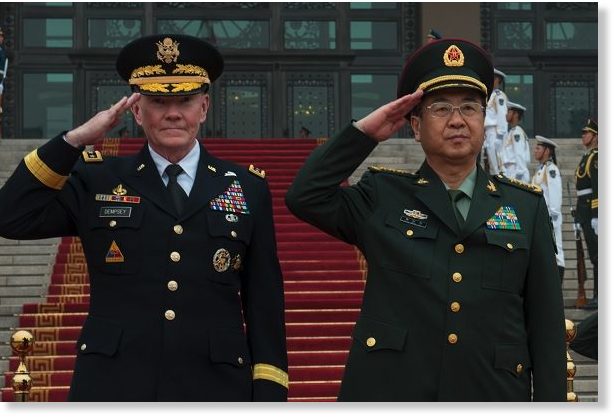
US and Chinese top brass
Last April, President Trump launched 59 Tomahawk cruise missiles into Syria.

He was responding to an alleged chemical weapons attack by Bashar al-Assad's Syrian government.

It was Trump's most dramatic military move since he became president. It was also the United States' first deliberate attack on the Syrian government.

At the exact moment he ordered the strike, Trump was also hosting China's president, Xi Jinping, for dinner at Mar-a-Lago, Trump's Florida resort. Xi's wife was also there.

Propaganda

Exposing Western media lies on East Ghouta: Why aren't civilians leaving the battle zone?

Refugees running away
A high volume of Western media coverage has been showing horrifying footage of civilians being killed and wounded in East Ghouta by Syrian government and Russian airstrikes.

East Ghouta, in the eastern countryside of Damascus province, is only a stones throw away from Damascus center. This has been one of the most consolidated areas of Syria controlled by terrorist organizations and a base for them to rain rockets and missiles on innocent civilians of government-held Damascus.

Reports have emerged that hundreds of civilians are being killed in Syrian and Russian airstrikes. However, what is the main source for these reports? Literally an ISIS supporter based in East Ghouta who has been photographed posing with an ISIS flag and doing the infamous Salafist finger salute.

Ahmad Sweida, the director of a hospital in East Ghouta

Chess

British Diplomatic Cable Reveals Western Strategy To Disintegrate Syria

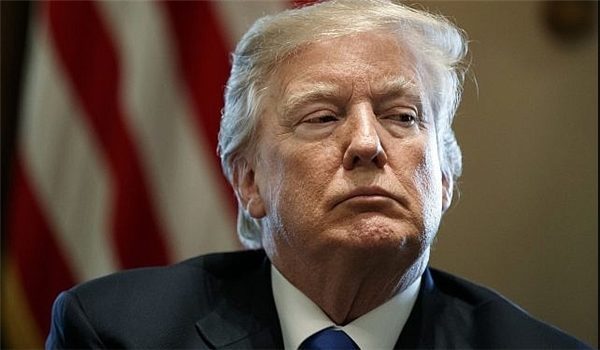
US president Donald Trump
© FNAA Lebanese newspaper wrote that it has gained access to an email from the British embassy in the US which reveals Washington's 5-paragraph plan to disintegrate Syria
The Arabic-language al-Akhbar newspaper wrote on Saturday that the US officials along with their western allies have decided to implement a detailed plan to disintegrate Syria and prolong the war in the country by continued deployment on the Eastern banks of the Euphrates.

In a somewhat familiar but precise English, Benjamin Norman - a diplomat in charge of the Middle East at the British Embassy in Washington - reports in a confidential diplomatic telegram of the first meeting of the "Small American Group on Syria" (United States, Great Britain, France, Saudi Arabia and Jordan), held in Washington on January 11, 2018.

In this five-page TD, he reveals the details of the "Western strategy" in Syria: partition of the country, sabotage of Sochi, framing of Turkey and instructions to the UN Special Representative Staffan de Mistura who leads the negotiations of Geneva. A Non Paper (8 pages) accompanies this TD in anticipation of the second meeting of the "Small Group". It was held in Paris on January 23, mainly devoted to the use of chemical weapons and the "instructions" sent by the "Small American Group" to Staffan de Mistura.

Hugh Cleary (Head of the Near and Middle East Department of the Foreign Office ), Jérôme Bonnafont (Director ANMO / North Africa and Middle East at the Quai d'Orsay), David Satterfield (US Assistant Secretary of State for the Middle East) and Jordanian Nawaf Tell and Saudi Jamal al-Aqeel attended the January 11 meeting in Washington. The American opened the meeting, stating that a second meeting would be held in Paris on January 23.

Comment: See also: 'Get ISIS and go home': Trump bucks Pentagon and State Dept. on ultimate US goal in Syria


Clock

Trump admin says US troops can stay in Iraq and Syria indefinitely - no need for permission

us troops iraq
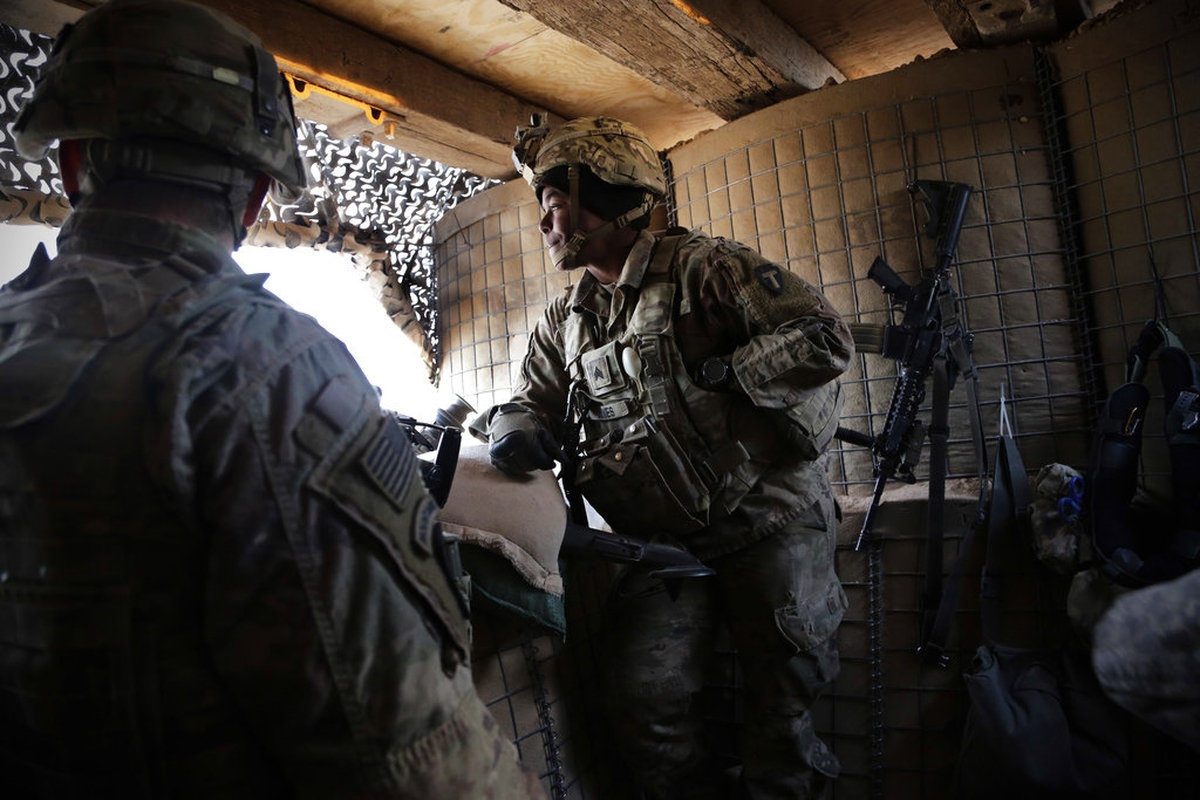
© Susannah George/APU.S. Army Sgt. Kaylin Jones, 25, stands at a guard tower on the perimeter of a small coalition outpost on the western edge of Iraq on Jan. 26, 2018.
U.S. President Donald Trump has the legal authority to keep U.S. forces in Iraq and Syria indefinitely, Pentagon and State Department officials said in a pair of letters released this week.

The letters detail the Trump administration's plan for an open-ended mission for U.S. forces, beyond the fight against the Islamic State group. The letters - first reported by The New York Times - were to Virginia Democrat Sen. Tim Kaine, an advocate for a replacement for the post-9/11 war authorizations for the use of military force.

The letters come amid various efforts from congressional Republicans and Democrats to have Congress approve a new authorization, or AUMF. Kaine and other critics argue the White House's use of authorizations from a decade and half ago is a legal stretch. He called on Trump to seek a new authorization.


Comment: The original AUMF was purposefully designed to be vague for exactly this purpose: endless war without congressional approval. Democrats and Republicans both like it that way, and you can bet Clinton would've continued and expanded the wars started by Obama. That's the way the bipartisan war party works.


"As I have long feared, we are moving from administrations exploiting the blurry authority between the president's and Congress's shared war powers to the alarming belief that Congress doesn't need to be involved at all," Kaine said in a statement, adding that Trump is "acting like a king by unilaterally starting a war."


Comment: "Starting"? These wars were started by Bush and Obama, Mr. Kaine.


In the letters to Kaine, not only is the end date of U.S. operations in Iraq and Syria vague - so is the number of U.S. troops working to defeat the remnants of ISIS. The Defense Department publicly says that number is 2,000, but has acknowledged that number omits troops on "sensitive missions."

Chess

Trump bucks Pentagon, State Dept. on US goal in Syria - doesn't include regime change

Trump in Aussi
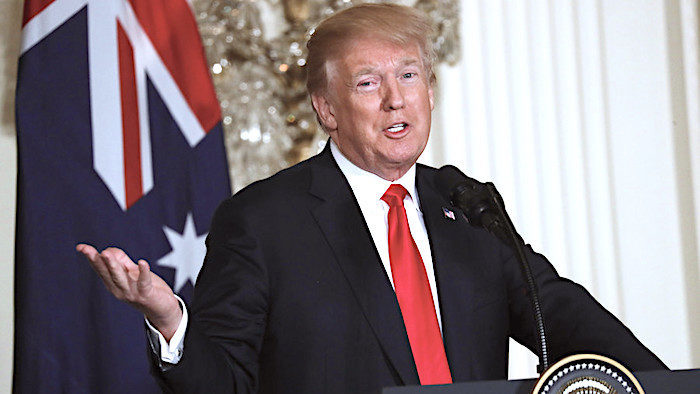
© Jonathan Ernst/ReutersUS-Australia news conference.
President Donald Trump appeared to dash the hopes of interventionists and contradict his own administration officials, by declaring that US troops' mission in Syria is limited to defeating ISIS and doesn't include regime change.

"We're there for one reason: to get ISIS and get rid of ISIS, and to go home," Trump said on Friday, during a joint press conference with Australian Prime Minister Malcolm Turnbull at the White House. "We're not there for any other reason and we've largely accomplished our goal."

While Trump did not hesitate to call the Syrian government "a humanitarian disgrace," criticizing Russia and Iran for their involvement, his comments implied the US military also had no business in Syria beyond the 'ultimate' goal of defeating Islamic State (IS, formerly ISIS/ISIL).


Comment: Mr. Trump -- Is this your final answer? (and will it be left standing?)


Nuke

Iran may withdraw from nuclear deal if banks continue to shun the Islamic Republic

JCPOAIran
© My Future America
Iran will withdraw from the 2015 nuclear deal if there is no economic benefit and major banks continue to shun the Islamic Republic, its deputy foreign minister said on Thursday.

Under the deal with Britain, China, France, Germany, Russia and the United States, Iran agreed to restrict its nuclear program in return for the removal of sanctions that have crippled its economy.

Despite that, big banks have continued to stay away for fear of falling foul of remaining U.S. sanctions - something that has hampered Iran's efforts to rebuild foreign trade and lure investment.

Adding to those concerns, U.S. President Donald Trump told the Europeans on Jan. 12 they must agree to "fix the terrible flaws of the Iran nuclear deal" or he would re-impose the sanctions Washington lifted as part of that pact.

But even if Trump relents and issues fresh "waivers" to continue suspending those sanctions, the existing situation is unacceptable for Iran, Deputy Foreign Minister Abbas Araqchi said.

"The deal would not survive this way even if the ultimatum is passed and waivers are extended," Araqchi, Iran's lead nuclear negotiator, said in a speech at the Chatham House think tank in London. "If the same policy of confusion and uncertainties about the JCPOA (Joint Comprehensive Plan of Action) continues, if companies and banks are not working with Iran, we cannot remain in a deal that has no benefit for us," Araqchi said. "That's a fact."

Comment: Clearly the US and Iran are not on the same page with the JCPOA. And behind it all is Israel, intent on widening the abyss.