Puppet MastersS


USA

USA - Has America become a dictatorship disguised as a democracy?

"The poor and the underclass are growing. Racial justice and human rights are nonexistent. They have created a repressive society and we are their unwitting accomplices. Their intention to rule rests with the annihilation of consciousness. We have been lulled into a trance. They have made us indifferent to ourselves, to others. We are focused only on our own gain."-They Live, John Carpenter
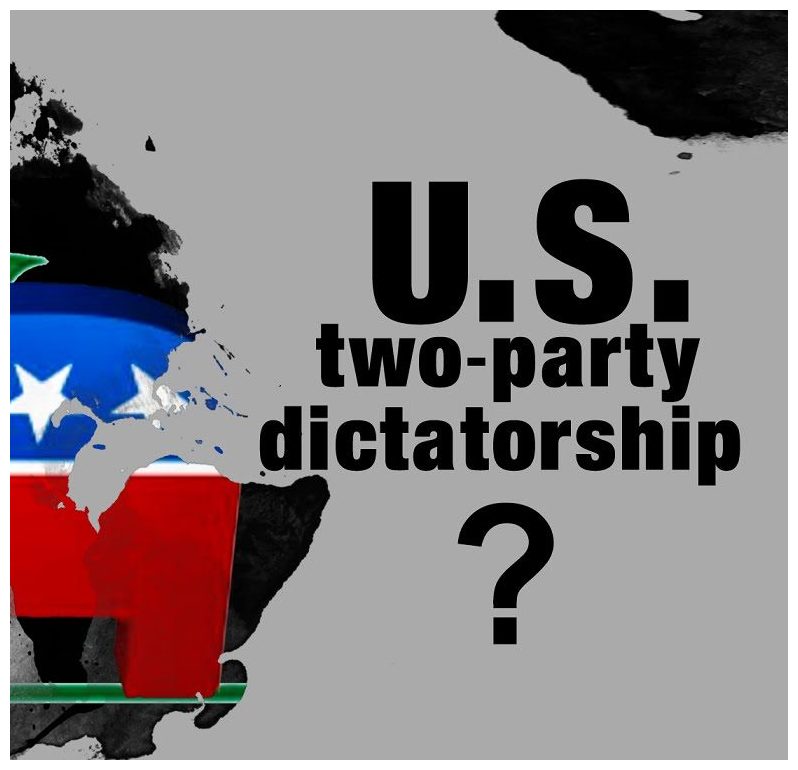
US Dictatorship
© YouTube
We're living in two worlds, you and I.

There's the world we see (or are made to see) and then there's the one we sense (and occasionally catch a glimpse of), the latter of which is a far cry from the propaganda-driven reality manufactured by the government and its corporate sponsors, including the media.

Indeed, what most Americans perceive as life in America-privileged, progressive and free-is a far cry from reality, where economic inequality is growing, real agendas and real power are buried beneath layers of Orwellian doublespeak and corporate obfuscation, and "freedom," such that it is, is meted out in small, legalistic doses by militarized police armed to the teeth.

All is not as it seems.

"You see them on the street. You watch them on TV. You might even vote for one this fall. You think they're people just like you. You're wrong. Dead wrong."

This is the premise of John Carpenter's film They Live, which was released 30 years ago in November 1988 and remains unnervingly, chillingly appropriate for our modern age.

Best known for his horror film Halloween, which assumes that there is a form of evil so dark that it can't be killed, Carpenter's larger body of work is infused with a strong anti-authoritarian, anti-establishment, laconic bent that speaks to the filmmaker's concerns about the unraveling of our society, particularly our government.

Time and again, Carpenter portrays the government working against its own citizens, a populace out of touch with reality, technology run amok, and a future more horrific than any horror film.

In Escape from New York, Carpenter presents fascism as the future of America.

In The Thing, a remake of the 1951 sci-fi classic of the same name, Carpenter presupposes that increasingly we are all becoming dehumanized.

Black Cat

A murder in the consulate: Jamal Khashoggi timeline

MbS Khashoggi
© Saudi Gazette/Associated PressCrown Prince Mohhmad bin Salman • Journalist Jamal Khashoggi
After days of denial, Saudi Arabia has now said that the writer Jamal Khashoggi died in a 'fist fight' at its Istanbul consulate. Martin Chulov pieces together events surrounding this death and the investigation, and links to Riyadh's controversial crown prince

The Saudi Arabian consulate in Istanbul is a homely looking place, much smaller than it seems, nestled into a quiet suburban street, and painted pastel yellow. Were it not for a giant steel door and a green flag flying on the roof - both sporting two large swords - it could easily be an Ottoman-era cottage like many nearby.

Police barriers to the left of the building mark a point where visitors gather before being allowed through to apply for visas or tend to official business. On 2 October one Saudi citizen, Jamal Khashoggi, stood at the fence line, pondering his next move. Khashoggi needed to deal with paperwork that proved he had the legal right to marry the woman nervously standing with him that day, his new Turkish fiancee, Hatice Cengiz. He paced the barricade for around 20 minutes, removed his two phones from his blazer and gave them to Cengiz. "Wish me luck," Khashoggi said. "This will be a birthday present," she replied.

Pirates

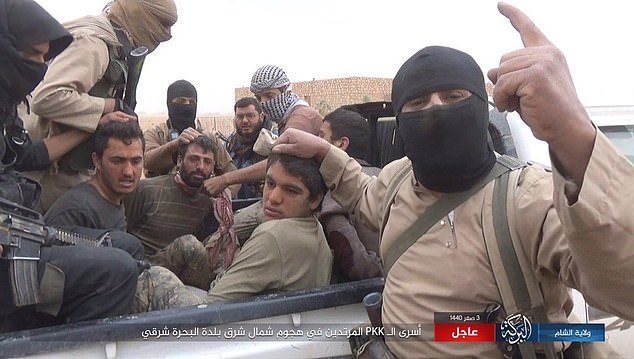
SOTT Focus: 700 Hostages Taken by ISIS Under US Military Watch? America's Spiteful Efforts to Prevent Syria's Recovery

ISIS hostages kidnapped hostages SDF
A photo shared on social media allegedly taken during an ISIS attack on U.S.-backed Syrian Democratic Forces in the same area as the refugee camp where terrorists kidnapped hundreds.
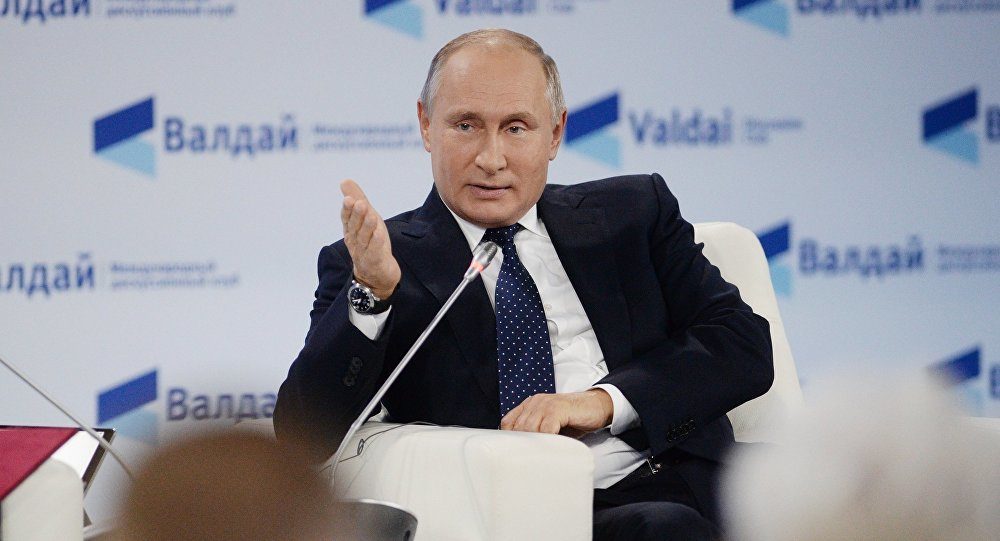
Speaking at the 15th annual Valdai forum in Sochi, in-between hilarious exchanges about the benefits of Western sanctions on the Russian cheese industry, President Putin made a number of strong statements directed at his 'Western partners'. These included an announcement that Russia is gradually 'de-dollarizing' its economy for security reasons; a droll warning that, should the worst come to pass and nuclear war break out, at least Russians would go to heaven as martyrs whereas her enemies would drop dead without time to repent; and a reminder that Russia has surpassed its competitors, for the foreseeable future, in hypersonic missiles. Far less publicized was his revelation about a recent incident involving ISIS in the Deir ez-Zor region of eastern Syria:
"We now see what is happening on the left bank of the Euphrates River, our colleagues know that. This territory is under the protection of our American partners, they rely there on the Kurdish armed forces. But they obviously did not work it through, members of Daesh remained in several settlements," Putin said at the annual Valdai Discussion Club meeting in Sochi.

The president further stressed that Daesh had recently started expanding its presence, taking 130 families hostage, which is nearly 700 people, including US and European nationals, in part of Syria controlled by US-backed forces.

"They [terrorists] put forward ultimatums and certain demands, and warned that if these ultimatums are not followed up to, they will be gunning down 10 people everyday. The day before yesterday they executed ten people," Putin stressed.

"Our information shows that several citizens of the United States and [some] European countries were also taken hostage [by Daesh]," Putin added.
You can listen to Putin describe this issue as a disaster, about which Western governments are keeping quiet, in this video, starting from 4:46. The reason they do not wish to talk about it is, of course, that it is not only an embarrassment for US coalition forces, but that it highlights their transparent intention to prevent the stabilization and reconstruction of war-torn Syria.

putin valdai
© Sputnik / Sergey MamontovVladimir Putin at Valdai Discussion Club Forum

Snakes in Suits

Bolton: Russia's position is clearly understood but US has yet to finalize its position on START treaty

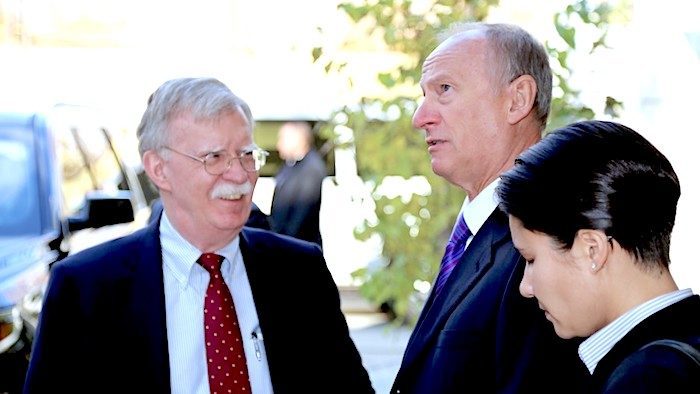
Nikolay Patrushev Bolton
© SputnikNikolay Patrushev and John Bolton
Following hours of talks behind closed doors in Moscow, US National Security Advisor John Bolton said that he now understands Russia's take on things much better, and added that more consultations on arms treaties are needed.

Bolton, the alleged mastermind behind the US pullout from the historic INF treaty, met with Secretary of Russian Security Council, Nikolay Patrushev on Monday. He arrived to Moscow shortly after the US President Donald Trump announced his desire to withdraw from the Intermediate-Range Nuclear Forces Treaty (INF).

The main issue with the INF treaty, Bolton said in an interview to the Ekho Moskvy radio station, is that the weaponry systems it concerns are no longer exclusively operated by the US and Russia. Other countries, including China and North Korea, are developing and testing such systems, therefore the issue cannot be solved only by the two countries.

Apart from that, he also cited the "concerns" of the US and its allies over alleged Russian violations of the treaty, without detailing the supposed violations. Moscow has repeatedly denied such accusations. But the US still believes that Russia wants to develop intermediate-range missiles, prohibited by the INF.

Comment: See also:


Attention

Analyst: A US pullout from INF treaty may prompt other countries to revise military plans

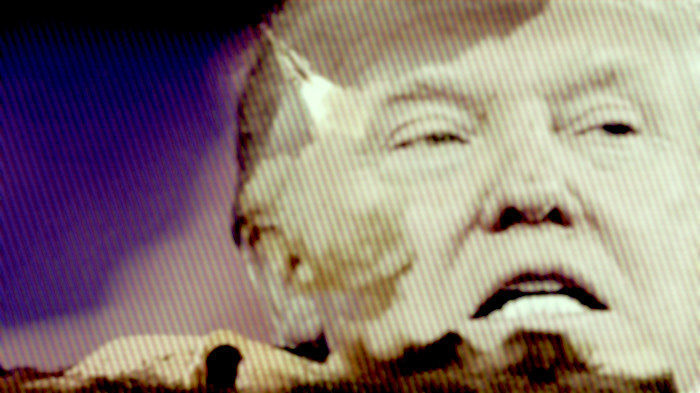
Trump face rocket
© Doug Ross
The United States' decision to quit the Intermediate Nuclear Force Treaty will foment many countries' distrust towards Washington and undermine strategic stability, the chief of the European security section at the Institute of Europe under the Russian Academy of Sciences, MGIMO University professor Dmitry Danilov told TASS.

In his opinion this step "shakes loose the military-political situation in the most serious way."
"If the INF Treaty ceases to exist, there will emerge problems with finding alternative elements of maintaining the strategic balance, in the first place, nuclear one. In a situation like this it will be necessary to take steps that would enable Russia and other countries to compensate for the imbalances at the national level and neutralize the potential risks and challenges that will emerge," he said.
Danilov believes that the United States' pullout from the INF Treaty would be tantamount to utter collapse of arms control.
"Trust towards the United States' ability to act in a responsible way in the arms control space and to honor the existing international treaties will be hopelessly wasted. Washington's credibility as a partner will be considerably undermined. This is true not of only Russia-US or Russia-NATO relations, but of far wider problems related with the erosion of nuclear non-proliferation.

"The United States' unilateral actions and pullout from the treaty will reduce to a critical low other countries' certainty about the ability of great powers to maintain the nuclear and strategic balances, non-proliferation and arms control."
The United States' decision to sever the INF Treaty, Danilov believes, may cause the most negative effect on Euro-Atlantic relations.

Comment: See also:


Boat

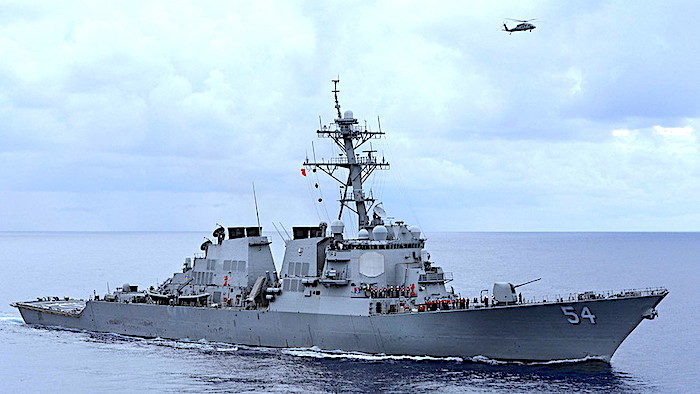
Two US warships enter Taiwan Strait as feud with China over 'freedom of navigation' escalates

US ship
© ReutersU.S. Navy guided-missile destroyer USS Curtis Wilbur.
Two US warships have reportedly passed through the Taiwan Strait, a move that will likely be viewed by Beijing as yet another escalation amid Washington's ongoing operation to impose freedom of navigation in the South China Sea.

The USS Antietam, a guided missile cruiser, and the USS Curtis Wilbur, a guided missile destroyer, traveled through the strait Monday, sailing from south to north, the US Navy said, confirming earlier reports from Taiwan's Defense Ministry.

The ships' passage through the strait demonstrates "the US commitment to a free and open Indo-Pacific," Cmdr. Nate Christensen, a spokesman for US Pacific Fleet, told CNN.

The last time US naval vessels passed through the strait was in July.

Last week it was reported that US officials were mulling an operation that would send warships through the waterway, as part of its ongoing efforts to impose free navigation in the South China Sea.

Comment: See also:


Attention

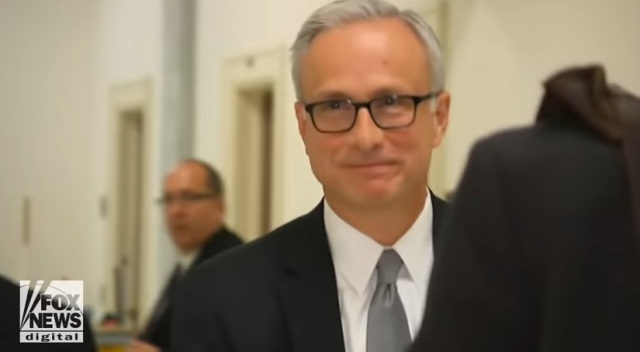
Senior FBI official caught accepting gifts from journalists but "criminal prosecution was declined"?

James Baker
© Fox News/screengrabformer FBI Chief Legal Counsel (now retired) James Baker
The DOJ Office of Inspector General released an interesting investigative summary report today following a review of a "senior FBI official" accepting tickets from a "television news corespondent" and lying to investigators about the events.

Comment: James Baker: swamp creature par excellence


Rocket

All you need to know about the Nuclear Arms Treaty with Russia that Trump wants to quit

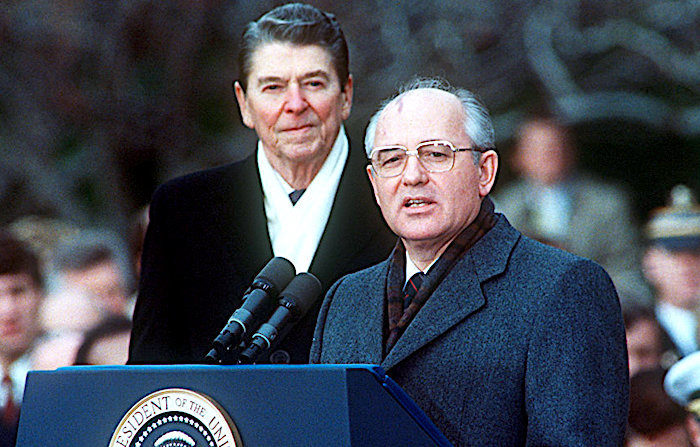
Reagan and Gorbachov
© AFP 2018/Jerome DelayFormer US President Ronald Reagan • Former USSR President Mikhail Gorbachev
On Saturday, Donald Trump announced that the United States would withdraw from the nuclear arms control agreement with Russia, commonly referred to as the Intermediate-Range Nuclear Forces Treaty (INF). Sputnik offers insight into what the treaty is about and what Russia's and America's takes are on it.

What's the Big Deal?

The INF deal was big, in fact, but we can realize its importance only if we take a look at the international situation in the mid-1970s. By that time, the two superpowers had roughly achieved strategic parity after three decades of the overwhelming dominance of the US in nuclear force.

While the Cold War between the United States and the Soviet Union was going through a period of détente, Washington began to modify its forward-based system in Europe with submarine-launched and intermediate-range ballistic missiles. This was seen as a cause for concern in Moscow, which responded by upgrading the aging missiles on its Western flank with state-of-the-art weapons, classified by NATO as SS-20 "Pioneer." These strategic nukes allowed the Soviet Union to place all major facilities in Western Europe in its crosshairs, thus obtaining a perceived military advantage in Europe.

Comment: Without China, or any other sophisticated super power of similar capabilities signing onto the agreement, both Russia and the US are at a disadvantage as the only two countries in restraint. With the dissolution, all restraint will be lifted and the risk will magnify for each country - including China and all others. A new deal, encompassing multi-countries is in order. But is that where this is going?

See also:


Arrow Down

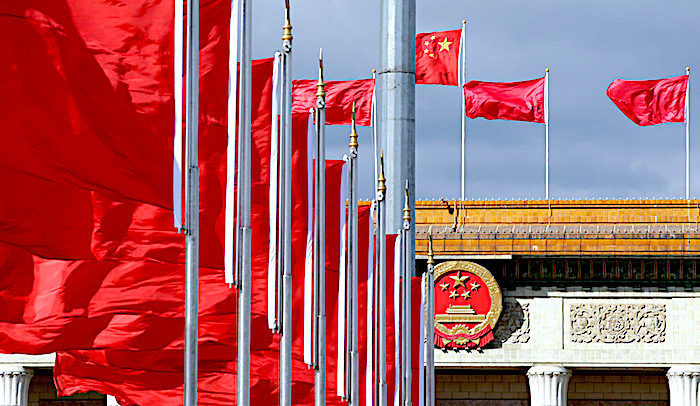
Beijing slams Trump's plan to ditch 'crucial' INF treaty, bodes 'multilateral negative effect'

Beijing, flags
© Reuters / JASON LEE
Beijing has become the latest to oppose Donald Trump's decision to pull out of what it branded a "crucial" nuclear treaty with Russia, with its foreign minister warning it would have a "multilateral negative effect."

Tagging on to the ever-growing choir of opposing voices, foreign ministry spokeswoman Hua Chunying told a regular news briefing that Beijing does not support Trump's decision to pull out from the Intermediate-Range Nuclear Forces Treaty (INF Treaty).

"The US unilateral withdrawal from the treaty [INF] will have a multilateral negative effect," the Chinese diplomat said, before adding the treaty is "a very important document on arms control. The treaty remains crucial in the modern era."


Comment: China is not a signed party to the treaty. Trump wants a trilateral agreement.


Comment: Treaty architecture is being dismantled. Back to the drawing board with full disclosures and new partners? Or is this a means to escalate beyond imagination?


Attention

The Khashoggi murder exposes Trump admin's dependency on Saudis

MbS  Trump
© Fareed ZakariaCrown Prince Mohammed bin Salman • US President Donald Trump
The murder of Saudi dissident journalist Jamal Khashoggi has come at time when the Trump administration is at its most dependent on Riyadh for the success of both its foreign and domestic policies.

Donald Trump has spoken repeatedly about US arms sales to Saudi Arabia, hugely overstating the actual figures. The president also benefits personally by Saudi royals and officials spending freely at his luxury hotel.

But he is reliant on Riyadh for more urgent and consequential reasons.

In three weeks' time, sweeping US sanctions go into effect on Iran, as the administration seeks to cut off the country's oil exports. Since walking out of an international nuclear deal with Iran in May, Trump has made crippling the Iranian economy a foreign policy priority, though his officials deny the aim is regime change.

Without a compensating increase in oil supply from other oil suppliers, Saudi Arabia foremost, the sanctions that go into effect on 4 November will produce a spike in oil prices just ahead of the finely balanced midterm elections.

Comment: With US elections a few weeks away, the timing of the Khashoggi murder is not only deeply disturbing, it is inconvenient. The Saudis have a part to play in Trump's Iranian oil sanction plan. Will they comply and keep US voters in Trump's court?