Puppet MastersS


Oil Well

Saudi Arabia claims scandal over Khashoggi killing won't trigger oil crisis

Gas pumps
© Reuters/Richard Carson
There will not be a repeat of the 1973 oil embargo despite the crisis over the murder of journalist Jamal Khashoggi at the Saudi consulate in Istanbul, the Saudi energy minister reportedly said on Monday.

On Friday, Saudi Arabia admitted for the first time that Khashoggi - a critic of Saudi leaders and former Washington Post journalist - had been killed by Saudi agents. Over the weekend, the US increased pressure on Riyadh with talk of possible sanctions. Some have accused Crown Prince Mohammed bin Salman of ordering the killing, a charge he has denied.

Speculation about possible sanctions against Riyadh have raised questions about the repeat of the 1973 oil crisis, when OPEC proclaimed an oil embargo against countries supporting Israel during the Yom Kippur War. The United States, Canada, the United Kingdom, Japan and the Netherlands were among the first sanctioned countries.

Comment: So...Saudis have no intent, but there are other players and the future is open.


Target

Professor gives reasons why Trump's exit of INF treaty focuses in-part on China

China's missiles
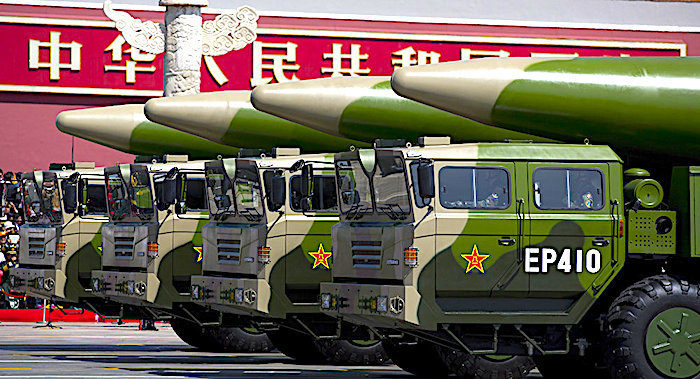
© AFP 2018 / Andy WongChina's DF-26 ballistic missiles
Russian and European officials from Germany to Italy have slammed President Trump's decision to withdraw from the Intermediate-Range Nuclear Forces Treaty, a 1987 arms control deal meant to reduce the risk of nuclear war. Speaking to Sputnik, strategic arms control specialist Dr. Peter Kuznick explained why Washington's move is so dangerous.

Sputnik: What is your reaction to the US move, and particularly the claims of Russian violations of the treaty?

Peter Kuznick: It's a very dangerous move on the part of the United States. It further erodes any effort to control the nuclear arms race. We've seen an escalation already, certainly in the rhetoric. Donald Trump said during the campaign that 'what's the point of having nuclear weapons if we can't use them' which to most people would mean let's get rid of the nuclear weapons, but to Trump means 'let's figure out a way to make them useable.' So the world has gotten much more dangerous.

We already had eroded the [strategic security] structure in 2002 when the United States pulled out of the Anti-Ballistic Missile Treaty, and in President Putin's March 1 state of the nation address, he focused on the 2002 move by the United States as very destabilizing, and to use it in part to justify the fact that Russia now is developing five new nuclear weapons, all of which can evade US ballistic missile systems.

Arrow Down

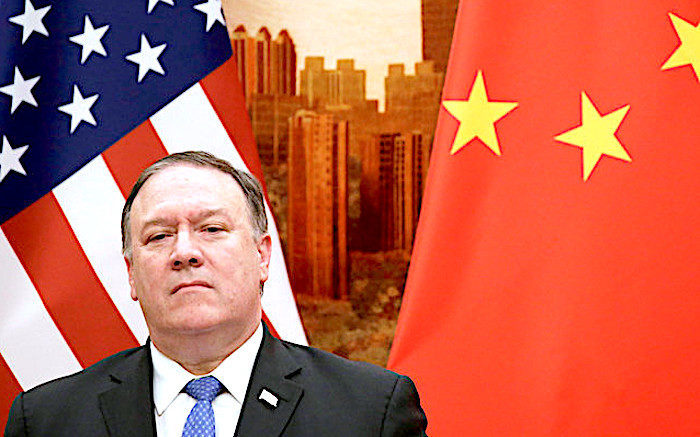
Pompeo slammed by China after he warns Latin America against Asian powerhouse

Pompeo CH/Amflags
© Reuters/Jason LeeUS Secretary of State Mike Pompeo
Chinese newspapers have slammed US Secretary of State Mike Pompeo after he told the media that "when China comes calling it's not always to the good of your citizens" and warning of the hidden risks of Chinese investment.

Pompeo was meeting heads of state in Panama and Mexico. It was during last week's Latin America tour that Pompeo lashed out at China, telling reporters in Mexico City that "when they [China] show up with deals that seem to be too good to be true it's often the case that they, in fact, are."

In Panama, Pompeo also said that China was engaging in "predatory economic activity" and that when dealing with Chinese investment, countries should have their "eyes wide open."

State-run paper China Daily took a swipe back at the secretary of state, saying in an editorial on Monday that his comments were "ignorant and malicious."

Comment: See also:


Attention

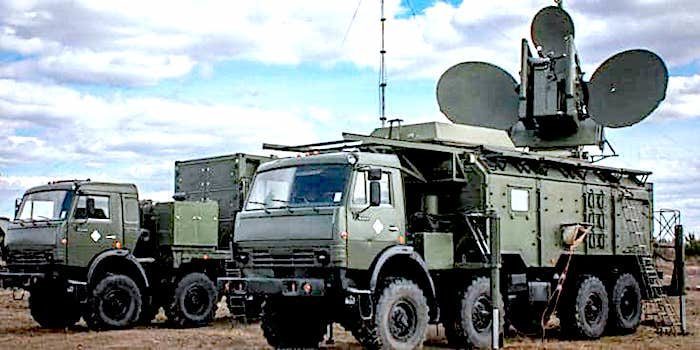
Syria: The US military has disabled Russian signaling devices for the first time

Vehicles with signal stuff
© Unknown
The United States military has disabled the Russian signaling devices for the "first time in Syria" Alexander Sitnikov, wrote in Svobodnaya Pressa, on a report explaining the ways to counter Putin's threats to the US military.
"The Pentagon prefers to keep the details of its confrontation with Russian means of electronic warfare secret. At times, some retired US generals are praising our electronic systems as the best in the world, even though they still consider the US military the strongest on the planet.

"What kind of American power can be spoken, if almost all of its weapons are connected to satellite communications, GPS, mobile Internet, and electronic warfare devices, and as is known these connections can be easily disabled. Yet Americans are confident in their power.

"It is quite natural that Syria, torn by the seven-year war, has become the main field of the indirect battle between new types of American and Russian weapons including electronic warfare."
The DARPA report, published recently by the Advanced Defense Research Projects Agency, on the implementation of a $ 9.6 million contract, received a special attention from military experts and journalists. Interestingly, the funds were allocated to provide US forces, in Syria and Iraq, with alternative communications systems capable of operating under strong electronic radio interference conditions.

Gold Coins

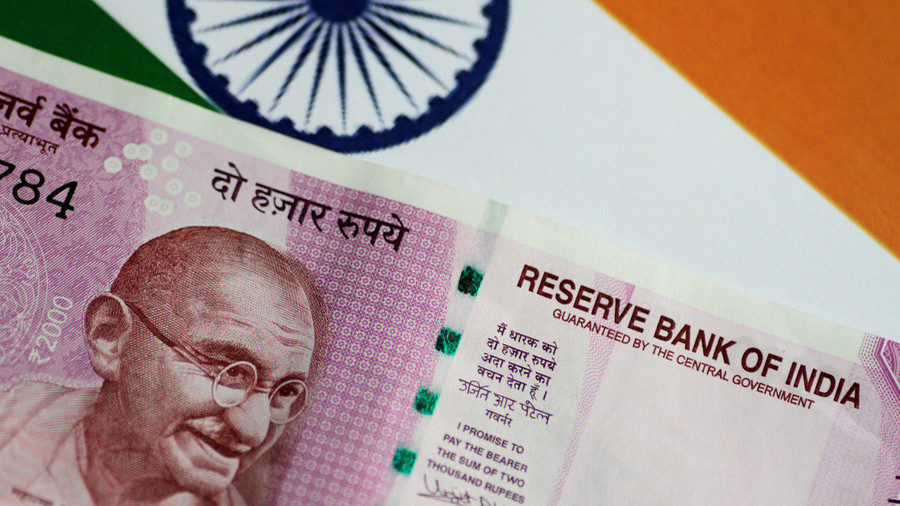
India continues offloading US Treasuries and buying gold to bolster its national currency

India rupee
© Reuters / Thomas White
The Reserve Bank of India (RBI) is cutting down on its holding of US Treasuries, joining a number of countries which have been dumping US debt to bolster domestic economies.

The country's share of US sovereign debt saw a gradual decline from $157 billion in March to $140 billion as of the end of August, according to the latest US Treasury report. RBI needed US dollars to sell in the market to stop the steep slide of its currency, the rupee. The bank has sold foreign currencies worth $18.6 billion in the spot market since April to rein the value of the rupee.

Foreign portfolio investors (FPI) have pulled out more than $10 billion of their investments in the Indian markets since April. That has resulted in rupee losing more than 10 percent in value against the dollar.

Comment: By using the dollar as a weapon the US is hastening its demise as a reserve currency:


Vader

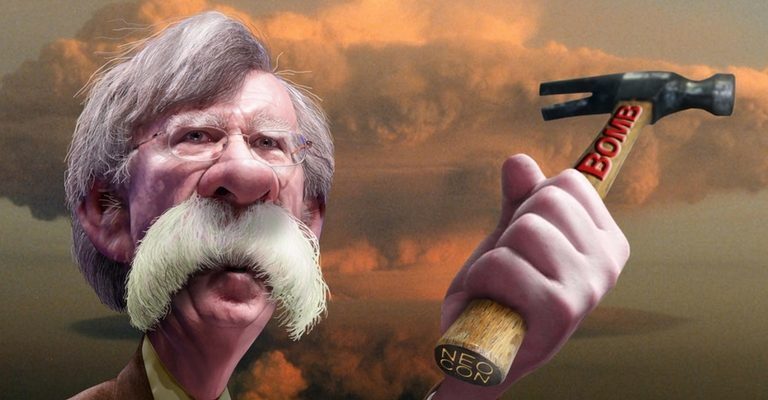
Withdraw first, ask later: Having nuked Russia-US relations, now Bolton arrives in Moscow 'to talk'

John Bolton
© themindunleashed.com
The alleged mastermind behind the US pullout from the historic INF treaty, John Bolton will expect a wintry reception in Moscow, with only the embers of the long-forgotten Helsinki summit to warm the parties.

Washington can be commended at least on laying its cards on the table with Friday's announcement by Donald Trump that he was considering withdrawing from the Gorbachev-Reagan 1987 agreement, which limits both sides from producing intermediate range missiles.

But the news is likely to cast a pall over Bolton's two-day visit, during which the National Security Advisor will meet not only his Russian counterpart Nikolay Patrushev, but foreign minister Sergey Lavrov and, on Tuesday, likely Vladimir Putin himself, though the face-to-face has not been given final approval by the Kremlin.

Comment:


Hammer

US pressuring SWIFT to disconnect Iran from global banking transactions to enforce sanctions

SWIFT
The US aims to disconnect Iran from the SWIFT global payment network as part of new economic sanctions against the Islamic Republic in November. Disconnection from network would make it difficult for Iran to get paid for exports.

"I can assure you our objective is to make sure that sanctioned transactions do not occur whether it's through SWIFT or any other mechanism," US Treasury Secretary Steven Mnuchin told Reuters on Sunday. "Our focus is to make sure that the sanctions are enforced."

After tearing up the 2015 Iran nuclear deal (JCPOA) in May to introduce sanctions against the Islamic Republic, the first round of American punitive measures targeting metals trading, coal, industrial software, and the auto sector took effect in August.

A second round, scheduled to take effect on November 4, will target Iran's oil sales and the central bank.

While the Trump administration is pressuring its allies to cut Iranian oil imports to "zero" next month, the White House also seeks to hit Tehran hard by cutting the country off from SWIFT, a Belgian-based financial messaging service. In doing so, Iran would lose its ability to be paid for its exports and to pay for imports.

Comment: By exerting additional pressure, the US is hastening the implementation of SWIFT alternatives and the dollar's demise.


Star of David

Ex-Israeli PM Olmert interview: 'Big operation' financed by 'rich American Jews' brought me down

Ehud Olmert poster
© ReutersAn ultra-Orthodox Jewish man walks past a poster in Jerusalem, depicting former Israeli prime minister Ehud Olmert April 15, 2010.
In an explosive interview, former Israeli prime minister Ehud Olmert claimed that he was investigated and imprisoned for corruption after being targeted by a cabal largely financed by wealthy American Jews.

Olmert told TV channel i24NEWS that his six-year prison sentence for graft and bribery - he was released on parole last year, after serving just 16 months - was the result of trumped up charges.

"The nature of the allegations against me...were really at the end of the day very ridiculous, very insignificant...it was clear to me that those who were after me were ready to do everything, everything in order to get rid of me...," he said.

"It was big operation, largely financed by rich Jews from America."

Comment: The entire thread is worth reading here. Some other choice comments by Mr. Olmert:
  • Olmert on Netanyahu: "Netanyahu's time is over. He's gone. If he doesn't know it yet, I know it."
  • "Let's not exaggerate the threat that theses rockets pose to the State of Israel . . . The rocket attacks are very unpleasant, they don't pose any strategic threat to the security of the State of Israel."


Laptop

Best of the Web: The Mecca bots: Inside Saudi Arabia's troll army

mbs saudi arabia
© Chris J. Ratcliffe/Getty ImagesOnline attackers who targeted Jamal Khashoggi were part of a broad effort ordered by Crown Prince Mohammed bin Salman and his close advisers to silence Saudi critics.
Each morning, Jamal Khashoggi would check his phone to discover what fresh hell had been unleashed while he was sleeping.

He would see the work of an army of Twitter trolls, ordered to attack him and other influential Saudis who had criticized the kingdom's leaders. He sometimes took the attacks personally, so friends made a point of calling frequently to check on his mental state.

"The mornings were the worst for him because he would wake up to the equivalent of sustained gunfire online," said Maggie Mitchell Salem, a friend of Mr. Khashoggi's for more than 15 years.

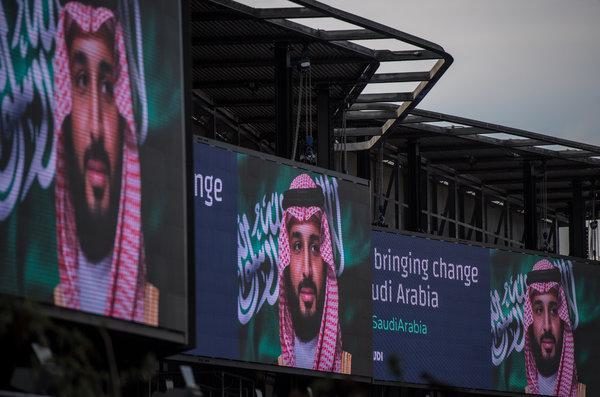
Mr. Khashoggi's online attackers were part of a broad effort dictated by Crown Prince Mohammed bin Salman and his close advisers to silence critics both inside Saudi Arabia and abroad. Hundreds of people work at a so-called troll farm in Riyadh to smother the voices of dissidents like Mr. Khashoggi. The vigorous push also appears to include the grooming - not previously reported - of a Saudi employee at Twitter whom Western intelligence officials suspected of spying on user accounts to help the Saudi leadership.

The killing by Saudi agents of Mr. Khashoggi, a columnist for The Washington Post, has focused the world's attention on the kingdom's intimidation campaign against influential voices raising questions about the darker side of the crown prince. The young royal has tightened his grip on the kingdom while presenting himself in Western capitals as the man to reform the hidebound Saudi state.

Comment: The knives are out for the Saudis. Of course, there are agendas within agendas behind this sudden change in media sentiment, but really, it's Saudi Arabia. They had it coming.


Vader

Former Pentagon analyst: The notion that the US is in Syria for 'stability' is just plain nuts

Bolton Pompeo Haley
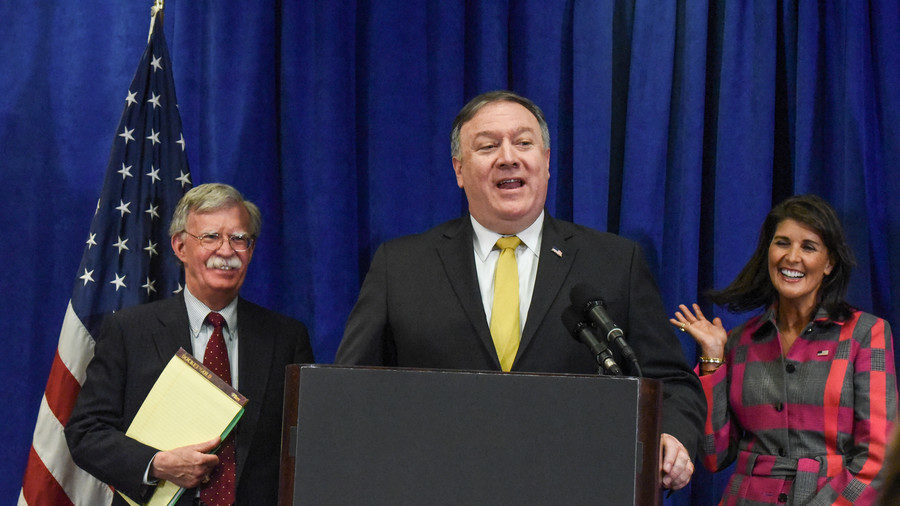
© Agence France-Presse / Stephanie KeithUS Secretary Of State Mike Pompeo (C) , National Security Advisor John Bolton (L) and United States Ambassador to the United Nations Nikki Haley
The notion that the United States is in Syria - albeit illegally - to bring "stability" to the nation by chasing out remnants of Islamic State (IS, formerly ISIS) fighters is just plain nuts.

Just in recent days, the Islamic State has seized 700 hostages in a part of Syria controlled by US-backed forces and are executing some ten a day until unspecified demands are met.

How could that be, if the US insists it has IS on the run? Going back to the Obama administration, the US has a history of protecting such jihadi fighters. The intent is to create a Sunni enclave inside Syria to impede any western Iranian or Shia militia advancement into Syria.

Comment: Remember the practicalities along with the ideological goals. Not only will the neocons benefit Israel politically from continuing the turmoil in Syria, it opens the door for resource extraction. Israel wants to secure the Golan in perpetuity to exploit the oil deposits there. The US wants to hang on, through its Kurdish proxies, to the richest deposits east of the Euphrates, along with created a 'second Israel' (Kurdistan) to be a thorn in Iran's side. Russian intervention, at Syria's invitation, has thrown a wrench in the scheme, but the rabid neocons aren't ready to give up yet. A few hundred dead civilians in Deir ez-Zor, even US citizens, don't figure into the calculus.