
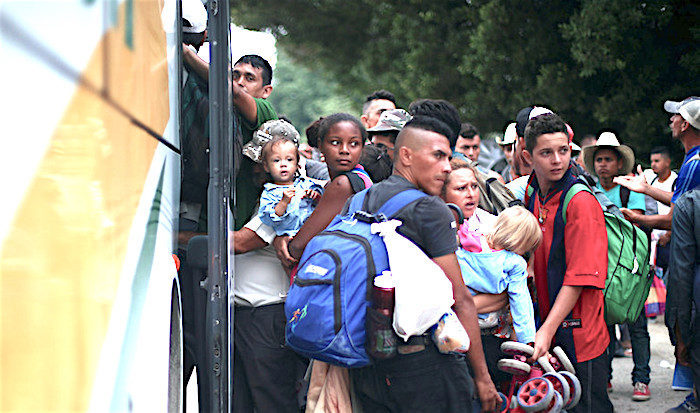
© Reuters / Hannah McKay
A delegation of some 200 migrants marched to the UN's offices in Mexico City on Thursday, demanding the organization provide them with buses to the US border, which is still some 600 miles (965 km) away from the caravan's current location.
The migrants in a meeting with representatives of the United Nations High Commissioner for Refugees (UNHCR), the United Nations High Commissioner for Human Rights (OHCHR) and the International Organization for Migration (IOM) said they were too exhausted and that it was getting too cold to continue the perilous journey on foot.
In a statement on Friday, the UN acknowledged the meeting but said that it does not have the authority to grant the request without the approval of the countries who would be affected by the scheme.
"Any help for the transport of migrants to a third country requires the prior agreement or request of the States involved," the UN's Mexico office said in a press release, without elaborating.


















Comment: See also: