Puppet MastersS


Evil Rays

Russian Navy reportedly has new weapon that makes targets hallucinate, vomit

The
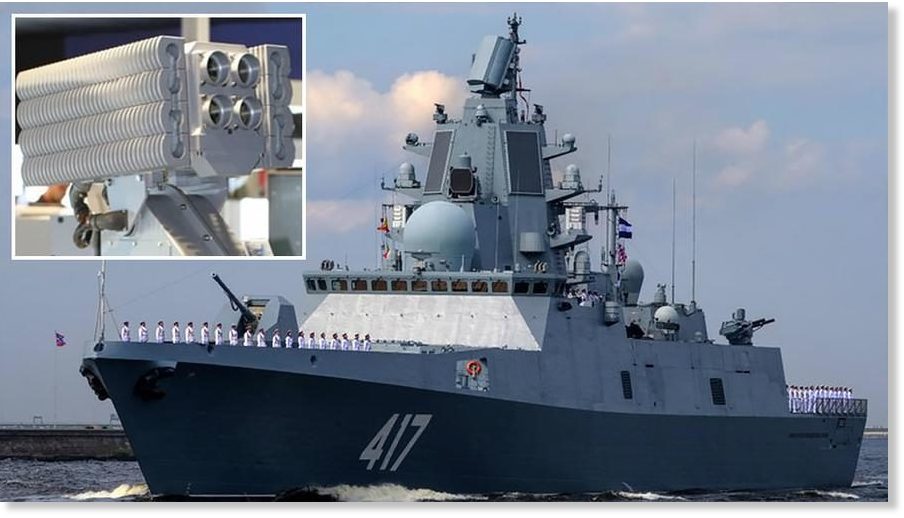
© Spuntik/RuselectronicThe "5P-42 Filin"
The Russian Navy reportedly has a new weapon that can disrupt the eyesight of targets as well as make them hallucinate and vomit.

Russian state news agency RIA Novosti reported that a Russian military contractor has installed the weapon on two Russian warships.

The weapon fires a beam similar to a strobe light that affects the target's eyesight, making it more difficult for them to aim at night. During testing, volunteers reportedly used rifles and guns to shoot targets that were protected by the weapon. The volunteers reported having trouble aiming because they couldn't see.

Additionally, about half of the volunteers said they felt dizzy, nauseous and disoriented. About 20 percent of the volunteers reported experiencing hallucinations.

The weapon, called the Filin, has reportedly been installed on the Admiral Gorshkov and Admiral Kasatonov, two Russian warships. The weapon is expected to be installed on more ships that are currently being built.

The weapon was developed by Ruselectornics, a Russian state-owned developer of electronics and other technologies.

Vader

Maduro calls it: Oil, gold & other riches behind Trump's Venezuela crusade

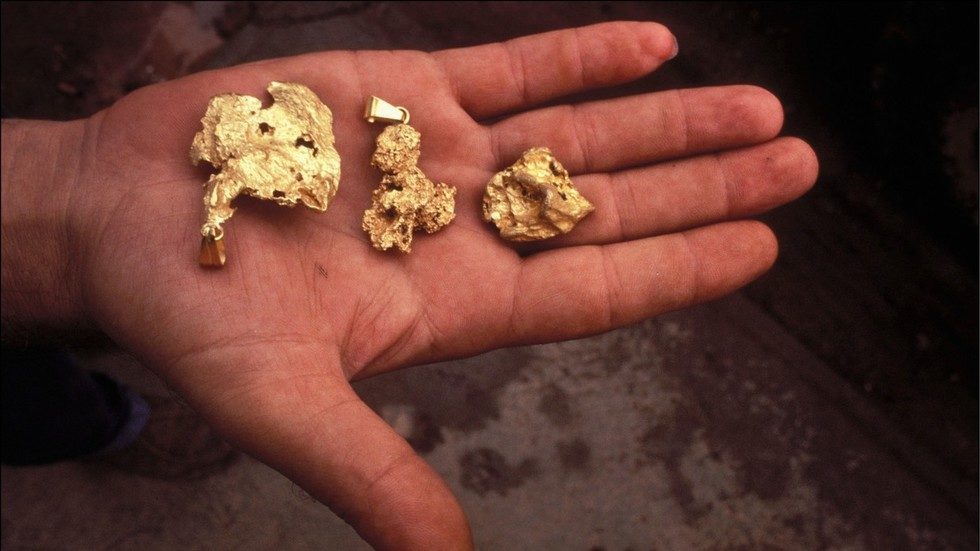
venezuela gold nuggets
© Getty Images/Eric Vandeville/Gamma-RaphoGold in Venezuela in 1992.
Venezuela's natural reserves, such as oil, gas, and gold, encourage the US to seek regime change there, President Maduro told RT, saying he won't be remembered as a leader who showed weakness and ignorance to his people.

"What is Donald Trump's casus belli against Venezuela? The casus belli is the oil of Venezuela, the riches of Venezuela, its gold, gas, iron, diamonds, other material riches," Maduro said in an exclusive interview with RT Spanish. The remarks come as Western nations pile overwhelming pressure on the Latin American country.

Maduro, who is widely seen as the successor to the cause of late Venezuelan leader Hugo Chavez, said it doesn't matter how he will go down in history.

What does matter, he said, is that he doesn't want to be a "traitor" and a "weak person," bowing down to Washington.

Comment: Maduro defies US pressure on Venezuela:
"I use every media outlet to urge the entire world - heads of state, heads of government, world leaders, social movements and the international community - to denounce and stop Donald Trump's insane actions against Venezuela. He threatened us with a military intervention, but Venezuela has not surrendered, and never will," he told RT.

He added that as the world becomes "increasingly sensible and conscious," "aversion" towards the US president grows.

Maduro said that the Venezuelan people were prepared to defend their "sacred" land from an US military invasion, but emphasized that he "prayed to God" that such a conflict will never occur. Trump's "military aggression" must be rejected so that "peace prevails."

He warned in an earlier interview that Trump would be responsible for a bloody conflict that would mirror the war in Vietnam if he gets militarily involved in Venezuela.

In late January, speaker of the opposition-dominated National Assembly, Juan Guaido, declared himself the interim president of Venezuela - a self-appointment which Washington quickly recognized as legitimate. Several European states have since followed suit, but Guaido still lacks a bloc-wide endorsement, which was opposed by Italy.

Caracas has denounced the decision by Germany, the UK, France, Spain, and several other EU states to recognize Guaido's claim to the presidency. The Venezuelan government said that it would have to "revise relations" with the bloc members that have thrown their support behind the opposition leader.

Moscow criticized the said countries for engaging in "direct interference" in Venezuela's internal affairs. Dmitry Peskov, spokesman for Russian President Vladimir Putin, said on Monday that the move was tantamount to "trying to legitimize an attempt to usurp power."


Pirates

No, ISIS won't return after US withdrawal from Syria and Iraq

syria refugees
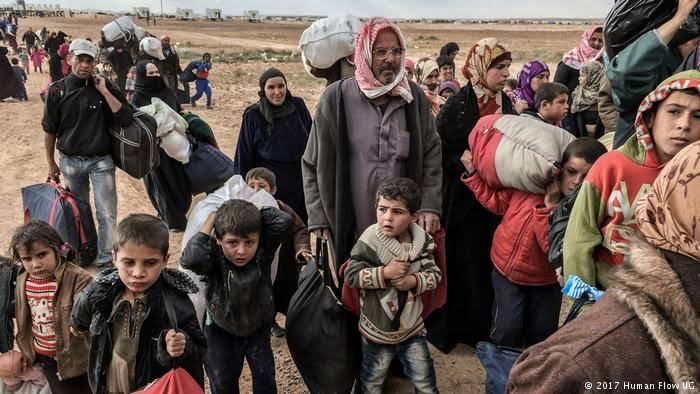
The US Intelligence community claims that the Islamic State (ISIS/ISIL) will return within twelve months of any US withdrawal from Syria and will be able to control a wide sweep of territory. In 2014 ISIS occupied an area the size of Great Britain - analysts claim that ISIS would soon be able to control half this much territory. At the same time US President Donald Trump is correctly announcing that ISIS is almost defeated, Pentagon sources claim there are still 20,000 to 30,000 ISIS fighters in Iraq and Syria.

These unfounded statements and predictions are made by analysts whose bread and butter is to keep the fear of ISIS alive. The reality on the ground is different. Indeed, Kurdish forces in Syria are overwhelmed not by attacks, but by the hundreds of ISIS surrendering to its forces, unwilling to continue fighting, and preferring prison to death. What is more, the families (women and children) of ISIS militants of various nationalities are flocking into the deserted area under Kurdish control east of the Euphrates and surrendering themselves. They are hungry and humiliated, and they loudly express their disappointment at the trap they were drawn into years ago to by the so-called Islamic State. Coalition forces and Iraqi artillery have been bombing ISIS's last strongholds in Arqub, BaghuzFoqani and BaghuzTahtani, within 7 km of the Syrian-Iraqi borders east of the Euphrates.

Comment: The latest bit of wishful predicting of an ISIS resurgence comes from the Pentagon/State Dept. Inspector General report, published Monday, though they do admit that the estimated number of remaining ISIS fighters has been vastly overestimated.


RT provides some details:
The report debunked the widely circulated estimate - from June 2018 - that IS had up to 17,000 fighters in Iraq and up to 14,000 in Syria, calling it questionable even at the time. The US-led coalition, known as the Combined Joint Task Force - Operation Inherent Resolve (CJTF-OIR) had "low confidence" in those estimates as of last July, the report said. As of January, CJTF-OIR estimated only 2,000 IS fighters remaining in the group's last remaining bastion - known at the Pentagon as the Middle Euphrates River Valley (MERV) and located in eastern Syria near the Iraqi border.
...
Monday's report, on the other hand, matches the reasoning of US intelligence chiefs last week that IS will rise again in the absence of US troops - although only in the limited area near its current holdout, rather than Syria and Iraq as a whole.

"You've got these divergent narratives," security analyst Charles Shoebridge told RT. "Trump is speaking from the hip, if you like, he is speaking off the cuff, and it might be what he's saying is actually a little bit closer to the truth of where the American strategy actually lies."

The US 'deep state' is firmly against withdrawal from Syria, Shoebridge noted.


One of the things the report revealed is that the US-backed militia was presumably on the brink of crushing the last IS holdout in the Euphrates Valley, but had to halt their operation when Turkey threatened to intervene against the Kurdish fighters.

The Kurdish YPG militia makes up more than two thirds of the US-backed Syrian Democratic Forces (SDF), which the US have used as the main proxy against IS in northeastern Syria. With the YPG busy against the Turks, the Arab component of the SDF was "unable to conduct" offensive operations, and actually lost ground to IS in late October and November, when bad weather prevented coalition airplanes from flying.

It was only in mid-November, when the YPG was back in the fight, that the SDF was able to roll back IS gains, the report said, describing the YPG "paramount to stability and efforts to defeat ISIS."

The report was also skeptical of Turkey's offer to take over the battle against IS, noting that with the exception of the 2016 Al-Bab operation, "Turkey has not participated in ground operations against ISIS in Syria since 2017, nor have Turkish forces participated in the fight against ISIS in the MERV, which is approximately 230 miles away from al Bab and the Turkish border."


NPC

Why all anti-interventionists will necessarily be smeared as Russian assets

tulsi
When Hawaii congresswoman Tulsi Gabbard announced her candidacy for the presidency on CNN last month, I had a feeling I'd be writing about her a fair bit. Not because I particularly want her to be president, but because I knew her candidacy would cause the narrative control mechanizations of the political/media class to overextend themselves, leaving them open to attack, exposure, and the weakening of their control of the narrative.

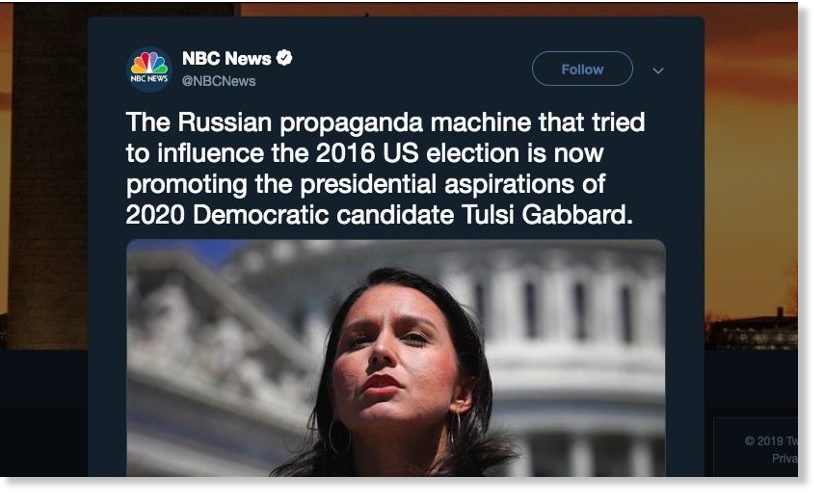
Mere hours before her campaign officially launched, NBC News published an astonishingly blatant smear piece titled "Russia's propaganda machine discovers 2020 Democratic candidate Tulsi Gabbard," subtitled "Experts who track websites and social media linked to Russia have seen stirrings of a possible campaign of support for Hawaii Democrat Tulsi Gabbard." One of the article's authors shared it on Twitter with the caption, "The Kremlin already has a crush on Tulsi Gabbard."

Attention

CNN claims Saudis transferred US-made arms to al-Qaeda in Yemen

yemen map
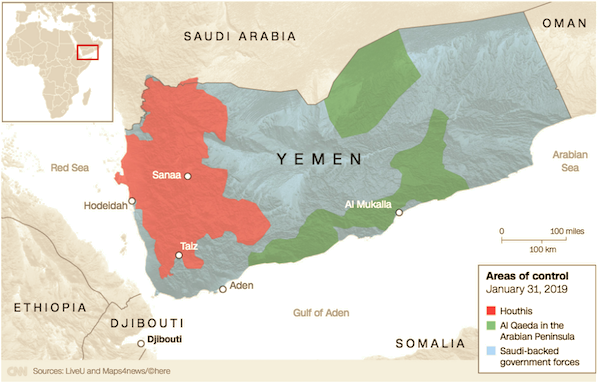
Saudi Arabia and its coalition partners have transferred American-made weapons to al Qaeda-linked fighters, hardline Salafi militias, and other factions waging war in Yemen, in violation of their agreements with the United States, a CNN investigation has found.

The weapons have also made their way into the hands of Iranian-backed rebels battling the coalition for control of the country, exposing some of America's sensitive military technology to Tehran and potentially endangering the lives of US troops in other conflict zones.

Saudi Arabia and the United Arab Emirates, its main partner in the war, have used the US-manufactured weapons as a form of currency to buy the loyalties of militias or tribes, bolster chosen armed actors, and influence the complex political landscape, according to local commanders on the ground and analysts who spoke to CNN.

By handing off this military equipment to third parties, the Saudi-led coalition is breaking the terms of its arms sales with the US, according to the Department of Defense. After CNN presented its findings, a US defense official confirmed there was an ongoing investigation into the issue.

The revelations raise fresh questions about whether the US has lost control over a key ally presiding over one of the most horrific wars of the past decade, and whether Saudi Arabia is responsible enough to be allowed to continue buying the sophisticated arms and fighting hardware. Previous CNN investigations established that US-made weapons were used in a series of deadly Saudi coalition attacks that killed dozens of civilians, many of them children.

Comment: The U.S. directly supported al-Qaeda in Syria, so it should come as no shock that the Saudis and UAE support them in Yemen. From American and Israeli strategists' point of view, al-Qaeda and other salafi-jihadists make good shock troops. It'll take a lot more than an exposure like this to change what is longstanding policy in the halls of American and Israeli geostrategy.


Rocket

Russia must create land-based hypersonic missiles with 500km+ range by 2020 - MoD

missiles
© Russian Defense Ministry / Sputnik
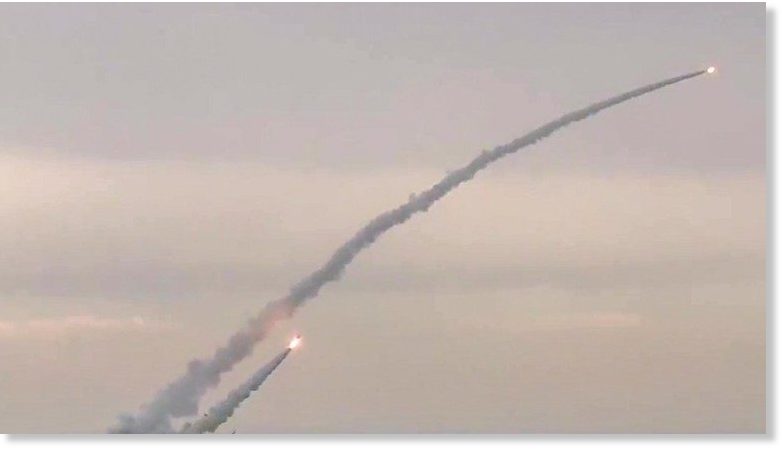
In response to the US suspending the INF treaty, Russia is boosting its land-based missile development. Moscow wants hypersonic missiles of 500km+ range and a land-based version of the Kalibr cruise missile, ready by 2020.

According to a plan earlier greenlighted by Russian President Vladimir Putin, existing missiles will be modified, and new ones created, within two years' time.

"Within 2019-2020 we must develop a land-based version of the ship-based Kalibr complex," Defense Minister Sergey Shoigu said at a ministry briefing. A land-based longer-range hypersonic missile complex is expected to be created within the same time limit.

The steps are being taken as a response to the US suspending its participation in the INF (Intermediate-Range Nuclear Forces) treaty and aiming to withdraw completely in six months.

Arrow Down

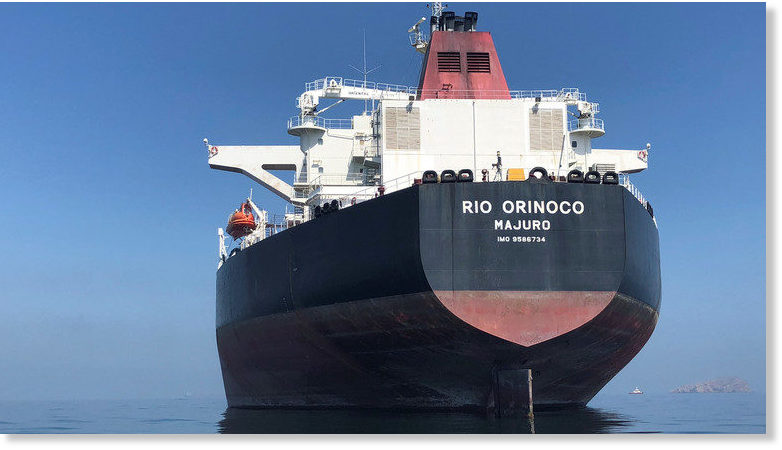
Venezuelan oil exports plunge on 'harsher' US sanctions

oil tanker
© Reuters / Alexandra Ulmer
Venezuela's oil production could be disrupted to a greater degree than most analysts first thought, as the US government seeks to essentially shut in the country's oil sector.

When the Trump administration first announced sanctions on Venezuela's oil sector a little over a week ago, it sounded as if they would simply bar US companies from buying oil. That would still mean that Venezuela could ship the oil elsewhere, albeit at a painful discount.

However, the US Treasury issued some more details on February 1, sketching out a harsher sanctions regime. The sanctions on Venezuela will actually resemble the measures targeting Iran in that it will bar companies from using the US financial system to do business with PDVSA. As such, the reach of the sanctions will extend well beyond the shores of the United States.

Reuters reported that even prior to last Friday's clarification from the US Treasury, European buyers were already slashing purchases because of concerns over payments. Reuters reported that two of the world's largest oil traders, Vitol and Trafigura, said that they would comply with all US sanctions.

Bullseye

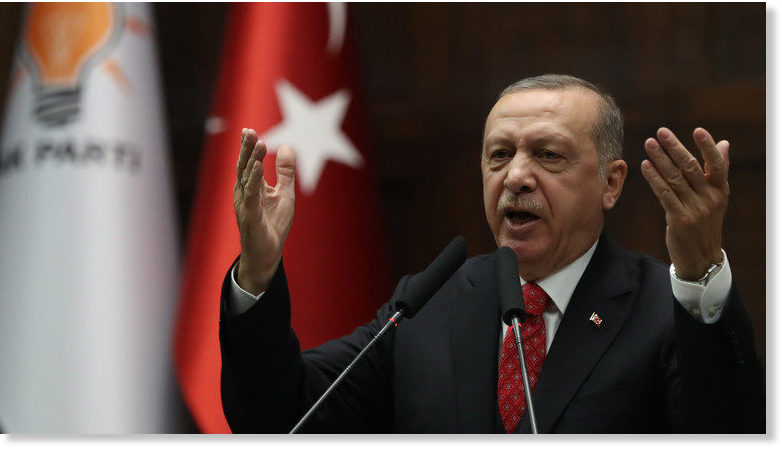
Erdogan slams US, EU for 'imperialist' meddling in Venezuela

erdogan
© AFP / Adem ALTAN
Turkish leader Recep Tayyip Erdogan has once again thrown his weight behind Venezuelan President Maduro, saying Western attempts to oust him are anything but democracy and rule of law.

"Is Venezuela yours?" Erdogan asked, speaking before Turkish lawmakers, but apparently addressing Western countries backing self-declared interim leader Juan Guaido.

"How do you oust a person who came to office through elections? How do you hand over presidential [powers] to someone who did not even get elected? Do you know what democracy is?"

The West, he said, is pushing for "an unlawful decision," by which he seems to mean President Nicolas Maduro being removed from power. So, Turkey doesn't accept "the world where might is right." Erdogan stressed that "we are against this imperialist stance."

Propaganda

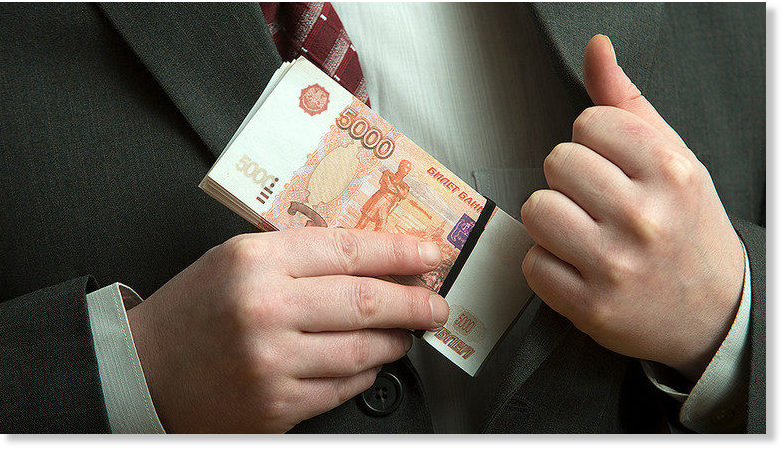
'Corruption is in Russia's DNA': Even Moscow's biggest critics can't stomach 'racist' NYT op-ed

rubles
© Global Look Press / Nikolay Gyngazov
An unfortunate New York Times op-ed which argues that Russia has a genetic affinity for corruption has disgusted even the most vocal Kremlin critics - an impressive feat considering the US appetite for mindless Russia bashing.

Around-the-clock Russiagate hysteria has produced an impressive array of poorly conceived, xenophobic-laced Kremlinology - but the Times' latest offering, 'The Putin I Knew; the Putin I Know', is a rare delicacy that not even the most accomplished truffle dog could dig up.

Penned by one Franz J. Sedelmayer, the piece uses anecdotes about Vladimir Putin when he was deputy mayor of St. Petersburg to argue that "Putin's Russia" is hardwired to hate democracy. Sedelmayer, we're told, ran a security company that received a contract in St. Petersburg - resulting in several run-ins with Putin in the 90s.

"Corruption is in Russia's DNA, as it is in Mr. Putin's," the German author theorizes. Not satisfied with pontificating about Russia's genetic defects, Sedelmayer later quips that "sharing's not the Russian way."

Dominoes

MAGA misses the Eurasia train

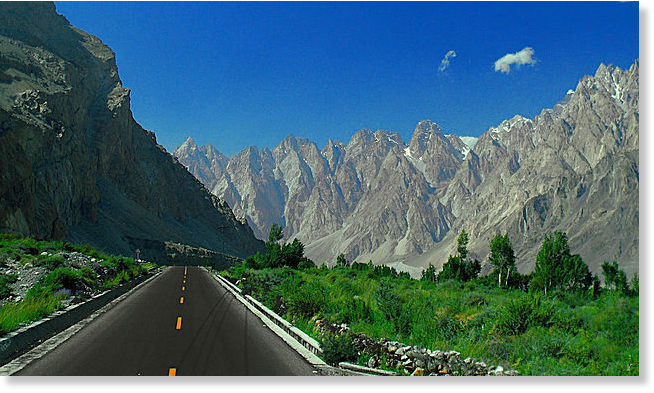
Karakoram Highway
© WikimediaThe Karakoram Highway connecting China and Pakistan, sometimes referred to as the Eighth Wonder of the World
We should know by now that the heart of the 21stCentury Great Game is the myriad layers of the battle between the United States and the partnership of Russia and China.

Even the U.S. National Defense Strategy says so: "The central challenge to U.S. prosperity and security is the reemergence of long-term, strategic competition by ... revisionist powers." The recently published assessment on U.S. defense implications of China's global expansionsays so too.

The clash will frame the emergence of a possibly new, post-ideological, strategic world order amidst an extremely volatile unpredictability in which peace is war and an accident may spark a nuclear confrontation.

The U.S. vs. Russia and China will keep challenging the West's obsession in deriding "illiberalism," a fearful, rhetorical exercise that equates Russian democracy with China's one party rule, Iran's demo-theocracy and Turkey's neo-Ottoman revival.