
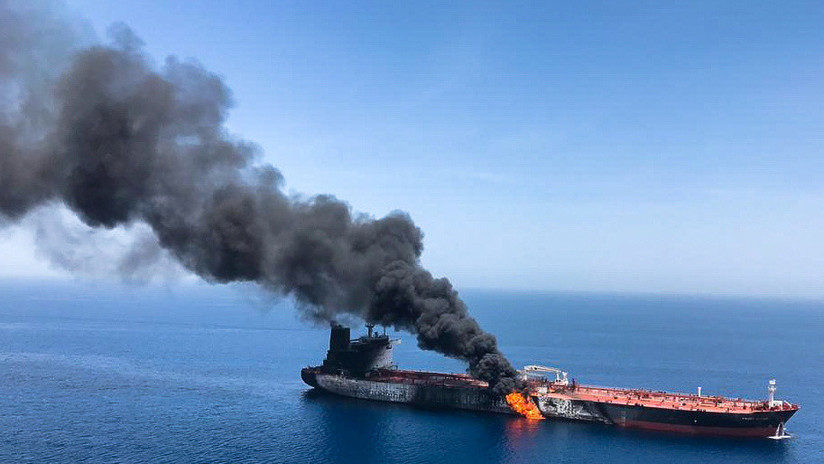
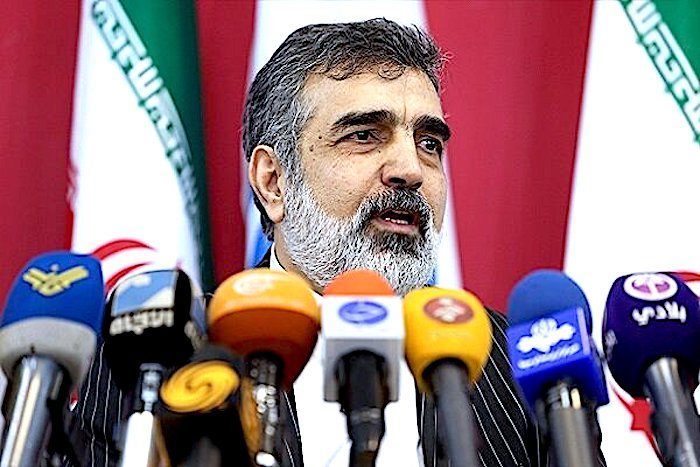
© ISNA/Handout / Reuters
It is not the habit of the US to look for just, substantial and robust pretexts for war once the decision to go to war has been taken. Recent events - the sabotage acts at al-Fujairah (the Emirates), the attack on Aramco pipeline, the attacks on two tankers in the Gulf of Oman, and the US Central Command video purporting to show Iranian boat personnel removing an unexploded Limpet mine from Kokuka Courageous - have already given the US ample pretexts for war, if the US were looking for war. If this were the case, President Donald Trump would have already ordered his military to conduct precision missile strikes similar to the attack he ordered against Syria or at least a punitive airstrike together with his close European partners. Or perhaps even prepared his army to go to war as George W. Bush did with Iraq in 2003.
The reason Trump has refrained from launching any order for attack is that he is aware that a military operation against Iran will be anything but a walk in the park. The consequences of such an attack are unpredictable and its outcome will certainly not be to his obvious advantage.












Comment: See also: