Puppet MastersS


Russian Flag

Putin explains what will happen if West 'robs' Russia's reserves

Russian President Vladimir Putin
© Sputnik / Sergey BobylyovRussian President Vladimir Putin
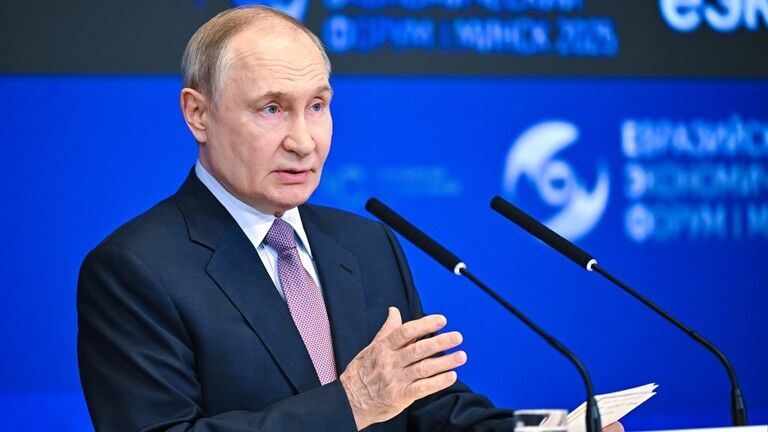
Seizing the frozen funds would hasten the shift to regional payment systems, the president has said

Any attempt by the West to seize Russia's frozen reserves would set off an irreversible shift toward regional payment systems, which would ultimately benefit the global economy, President Vladimir Putin has said.

Comment: Note: 300 Billion is about 13-14 % of the Russian GDP. Imagine doing that to another country?

1)
Putin added upon further reflection that the term "theft" was insufficient. "Theft is the secretive taking of property - this is open. This is robbery,"
While the West has promoted itself as being a champion of the rule of law, there are many examples that indicate the promoters act in accordance with the rule of outlaws; that is, they do whatever they can get away with.

2) Another interpretation of the calls for using the frozen Russian assets, is that the Western elites may be assuming that Russia as a legal entity and potential claimant, can be done away with. 3) In the process and aftermath of the 1917 Russian revolution and following the break up of the USSR around 1990, huge amounts moved from the area of Russia and later USSR to the West. What is happening now is a continuation. The silver lining of the affair is, as Putin suggests, that there will be a shift toward regional payment systems, and this shift is already being fueled by sanctions policies.


Attention

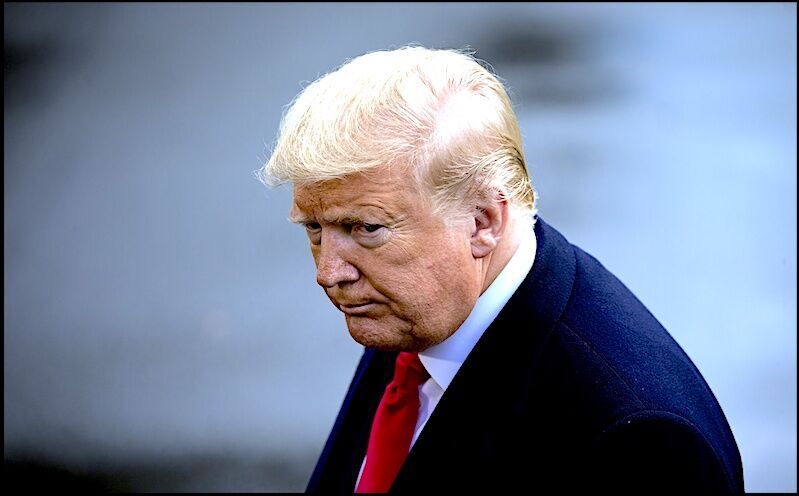
Donald, the American toy is breaking, be careful

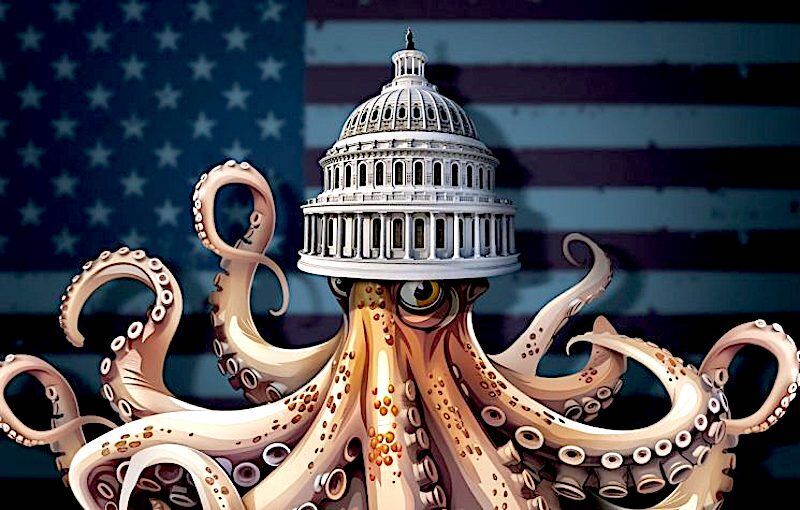
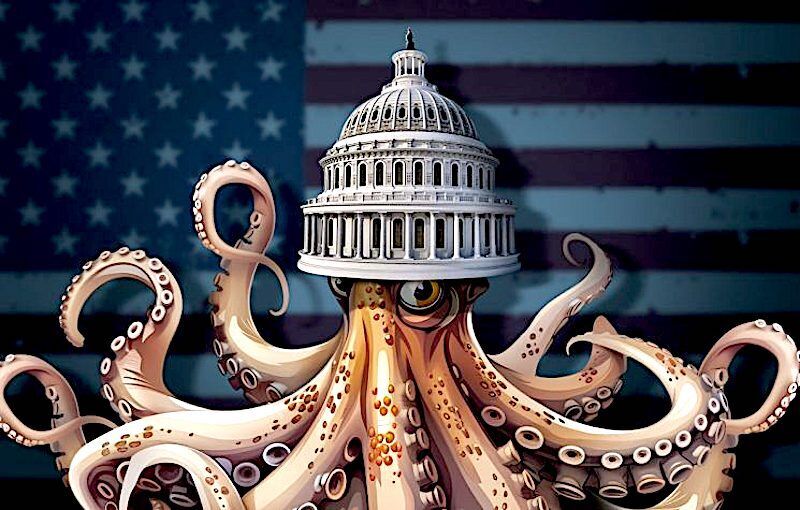
capitol and octo
© UnknownCapitol Deep State
Things are no longer as they were, and America will have to decide, before it is too late, what position to take in an increasingly multipolar world.

Anything can happen

What we have seen happening in the recent conflict in the Middle East between Israel and Iran is clear and irrefutable proof of the increasing decline, the inexorable collapse and the imminent end of the American hegemonic system, and more generally of Anglo-American leadership, as well as of the Zionist system closely linked to it.

Let's try to imagine if what happened in recent days had happened, for example, 30 years ago, at the height of American power on the international stage. It would not have been so much a question of a shorter or longer event, because duration depends on a series of factors that come together, such as the type of conflict, the territory, the concrete operational actions, the resources employed, and, of course, the international situation. But it would certainly have been a conflict in which the United States would have demonstrated, without much effort, its dominance on the international stage, managing to influence the outcome of the situation without having to ask anyone's permission, at least without any difficulty in speaking loudly and reaffirming its global hegemonic dominance.

This is exactly what did not happen this time. And it did not happen because the United States no longer has that position of dominance over the rest of the world, it no longer has control over nuclear, oil and monetary strategic deterrence, it no longer even has the political credibility to be the guarantor of stability and success for other countries - if anything, the opposite is true.

We need to reflect on this carefully in order to learn the lesson hidden in the - at least temporary - outcome of the conflict.

Arrow Up

US bombing of Iran likely to lead to increased risk of Iranian cyber attacks

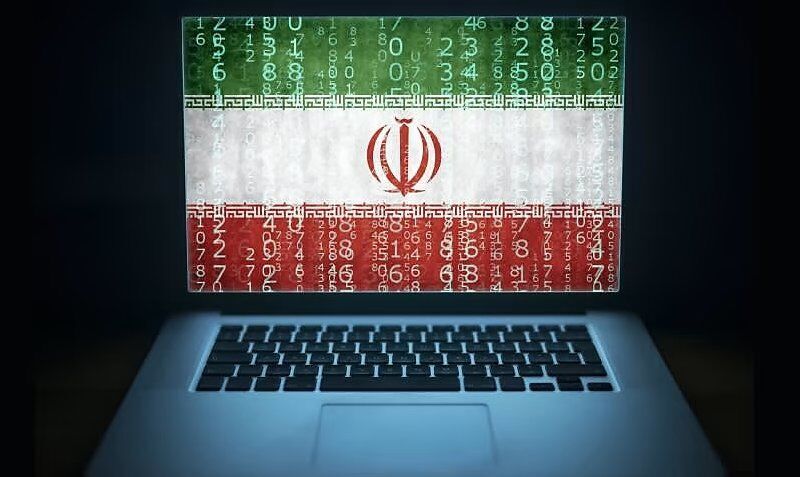
Iran flag screen/keyboard
© UnknownIranian cyber attack
The United States' will-they-or-won't-they policy towards military intervention in Iran crystalized over the weekend when the Trump administration gave the green light to target Iranian nuclear infrastructure.

B2 stealth bombers launched from the US mainland dropped bunker-buster ordnance on three of Iran's deeply buried nuclear facilities, drawing praise and condemnation in almost equal measure.

Iran has now said the US "must receive a response" in the wake of the attacks, but what that response might be remains to be seen. While a military response, targeting US assets in the region, is possible, another, more likely scenario could be a stepping up of Iranian cyber activity.

John Hultquist, chief analyst at Google Threat Intelligence Group, said in a recent statement to Defence Connect's sister-publication, Cyber Daily:
"In light of recent developments, the likelihood of disruptive cyber attacks against US targets by Iranian actors has increased. In recent years, Iran has primarily focused this activity on Israel, especially following October 7th. Those incidents offer useful insight into the capability and limitations of Iranian actors."
However, while an increase in cyber attacks is likely, their impact may be hard to judge in advance.

Comment: Pro-Iran hackers are back at work after air strikes, targeting U.S. banks, defense contractors, and oil companies:
Hackers backing Tehran have targeted U.S. banks, defense contractors and oil industry companies following American strikes on Iranian nuclear facilities — but so far have not caused widespread disruptions to critical infrastructure or the economy. But that could change if the ceasefire between Iran and Israel collapses or if independent hacking groups supporting Iran make good on promises to wage their own digital conflict against the U.S., analysts and cyber experts say.

Hacking operations are much cheaper than bullets, planes or nuclear arms — what defense analysts call kinetic warfare. America may be militarily dominant, but its reliance on digital technology poses a vulnerability.

Two pro-Palestinian hacking groups claimed they targeted more than a dozen aviation firms, banks and oil companies following the U.S. strikes over the weekend. The hackers detailed their work in a post on the Telegram messaging service and urged other hackers to follow their lead, according to researchers at the SITE Intelligence Group, which tracks the groups' activity. The attacks were denial-of-service attacks, in which a hacker tries to disrupt a website or online network. "We increase attacks from today," one of the hacker groups, known as Mysterious Team, posted Monday.

While it lacks the technical abilities of China or Russia, Iran has long been known as a "chaos agent" when it comes to using cyberattacks to steal secrets, score political points or frighten opponents. Cyberattacks mounted by Iran's government may end if the ceasefire holds and Tehran looks to avoid another confrontation with the U.S. But hacker groups could still retaliate on Iran's behalf.

In some cases, these groups have ties to military or intelligence agencies. In other cases, they act entirely independently. More than 60 such groups have been identified by researchers at the security firm Trustwave.

Economic disruption, confusion and fear are all the goals of such operations, said Mador, who is based in Israel:
"We saw the same thing in Russia-Ukraine. While Iran lacks the cyberwarfare capabilities of China or Russia, it has repeatedly tried to use its more modest operations to try to spy on foreign leaders — something national security experts predict Tehran is almost certain to try again as it seeks to suss out President Donald Trump's next moves."
Last year, federal authorities charged three Iranian operatives with trying to hack Trump's presidential campaign. It would be wrong to assume Iran has given up those efforts, according to Jake Williams, a former National Security Agency cybersecurity expert.

"It's fairly certain that these limited resources are being used for intelligence collection to understand what Israel or the U.S. might be planning next, rather than performing destructive attacks against U.S. commercial organizations."


Pistol

Ukraine deliberately exterminating civilians in Donbass - Moscow

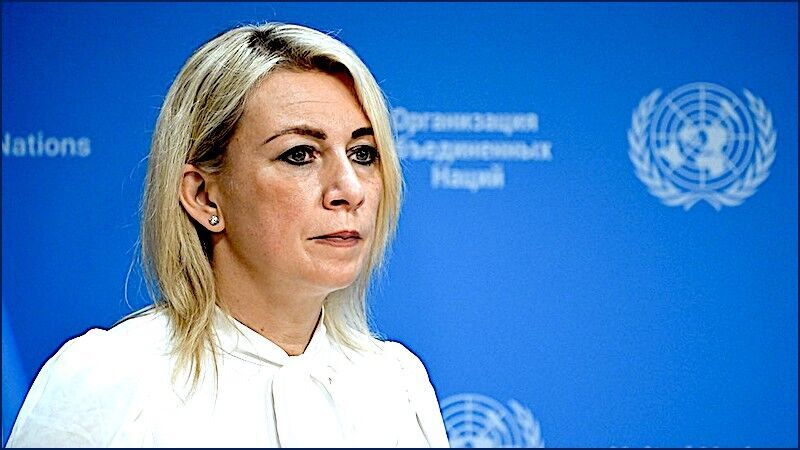
Zakharova
© Sergey Guneev/SputnikRussian Foreign Ministry spokeswoman Maria Zakharova
Kiev's atrocities have been "elevated to the level of state doctrine," Foreign Ministry spokeswoman Maria Zakharova has said. Ukrainian forces are deliberately committing atrocities against civilians in Donbass, including mass killings of the elderly and drone strikes on residential homes.

Zakharova delivered the remarks on Thursday while speaking at a conference on the "atrocities and war crimes by the Kiev regime in Dzerzhynsk," a city some 30km north of Donetsk that was liberated by Russian troops in February. The conference featured a report including testimonies from over 30 civilians recounting the "genocide" policies pursued by Ukrainian troops while they controlled the city.

The event was organized by the Public Tribunal on the Crimes of Ukrainian Neo-Nazis, which includes representatives of civil society from 35 countries worldwide.

Eye 1

UN official gave Israel cover - and Iran paid the price

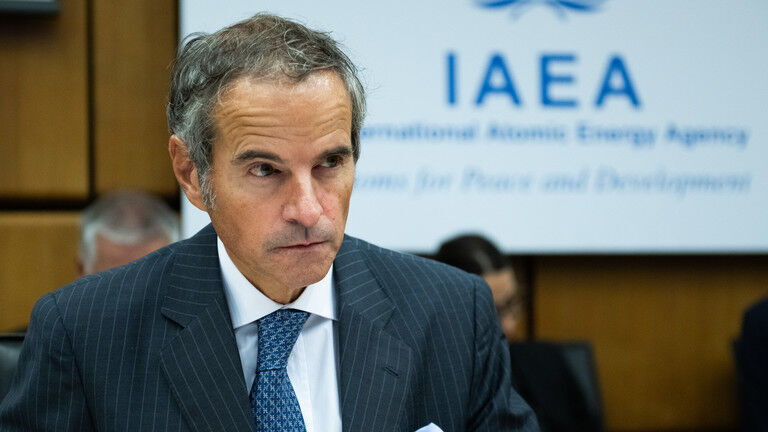
IAEA Director General, Rafael Grossi.
© Thomas Kronsteiner/Getty ImagesIAEA Director General, Rafael Grossi.
The IAEA chief's ambiguous language helped justify illegal military action.

Israel's military actions against Iran have significantly destabilized the Middle East, driven by concerns over Iran's nuclear capabilities. These events, rooted in historical tensions, are irreversible and have reshaped regional dynamics. A key document that served as a pretext for Israel's aggression was a resolution adopted by the Board of Governors (BoG) of the International Atomic Energy Agency (IAEA). This resolution was based on a report by IAEA Director General Rafael Grossi, who later attempted to moderate its implications in an interview with Christiane Amanpour shortly after the onset of hostilities.

Since assuming his role, Grossi has been tasked with implementing the IAEA's statute to ensure nuclear non-proliferation. However, his reports have often been ambiguous, raising doubts about Iran's nuclear program that could be interpreted in multiple ways. Critics argue that the reports, if deliberately misleading, may have contributed to the escalation of tensions leading to war, raising questions about Grossi's accountability, including the possibility that he may be dismissed or stand trial. The IAEA Statute allows the Board of Governors to appoint or terminate the Director General, and significant controversy over false or biased reporting could influence such decisions.

Dollar

Best of the Web: Dystopia UK: Genocidal RAF squadron targeted by Palestine Action is actually owned by a HEDGE FUND

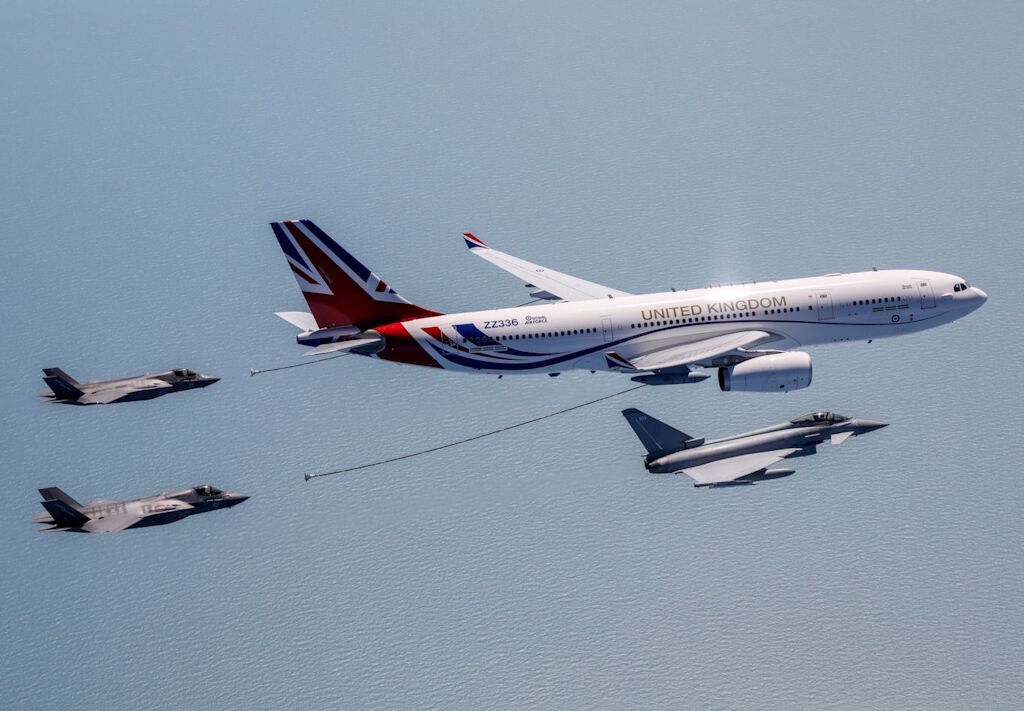
RAF VIP Voyager fuel tanker air to air
RAF VIP Voyager able to carry up to 111 tonnes of fuel, the highest capacity of all tanker aircraft, with the ability to dispense 50,000 kg of fuel
If you thought RAF jets were owned by the RAF, think again.

The RAF squadron targeted for a repaint by Palestine Action due to its involvement in supplying Israel's genocide, does not in fact belong to the RAF at all. It belongs ultimately to Polygon Global Partners LLP, a Hedge Fund.

Through a chain of seven cutout companies, which I will take you through, the direct ownership is with Airtanker Ltd, which gives its address as RAF Brize Norton. It owns, maintains and operates the RAF's Voyager refuelling aircraft, which have been providing mid-air refuelling to the Israeli Defence Forces as well as carrying, in their cargo role, munitions to the IDF.

Note that Airtanker Ltd states that five of the Voyager aircraft while available to the RAF: "can also be made available to other parties. This can include providing military capability to other nations...".

Comment:


The Palestinian Action group was reported on by Al Jazeera:
What is Palestine Action?

Palestine Action describes itself as a movement "committed to ending global participation in Israel's genocidal and apartheid regime". The group was launched in July 2020.

The group says it seeks to use "disruptive tactics" to target "corporate enablers" and companies involved in weapons manufacture for Israel, such as Israel-based Elbit Systems, Italian aerospace company Leonardo, French multinational Thales and United States company Teledyne. The group has targeted British facilities linked to these companies.

"Palestine Action is a direct action group who have majoritively focused on weapons factories that are operating on British soil and are complicit in the current genocide in Gaza, but also in the longer-term kind of oppression of the Palestinian people," Manaal Siddiqui, a spokesperson for Palestine Action, told Al Jazeera.

In 2022, the group broke into a Thales equipment factory in Glasgow, causing damage to weapons worth more than 1 million pounds ($1.4m).

In 2021, members of Palestine Action protested on the rooftop of Elbit Systems' subsidiary UAV Tactical Systems in Leicester for six days, until a number of them were arrested by the police.
[...]
Home Secretary Yvette Cooper said in a statement on Monday that she had decided to proscribe the group under the Terrorism Act 2000.

Cooper's statement came days after June 20, when some Palestine Action activists broke into RAF Brize Norton, the largest station of the Royal Air Force in Oxfordshire, and sprayed two military planes with red paint.

In the most high-profile move made by the group so far, the activists sprayed red paint into the turbine engines of two Airbus Voyager aircraft, used for air-to-air refuelling, and damaged them with crowbars.
[...]
Siddiqui, however, said Brize Norton stores aircraft "which are going to be used around the world, but particularly in Gaza". She added that they have also been used in Syria and Yemen.

Israel's war in Gaza, which began on October 7, 2023, has killed more than 56,000 Palestinians.

"These aircraft can be used to refuel and have been used to refuel Israeli fighter jets," Siddiqui said, adding that planes from Brize Norton go to the British air force base in Cyprus, from where they are "dispatched on spy missions and that intelligence is shared with the Israeli government and the Israeli air forces".


Bad Guys

Disgruntled DOJ lifers place Trump nominee Emil Bove in crosshairs

Emil Bove tump nominee doj
© Angela Weiss/PoolEmil Bove, Trump’s nominee for an opening on the Third Circuit Court of Appeals
The knives are out for Emil Bove, the principal assistant deputy attorney general and President Donald Trump's nominee for an opening on the Third Circuit Court of Appeals; Bove faces what is expected to be a heated confirmation hearing before the Senate Judiciary Committee on Wednesday morning.

Opposition to Bove's nomination is not based on his resume - he graduated at the top of his class from Georgetown Law and spent 10 years as a top prosecutor at the U.S. Attorney's office in the southern district of New York among other accomplishments - but because he represented the president in two criminal matters: Special Counsel Jack Smith's so-called documents case in Florida and Manhattan District Attorney Alvin Bragg's business records case in New York.

But Bove really rankled the old guard at the Department of Justice - and establishment DOJ's defenders in the Democratic Party and national news media - by aggressively addressing corruption at the department, one of the president's top priorities. Consistent with the president's executive order to end the weaponization of government, particularly at the DOJ, Bove, the acting deputy attorney general at the time, quickly enacted a series of reforms. Known partisans at the department were fired or reassigned to a new immigration enforcement unit, prompting many to resign.

Comment: Clips from Emil Bove's confirmation hearing:


Attention

Iran, BRICS, and the dangers of strategic patience - Multipolarity must arm itself

The recent - and certainly not last - massive and unambiguously criminal assaults by the US-Israel complex on Iran has produced much commentary, in good as well as bad faith (that is, propaganda). The latter mainly consists of absurd attempts to pass it off as legal - as shameless NATO Secretary General Mark "Says Daddy" Rutte, for instance, had the gall to claim - or so necessary that legality doesn't matter - German "think" tank "expert" and decorative TV studio element Christian Mölling, for instance - or somehow both (Western propagandists aren't good at consistency since it requires logical thinking). These narratives are so obviously motivated and dishonest that they don't deserve serious attention, only dismay and dismissal. Consider that done.
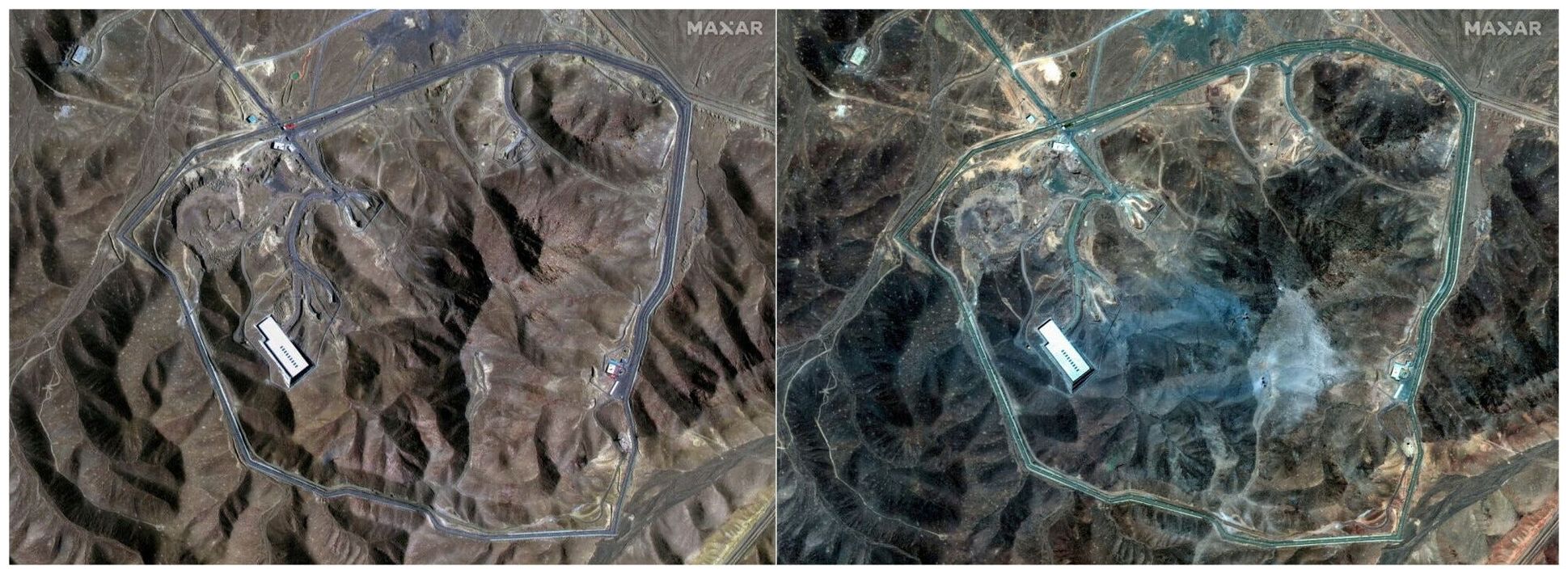
Iran's Nuclear Site
© tarikcyrilamar.com
Regarding analyses, comments, and interpretations that may be correct or misleading but at least merit attention, these have clustered around a few questions, such as: What was the precise nature of the obvious collusion between the US and Israel? What aims have been in play, "merely" (for want of better terms) compulsory and illegal "de-nuclearization," regime change, or both? By the standards of these two aggressors, how effective were their attacks: Has the Iranian nuclear program, for instance, suffered a temporary setback - if so, for how long: months, years? - or a crippling blow? What do we know about how Iran - as a state and a society - has responded to these attacks? When will Israel and the US attack again? And so on.

Yet there is one issue that seems to receive insufficient scrutiny, notwithstanding that it is second to none in terms of global significance: How will BRICS be affected by these attacks? In particular, what kind of challenges do they pose for the association and its goals? Finally, how should BRICS respond in the mid-to-long term, and, at least as importantly, what mistakes must BRICS avoid?

Nuke

The unspoken truth about Iran's nuclear program

Gandhi
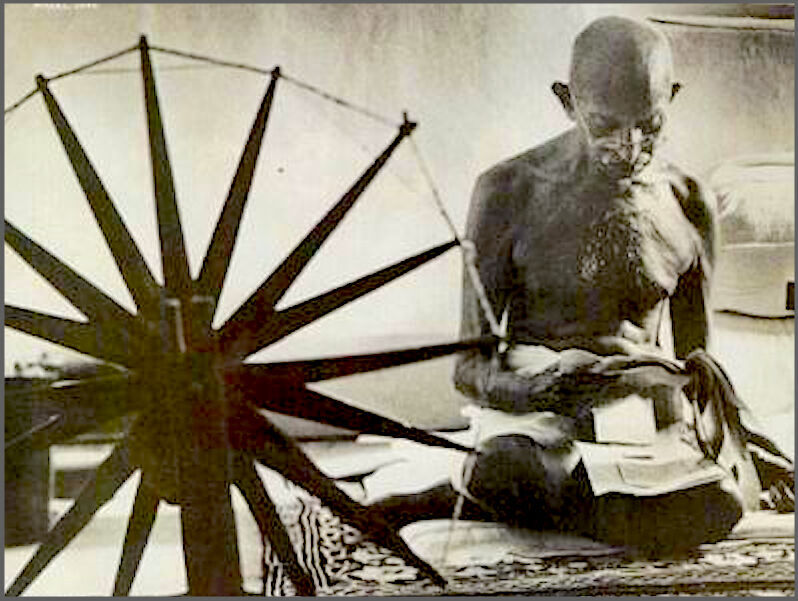
© UnknownMohandas K. Gandhi (1869-1948) challenged the British Empire by breaking the Crown's monopoly. He himself wove Indian cotton. Today, Iran, following in the footsteps of Mohammad Mossadegh, is attempting to break the monopoly of Western oil companies by mastering civilian nuclear fusion.
The stakes of Iran's nuclear program are not what one might think. Tehran renounced the atomic bomb in 1988, but is attempting, with Russia's cooperation, to discover the secrets of nuclear fusion. If it succeeds, it would help the states of the South decolonize by freeing themselves from oil.

As for the stakes of the bombing of certain Iranian nuclear sites by the United States, they may also not be what one might think.

This affair is all the more opaque because it is not possible today to establish a clear distinction between research on civilian nuclear fusion and military fusion.

Since the fall of Iraq, under the blows of the British and the United States, London and Washington have popularized the myth of Iranian military nuclear power, in line with that of Iraqi weapons of mass destruction. This myth has been taken up by Israeli "revisionist Zionists" (not to be confused with "Zionists" tout court) and their leader, Benjamin Netanyahu. For twenty years, Westerners have been inundated with this propaganda and have ended up believing it, although announcing for such a long period that Tehran will have "the" bomb "next year" makes no sense.

However, even though Russia, China, and the United States all agree that Iran currently has no military program, everyone can see that Iran is doing something at its power plants. But what?

Comment: The Devil (or Angel) is in the details. When we are presented with correct information in context, questioned motives/operations/results begin to make sense.


No Entry

Trump backs away from leadership turnover in Iran: 'Regime change takes chaos'

Trump
© Al Drago/BloombergUS President Donald Trump
President Trump on Tuesday backed away from talk of a regime change in Iran, amid pushback from MAGA supporters about the possibility of deeper U.S. involvement in the Middle East.

The president was asked if he wants an Iranian regime change and replied:
"No. I want to see everything calm down as quickly as possible. Regime change takes chaos, and ideally, we don't want to see so much chaos. So we'll see how it goes."
He told reporters on Air Force One on the way to The Hague for the NATO summit:
"The Iranians are very good traders, very good businesspeople, and they got a lot of oil. They should be fine. They should be able to rebuild and do a good job. They're never going to have nuclear. But other than that, they should do a great job, which is exactly what I've been saying for years."
Before leaving the White House, the president railed against Israel and Iran for continuing to fight overnight after the president announced the parameters of a ceasefire the day before.