Puppet MastersS


Blue Pill

Lies, half-truths & propaganda: Even during Covid-19 crisis, Britain's leading news source can't resist Russia-bashing

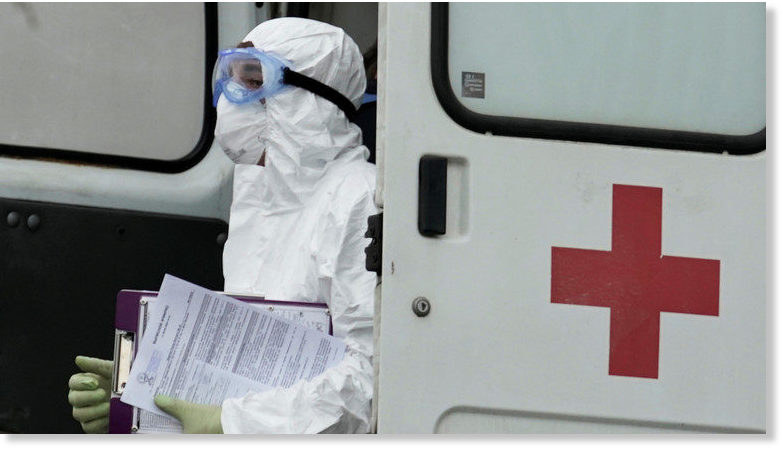
health worker
© REUTERS/Tatyana Makeyeva
One of the side-effects of attaining any reasonable level of knowledge about Russia is that it's subsequently impossible to read most US/UK media coverage of the country without suffering a discomforting rise in blood pressure.

Viewed from here, it can seem like every Anglo-American mainstream media publication is printing reams of never-ending drivel about Russia. Of course, in reality, for the average joe in London or New York, Russia is barely even a consideration. It is just another nation in a long list of far-away lands, and naturally, people are more concerned about issues at home. Yet, media elites have a peculiar preoccupation with the country.

Take the Mail, for instance. The Daily Mail is Britain's most widely read title across print and online, which took the biscuit a few days ago with a piece so poorly compiled that you'd call it "a new low" - if the depths weren't plumbed with such regularity. As Russia hack-jobs go, this was painting-by-numbers, even featuring an appearance from the creator of the 'Gerasimov Doctrine' hoax.

Broom

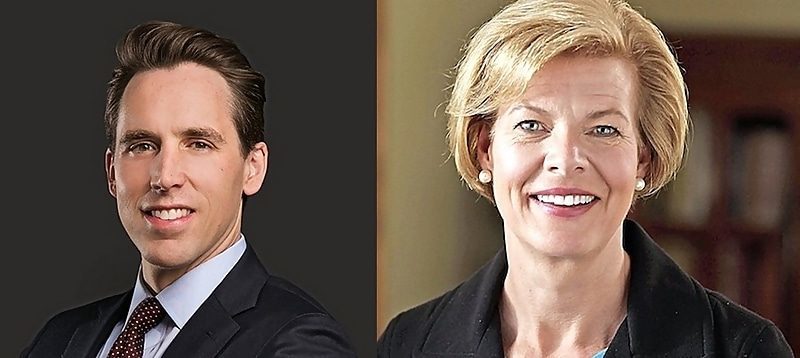
Bipartisan pair of senators request FTC anti-trust probe into meatpacking industry

Sens. Josh Hawley (R-MO) and Tammy Baldwin (D-WI)
Sens. Josh Hawley (R-Mo.) and Tammy Baldwin (D-Wis.) have asked the Federal Trade Commission (FTC) to open an antitrust investigation into the meatpacking industry and its potential to cause significant disruptions in the food supply chain.

The senators note that the beef industry is dominated by Tyson Foods, Cargill, JBS S.A. and Smithfield Foods, which processes 85 percent of all U.S. beef. Three multinational companies, Tyson Foods from the U.S., JBS from Brazil and Smithfield from China, process 63 percent of all U.S. pork products.

"Following a spate of COVID-19 infections among plant workers, in recent days these oligopolistic companies have closed three pork plants indefinitely, resulting in the shutdown of a staggering 15 percent of America's pork production," the senators wrote to the FTC, referring to Smithfield plants in Missouri, Wisconsin and South Dakota that have closed due to coronavirus outbreaks.

Comment:


Black Magic

UK's coronavirus response is being led by a secretive, incompetent cabal

Downing
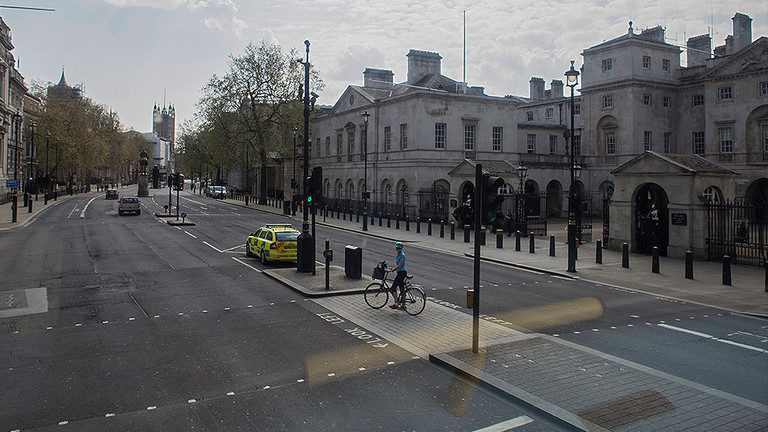
© Getty Images/Rahman Hassani/SOPA Images/LightRocketA nearly deserted Downing Street during lockdown due to corona virus pandemic
The clandestine scientific body SAGE, which has helped shape the British government's Covid-19 policy, has serious questions to answer about corruption, incompetence and chaos.

They were a mysterious cabal of individuals plotting behind closed doors, whispering about initiatives to implement on an unwitting British population.

Now the Scientific Advisory Group on Emergencies (SAGE) has finally been forced into the light.

Up until a few days ago, their identities were being kept secret because of an alleged fear of being lobbied. Their job is to meet twice a week (on Tuesdays and Thursdays) to discuss Britain's response to Covid-19.

Comment: Whilst the coronavirus is evidently less deadly than the flu, what the author does accurately pin down is that the government have proven themselves to be corrupt as well as incapable of dealing with a crisis - even a manufactured one - and it's likely that when a real crisis comes along, we'll see much of them same, however the state of the country will be considerably worse and citizens will be in an even more vulnerable position than they are now.

See also:


Propaganda

N. Korea Unification Minister rejects reports of Kim Jong-un's illness as 'fake news,' 'infodemic'

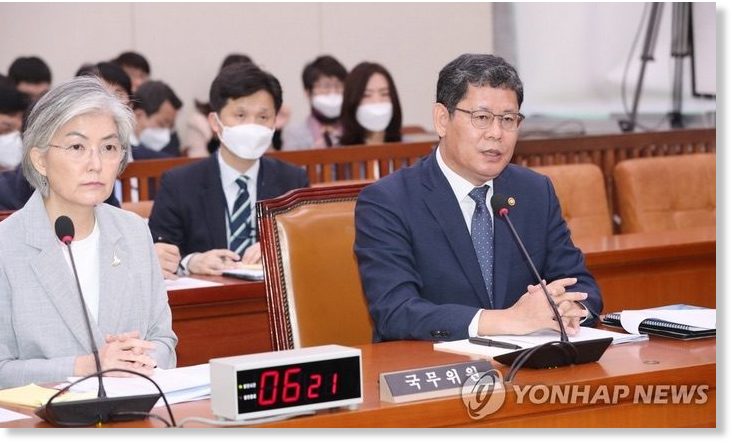
Unification Minister Kim Yeon-chul
© YonhapForeign Minister Kang Kyung-wha (L) and Unification Minister Kim Yeon-chul speaks during a parliamentary session at the National Assembly in Seoul on April 28, 2020.
Unification Minister Kim Yeon-chul on Tuesday rejected unconfirmed reports of North Korean leader Kim Jong-un's illness as "fake news" and "infodemic," insisting he can say confidently there have been no unusual signs in the communist state.

Speculation about Kim's health spiked after he skipped an annual visit to the mausoleum of his grandfather Kim Il-sung on the late national founder's April 15 birth anniversary, the North's most important national holiday.

Media reports have since speculated that Kim might be seriously ill, but Seoul officials have disputed the reports, repeatedly saying there are no unusual signs found in North Korea and that Kim is believed to be staying in the country's eastern coastal town of Wonsan.

"It can be seen as a phenomenon of infodemic," Minister Kim said during a parliamentary foreign affairs committee meeting, referring to a recent deluge of unfounded rumors about the leader's heath. "We have intelligence capacity that allows us to say confidently that there are no unusual signs."

Comment: Trump recently weighed in on the speculation, and his comments suggest that he "knows something":
US President Donald Trump further fueled speculation about the health of North Korean leader Kim Jong-un, telling reporters at the White House he had a "very good idea" of his condition but couldn't talk about it at this time.

"I can't tell you exactly. Yes I do have a very good idea but I can't talk about it now," Trump said Monday when asked about Kim's health.

"I just wish him well," the president added.
I hope he's fine. I do know how he's doing, relatively speaking.
[...] the president dismissed on Monday claims by North Korean state media that Kim had made a statement on Saturday, saying this couldn't possibly be true.

"I don't think so. No one has seen him. He didn't make a statement," Trump said. "He didn't say anything last Saturday. Nobody knows where he is, so obviously he couldn't have said it."

North Korean media said over the weekend that Kim had made a statement to workers in the coastal resort town of Wonsan. Moon Chung-in, a national security adviser to South Korea's president, also said on Sunday that Kim had been staying in Wonsan. Seoul firmly believes that Kim "is alive and well," the senior official said.

Trump made sure to remind reporters that the US would have been at war with North Korea had he not been elected in 2016. While he and Kim exchanged threats and insults early on, in 2018 Trump became the first US president to directly meet with a North Korean leader.


Eye 1

'Risk of economy falling apart': France's PM details plan to 'ease' lockdown

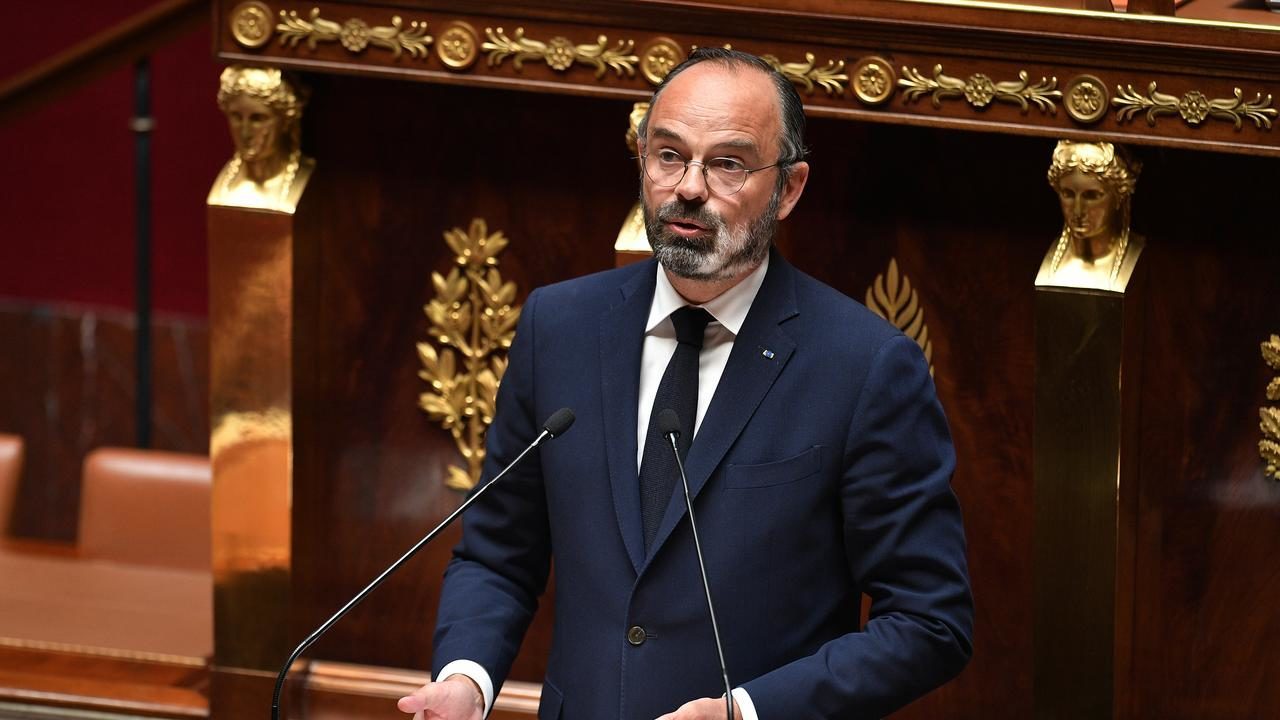
Édouard Philippe
© David Nivière, AFPFrench Prime Minister Édouard Philippe unveils his blueprint for the country's exit from lockdown in an address to the National Assembly on Tuesday, April 28.
French Prime Minister Édouard Philippe revealed his government's much-awaited plan to ease the strict nationwide coronavirus lockdown on May 11 to the National Assembly on Tuesday, including how many tests for the virus they hope will be carried out per week.

MPs passed Philippe's plan on Tuesday by 368 votes, compared to 100 against.

The easing of France's Covid-19 lockdown measures looks set to be a perilous process as the disease tolls continues to mount, though at a slower rate, more than a month after a nationwide lockdown was put in place.

Comment: Admitting that we just have to 'learn to live with the virus' is akin to admitting that the lockdown and the destructive consequences of same have all been for nothing. And, in light of this, what's notable in the details provided below by TheLocal.fr, is that many of these rules clearly make no sense which just goes to show that this 'easing' of the lockdown is actually the process of easing in to a 'new normal' (as desired and directed by the pathocrats), and this appears to have been the real reason behind the the lockdown:
Main points on what changes on May 11th:
  • No permission slip needed after May 11th...
  • As long as you are not travelling more than 100km from home
  • Long distance travel allowed only for essential reasons
  • France to carry out 700,000 tests a week after May 11th
  • Those who test positive must be isolated for 14 days either at home or in special accommodation
  • Masks will be made compulsory in some sectors, for example on the metro and in secondary schools
  • Everyone working from home should continue to do so
  • Crèches to reopen, but with max 10 children in each group
  • Maximum 15 pupils in each school class
  • Shops to reopen
  • Bars, restaurants, cinemas and beaches remain closed
  • Public gatherings of up to 10 people allowed
  • No religious ceremonies before June
  • BUT, rules may vary between départements
  • French football, rugby seasons cannot resume till September
"This is how we will tell the French that life will resume", said Philippe.

The PM said the government would provide a lot of leeway to regional authorities to adapt the measures, in order to ensure that the final decisions would be tailored to local needs.

"We have never in our history known this kind of situation," Philippe said as he presented a plan, which was to be debated and and voted on in the French parliament.

Philippe's address was followed by a debate and a vote, with just 75 of the 577 lawmakers allowed into the National Assembly in line with social distancing measures.

The rest will vote by proxy.

The government's lockdown had been key in limiting the epidemic curve avoiding the country's hospitals becoming unable to cope with the number of patients, the PM said.

"We all want to avoid having to, after confining and the unwinding the lockdown, having to re-confine."

The PM outlined a "phase one" from May 11th to June 2nd, when the necessary steps for the "next phase" ("until summer") would be determined.

The entire speech is available here.

'Learn to live with the virus'

After May 11th the French public are going to have to learn to live with the virus, the PM warned.

"As long as we don't have a vaccine, or reached collective immunity, the virus will continue to circulate among us," the PM said, outlining that this was the "first axis" of the government's strategy: "protecting, testing, isolating."

The second axis was that the easing of the current lockdown would be "progressive." The government aimed to gradually relieve restrictions in order to continue to protect the country's hospitals.


"Red" and "green" areas

The third key point of the government's strategy was "geography", said Philippe, meaning that mayors and local authorities around France would be allowed to adapt the government's plan depending on the spread of the virus in their area.

Some départements would have to introduce stricter rules than others, the PM said.

Indicators to determine "which départements would need a stricter easing of the lockdown (..) will be fixed on May 7th."

On May 11th, some areas would be categorised as "red" and others as "green" depending on local testing capacities, hospital capacity and the total number of new cases over the past seven days.

Full details on that system here.

'Protect, test, isolate'

Philippe spelled out the risk that a second wave of infections could mean a second spell of confinement.

"The risk that a second wave, which will result in a second period of confinement is a serious risk, that must be taken seriously."

Masks

"We will have enough masks for everyone starting May 11th," the PM said.

He acknowledged that "the question of mask had been a source of anger among many," explaining that France - "like all other European countries" - had faced the challenge of stock shortages.

"The government therefore decided to set aside national stocks of masks for the country's health workers," he said.

France has massively increased the country's national production, Philippe said.

"We are receiving nearly 100 million surgical masks per week," he said.

The government would "support regional collectivities in buying masks by covering 50 percent of the price," Philippe said.

Starting May 11th, masks would be required as facial protection in several everyday life scenarios (outlined below).

Tests

"At the end of the lockdown (May 11th) we will be able to carry out 700,000 virology tests per week," Philippe said.

The cost of the tests would be covered "100 percent by social security," the PM said.


Paid for by the taxpayer.


Religious ceremonies

The PM said religious communities would not be able to organise ceremonies "before June 2nd."

Funerals would continue to be permitted albeit the maximum number of attendees would remain at 20 as is the case now.


Meanwhile gatherings of other kinds are limited to 10??


Parks and gardens

Will reopen on May 11th, but only in the areas that are least affected by the virus.

Graveyards

The public would be able to visit the country's graveyards after May 11th.

Sport

French football, rugby seasons cannot resume till September.

Isolating those with the virus

Philippe said those who test positive for the virus would have to isolate themselves for 14 days, either on their own in special accommodation such as hotels or at home. If people chose to isolate with their family then the whole household will have to stay in self-isolation, the PM said.

"The main objective of isolation is to allow us to identify those carrying the virus. It's not a punishment, it's putting them in a safe place," he said.


War is peace and freedom is slavery.


Philippe said the policy relied on "individual responsibility and each person's conscience".

Travel

People won't be free to travel around France after May 11th.

While people will be allowed to travel within 100km of their homes, it won't be so easy to undertake longer trips.

"We want to limit these trips for only professional or family reasons, for obvious reasons of limiting the circulation of the virus," said Philippe.

People in France who want to travel over 100km for professional or family reasons will need "a permission form". This form may be made available at a later date.

Shops and markets

Shops and stores will be allowed to reopen from May 11th as long as they have protective measures in place to ensure social distancing and "hygiene barriers."

Shop owners can, starting May 11th, require customers to wear masks.

All open air markets can reopen starting May 11th, providing that they maintain current security measures and have customers respecting social distancing of metre between each person.


Open air markets with possibly hundreds of people may open but gatherings must be limited to 10 people, except funerals and religious services may have up to 20. These measures are demented, and it's even more telling that the government actually approved them.


Hair dressers and beauty salons can also reopen on May 11th.

Big museums, cinemas and theatres to remain closed

The country's cinemas, theatres and large museums will not reopen on May 11th but libraries and small museums will be allowed to.

Public transport

Starting May 11th, masks will be mandatory on all public transport. People travelling by tram, metro, RER or train would need to wear a protective facial mask, the PM said.

Public transport capacity in Paris would be increased from the skeleton service running now to reach 70 percent of normal service by May 11th and social distancing will be required "also in the Metro."

But Philippe said train capacity would be significantly reduced in order to respect distancing requirements, for example one out of every two seats will be put out of use and passengers waiting on platforms would be separated.

Philippe said rush hours would be "reserved for workers" who needed to get to their workplace.

Working from home

Philippe said working from home would be needed to maintained in the professions where this was possible - at least in the coming three weeks.

Restaurants, bars and cafés

The government will set a date for when the restaurants, bars and cafés could reopen at the end of May. They would not, however, open before June 2nd.

Social gatherings limited to 10

Any kind of social gathering whether in public or private will be limited to 10 people.

Physical exercise

All individual physical exercise will be allowed starting May 11th (without permission slip).

Joggers and cyclists may move further away from their home than 1km again and no time limit will be set on running, walking or biking.

However, all collective sports and contact sports will continue to be banned.

Schools

The French government has already said French schools would begin to reopen starting May 11th.

Now, Philippe said crèches would also open starting May 11th, but with an upper limit of 10 children in every group. Staff will have to wear masks.

Collèges (secondary schools) would progressively reopen starting May 18th - "but only in the départements where the circulation of the virus is very low," the PM said. The classes 5ème (11 year olds) and 6ème (12 year olds) would return to school first.

No classes could exceed 15 pupils, the PM said.

The government would make a decision in early June on whether lycées (high schools) would be able to reopen.

Universities will remain closed until September.

Returning to school will however be voluntary, and the government has previously said that no parent will be forced to send their child back to school against their will.

As for masks in schools, Philippe said "masks will be forbidden in maternelle (nursery)" and "not recommended" in primary school due to health risks if the user did not wear the mask correctly.

Wearing masks in secondary schools (coll!ges) would however be compulsory, the PM said. Secondary school children who had "not managed to procure a mask" would be provided with masks by the government.

Religious ceremonies

The PM said religious communities would not be able to organise ceremonies "before June 2nd."

Funerals would continue to be permitted albeit the maximum number of attendees would remain at 20 as is the case now.

Sport

French football, rugby seasons cannot resume till September.


Bizarro Earth

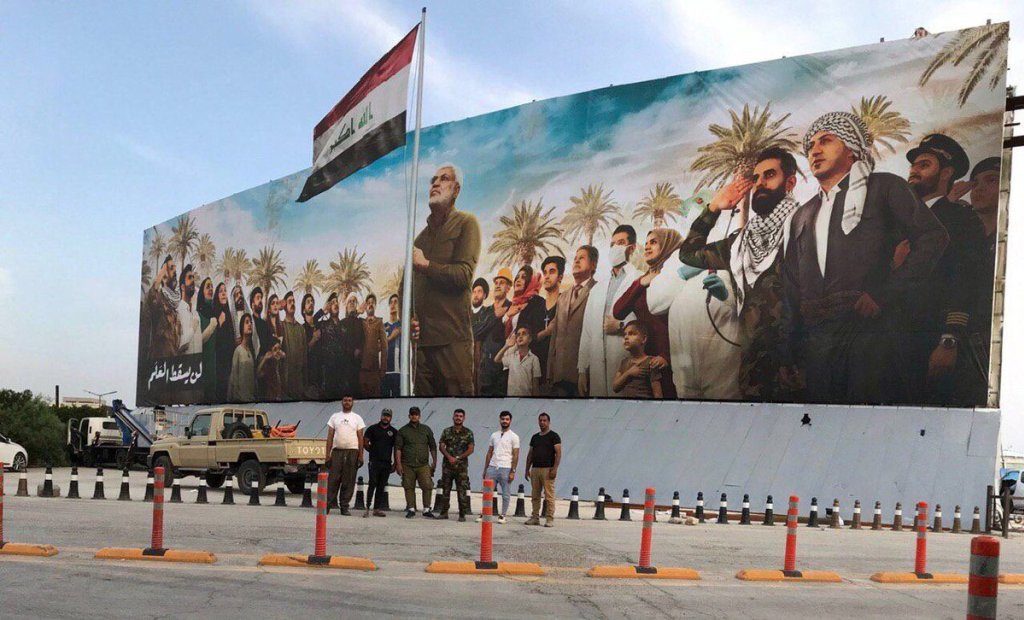
Magnier: The US demands China, al-Hashd and Iran, out of Iraq, or else

iraq
Iraq never before witnessed fragmentation of this magnitude, embodied by an unprecedented division between the various political blocs in a parliamentary system dependent on the consensus of the ruling parliamentary blocs.

The US administration, aware of the lack of Iraqi unity, is playing an important role in pouring oil on the fire. The Iraqi economy depends on sales of crude oil for 67 percent of its budget. Its value is now so low that it threatens the Iraqi economy, and it has become a contributory factor in endangering the integrity of the territory. The deterioration of the standard of living, an unstable infrastructure, the emerging virus COVID-19 with its global economic repercussions- plus the division of parties that want their share in the government of Iraq: all these are effective contributors to the current instability of Iraq.

Comment: See also: Ehret: Might the current global crisis revive the Wallace/FDR grand design for Russia-China-US cooperation?


Better Earth

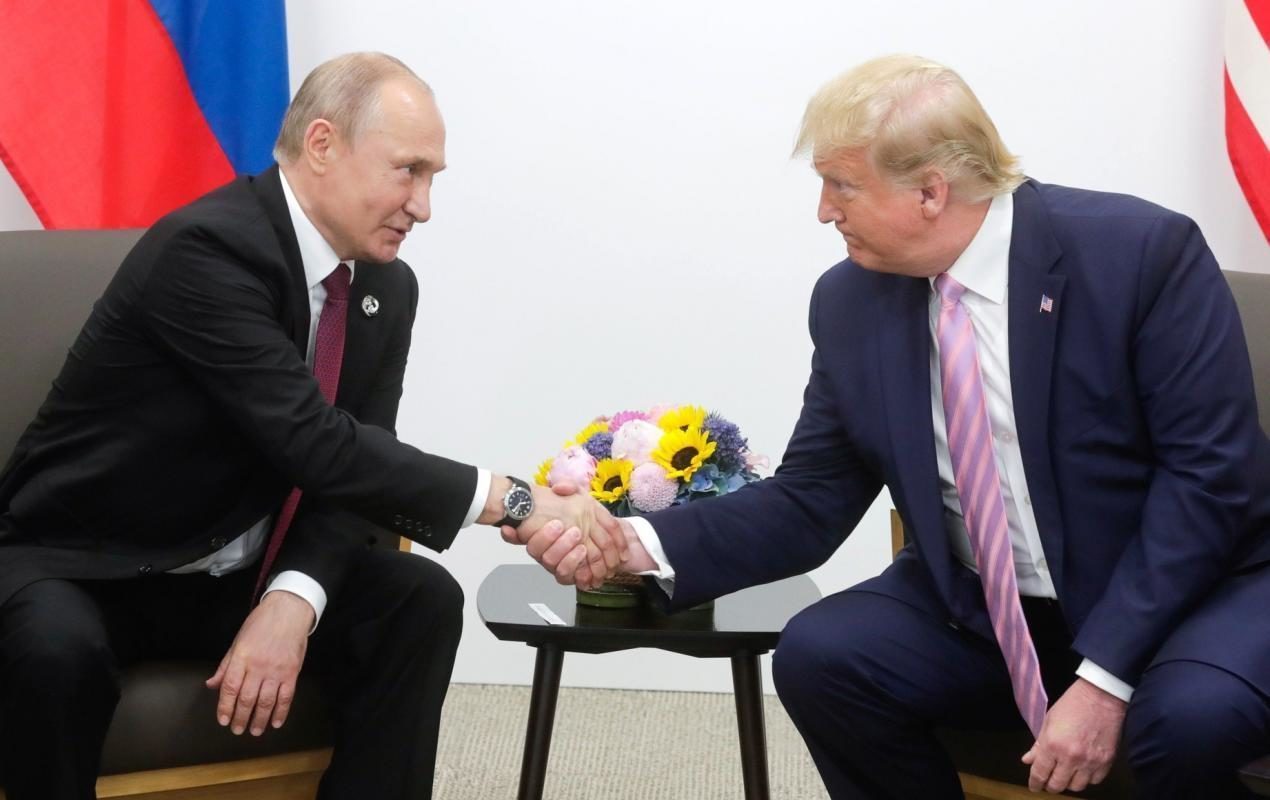
Ehret: Might the current global crisis revive the Wallace/FDR grand design for Russia-China-US cooperation?

putin i trump
© Anadolu Agency / GettyFILE PHOTO
On April 14th, President Putin re-iterated his January 15th, 2020 call for a new system to be created led by the 5 nuclear powers of the United Nations Security Council and guided by the UN Charter's principles. The Kremlin stated that:

"The meeting was initiated by the [Russian] President as a visionary meeting and, naturally, the video conference format that is widely used now for crisis management does not possibly create the necessary atmosphere for such a visionary conversation, even more so for the heads of five members of the Security Council."

Putin had earlier described this intended meeting in the following terms:

"The founding countries of the United Nations should set an example. It is the five nuclear powers that bear a special responsibility for the conservation and sustainable development of humankind. These five nations should first of all start with measures to remove the prerequisites for a global war and develop updated approaches to ensuring stability on the planet that would fully take into account the political, economic and military aspects of modern international relations."

Beaker

Flashback Bill Gates and Richard Branson are betting lab-grown meat might be the food of the future

lab meat
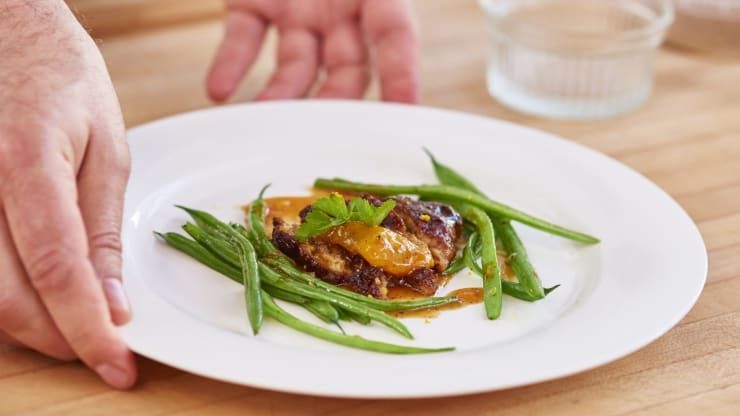
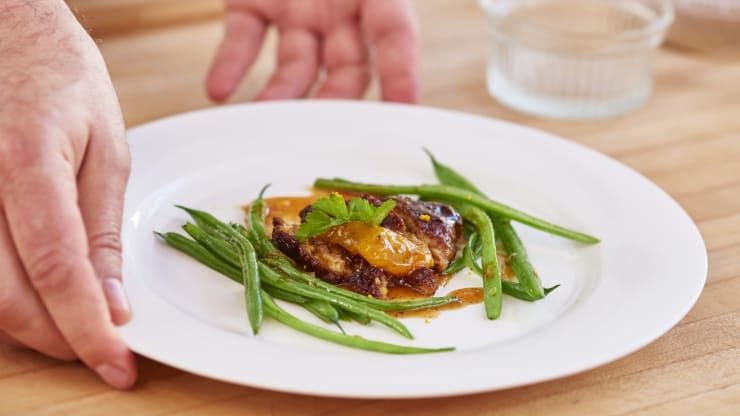
© Photo courtesy Memphis MeatsDuck à l'Orange made by Memphis Meats
  • Investors like Tyson and Cargill could put 'clean meat' on grocery shelves within three years.
  • Traditional meat production is ecologically devastating, and a growing world population could make farm-raised animal meat unfeasible by 2050.
  • Billionaires, including Bill Gates, say there is no way to produce enough meat traditionally to feed the world population of the future.
  • For lab-grown meat start-ups, going after $50-per-pound foie gras makes as much sense as grocery-store staples like burgers and chicken nuggets.
Vegetarians have long touted the ethical and environmental problems with meat production and consumption. Start-ups such as MosaMeat, JUST and Memphis Meats are tissue-engineering meat in a lab to allow people to enjoy being a carnivore without any of the environmental or ethical hang-ups.

Dubbed clean meat, the efforts are distinct from "fake meat," like the soy protein "chicken" you can find in your grocery store today. Unlike Morningstar or Boca Burgers, clean meat really is meat; it just grows in a lab instead of being part of an animal. But lab-grown meat leads most skeptical diners to think of a big hurdle: taste.

"When they taste the product, they have to have the experience of meat, not the experience of a product that looks like meat and comes close to meat or has the distinct hints of something that looks like meat," said Peter Verstrate, the CEO of MosaMeat. "It just has to be meat."

"The ultimate filter is, 'Does it taste exactly like the meat you're used to?'" said Josh Tetrick, CEO of clean meat start-up JUST, who already tasted success with JUST Mayo.

There are two business-world barometers for clean-meat products that are make-or-break as well: price and scale.

Right now clean meat is much more expensive to produce than traditional meat because of scaling and infrastructure. The land, feed, farmers, slaughterhouses and transportation are already in place to produce meat from dead animals. Growing clean meat may be more efficient and will require less total marginal costs in the end, but until the systems needed to grow clean meat on a large scale exist, it will be more expensive.

Comment: Bill Gates has his tentacles everywhere!


Lab-Grown meat startups backed by Bill Gates & Tyson Foods face FDA oversight

Can you really call lab-grown meat 'clean'?

Bill Gates has been controlling the WHO


Document

Trump to sign executive order to keep meat processing plants open

trump
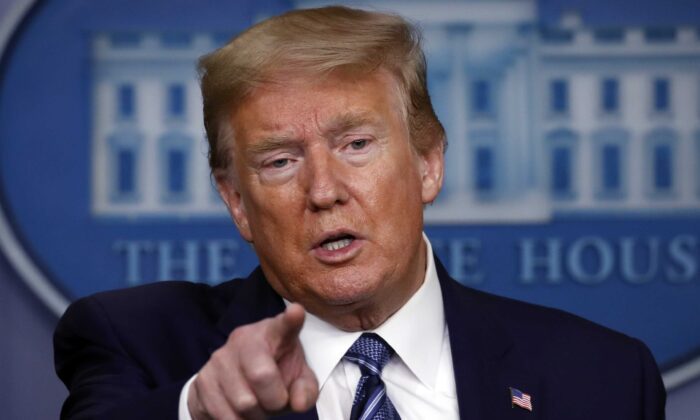
© Alex Brandon/APPresident Donald Trump speaks about the CCP virus in the James Brady Press Briefing Room of the White House on April 21, 2020.
President Donald Trump said he's planning to sign an executive order to compel meat processing plants to remain open during the CCP virus pandemic.

A number of meat and poultry plants have shut down in recent weeks after employees contracted the virus, leading to warnings from top executives that a shortage may hit the United States.

"We're going to sign an executive order today, I believe, and that'll solve any liability problems," Trump told reporters on April 28 during a meeting with Florida Gov. Ron DeSantis.

News reports on April 28 said Trump would sign a Defense Production Act order and state that meat processing plants are critical infrastructure.

"And we'll be in very good shape," the president said in response to a question about the order. "We're working with Tyson, which is one of the big companies in the world. And we always work with the farmers. There's plenty of supply, as you know. There's plenty of supply. It's distribution. And we will probably have that today solved. It was a very unique circumstance, because of liability."

Comment: Tyson Foods and Bill Gates wouldn't want to create a meat shortage now would they?


Dollars

The Gates Foundation and the war on cash: "Financial inclusion" in an age of neoliberalism

war on cash
Back in November 2016, the Indian government decided to remove all 500- and 1000-rupee notes from circulation overnight without prior notice. This effectively removed 86% of cash in a country that was almost 90% cash reliant.

The notes became worthless and people were asked to hand them in to banks. They would only receive what they had deposited in dribs and drabs over time in the form of new notes. The official reason for this was that the action would curtail the shadow economy and reduce the use of illicit and counterfeit cash to fund illegal activity and terrorism.

Some who questioned the official narrative regarded this 'demonetisation' policy as a ploy to take money from the public and use it to inject much needed liquidity into the banking system that had been bled dry by the outflow of cheap money (and loan waivers) to large corporations which had been milking the well dry.

The purpose of this article is not to explore the merits or otherwise of this claim or the official government narrative. The point here is to highlight how the policy (also) formed part of an ongoing global 'war on cash'. In the discussion that follows, it will be shown that Bill Gates is a major player in trying to get the world to go digital and ditch cash, especially relevant given his role in the COVID-19 issue.