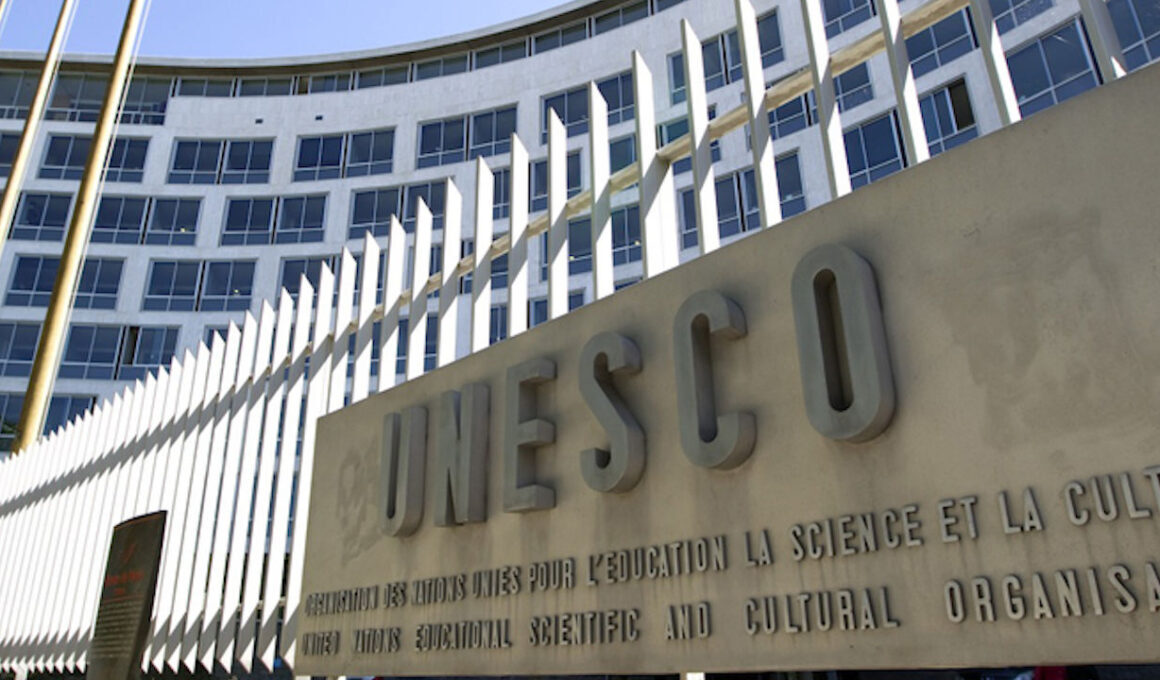
UNESCO headquarters in Paris
For over forty years, coalitions of academics, governments, corporations, and world governance bodies have colluded to build a global ed-tech schooling system meant to shackle children to the transhumanist Fourth Industrial Revolution.
I recently visited former Senior Policy Advisor to the US Office of Educational Research and Improvement, Charlotte Thomson Iserbyt, who gave me access to her archive of files that she collected from the US Department of Education. After digging through a collection of files collated by
Lawrence P. Grayson, who was the Advisor for Mathematics, Science and Technology at America's National Institute of Education (NIE), I discovered that the Department of Ed's
Project BEST (Basic Education Skills through Technology), which Iserbyt leaked in 1981, was actually the USA's domestic version of an international technology initiative spearheaded by the United Nations Educational Scientific and Cultural Organization (UNESCO).
While stationed at the NIE, Grayson was also the US Department of Ed's liaison with UNESCO's educational technology programs, including
"Study 11: New Technologies in Education", which he procured for Iserbyt in a bundle of interrelated memorandums and journals. Labeled as the "Grayson File," this folder compiled the following documents:
- UNESCO Study 11 whitepapers that issue ed-tech directives to a region of 14 nation states grouping together communist, socialist, and capitalist countries;
- US Department of Ed memorandums which stipulate American collaboration with Study 11 and other UNESCO technology programs;
- Law journals that call for restructuring legal systems in order to globalize the computerized "information technology" (IT) revolution necessary to streamline international ed-tech markets;
- Academic journals containing ed-tech promotionals from Project BEST contractors and UNESCO Study 11 representatives published alongside commercial advertisements and order forms for Project BEST courseware and other e-learning products being sold by the very same companies, including Microsoft, Apple, and IBM, that are endorsed in the UNESCO Study 11 whitepapers.













Comment: See also: