Puppet MastersS


Vader

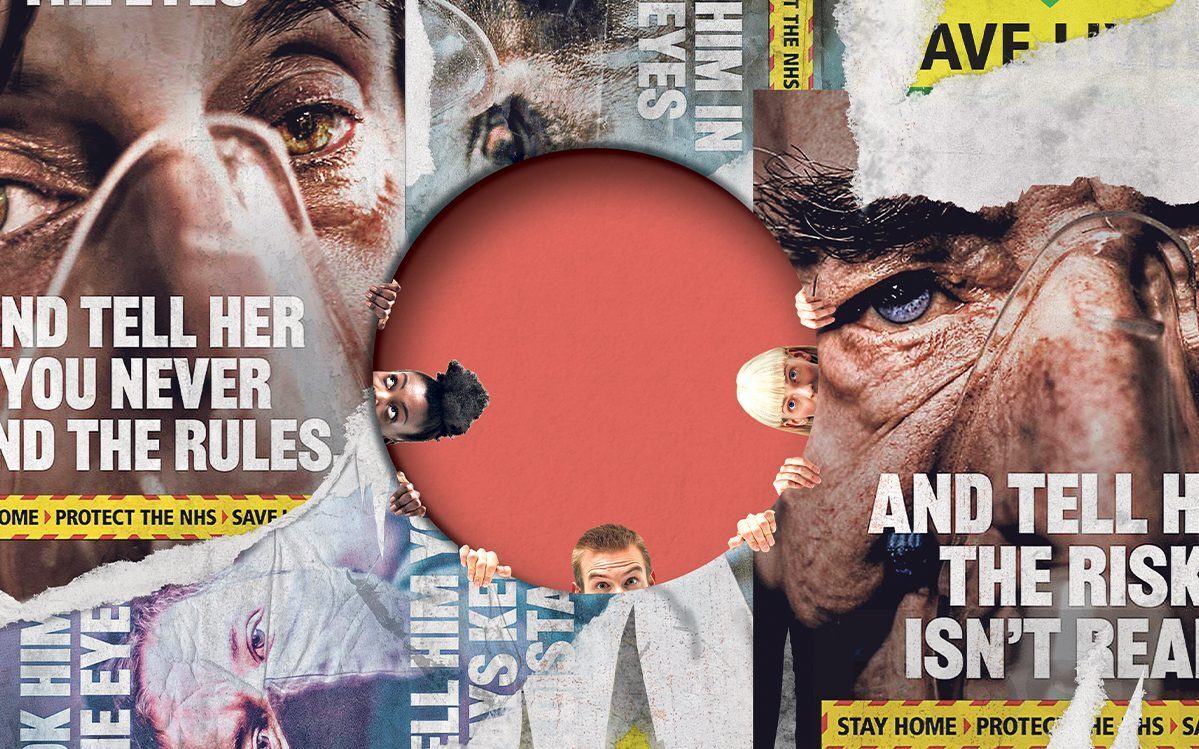
Flashback SOTT Focus: Life Inside The Fear Factory: How The Government Keeps us on High Alert

fear government pandemic
© The TelegraphInfantilised: 'If this was an experiment in a psychology lab, we would have signed consent forms'
Foreign holidays are back! So said the headlines last week when the Government's "green list" of safe countries was revealed.

Not so fast, warned ministers, telling the public going abroad was "dangerous" and is "not for this year".

Confused? That's because you're meant to be, says Laura Dodsworth, who has spent the past year investigating the Government's use of behavioural psychology for her new book, A State of Fear.

"When you create a state of confusion, people become ever more reliant on the messaging," she says. "Instead of feeling confident about making decisions, they end up waiting for instructions from the Government."

This week's chaotic and contradictory advice on travel is all part of the growing use of fear to control the public, she believes - a tactic which has been supercharged by the Covid pandemic.

"It reminds me very much of what the Government was doing at Christmas, when family Christmases were on, then off, then back on, then off again," she says. "You have got someone tightening the screw, then loosening the screw, then tightening it again. It's like a torture scenario."


Comment: To illustrate the pan-Western application of this torture, French media literally ran multiple headlines at key junctures throughout this psychological torture process in which the government announced, time and again, that it was "turning the screw..."


Cult

Moscow responds to leaks detailing British political interference in Russia

British pound sterling currency
© Simon Belcher / Global Look PressThe UK spent lavishly on its NGOs in Russia
Foreign Ministry reacts to leak of documents on London's spending on pushing its agenda in country

Britain has created a network of affiliates in Russia to influence civil society through a system of grants worth millions of dollars annually, Moscow claimed on Sunday.

The sums London spends on "influencing civil society organizations ... and steering Russia's [political] course in a direction favorable for the UK ... boggles belief," Foreign Ministry spokeswoman Maria Zakharova insisted, citing a freshly leaked trove of documents shedding light on the activities of British diplomats in Russia.

Comment: Not the first leak either:


Attention

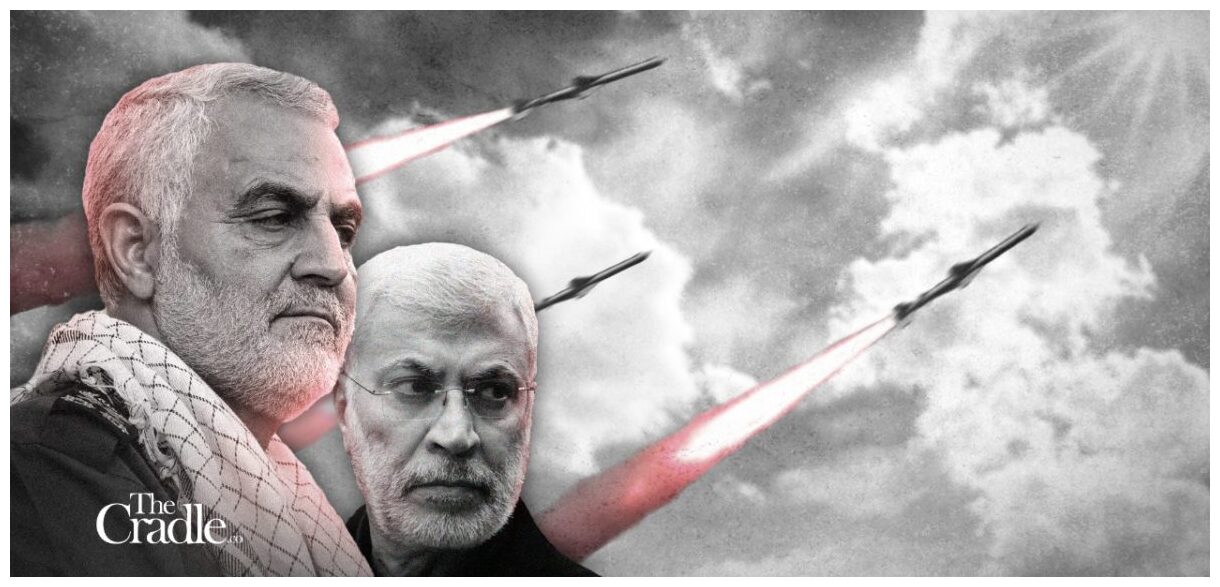
Two years on, the Soleimani Spirit gathers clout

The Americans may have assassinated Soleimani, but the illegal aggression has not thwarted the Quds Force general's plans for West Asia one bit, and may have even accelerated them.

Soleimani and Abu Mahdi
© The CradleThe Baghdad murders of anti-ISIS commanders Qassem Soleimani and Abu Mahdi al Muhandes triggered an unprecedented Iranian ballistic missile attack on US military bases in Iraq.
Two years ago, the 2020s started with a murder.

Baghdad airport, January 3, 00:52 AM. The assassination of Major General Qassem Soleimani, commander of the Quds Force of the Islamic Revolutionary Guards Corps (IRGC), alongside Abu Mahdi al-Muhandes, deputy commander of Iraq's Hashd al-Shaabi forces, by laser-guided AGM-114 Hellfire missiles launched from two American MQ-9 Reaper drones, was an act of war.

This act of war set the tone for the new decade and inspired my book Raging Twenties: Great Power Politics Meets Techno-Feudalism, published one year later.

The drone strikes at Baghdad airport, directly approved by then US President Donald Trump, were unilateral, unprovoked and illegal: an imperial act engineered as a stark provocation capable of triggering an Iranian reaction that would then be countered by American "self-defense," packaged as "deterrence."

Call it a perverse form of double down, reversed false flag.

The imperial narrative barrage spun it as "targeted killing:" a pre-emptive op squashing Soleimani's alleged planning of "imminent attacks" against US diplomats and troops.

No evidence whatsoever was provided to support the claim. And then-Iraqi Prime Minister Adel Abdul-Mahdi, in front of Parliament, offered the ultimate context: Soleimani, on a diplomatic mission, had boarded a regular Cham Wings Airbus A320 flight between Damascus and Baghdad. He was involved in complex negotiations between Tehran and Riyadh, with the Iraqi Prime Minister as mediator, and all that at the request of President Trump.

So the imperial machine - following trademark mockery of international law - assassinated a de facto diplomatic envoy. In fact two envoys, because al-Muhandis had the same leadership qualities of Soleimani - actively promoting synergy between the battlefield and diplomacy - and was absolutely irreplaceable as a key political articulator in Iraq.

Hourglass

It's time to prepare for the post-American age

Protest
© AFP/Mohammed AbedProtest and Anger
Washington's role in the world is diminishing. What comes next? Has American dominance across global foreign policy, finance, and military affairs been a source of stability or conflict? Some believe Washington's status as the last great power has been a force for good. Others disagree.

Maintaining its hegemony has demanded that Washington divide the world into marginalised adversaries and dependent allies. NATO's supremacy in Europe was seen by many of the West's leading lights as having created a lasting peace on the continent. At the same time though, it has also been the main source of conflict as the bloc expanded towards Russian borders.

We are now living in an age when that American dominance is coming to an end, and its security guarantees are losing their credibility. If a unipolar world order reduced the prospect of conflict, will previously dormant forces be unleashed as vulnerable states are overwhelmed by their aggressors? Alternatively, though, will stalemates and ceasefires be longer lasting as nations previously emboldened by US backing are forced to find lasting solutions with their adversaries, rather than languishing behind Washington's protection?

Comment: What will protect/ensure a new paradigm from a similar fate? Lessons learned? Unlikely. Old habits die hard and some grooves are just too deep.


Rainbow

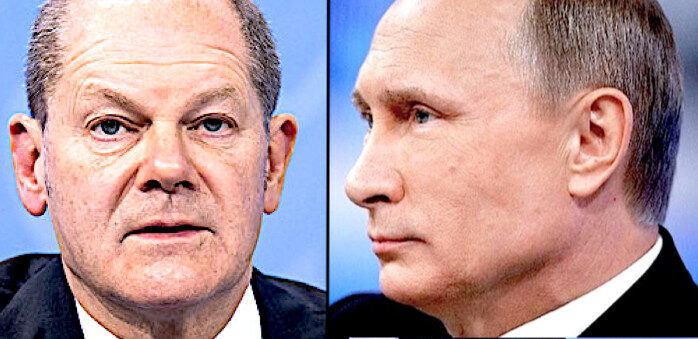
New German chancellor to meet Putin, wants 'fresh start' says media

ScholzPutin
© Bernd von Jutrczenka/AFP/UnknownGerman Chancellor Olaf Scholz • Russian President Vladimir Putin
German Chancellor Olaf Scholz is hoping to turn a page in relations with Moscow, and expects to meet with his Russian counterpart Vladimir Putin by the end of the month, according to a report from Berlin's top tabloid.

On Monday, Bild claimed that Scholz sees relations with Moscow as a top-tier foreign affairs priority in spite of calls from some members of his governing coalition for a more confrontational approach to Russia. The newspaper said that the 63-year-old is aiming for a "qualified fresh start."

However, Berlin has officially yet to confirm any top-level meeting of this type, with the German Embassy in Moscow also unable to verify the report. What is known, however, is that the chancellor's foreign policy adviser will meet his Russian and French counterparts this week.

Scholz's reported attempts at a new détente with Moscow may prove unpopular with his coalition partners, particularly the Green party, which is strongly pro-US/NATO and hostile to Russia.

Comment: Scholz may have the right idea in an unyielding political climate. How far will he get? Ref: Trump


Bad Guys

Twitter permanently suspends conservative Rep. Marjorie Taylor Greene's personal account

Marjorie Taylor Greene
© Carol Guzy/ZUMA Wire/REX/ShutterstockRep. Marjorie Taylor Greene (R-GA)
Congresswoman has repeatedly battled social media platform over censorship.

Twitter on Sunday permanently suspended Rep. Marjorie Taylor Greene's personal account with nearly a half million followers, alleging she violated the company's rules on COVID-19 information.

The following message appeared on her @mtgreene account: "Account suspended. Twitter suspends accounts that violate Twitter rules."

A company spokesman confirmed to CNN the account was permanently suspended "for repeated violations of our COVID-19 misinformation policy."

Greene, a freshman Republican for Georgia, did not immediately issue a statement after Twitter's action. Her official congressional account remained operational midday Sunday.

Comment: This tweet seems to be the issue:


Zuck taking his cues from Dorsey's beta replacement:


Both sides of the political divide were quick to respond.


Piggy Bank

Countries set to launch e-money this year

virtual pig bank
© Getty Images/PM imagesThe virtual piggy bank
The rise of cryptocurrencies has driven central banks to attempt a similar - digital - approach to monetary policy. Jamaica just announced it successfully tested its CBDC, and several other nations are ready to launch theirs.

CBDC stands for 'Central Bank Digital Currency' - a country's fiat currency in the form of a digital asset, which, unlike cryptocurrencies, is controlled by the official monetary authorities - usually central banks. So far, only two countries in the world use a CBDC (The Bahamas and Nigeria). However, other nations have been working on a CBDC release of their own.

A number of nations worked on digitizing their monetary ecosystems in the past two years, but only two have managed to do so; these may be next:
  1. Jamaica: In the most recent development, the Bank of Jamaica announced on Monday it has successfully completed a trial of its digital currency. The eight-month pilot project began in May and ended on December 31. The country is now set to roll out its CBDC in the first quarter of 2022.
  2. China: The People's Bank of China (PBOC) was also busy prepping its e-CNY digital currency, announcing the project in September 2021 with plans to release the e-coin by February. The e-CNY was tested in five cities, including Shanghai, and conducted $9.7 billion worth of transactions. It is designed to be used for online and offline shopping, as well as paying electricity bills and transportation fares, according to the PBOC.
  3. Kazakhstan: Bitcoin-friendly Kazakhstan has made a prototype of a digital tenge platform and could launch its CBDC by the end of the year, as pilot testing is yet to start, Coin Rivet reports.
  4. Russia: Russia is ready to launch pilot testing of the digital ruble in early 2022, media reports state, citing Bank of Russia Governor Elvira Nabiullina. Last month, she said the pilot program would show whether the blockchain-based digital ruble will be launched or scrapped, as there are concerns that hackers might be able to access it.
  5. Brazil: The Central Bank of Brazil (BCB) is also set to test its 'digital real' this year, but so far, is planning to launch the currency for public use no sooner than in 2024. Analysts say the crypto-friendly nation has a good chance for a successful CBDC launch. Brazilians acquired $4.27 billion in cryptocurrencies in 2021, BCB figures show.

Newspaper

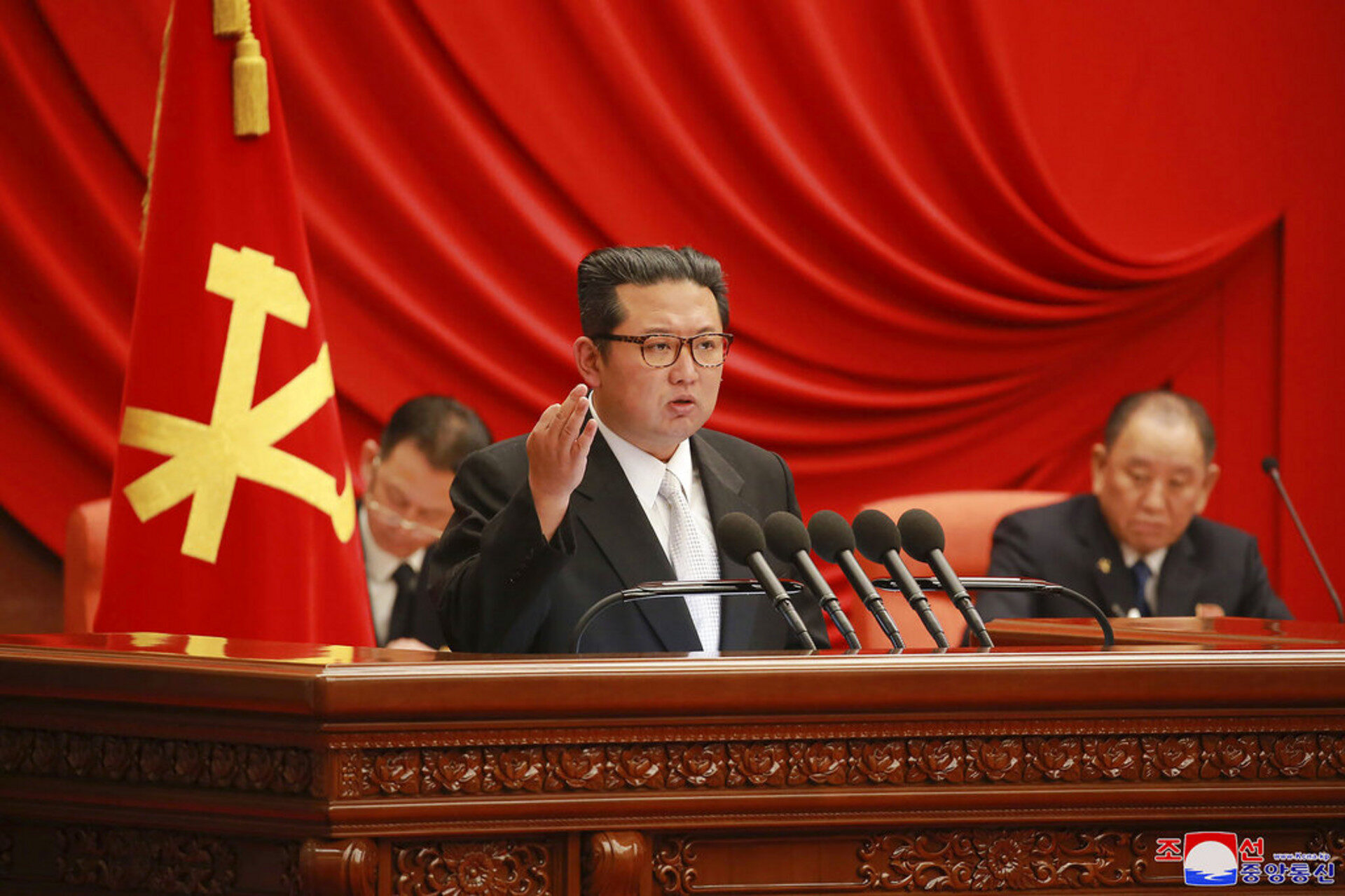
North Korea's Kim vows to engage with South, US, boost military, maintain lockdown, as country's economy sees worst contraction since 1997

Kim Jong Un
© Korean Central News Agency/Korea News Service via APNorth Korean leader Kim Jong Un, center, attends a meeting of the Central Committee of the ruling Workers’ Party in Pyongyang, North Korea.
There are no signs of political instability in North Korea, but some experts say the long-term stability of Kim's leadership could be questioned if the current difficulties continue.

North Korean leader Kim Jong Un vowed to further bolster his military capability, maintain draconian anti-virus measures and push hard to improve the economy during a speech at a key political conference this week, state media reported Saturday.

A state media report on Kim's speech at the five-day plenary meeting of the ruling Workers' Party didn't carry any specific comments on dealings with the United States and South Korea. Some experts say this implies Kim has no interest in resuming talks with Washington and Seoul anytime soon and would rather keep his country's borders closed while seeking a stronger self-reliant economy to overcome pandemic-related difficulties.

Comment: Yahoo provides further detail on Kim's speech and recent announcements:
North Korean leader Kim Jong Un capped off his 10th year in power with a speech that made more mention of tractor factories and school uniforms than nuclear weapons or the United States, according to summaries by state media on Saturday.

The meetings coincided with the 10-year anniversary of Kim effectively assuming leadership of the country after the death of his father in 2011.

Kim has used previous speeches around the New Year to make major policy announcements, including launching significant diplomatic engagements with South Korea and the United States.

But summaries of his speech published in North Korean state media made no specific mention of the United States, with only a passing reference to unspecified discussions of inter-Korean relations and "external affairs."

"The basic tasks facing the part and the people the next year are to provide a firm guarantee for implementing the five-year plan and make remarkable changes in the national development and the people's living," Kim was quoted as saying.

Kim spent the majority of his speech detailing domestic issues from an ambitious plan for rural development to people's diets, school uniforms and the need to crack down on "non-socialist practices."

He cited unspecified military advancements as a major achievement of the past year and discussed "militant tasks" facing national defence in 2022. The tractor factory he discussed in the speech is also likely to be used to build launch vehicles for missiles, foreign analysts have said, and North Korea is believed to have expanded its arsenal despite the lockdowns.

The big focus on rural development is likely a populist strategy, said Chad O'Carroll, founder of NK News, a Seoul-based website that tracks North Korea.

"Overall, Kim might be aware that revealing sophisticated military development plans while people are suffering food shortages and harsh conditions outside of Pyongyang might not be such a good idea this year," he wrote on Twitter.
See also:


NPC

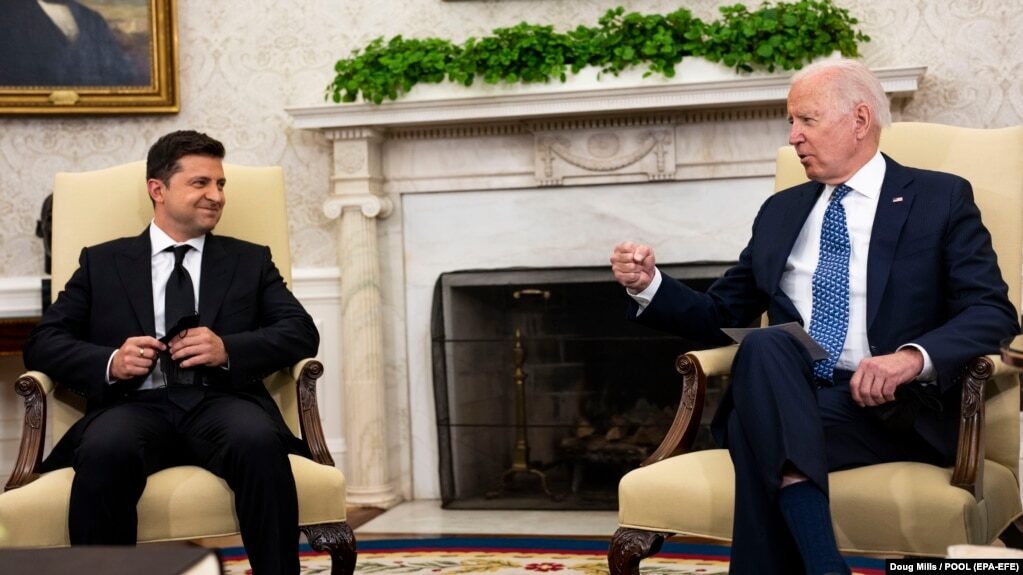
Biden tells Zelenskiy US will 'respond decisively' (whatever that means) if Russia invades Ukraine

Zelenskiy Biden
FILE PHOTO: President of Ukraine Volodymyr Zelenskiy (left) during a meeting with U.S. President Joe Biden in September at the White House.
U.S. President Joe Biden has told Ukrainian President Volodymyr Zelenskiy that the United States and its allies will "respond decisively" if Russia further invades Ukraine, according to a White House statement on January 2.


Comment: 'Respond decisively' could mean that the US will abandon Ukraine to its fate - and NATO has said outright that Ukraine is not included in its protection agreements - but it could mean just about anything, and that may have been the intention.


Biden "reaffirmed the United States' commitment to Ukraine's sovereignty and territorial integrity," White House spokeswoman Jen Psaki said in the statement, which came after the two leaders spoke by phone.


Comment: As a US vassal, Ukraine has little sovereignty, that's why Russia has said there's no point in having a discussion with Ukraine's leadership, because it doesn't call the shots.


"The leaders expressed support for diplomatic efforts, starting next week with the bilateral Strategic Stability Dialogue, at NATO through the NATO-Russia Council, and at the Organization for Security and Cooperation in Europe," Psaki said.

The first of the three high-level U.S. and Russian talks are set for January 9-10 in Geneva.

Comment: There's no evidence Russia has any intentions to initiate an 'invasion' of Ukraine, but there is solid evidence that this whole farce has been concocted by the West to antagonise Russia, in order to further a number of agendas.

Russia has explicitly declared it's red lines and that if they are crossed it, too, will be forced to respond; and it's notable that the West hasn't disputed Russia's red lines, and this is probably because they're not unreasonable.

However, in the run up to these meetings, the West has been on a propaganda offensive - the meeting with Zelenskiy as just one example - as well as doing everything it can to stall and deflect from Russia's proposals: Also check out SOTT radio's: NewsReal: New Year, Same 'New Normal': Mass Formation Psychosis & Crowd Psychology


SOTT Logo Radio

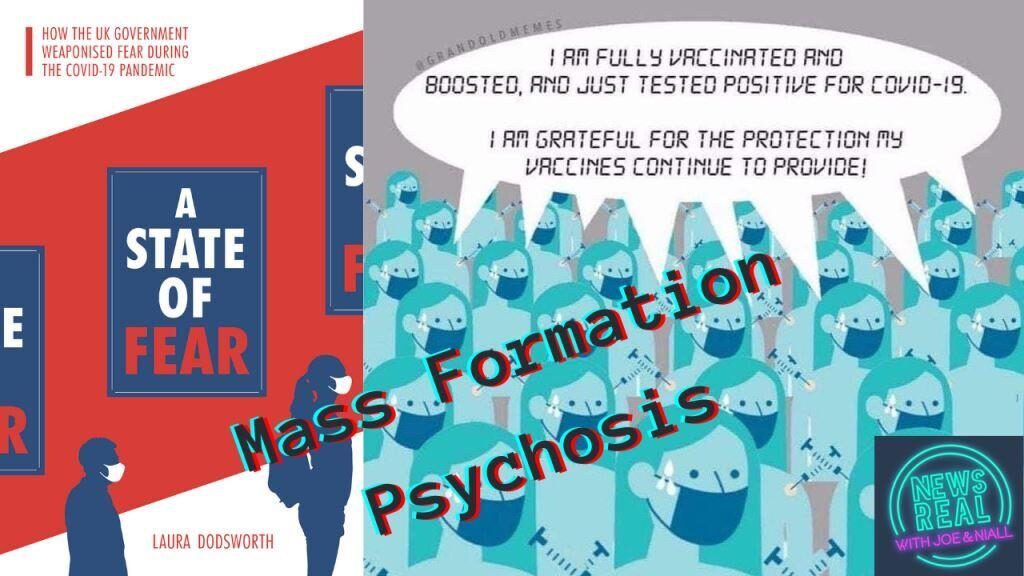
SOTT Focus: NewsReal: New Year, Same 'New Normal': Mass Formation Psychosis & Crowd Psychology

mass formation psychosis newsreal
© Sott.net
Joe and Niall return with NewsReal to discuss UK journalist Laura Dodsworth's State of Fear, a book detailing how British authorities used mind control techniques to manipulate the population into following the government's every word on Covid; Dr. Robert Malone's final message on Twitter (about the documented harms of injecting mRNA 'vaccines' into children) before he was summarily booted off the platform; and Prof. Matias Desmet's theory of Mass Formation Psychosis, which is gaining traction as an explanation for why so many people are impervious to facts about the so-called pandemic.

In the final ten minutes, they summarize the US-Russia stand-off over Ukraine with a preview of how that situation could play out in the weeks and months ahead. More on the Great Game of Geopolitics in upcoming shows...


Running Time: 01:43:40

Download: MP3 — 71.2 MB