Puppet MastersS


Arrow Up

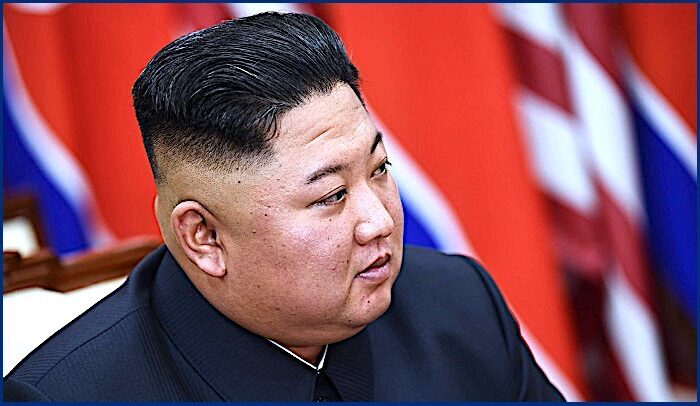
Ten years of Kim Jong-un's rule

Kim Jong-un
© UnknownKorean Leader Kim Jong-un
It's known that the former North Korean leader Kim Jong-il died suddenly at his workplace on December 17, 2011. The man who had the difficult task of taking the country out of a difficult situation caused by a set of natural disasters and radical changes in the international environment, which the DPRK calls "the hard march."

Kim Jong il "took North Korea with a plow and left it with a plow and a nuclear bomb." His youngest son Kim Jong-un inherited a reign, ten years of which deserve a special analysis because the author remembers the degree of skepticism the world and Western experts discussed the rule of the young general. Not everyone was sure that the status quo would last. They lashed out at his youth and unpreparedness, dreaming of the advent of democracy and a speedy unification. Reality proved different, refuting predictions of an inevitable regency, collective leadership, or military coup.

The anniversary was celebrated with a series of commemorative events honoring the late leader and emphasizing loyalty to the current leader.

Comment: Leadership is as much a journey for the people served as it is for the commander in chief. Many aspire; few succeed.


Nuke

Germany shuts down half of its 6 remaining nuclear plants

Nuke plant
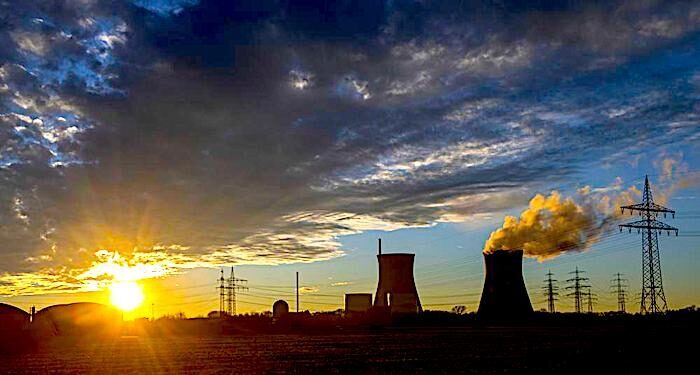
© Stefan Puchner/dpa via APNuclear plant in Gundremmingen, Bavaria, Germany to be shut down.
Germany on Friday shut down half of the six nuclear plants it still has in operation, a year before the country draws the final curtain on its decades-long use of atomic power.

The decision to phase out nuclear power and shift from fossil fuels to renewable energy was first taken by the center-left government of Gerhard Schroeder in 2002. His successor, Angela Merkel, reversed her decision to extend the lifetime of Germany's nuclear plants in the wake of the 2011 Fukushima disaster in Japan and set 2022 as the final deadline for shutting them down.

The three reactors now being shuttered were first powered up in the mid-1980s. Together they provided electricity to millions of German households for almost four decades.

One of the plants — Brokdorf, located 40 kilometers (25 miles) northwest of Hamburg on the Elbe River — became a particular focus of anti-nuclear protests that were fueled by the 1986 Chernobyl catastrophe in the Soviet Union. The other two plants are Grohnde, 40 kilometers south of Hannover, and Gundremmingen, 80 kilometers (50 miles) west of Munich.

Some in Germany have called for the decision on ending the use of nuclear power to be reconsidered because the power plants already in operation produce relatively little carbon dioxide. Advocates of atomic energy argue that it can help Germany meet its climate targets for reducing greenhouse gas emissions. But the German government said this week that decommissioning all nuclear plants next year and then phasing out the use of coal by 2030 won't affect the country's energy security or its goal of making Europe's biggest economy "climate neutral" by 2045.

Question

Is Belarus preparing for life after Lukashenko?

Lukashenko
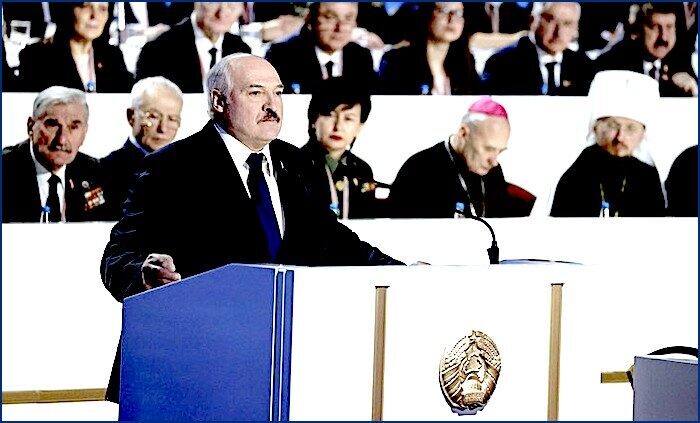
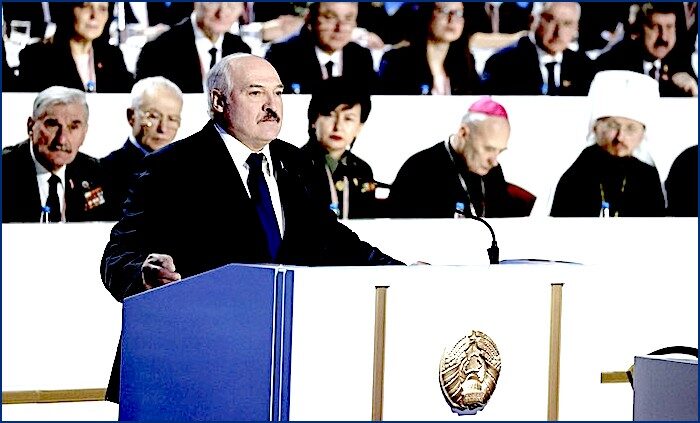
© Sputnik/BeiTABelarus' President Alexander Lukashenko
Belarus is on track to undergo a series of symbolic political reforms by way of amending its constitution. The first draft of the new document has recently been unveiled to much fanfare outside the country. But what might it mean?

Opinion pieces in both the Russian and Western media have nearly unanimously agreed that Belarusian leader Alexander Lukashenko is getting ready for a transition of power. The man who has ruled the Eastern European nation since 1994 has himself said the process is a precursor to standing down, arguing that the task of formulating the new document cannot be given to an unknown president, as it would be a "disaster." Yet many opposition figures have dismissed this as nothing more than a stalling tactic delaying his departure.

They point out that, under the terms of the new constitution, the All-Belarusian People's Assembly is probably being introduced merely to protect Lukashenko's interests in the long term, so warn against exaggerating the significance of these developments.

In reality, over the past few decades, politics in Belarus has been mostly what one might call a game of unreality. Anything declared on the political arena has always translated to a simulation rather than the actual implementation of what is declared. The republic's political parties simulate a parliamentary process, while its trade unions simulate a semblance of workforce independence when, in fact, they are the agents of the executive branch, and so on and so forth.

Comment: There are few good models, these days, from which to build. Belarus, unlike Ukraine, must choose wisely.


Stock Up

Everything bubble's end game

S&P chart
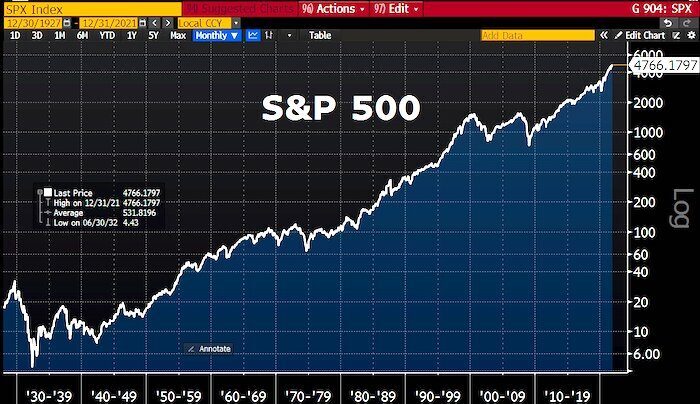
The S&P 500 closed 2021 at a new all-time high, indicating that the ongoing central bank monetary experiment is nowhere near winding down. We got used to this... but it's actually a staggering image!

For years now, we've seen many compelling analyses, usually based on valuation issues or macroeconomic risks, predicting an imminent crash and explaining why the bull market just could not continue for long. And for years they've all been dead wrong.
Chart
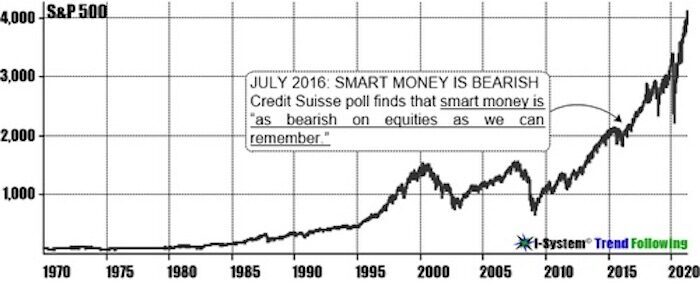
In 2016, the "smart money" was ultra-bearish. Around the same time John Mauldin was predicting an imminent 50% correction... For all the intellectual exertion that goes into such analyses, most market experts have missed the one force that has had the decisive impact on stock prices: central bank monetary inflation.

Footprints

FDIC chair resigns after warning Democrats launching 'hostile takeover'

McWilliams
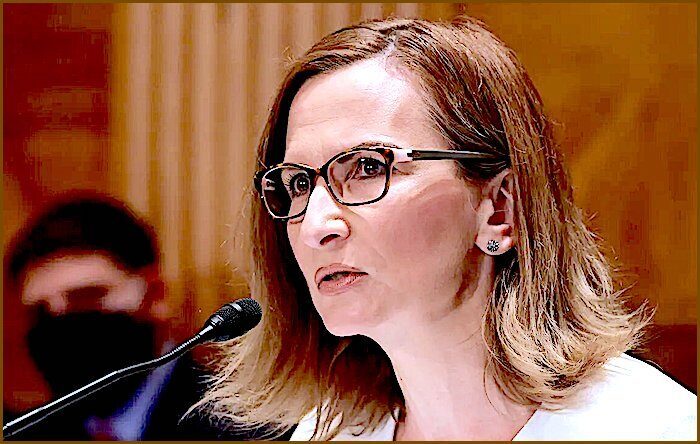
© Getty Images/Alex WongChairman of Federal Deposit Insurance Corporation (FDIC) Jelena McWilliams testifies during a hearing before Senate Banking, Housing and Urban Affairs Committee
FDIC Chairman Jelena McWilliams announced her resignation Friday in an open letter addressed to President Biden, just weeks after she warned of a "hostile takeover" of the agency by Democrats.

McWilliams, a Serbian immigrant, has lived in the country for decades and boasts a successful career in law, finance, and banking policy. McWilliams wrote in the letter:
"When I immigrated to this country 30 years ago, I did so with a firm belief in the American system of government. During my tenure at the Federal Reserve Board of Governors, the United States Senate, and the FDIC, I have developed a deep appreciation for these venerable institutions and their traditions. Throughout my tenure, the agency has focused on its fundamental mission to maintain and instill confidence in our banking system while at the same time promoting innovation, strengthening financial inclusion, improving transparency, and supporting community banks and minority depository institutions, including through the creation of the Mission Driven Bank Fund.

"Of the 20 chairmen who preceded me at the FDIC, nine faced a majority of the board members from the opposing party, including Mr. Gruenberg as chairman under President Trump until I replaced him as chairman in 2018. Never before has a majority of the board attempted to circumvent the chairman to pursue their own agenda.

"This conflict isn't about bank mergers. If it were, board members would have been willing to work with me and the FDIC staff rather than attempt a hostile takeover of the FDIC internal processes, staff and board agenda."

Comment: Abandoning Biden's Ship of State are those with integrity who cannot abide an environment of subversion and partisanship where principles and protocol have become a 'free-for-all' lacking effectiveness or meaning.


Bad Guys

Best of the Web: How The Vanguard Group is building an empire

The vanguard group logo sign
© Bloomberg
Along with BlackRock and State Street, Vanguard is considered one of the "Big Three" index fund managers that dominate corporate America, and ultimately the world. "If historical trends continue, a handful of giant institutional investors will one day hold voting control of virtually every large U.S. corporation," said Jack Bogle in November 2018.

Bogle, the founder of Vanguard, wrote an article for the Wall Street Journal shortly before his death in January 2019 in which he warned:
"Most observers expect that the share of corporate ownership by index funds will continue to grow over the next decade. It seems only a matter of time until index mutual funds cross the 50% mark. If that were to happen, the "Big Three" might own 30% or more of the U.S. stock market — effective control. I do not believe that such concentration would serve the national interest."
By November 2020, the "Big Three" managed US$15 trillion in combined assets, equivalent to more than three-quarters the size of the US economy and combined, they were the largest owner in 88% of the S&P 500 companies. By January 2021, the "Big Three" had almost US$18 trillion in assets under management.

Being the largest owner of a publicly traded company doesn't mean that you can do whatever you want, but it does give you enormous power.

Comment:


Bullseye

France's Presidential hopeful Melenchon says country should leave NATO and partner with Russia

Melenchon
Jean-Luc Melenchon says leaving NATO bloc would help Paris avoid getting dragged into new Cold War
The leader of a French leftist party and presidential hopeful has called for the country to pull out of the NATO alliance, revealing that he regards Russia as a partner for Paris rather than an adversary.

The leader of the leftist La France Insoumise (France Unbowed) party, Jean-Luc Melenchon, shared his insights on the new Cold War and France's place in it during a major interview with France Inter radio on Monday. Melenchon further elaborated on the points he made during the interview in a long Twitter thread.

The politician said the country should take part in efforts to "de-escalate" the international situation rather than follow Washington in the new Cold War against China and Russia. Leaving the NATO alliance altogether would therefore be beneficial for France, as it won't be part of the "military adventurism" of the US, Melenchon believes.

Comment: Despite the Anglosphere proving it cares nothing for France in the recent AUKUS debacle, the establishment is unlikely to allow France to pivot to Russia in any way. Should Melenchon begin to gather a sizeable following, contrary to the propaganda media's messaging, it's likely he will be purposely neutralised at the ballots; as we've seen in numerous other high profile votes in recent years.


Handcuffs

'Marriage of Convenience'? Ghislaine Maxwell's husband ended it over the phone while she was in jail

Ghislaine Maxwell, Scott Borgerson
© Getty / YouTubeGhislaine Maxwell, Scott Borgerson
The British socialite, who was recently convicted of sex trafficking charges, was allegedly dumped by her husband who is believed to have moved on with a yoga instructor.

Maxwell's personal life has remained largely discreet throughout the ongoing trial but 2020 court documents did reveal that she was secretly married to an unnamed man.

Now, it appears that marriage disolved in what is reported to have been a "confrontational" phonecall.

Who is Ghislaine Maxwell's husband?

Comment: It seems unlikely that Maxwell's 'husband' was in the dark about her crimes and perversions:


Bizarro Earth

Boris Johnson warns it would be 'absolute folly' to say pandemic is ending - but Omicron is 'plainly milder'

Boris Johnson
© Adrian Dennis / Reuters
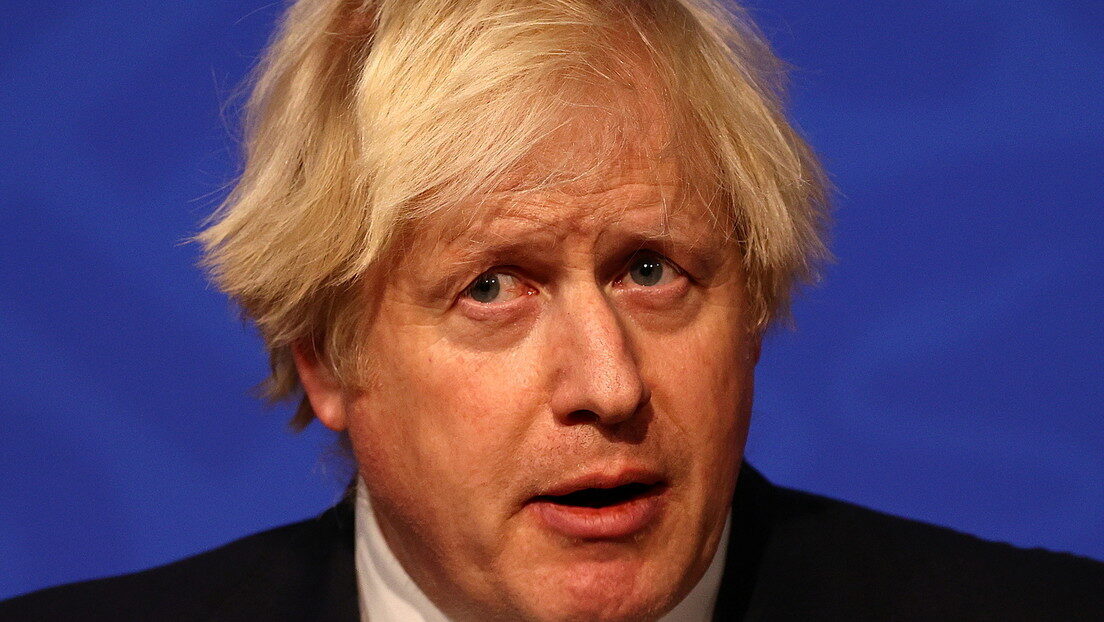
Boris Johnson has warned it would be "absolute folly" to say the pandemic is over - but said Omicron "is plainly milder" than other variants.

Despite a huge increase in coronavirus cases in recent weeks, the prime minister said the UK is in a better position than most other countries due to the "very, very high level of vaccination".

However, he said despite Omicron being "plainly milder" than other variants, the NHS is under pressure due to its high transmissibility - and the public must do everything they can to help relieve that pressure by following plan B measures.

Comment: Part of the ability to control populations is found in maintaining uncertainty. This shuts down the populations prefrontal cortex, which inhibits the ability to actually think. Uncertainty naturally gives rise to fear and anxiety, and what better way to create this state by constantly sending mixed messages!


Bomb

Best of the Web: Coercing consumers into making 'green energy choices', the British government risks blowing itself up

energy crisis uk
Yup
Blackouts bring down governments. The Conservative administration of Ted Heath paid such a price at the ballot box in 1974 when it had failed to keep the lights on, having mishandled (to put it mildly) the coal industry. Now gas, rather than coal, is the dominant fuel in heating our homes. While a shortage of the stuff is not so critical as to lead to people freezing through lack of available energy, the effect on domestic bills could have a similar effect, at least among the poorest.

The soaring open-market price for gas combined with a consumer price cap imposed by Theresa May's administration (as pledged in her 2017 election manifesto) has caused the collapse of numerous suppliers. If the entire industry is not to be rendered bankrupt, the cap will have to be lifted to a level that would at least double the average household's gas bill.

That is a recipe for mass discontent. But, extraordinarily, it represents success in terms of the government's energy strategy. While natural gas is the cleanest of the fossil fuels, it is still a hydrocarbon and therefore set for gradual elimination under the government's "world-leading" commitment to reach net zero carbon emissions by 2050.

Comment: The full extent of their hubris is gauged when you realize they're intentionally destroying the economy, something they're betting that we plebs won't survive but which they will.