
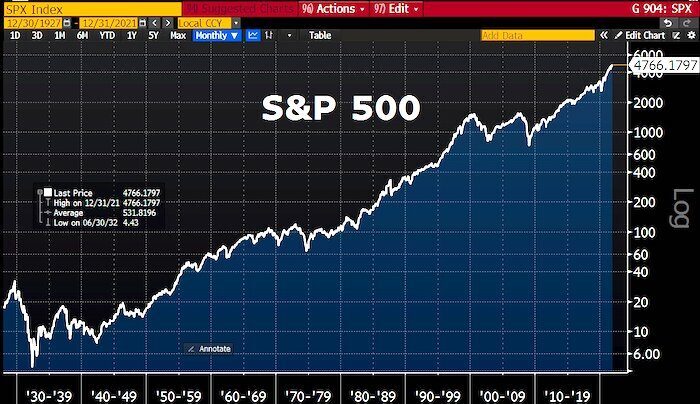
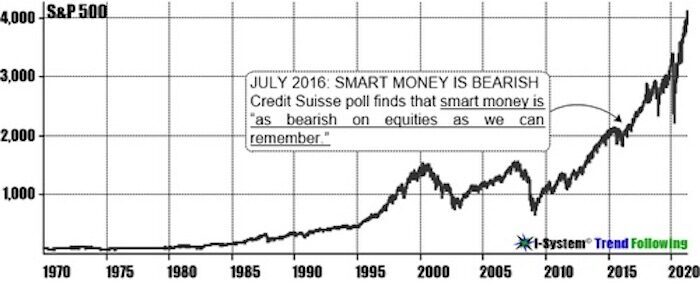
For years now, we've seen many compelling analyses, usually based on valuation issues or macroeconomic risks, predicting an imminent crash and explaining why the bull market just could not continue for long. And for years they've all been dead wrong.
This is not exactly a new thing, but a recurring pattern that's been remarkably consistent for at least a century now as the following table shows:
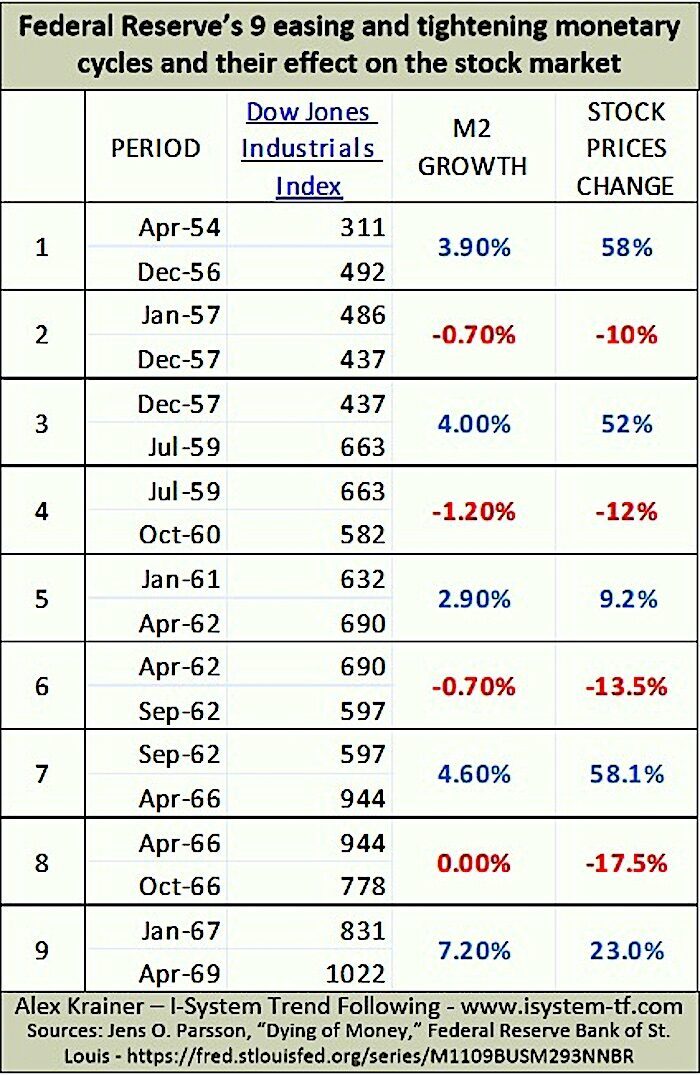
I elaborated this hypothesis in "The One Force moving stock prices and what it tells us about the future," which I published in the wake of the 2020 market crash. Thus far the hypothesis has aged exceptionally well which then also seals the end-game. As I then wrote, we'll see "an accelerating bull run accompanied by hyperinflation after which comes an epic crash."
OK, not everyone's convinced that we'll have hyperinflation. But regardless of whether we'll see hyper-, or only high inflation remains to be seen, the one thing we know for sure is that all bubbles ultimately burst, with no exceptions, so that's a predictable outcome. Of course, predicting the end-game is very different from predicting its timing and the price levels of key events. I believe the best we can do is to navigate along with the prevailing trends with utmost patience and discipline.
2022 will be a year of trends
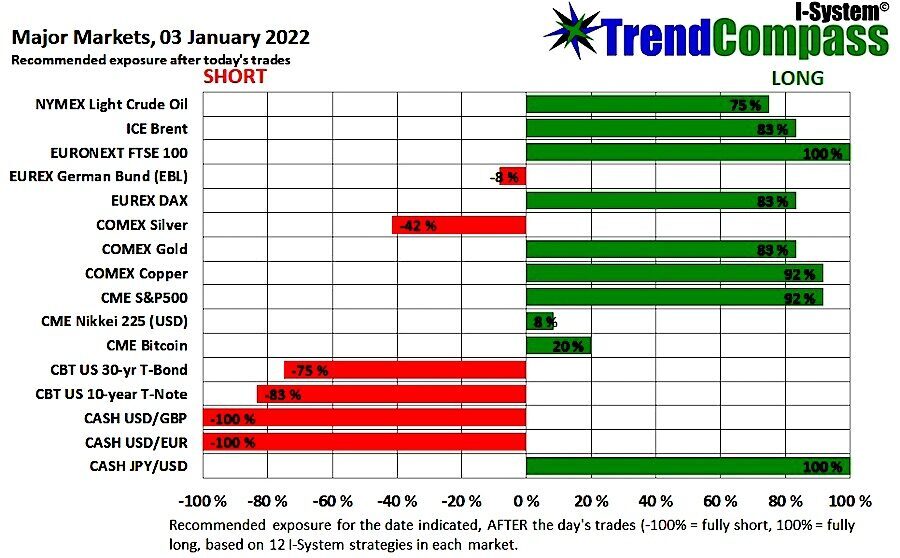
In addition to the asset bubble we are are also facing the accelerating inflation, rising interest rates and the prospect of a commodity super-cycle that could span a decade or longer. All these developments promise large-scale price events (LSPEs) in many markets. Below is the current directional exposure (as a percentage of full exposure), based on 12 individual CTA strategies tracking short-, medium-, and long-cycle trends in 16 key global financial and commodities markets:
About the Author:
Alex Krainer - @NakedHedgie is a former hedge fund manager, founder of KRAINER ANALYTICS and publisher of the daily TrendCompass reports. I-System TrendCompass provides daily CTA signals on over 200 financial and commodities markets.
Sign up for a 1-month FREE trial by e-mailing us at TrendCompass@ISystem-TF.com
The books are now free: since Amazon has recently banned all of my books, including the award-winning "Mastering Uncertainty in Commodities Trading," they are now available for free at this link.



Reader Comments
R.C.