Science & TechnologyS


Meteor

Weird asteroid in Jupiter's orbit is 1st interstellar immigrant

asteroid 2015 BZ509
© Royal Astronomical SocietyImages of asteroid 2015 BZ509, which appears to have come from another star system.
For the first time, a permanent member of our solar system has been found to have originated elsewhere

A permanent visitor from interstellar space has been found in our solar system, astronomers studying an asteroid orbiting our sun have revealed.

While collisions with Earth by comets and asteroids from within our solar system are thought to have brought organic material and water necessary for life to emerge, experts say the latest discovery suggests bodies from beyond the solar system might have also have played a role.

"It would be very interesting to go and observe it more and understand its composition," said lead author Dr Fathi Namouni from the Observatoire de la Côte d'Azur.

"Before [the discovery of this asteroid], we only had to work to explain solar system phenomena with the objects that are in the solar system and thought to be part of the solar system all the time," he said. "Now we have new sources of material that actually influenced the solar system - and so the solar system did not grow up in isolation."

The latest discovery marks the first time an asteroid that appears to be a permanent member of our solar system has been revealed as having its origins in another star system. 'Oumuamua, an asteroid spotted hurtling through our solar system earlier this year, was only on a fleeting visit.


Known as asteroid 2015 BZ509, the permanent visitor is about 3km across and was first spotted in late 2014 by the Pan-Starrs project at the Haleakala Observatory in Hawaii. Experts quickly realised the asteroid travelled around the sun in the opposite direction to the planets - a retrograde orbit.

Beaker

Creepy! Researchers create human-like 3D gel that walks underwater

walking 3D gel
© Daehoon Han/Rutgers University-New BrunswickA human-like 3D-printed smart gel walks underwater.
Rutgers University-New Brunswick engineers have created a 3D-printed smart gel that walks underwater and grabs objects and moves them.

The watery creation could lead to soft robots that mimic sea animals like the octopus, which can walk underwater and bump into things without damaging them. It may also lead to artificial heart, stomach and other muscles, along with devices for diagnosing diseases, detecting and delivering drugs and performing underwater inspections.

Soft materials like the smart gel are flexible, often cheaper to manufacture than hard materials and can be miniaturized. Devices made of soft materials typically are simple to design and control compared with mechanically more complex hard devices.

"Our 3D-printed smart gel has great potential in biomedical engineering because it resembles tissues in the human body that also contain lots of water and are very soft," said Howon Lee, senior author of a new study and an assistant professor in the Department of Mechanical and Aerospace Engineering. "It can be used for many different types of underwater devices that mimic aquatic life like the octopus."

Arrow Up

Study says bitcoin miners consume as much energy as the whole nation of Ireland

Bitcoins
© Dado Ruvic/Reuters
The process of mining new bitcoin is now so intensive that computers carrying out the process are using nearly as much electricity as the entire country of Ireland.

A new study by economist Alex de Vries estimates that bitcoin mining consumes at least 2.55 gigawatts of electricity and, by the end of the year, that will have risen to 7.67 gigawatts - as much as Austria consumes in the same period.

Mining the cryptocurrency involves computers solving complex mathematical problems. As the amount of bitcoin left to mine grows smaller and smaller, the problems become increasingly complex, meaning they require an even greater amount of computing power.

'Half a million PlayStations'

Due to the secretive nature of mining, the research is based on speculative figures. The cryptocurrency's network is estimated to have around 10,000 connected nodes, but a single node in the network can represent either one or many machines.

"A hashrate of 14 terahashes per second can either come from a single Antminer S9 running on just 1,372 watts, or more than half a million PlayStation 3 devices running on 40 megawatts," the research says.

Fish

Worldwide ocean anoxia driven by global cooling was possible factor in previous mass extinctions

UNM Researcher Maya Elrick gathers samples on Anticosti Island.
© University of New Mexico
UNM Researcher Maya Elrick gathers samples on Anticosti Island.
For decades, scientists have conducted research centered around the five major mass extinctions that have shaped the world we live in. The extinctions date back more than 450 million years with the Late Ordovician Mass Extinction to the deadliest extinction, the Late Permian extinction 250 million years ago that wiped out over 90 percent of species.

Over the years, scientists have figured out the main causes of the mass extinctions, which include massive volcanic eruptions, global warming, asteroid collisions, and acidic oceans as likely culprits. Other factors sure to play part include methane eruptions and marine anoxic events-when oceans lose life-supporting oxygen.

Comment: The article's closing 'global warmists' comment is patently false and it actually runs counter to the mechanisms described in their findings. The planet as a whole is showing signs of serious cooling, reflecting the same conditions that occurred during the previous extinctions:


Brain

A new theory on the quality of high IQ brains

neurons
More intelligent people's brains are not just bigger...

People with bigger heads are, on average, more intelligent, new research confirms.

Bigger heads contain bigger brains, which have more neurons (brain cells), which make people smarter.

But wait, that is not the end of the story.

The latest neuroscience research suggests there's a twist.

When you 'listen' electrically to the brain running, the more intelligent ones make less 'noise'.

It's like a larger, more powerful engine somehow running quieter.

Galaxy

Astronomers discover fastest growing monster black hole the size of 20 billion suns

black Hole
© AP Photo / M.Weiss/NASA
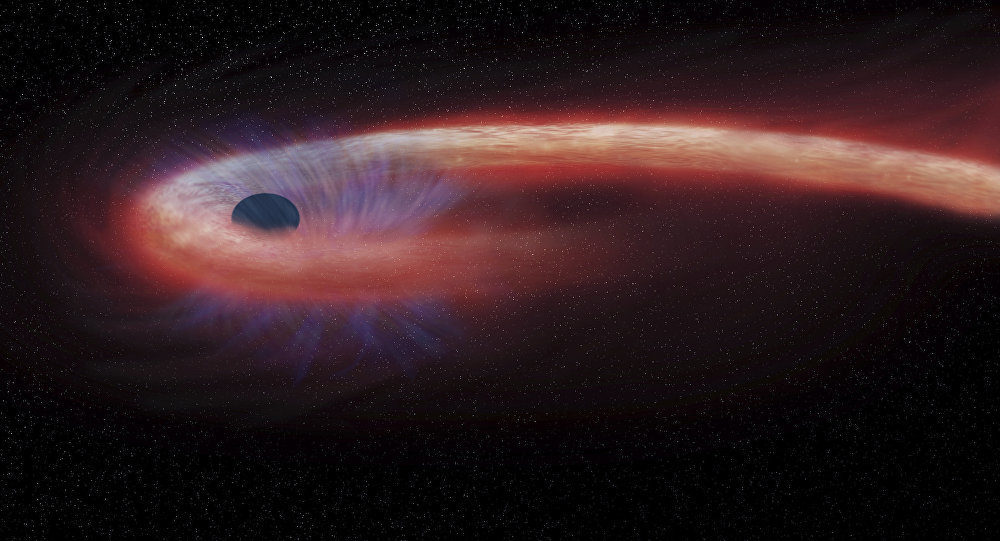
Astronomers using cutting-edge skywatching devices have identified an extremely fast-growing black hole, cataloging it as a 'monster' that eats the mass equivalent of our sun every two days.

Astronomers with the Australian National University (ANU) have discovered the fastest-growing black hole in the known universe, a super-massive celestial object some 12 billion light years distant, thought to be at least the size of 20 billion of our suns.

Research suggests that the object is so large and has so much gravity that it pulls into itself the mass equivalent of one of our suns every two days, radiating matter-transforming energies back into space on a galactic scale.

Comment: See also:


Attention

Researchers issue new drug resistance warning as deaths from fungal infections exceeding malaria

candida yeast fungus fungal culture
'Compost heaps are absolutely lethal, if your immune system doesn't mop up those spores they'll just rot you down as quick as a flash,' says fungal disease expert professor Matthew Fisher

Common fungal infections are "becoming incurable" with global mortality exceeding that for malaria or breast cancer because of drug-resistant strains which "terrify" doctors and threaten the food chain, a new report has warned.

Writing in a special "resistance" edition of the journal Science, researchers from Imperial College London and Exeter University have shown how crops, animals and people are all threatened by nearly omnipresent fungi.

"Fungal infections on human health are currently spiralling, and the global mortality for fungal diseases now exceeds that for malaria or breast cancer," the report notes.

Attention

Washington's hidden Glacier Peak volcano is one of the most dangerous and least monitored

Recently completed lidar maps of Glacier Peak strip away the heavy vegetation and reveal the underlying topography, including tracks of past eruptions and lahars.
© Washington Department of Natural ResourcesRecently completed lidar maps of Glacier Peak strip away the heavy vegetation and reveal the underlying topography, including tracks of past eruptions and lahars.
As Kilauea continues its rampage on Hawaii's Big Island, the 38th anniversary this month of Mount St. Helens' cataclysmic eruption is an uneasy reminder that the snow-capped volcanoes of the Pacific Northwest can awaken at any time.

Yet one of Washington's most dangerous volcanoes remains the least-monitored and the least-studied in the Cascade range.

Tucked deep inside its namesake 566,000-acre wilderness a scant 70 miles northeast of Seattle, Glacier Peak is the state's hidden volcano. At a modest 10,541 feet, its summit doesn't tower over the landscape like Rainier, Baker or Adams. Settlers didn't even realize it was a volcano until the 1850s, when Native Americans told the naturalist and ethnologist George Gibbs about a small mountain north of Rainier that once smoked.

Comment: As many in the vicinity of Hawaii's Kilauea have discovered, it's one thing to be aware of the potential activity of a volcano and it is extremely mportant to closely monitor the situation, because when it begins to unleash its fury the only choice you have is to get out of its way. And when we consider volcanic activity appears to be on the increase, now more than ever do citizens need to be ready:


Info

Earth's magnetic field is drifting westward

Magnetic Field
© RU-RTR Russian Television via AP
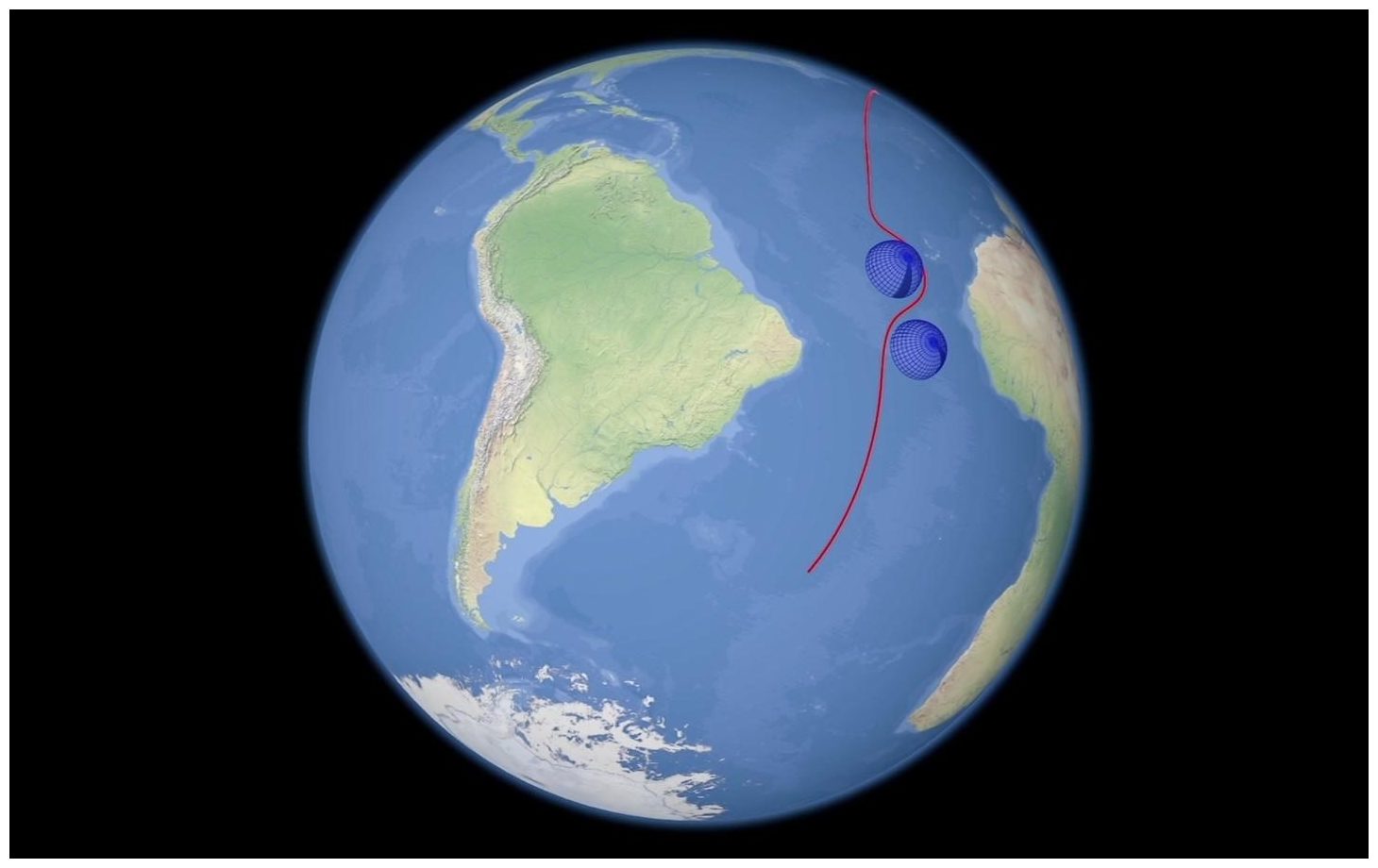
Over the 400 years or so that humans have been measuring Earth's magnetic field, it has drifted inexorably to the west. Now, a new hypothesis suggests that weird waves in Earth's outer core may cause this drift.

The slow waves, called Rossby waves, arise in rotating fluids. They're also known as "planetary waves," and they're found in many large, rotating bodies, including on Earth in the oceans and atmosphere and on Jupiter and the sun.

Earth's outer core is also a rotating fluid, meaning Rossby waves circulate in the core, too. Whereas oceanic and atmospheric Rossby waves have crests that move westward against Earth's eastward rotation, Rossby waves in the core are "a bit like turning atmospheric Rossby waves inside out," said O.P. Bardsley, a doctoral student at the University of Cambridge in England, and the author of a new study on the Rossby wave hypothesis. Their crests always move east.

Galaxy

The 'Great Filter': Are we humans about to go extinct by our own hand?

milky way
Humans have had a great ride. We've overcome vicious predators, drastic shifts in climate, diseases, large-scale warfare and many other things that would have put an end to lesser species. These days, life is so comfortable and sheltered for many of us that we often take the survival of our species for granted. However, as I will discuss in this article, there is a major risk of extinction on the horizon. Will we overcome this hurdle like we have overcome past hurdles, or will our species finally be filtered out?

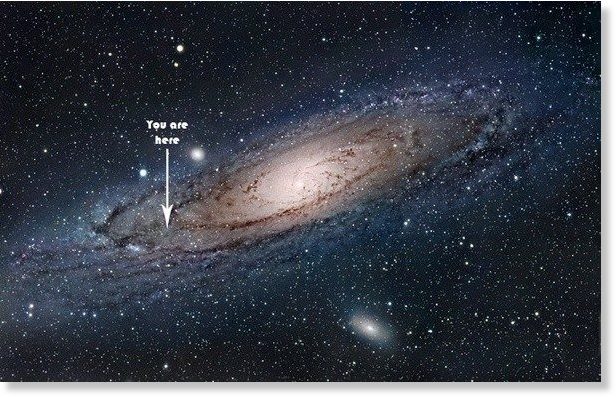
To understand what I mean by a "Great Filter", let's first go over the Fermi's Paradox. The Fermi's Paradox is the apparent contradiction between the lack of evidence and high probability estimates for the existence of extraterrestrial civilizations. To put it more simply: if there are 70 sextillion stars (more than all grains of sand on earth) in the observable universe, why haven't we discovered signs of intelligent life? The odds of such a discovery should be heavily in our favor.

We have gotten some close calls, like the mysterious SETI signal we got 40 years ago, and the possible alien megastructure (I.e. Dyson Sphere) discovered a few years ago. But these discoveries are far from conclusive signs of another intelligent civilization.

There are many possible explanations for why we can't find intelligent life. Here are a few:
  1. other civilizations might be out there but are too advanced to communicate with (think about a human trying to communicate with an ant),
  2. intelligent lifeforms could have already visited or tried to communicate with Earth, but we were not here yet,
  3. higher civilizations are aware of us but are just observing our species for now,
  4. the concept of physical colonization may be a silly idea to higher-level civilizations (therefore, no need to find life elsewhere).

Comment: A prime example of how this dilemma is being made manifest: US Military invests $100m in 'genetic extinction' technologies, should Russia be concerned?

And some more thoughts on why we may actually be on the brink of extinction: