Science & TechnologyS


Magnify

Declassified UFO docs reveal Pentagon's tech wishlist: Warp drives, invisibility cloaks, manipulating extra dimensions and more

nasa laser
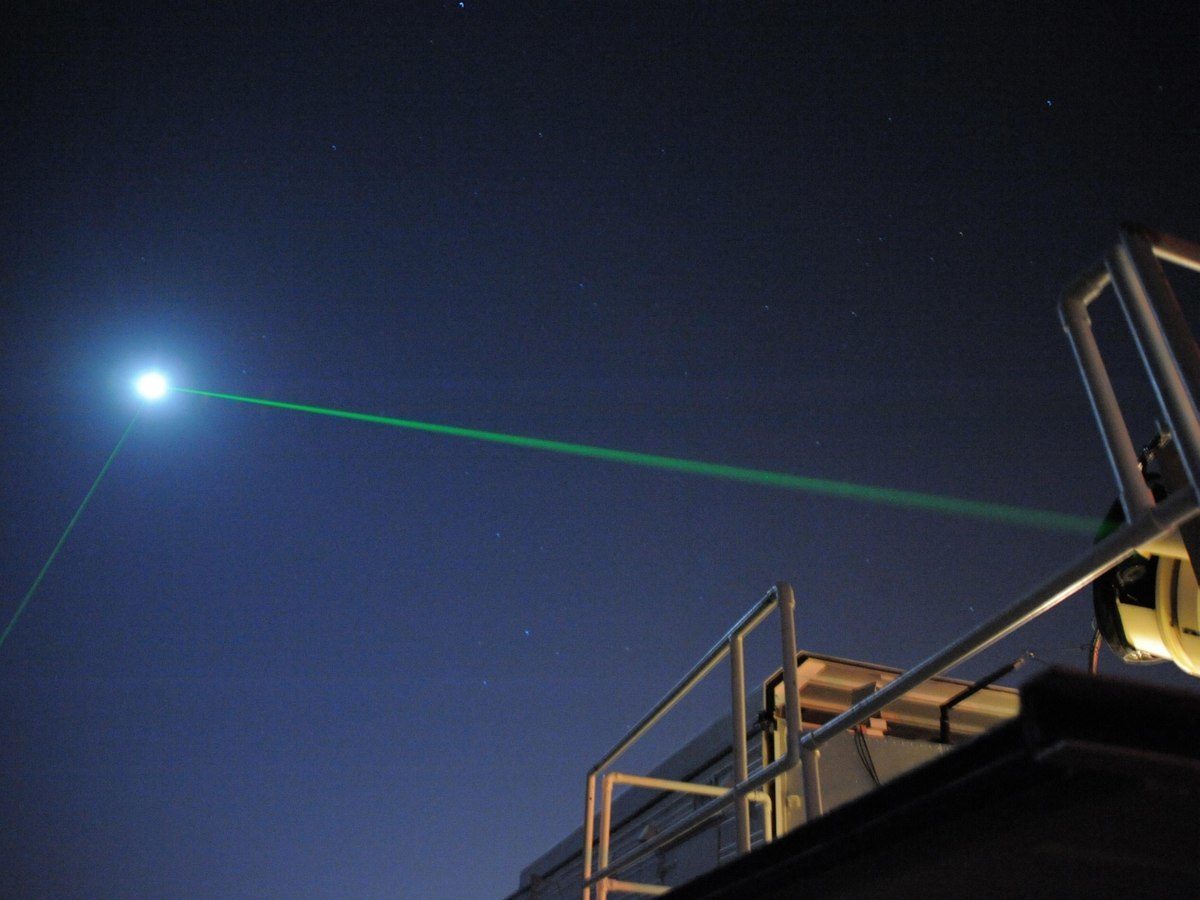
© NASAThis photograph shows the Laser Ranging Facility at the Geophysical and Astronomical Observatory at NASA's Goddard Space Flight Center in Greenbelt, Md. The observatory helps NASA keep track of orbiting satellites. DIA research explored other ways of tracking and defeating unknown objects in space, including using lasers.
Space is a hostile environment. Most of the hostility is inherent - a void cannot itself be accommodating to humans, and the projects that do sustain human life in orbit do so by creating tiny livable pockets, encased in proverbial tin cans. That space could be a vector for other threats became clear from the dawn of the space race.

A missile that can carry a satellite into orbit could carry a much deadlier payload to somewhere else on Earth. And so space became both a place to put early warning systems and the path by which weapons would pass through on their way to doomsday. In order to prepare for new threats from or through the great beyond, the Pentagon spent $22 million between 2007 and 2012 researching a number of speculative threats under an "Advanced Aerospace Threat Identification Program."

How speculative? One of the studies was called "Warp Drive, Dark Energy, and the Manipulation of Extra Dimensions."

On Jan. 16, 2019, the Defense Intelligence Agency released a list of 38 research titles funded by the "Advanced Aerospace Threat Identification Program," which includes the above title on warp drives, one on invisibility cloaking, and another about stargates. All three are technologies that have found a home in fiction, powering the spaceships of the Star Trek universe, the in-fiction specific weapons of the Romulans and Klingons, as well as the entire "Stargate" franchise. The research papers were just one part of the Advanced Aerospace Threat Identification Program, which also looked at unidentified flying objects, included recovered alloys of unknown origin.

Comment: See also:


Telescope

Mars and the mysterious streaks that continue to puzzle scientists

streaks mars
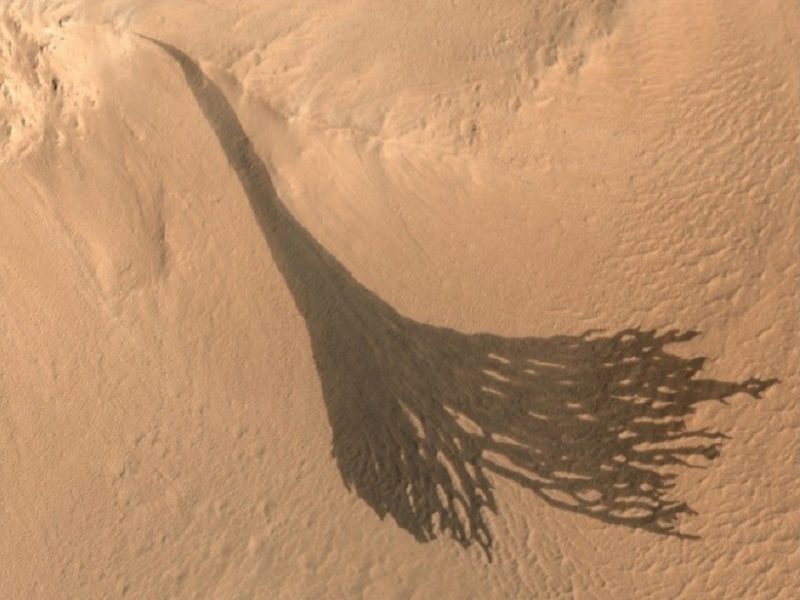
Since they were first observed in the 1970s by the Viking missions, the slope streaks that periodically appear along slopes on Mars have continued to intrigue scientists. After years of study, scientists still aren't sure exactly what causes them. While some believe that "wet" mechanisms are the culprit, others think they are the result of "dry" mechanisms.

Luckily, improvements in high-resolution sensors and imaging capabilities - as well as improved understanding of Mars' seasonal cycles - is bringing us closer to an answer. Using a terrestrial analog from Bolivia, a research team from Sweden recently conducted a study that explored the mechanisms for streak formation and suggest that wet mechanisms appear to account for more, which could have serious implications for future missions to Mars.

The study, titled "Are Slope Streaks Indicative of Global Scale Aqueous Processes on Contemporary Mars?", recently appeared in the Reviews of Geophysics, a publication maintained by the American Geological Union (AGU). The study was conducted by Anshuman Bhardwaj and his colleagues, all of whom hail from the Luleå University of Technology in Sweden.

Comment: It seems that the scientists are yet to find an adequate explanation. It's likely there are clues to be found in the other discoveries relating to Mars and its environment, see: And check out SOTT radio's:


Moon

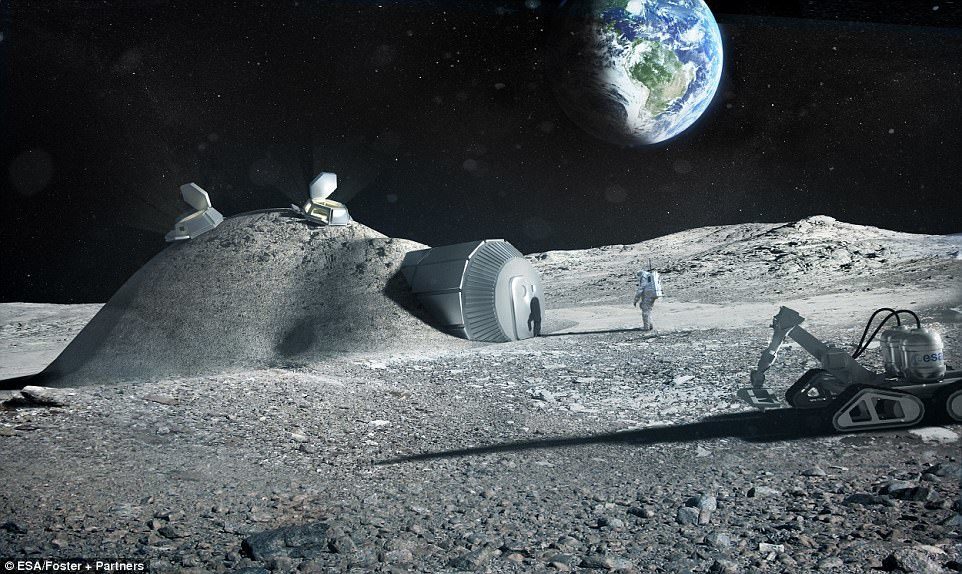
Europe's plans to mine the moon could spark a new space race

moon base
The European Space Agency revealed it has signed up rocket maker ArianeGroup to develop plans for a moon base that could be used to mine material from the lunar surface.
The one-year contract aims to eventually mine regolith on the lunar surface.

'As ESA and other agencies prepare to send humans back to the Moon - this time to stay - technologies that make use of materials available in space (in-situ resource utilisation) are seen as key to sustainability, and a stepping stone in humankind's adventure to Mars and farther into the Solar System,' the space agency said.

'In the longer term, resources in space may even be used on Earth.'

'Regolith is an ore from which it is possible to extract water and oxygen, thus enabling an independent human presence on the Moon to be envisaged, capable of producing the fuel needed for more distant exploratory missions, ESA says.

'The use of space resources could be a key to sustainable lunar exploration and this study is part of ESA's comprehensive plan to make Europe a partner in global exploration in the next decade - a plan we will put to our Ministers for decision later this year at the Space19+ Conference.' added Dr. David Parker; Director, Human and Robotic Exploration at ESA.

Seismograph

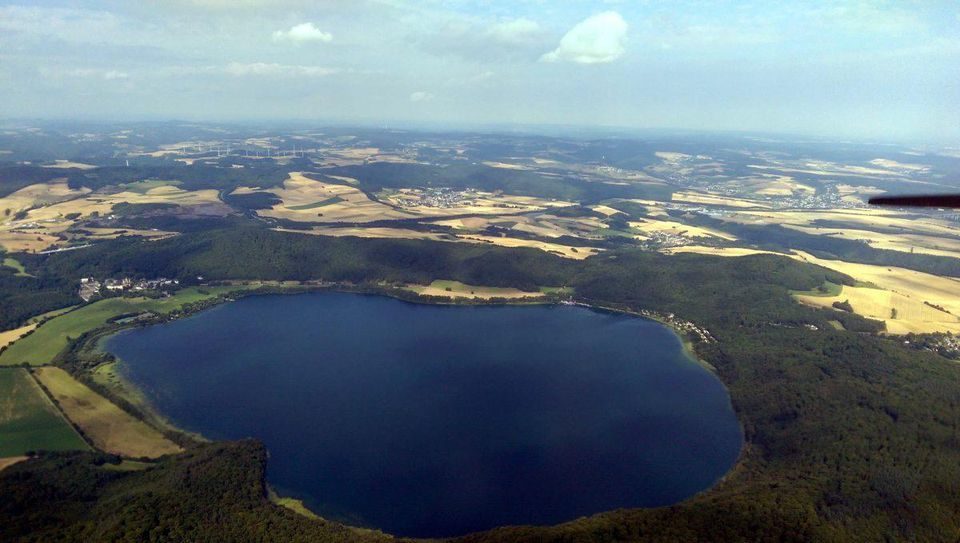
Deep quakes reveal that magma is moving beneath an ancient German volcano

Laacher See caldera
© DF1PAW/WIKIMEDIA COMMONS; CC BY-SA 4.0Laacher See caldera, as seen today.
When it comes to active volcanoes, what country first comes to mind? Japan, perhaps? The US? What about Italy? These are all excellent examples, and understandably so. They have a wide range of fiery mountains that, at some point in the last 12,000 years, have erupted - a condition that, per the United States Geological Survey, makes them "active."

It's easy to forget that plenty of once-prolific volcanoes around the world have long fallen silent; geologically tame countries were often once replete with effusive or explosive eruptions. Just take Germany's Laacher See Volcano (LSV), found in the Eifel mountain range within the Rhineland-Palatinate state. This lake-filled cauldron ("caldera") is a rather serene site today, but it was originally forged out of fury. Around 12,900 years ago, a cataclysmic eruption, one that coated plenty of Europe in ash, was responsible for creating the crater-like edifice that we can see there today.

Make no mistake: coming in at a 6 on the Volcanic Explosivity Index (VEI), which tops out at 8, this was an unmistakably huge eruption. Today, according to Volcano Discovery, it's the only caldera in Central Europe, which means that in the last 12-13,000 years, this part of the world has never seen an eruption as powerful as the one that formed LSV.

Its days of volcanism aren't necessarily done and dusted, though. A new study, published in Geophysical Journal International, reveals that there are some curious rumblings going on beneath LSV. These specific tremors, known as deep low-frequency earthquakes, are a clear sign that magmatic fluids are on the move.

That's certainly noteworthy. The East Eifel Volcanic Field, of which LSV is part of, hasn't experienced an eruption for roughly 12,000 years, so the movement of magma beneath the surface is something that volcanologists are keen to document and comprehend.

Galaxy

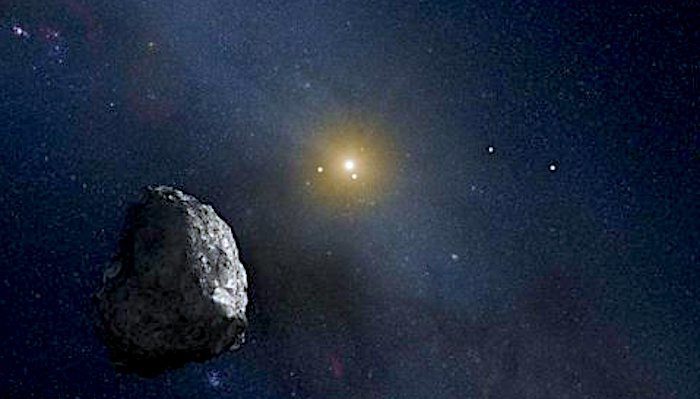
Mystery orbits in solar system outermost reaches, not caused by 'Planet Nine'

Kuiper Belt
© NASA, ESA, G.Bacon (STScl)Artist's impression of a Kuiper Belt object located on the outer rim of our solar system.
The strange orbits of some objects in the farthest reaches of our solar system, hypothesised by some astronomers to be shaped by an unknown ninth planet, can instead be explained by the combined gravitational force of small objects orbiting the Sun beyond Neptune, say researchers.

The alternative explanation to the so-called 'Planet Nine' hypothesis, put forward by researchers at the University of Cambridge and the American University of Beirut, proposes a disc made up of small icy bodies with a combined mass as much as ten times that of Earth. When combined with a simplified model of the solar system, the gravitational forces of the hypothesised disc can account for the unusual orbital architecture exhibited by some objects at the outer reaches of the solar system.

While the new theory is not the first to propose that the gravitational forces of a massive disc made of small objects could avoid the need for a ninth planet, it is the first such theory which is able to explain the significant features of the observed orbits while accounting for the mass and gravity of the other eight planets in our solar system. The results are reported in the Astronomical Journal.

Archaeology

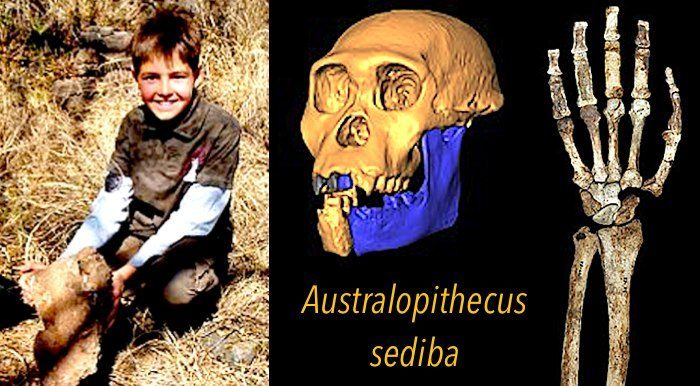
Discovery South Africa: Fossils reveal the 'missing link' in human evolution

Australopithecus sediba
© Australopithecus sediba/ Wikipedia/KJNMatthew Berger and fossil from the Malapa Nature Reserve • Australopithecus sediba
A 9-year-old boy who tripped over a rock in South Africa led researchers to discover a "missing link" in human evolution, according to a new study.

The fossils of Australopithecus sediba were found in 2008 after Matthew Berger stopped to examine the rock he tripped over while following his dog near what is now the Malapa Fossil Site in South Africa.

The subsequent discovery of the 2-million-year-old adult female and juvenile male remains in the "Cradle of Humankind" set off contentious debate in the scientific community. New research confirms the species is closely related to the Homo genus and fills a key gap in humankind's history between early humans and our more apelike predecessors.

Scientists writing in the journal PaleoAnthropology found that the species is the bridge between the 3-million-year-old "Lucy" or Australopithecus afarensis and the "handy man" Homo habilis, which used tools between 1.5 and 2.1 million years ago.

The study, which describes the new species' anatomy in detail, found that Au. sediba is unique, but shares similarities with its neighbor Australopithecus africanus and early members of the genus Homo "suggesting a close evolutionary relationship."

Comment: See also: Preserved flesh of 2-million-year-old human ancestor found?


People 2

How our brains distinguish between self-touch and touch by others

touch
Our brains seem to reduce sensory perception from an area of our skin when we touch it ourselves, according to a new study from Linköping University published in the journal Proceedings of the National Academy of Sciences, PNAS. The finding increases our understanding of how the brain distinguishes between being touched by another person and self-touch.

We don't wonder about our concept of "self" all the time, but the ability to distinguish between self and others is extremely important. During the first period of life, new-born children develop an understanding of where their own body ends mainly through being touched by those who care for them. Problems with the self-concept, such as the ability to recognise one's own actions, are common in several psychiatric disorders. Most people cannot tickle themselves, but some patients with schizophrenia can, suggesting that their brain interprets sensory perceptions from their own body differently.

Scientists at Linköping University in Sweden have examined what happens in various parts of the nervous system when a person is touched by another person, and compared this with corresponding self-touch. They have shown that the brain reduces the processing of the sensory perception when it comes from self-touch.

The skin contains sensory receptors that react to touch, pressure, heat and cold. Information about touch is transmitted from these to the spinal cord and on to the brain, where the perception is processed in several steps in different regions of the brain. The researchers involved in the new study carried out several experiments in which healthy volunteers lay in a magnet resonance camera, which recorded images of brain activity (fMRI). The participants were requested to stroke their arm slowly with their own hand, or were told that a researcher would stroke their arm in a similar manner. The researchers investigated how these types of touch were linked to activity in different parts of the brain.

Comment: See also:


Rose

Plants sense passing bees and respond by producing sweeter nectar

flower
© Richard Stockwell/Flickr/CC BY-NC-ND 2.0
The flowers are listening, according to new research - well, in a sense, at least.

Scientists have found evidence that plants can actually hear the buzz of passing bees and produce sweeter nectar in response to entice the flying insects in. And flowers are technically their 'ears'.

Based on observations of evening primroses (Oenothera drummondii), the team behind the new study discovered that within minutes of sensing the sound waves of nearby bee wings through flower petals, the concentration of the sugar in the plant's nectar was increased by an average of 20 percent.

The flowers even seemed able to tune out irrelevant background noises, such as the wind.

This capability could well give some plants an evolutionary advantage, say the scientists, maximising their chances of spreading pollen.

Comment: See also:


Ice Cube

Remains of tiny, strange creatures discovered in 'lost' Antarctic lake

Salsa Team Antarctica
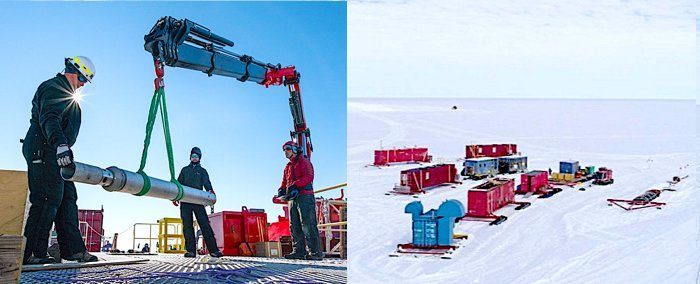
© SALSA Antarctica/FacebookThe SALSA Drill Team uses McMurdo Station to prepare for its work drilling into Mercer Subglacial Lake.
Lake Mercer, a subglacial lake deep below the Antarctic Ice, sat untouched by humans for millennia - until now. Scientists accidentally discovered the lake in 2007, when they were examining satellite imagery of Antarctica's ice sheet. Then on December 26, 2018, they finally reached it.

To explore the 50-foot-deep subglacial lake, researchers from a project called SALSA (Subglacial Antarctic Lakes Scientific Access) had to bore a tiny hole nearly 1 kilometer into the ice. They did this using a drill with a pencil-sized nozzle that sprays heated water. Once the hole was made, they then used a corer tool to pull samples back to the surface.

The team anticipated finding microbial lifeforms in those samples - and they did - but they were surprised by what else was lurking in the mud.

The samples also contained carcasses of tiny crustaceans (creatures smaller than a poppy seed) and the body of a tardigrade, a type of eight-legged invertebrate known for its ability to withstand the very harshest conditions.

A surprise in the mud

The SALSA team wound up extracting a 5.5-foot-long core (the longest ever from a subglacial lake) along with "six out of six 'perfect' sediment cores."

Info

Another blow to 'junk' DNA theory: Global function found for introns in budding yeast

Saccharomyces cerevisiae
© Rainis Venta [CC BY-SA 3.0] / Wikimedia CommonsSaccharomyces cerevisiae
Introns are segments of genes, found in eukaryotes, that do not code for proteins. Introns are removed from the pre-mRNA transcript by a protein complex called a spliceosome, and the protein-coding regions (called exons) are pasted together by another enzyme, RNA ligase.

Introns were first identified in 1977 by the lab of Richard Roberts and Phil Sharp (Chow et al., 1977; Berk and Sharp, 1977; Berget and Sharp, 1977). The introns of higher eukaryotes can often be very long indeed - in many cases spanning hundreds of thousands or even millions of bases. Lower eukaryotes (for example, yeast) tend to have shorter and fewer introns. While they were once thought to be junk - genetic debris left over from millions of years of evolution - more recent evidence has revealed many important functions for these non-coding regions of genes.

For example, it has been established that introns contain codes involved in the regulation of alternative splicing (e.g. Kabat et al., 2006). It has also been shown that the length of introns (and, consequently, the time taken to transcribe them) can contribute to timing mechanisms during development (Swinburne and Silver, 2010). Introns can also encode RNA molecules such as microRNAs (which are required for the expression of mRNAs during development) and small nucleolar RNAs (which play an important role in the processing of ribosomal RNAs) (e.g., Qi et al., 2010; Kiss and Filipowicz, 1995). Plenty of other functions of intronic sequences could be discussed.