Science & TechnologyS


Book 2

ID proponent Behe's new book, "Darwin Devolves" — stunning and absolutely convincing

red-legged honeycreeper
© DickDaniels (carolinabirds.org) [CC BY-SA 3.0 or GFDL] Wikimedia Commons.A red-legged honeycreeper (Cyanerpes cyaneus)
I recently had a lively conversation with a former colleague at the Max Planck Institute for Plant Breeding Research in Cologne. We have been on good terms for more than thirty years now and continue to be so. The subject turned to intelligent design and he stated emphatically: "There is no irreducible complexity," and "There are no orphan genes." To which I responded, "Yes, and there is no [my interlocutor's name], either."

I thought of this exchange in considering Michael Behe's forthcoming book. Will it perhaps help our Darwinian friends to somewhat refine their assessments of ID?

ID critics appear to suspect something terrible is about to befall them when Behe's book, Darwin Devolves: The New Science About DNA That Challenges Evolution, is published on February 26. Some well-known and also lesser-known commentators were already more or less outraged months before publication. See here, here, here, and here for several examples.

What's the Fuss About?

In his new work Behe has extended his studies on intelligent design to several fields of biology. Instead of regretting and repenting his former arguments - dismissed by Darwinists as "totally wrong," "completely wrong," "dead wrong" - he now confirms them yet again: "The firm conclusion I've drawn over the past decades is this: despite occasional questions and bumps along the road, the greater the progress of science, the more deeply into life design can be seen to extend." And "[A]lthough chance affects superficial aspects of biology, the newest evidence confirms that life is the intended work of a mind and that that work extends much more deeply into life than could previously be seen." He even dares to substantiate his claims by clear and powerful scientific evidence. Outrageous indeed!

Brain

Not so vegan after all: Yukon's snowshoe hares are cannibalistic carnivores

snowshoe hare
Your fluffy pet bunny's cousin is actually a carnivore-and a cannibal, new photographs reveal for the first time.

Snowshoe hares in Canada's Yukon Territory eat meat to supplement their diets during long winters in one of the coldest places on Earth.

During summer months, the mammals feed on vegetation, but when snow blankets the landscape and temperatures plunge to 30 below, hungry hares scavenge other hare carcasses, as well as several species of birds. (See "Friends For Dinner: Why Some Animals Become Cannibals.")

And, in an ironic twist on natural selection, hares also dine on dead Canada lynx-their main predator, says Michael Peers, a Ph.D. candidate in ecology at the University of Alberta in Edmonton, who led a new study on the phenomenon in Bio One Complete.

"It was shocking to see the first time," says Peers, who believes the hares are boosting their protein intake during harsh times. "I had no idea they actually scavenge."

Comment: Lots of 'herbivores' have a hankering for meat apparently:


Cloud Lightning

Laser triggers electrical activity in thunderstorm for first time

lightning
© CC0 Public Domain
A team of European scientists has deliberately triggered electrical activity in thunderclouds for the first time, according to a new paper in the latest issue of Optics Express, the Optical Society's (OSA) open-access journal. They did this by aiming high-power pulses of laser light into a thunderstorm.

At the top of South Baldy Peak in New Mexico during two passing thunderstorms, the researchers used laser pulses to create plasma filaments that could conduct electricity akin to Benjamin Franklin's silk kite string. No air-to-ground lightning was triggered because the filaments were too short-lived, but the laser pulses generated discharges in the thunderclouds themselves.

"This was an important first step toward triggering lightning strikes with laser beams," says Jérôme Kasparian of the University of Lyon in France. "It was the first time we generated lighting precursors in a thundercloud." The next step of generating full-blown lightning strikes may come, he adds, after the team reprograms their lasers to use more sophisticated pulse sequences that will make longer-lived filaments to further conduct the lightning during storms.

Comment: The potential applications of the technology could be profound. And so let's hope they know what they're messing with. Also check out SOTT radio's:


Info

Giant pattern discovered in the clouds of Venus

Clouds of Venus
© Partial editing of image in the Nature Communications paper. CC BY 4.0Figure 1: (left) the lower clouds of Venus observed with the Akatsuki IR2 camera (after edge-emphasis process). The bright parts show where the cloud cover is thin. You can see the planetary-scale streak structure within the yellow dotted lines. (right) The planetary-scale streak structure reconstructed by AFES-Venus simulations. The bright parts show a strong downflow.
A Japanese research group has identified a giant streak structure among the clouds covering planet Venus based on observation from the spacecraft Akatsuki. The team also revealed the origins of this structure using large-scale climate simulations. The group was led by Project Assistant Professor Hiroki Kashimura (Kobe University, Graduate School of Science) and these findings were published on January 9 in Nature Communications.

Venus is often called Earth's twin because of their similar size and gravity, but the climate on Venus is very different. Venus rotates in the opposite direction to Earth, and a lot more slowly (about one rotation for 243 Earth days). Meanwhile, about 60 km above Venus' surface a speedy east wind circles the planet in about 4 Earth days (at 360 km/h), a phenomenon known as atmospheric superrotation.

The sky of Venus is fully covered by thick clouds of sulfuric acid that are located at a height of 45-70 km, making it hard to observe the planet's surface from Earth-based telescopes and orbiters circling Venus. Surface temperatures reach a scorching 460 degrees Celsius, a harsh environment for any observations by entry probes. Due to these conditions, there are still many unknowns regarding Venus' atmospheric phenomena.

To solve the puzzle of Venus' atmosphere, the Japanese spacecraft Akatsuki began its orbit of Venus in December 2015. One of the observational instruments of Akatsuki is an infrared camera "IR2" that measures wavelengths of 2 um (0.002 mm). This camera can capture detailed cloud morphology of the lower cloud levels, about 50 km from the surface. Optical and ultraviolet rays are blocked by the upper cloud layers, but thanks to infrared technology, dynamic structures of the lower clouds are gradually being revealed.

Info

Star transforming into a black hole caught on camera

Cosmic Cow
© Margutti, et alGone in a flash. The cosmic Cow is just visible as one of two bright spots in the lower right quadrant of the spiral galaxy classified as CGCG 137-068.
A team of astronomers using information gained by the W.M. Keck Observatory in Hawaii, US, has identified a sudden bright spot in a distant galaxy as a star collapsing to form a black hole or neutron star.

The analysis - detailed in The Astrophysical Journal - marks the first time the violent transformation from star to compact object has ever been recorded.

The discovery began in June 2016 when ATLAS telescopes in Hawaii captured a new and intensely bright phenomenon beaming out of the Hercules galaxy, about 200 million light-years from Earth. The event was hyper-transient, disappearing after just 16 days and leaving observers wondering about its cause.

"We thought it must be a supernova," says Raffaella Margutti, of Northwestern University in the US. "But what we observed challenged our current notions of stellar death."

The mysterious object was dubbed "AT2018cow" and quickly nicknamed The Cow.

As the astronomers began to dig deeper into the data gathered by the telescopes - augmented by additional material obtained from the MMT Observatory in Arizona, US, and the Southern Astrophysical Research SOAR Telescope in Chile - the supernova theory quickly fell over and the search for a different explanation commenced.

Butterfly

How beauty is making scientists rethink evolution

A male Indian peafowl.
© Kenji Aoki for The New York TimesA male Indian peafowl.
The extravagant splendor of the animal kingdom can't be explained by natural selection alone - so how did it come to be?

A male flame bowerbird is a creature of incandescent beauty. The hue of his plumage transitions seamlessly from molten red to sunshine yellow. But that radiance is not enough to attract a mate. When males of most bowerbird species are ready to begin courting, they set about building the structure for which they are named: an assemblage of twigs shaped into a spire, corridor or hut. They decorate their bowers with scores of colorful objects, like flowers, berries, snail shells or, if they are near an urban area, bottle caps and plastic cutlery. Some bowerbirds even arrange the items in their collection from smallest to largest, forming a walkway that makes themselves and their trinkets all the more striking to a female - an optical illusion known as forced perspective that humans did not perfect until the 15th century.

Yet even this remarkable exhibition is not sufficient to satisfy a female flame bowerbird. Should a female show initial interest, the male must react immediately. Staring at the female, his pupils swelling and shrinking like a heartbeat, he begins a dance best described as psychotically sultry. He bobs, flutters, puffs his chest. He crouches low and rises slowly, brandishing one wing in front of his head like a magician's cape. Suddenly his whole body convulses like a windup alarm clock. If the female approves, she will copulate with him for two or three seconds. They will never meet again.

Comment: See also: And check out SOTTs' radio shows on the topic:


Seismograph

Scientists preparing for future faultline rupture of Hikurangi subduction zone

subduction tsunami Hikurangi
© INGOMAR200An earthquake from the Hikurangi subduction zone could devastate the east coast of NZ with a tsunami. This graphic illustrating a projected tsunami.
The Hikurangi Project is a multinational science investigation of the subduction zone beneath New Zealand's North Island. Specially designed pressure sensors are in place to detect uplift or subsidence of the sea floor.

It's not a matter of if the Hikurangi subduction zone will go, it's when - and that's what Kiwi scientists are preparing for.

Scientists are developing an emergency response plan to prepare for the rupture of New Zealand's largest fault.

Using a credible magnitude 8.9 earthquake and tsunami scenario, five Civil Defence Emergency Management (CDEM) groups from across the North Island are working together on the plan.

Moon

Double feature: Lunar eclipse will occur simultaneously to a supermoon this month

blood moon totality
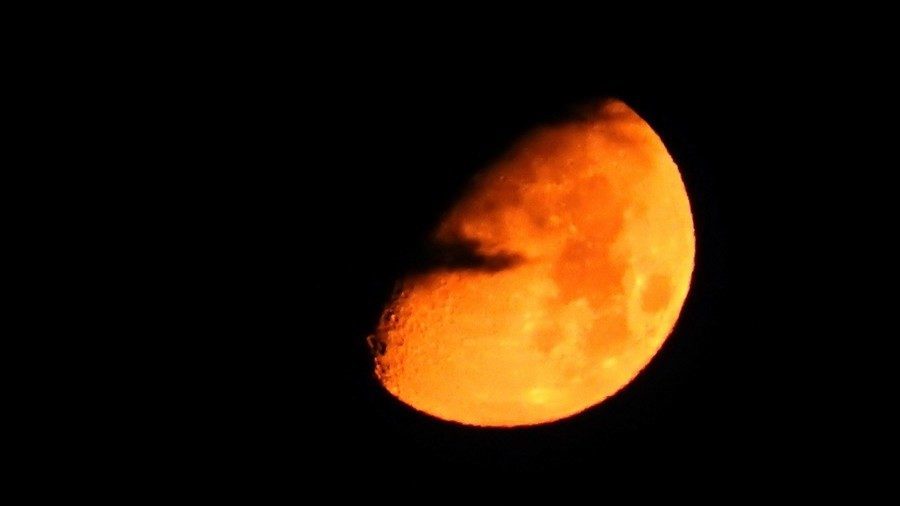
© Giuseppe Donatiello from ItalyTotality during the lunar eclipse of 27 July 2018. Direct sunlight is being blocked by the Earth, and the only light reaching it is sunlight refracted by Earth’s atmosphere, producing a reddish color
The "supermoon bloodmoon lunar eclipse" is coming to North and South America, as well and the UK and parts of Eastern Europe this month. The total lunar eclipse will start late on Sunday, Jan. 20, and finish early on Monday, Jan. 21, and because it occurs during a "supermoon", it will appear about 14% bigger than normal.

It will also be one of the few times when you'll be able to photograph the moon and stars simultaneously. While it will be a deep blood red, the contrast difference will be low enough that cameras will be able to pick up stars in the background.

Rocket

US missile defense systems are no match for hypersonic weapons

Hypersonic missile model
© militaryrussia.ruRussian Hypersonic Missile model
A Mitchell Institute for Aerospace Studies paper makes a complete and compelling case for why the United States should aggressively pursue hypersonic weapons, systems that travel faster than five or six times the speed of sound.

Hypersonics, the authors conclude, would afford the U.S. with unprecedented rapid reach, global target access, a "fourth dimension effect" by effectively shrinking a foe's decision-making window and a complete rendering of existing air defenses to be obsolete.

What may not be obvious to U.S. policymakers is the corollary: Hypersonic weapons can provide these very same advantages to our adversaries. In fact, given the state of hypersonic weapons development in Russia and China, they already do.

Russian and Chinese research, test and development of hypersonic weapons have far outpaced that of the United States. A Russian hypersonic glide vehicle (HGV), known as the Avangard, completed a successful flight test in December in which the weapon purportedly reached 27 times the speed of sound. The Russians also claim this system is now in production and ready to be fielded.

Comment: See also:


Satellite

Russian space chief says FSB overcautious about OneWeb global internet project

model OneWeb satellite
© Global Look Press via ZUMA Press / Kim ShiflettModel of a OneWeb satellite.
The Russian Security Service (FSB) is overcautious about OneWeb, a global satellite internet provider, the Russian space chief believes. Russia's space industry will be launching some of the satellites for the project.

OneWeb intends to provide global access to broadband internet via a constellation of hundreds of satellites in low-Earth orbit. Its access to the Russian market, however, has been difficult, as Russian security officials have expressed concern that the satellites may endanger national security.

According to Dmitry Rogozin, the head of the Russian Space Agency (Roscosmos), the FSB leadership is overcautious and their position would result in Russia's exclusion from the project, which will go online with or without Russia's help.

"I understand why our colleagues from the FSB are skeptical. It's their job to be skeptical. But we have to realize that this constellation will be created whether we want it or not," he told RBC news website.