Science & TechnologyS


Bug

Bill Gates Unleashes Swarm of Mosquitoes on Crowd

Microsoft founder turned philanthropist Bill Gates released a glass full of mosquitoes at an elite technology conference to make a point about the deadly disease malaria.

"Malaria is spread by mosquitoes," Gates said while opening a jar onstage at the Technology, Entertainment, Design Conference - a gathering known to attract technology kings, politicians, and Hollywood stars.

"I brought some. Here I'll let them roam around. There is no reason only poor people should be infected."

First reported on social networking site Twitter, Facebook's Senior Platform Manager Dave Morin blogged, "Bill Gates just released mosquitos into the audience at TED."

Sherlock

Archaeologists Made New Discoveries at Moenjodaro

Archaeologists cleaning a drain to flush out rainwater from an explored part of the ancient Indus Valley city of Moenjodaro have been pleasantly surprised to come across artefacts and other objects of much cultural value at the World Heritage site.

'We had gone just half a metre down the level of surface of the old structures in the DK-G area and found the material of cultural value,' Dawn Monday quoted Moenjodaro director Qasim Ali Qasim as saying.

Well-defined structures of old drains were discovered along with certain old artefacts during the digging, which was necessitated to prevent rainwater stagnating at the world heritage site.

Sherlock

Ancient Human Sacrifice Unearthed

French archaeologists in northern Sudan say they've unearthed a 5,500 year-old Stone Age tomb which they believe confirms the location of Africa's "oldest human sacrifice".

In a graveyard in Al-Kadada, north of Khartoum, the archaeologists have dug up the tomb of a man and a woman facing each other in a ditch, with bodies of two women, two goats and a dog buried nearby.

The discovery "confirms'' excavations last year which found traces of the oldest human sacrifice ever identified in Africa, said Jacques Reinold, a researcher for the French section of the Sudanese antiquities department.

Sherlock

Renaissance Caregiving Nuns Wiped Out by Plague

Grave
© Raffaella Bianucci, GallienThe remains and burial sites of some religious order members who died of plague in Renaissance Europe.
Nuns and priests sacrificed their own lives to provide medical care for the poor in Renaissance France, according to a new study that implicates exposure to contagious plague victims in the deaths of several religious order members.

The study is among the first to find that plague, a deadly bacterial disease also known as "the Black Death," can be quickly and accurately identified in ancient human remains.

Several recently identified women who died after caring for plague victims were all Benedictine nuns from the Sainte-Croix Abbey's chapter house near Poitiers, France.

Info

We are becoming a new species, we are becoming Homo Evolutis

Image

Juan Enriquez talked about the new human species emerging before our eyes. Thanks to an array of biological advances and our growing aptitude in robotics, we now find ourselves in the early days of the deliberate creation of what he called a new species.

At TED 2009, now halfway through the near-weeklong binge of activities and presentations, Juan Enriquez energized and perhaps terrorized attendees with his brief look into the future of human affairs, and indeed, of the human species. What made Enriquez' presentation so engaging was that his vision wasn't that far off, this sci-fi future that he spoke of; it's the future that is unveiling itself right before us, a future that we will all likely watch arrive, and our children will come to know as reality.

Chairman and CEO of Biotechonomy, Enriquez says that humanity is on the verge of becoming a new and utterly unique species, which he dubs Homo Evolutis. What makes this species so unique is that it "takes direct and deliberate control over the evolution of the species." Calling it the "ultimate reboot," he points to the conflux of DNA manipulation and therapy, tissue generation, and robotics as making this great leap possible.

Telescope

Number of alien worlds quantified

Intelligent civilisations are out there and there could be thousands of them, according to an Edinburgh scientist.

The discovery of more than 330 planets outside our solar system in recent years has helped refine the number of life forms that are likely to exist.

The current research estimates that there are at least 361 intelligent civilisations in our Galaxy and possibly as many as 38,000.

Bizarro Earth

Animal Ancestors May Have Survived 'Snowball Earth'

Chemical fossils push back the date for animal life to at least 635 million years ago.

A new analysis of ancient chemical fossils has rocked the cradle of early animal evolution, bumping back compelling evidence of animal life to at least 635 million years ago.

The findings, published in the Feb. 5 Nature, suggest that the ancient ancestor of fully formed animals survived a massive glaciation that enshrouded the Earth in ice at the end of the aptly named Cryogenian period. Debate continues over how much of the planet was frozen during two ice ages, each possibly a "snowball Earth" event that flanked this period, which extended from about 790 million to 630 million years ago.

The new results suggest that even if glaciers reached the equator during the second ice age, it is likely that warm pockets, perhaps created by volcanic activity or hydrothermal vents, may have persisted and harbored life.

Saturn

Should Mars Be Treated Like a Wildlife Preserve?

Mars
© NASA/JPL-CaltechIf life is found on Mars, we may have to remove or destroy past spacecraft like the Mars Phoenix lander to prevent contamination, a researcher says.
Life has not yet been found on Mars, and no one is sure whether it will be. But some researchers say it is not too early to consider the possibility that humans could do irreversible damage to indigenous Martian life.

A group of international experts will meet as early as this September to discuss whether it is time to revise policies that protect Mars from contamination.

At issue is the ethics of exploring the Red Planet - in particular whether hitchhiking Earth microbes could harm Martian habitats.

Past missions, including NASA's twin rovers, have already ferried hundreds of thousands of bacterial cells to the Red Planet. Most of the microbes on the exterior of these craft were quickly destroyed by intense ultraviolet radiation, which passes easily through Mars's thin atmosphere.

Sherlock

Bones Reveal Harsh Life of Colonial America

It's a tale of toil, starvation and death, set forth in messages from the grave.

Skeleton
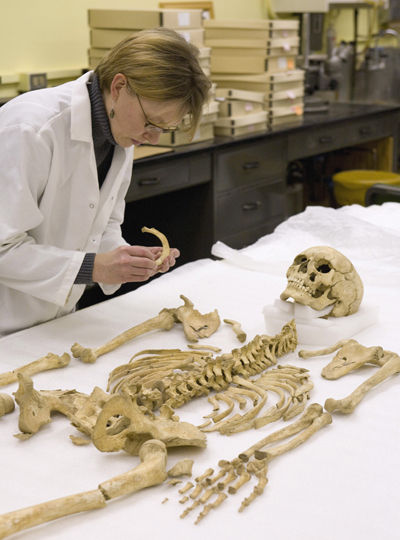
© AP Photo/Smithsonian, Chip ClarkForensic anthropologist Karin Bruwelheide examining a 17th century skeleton from the Leavy Neck site, Anne Arundel County, Md., part of an exhibit, The saga of life in 17th century America.
The saga of life in 17th century America -- "Written in Bone" -- goes on display Saturday at the Smithsonian's National Museum of Natural History.

Some 340 objects, including artifacts and human bones, are on display for two years, with discussions of how cold cases from colonial times shed light on what life was like for some of the earliest English and Africans to settle in America.

The exhibit is "a fascinating window into the lives of our nation's earliest colonists," observed museum director Cristian Samper.

Since 1992 researchers have unearthed the remains of hundreds of early settlers around Chesapeake Bay.

"Now we can get to know these individuals, learn about how they lived and sometimes how they died," said forensic anthropologist Douglas Owsley, curator of the exhibit.

Sherlock

'Green Magic' Protected Egyptian Child Mummies

Mummy Stone
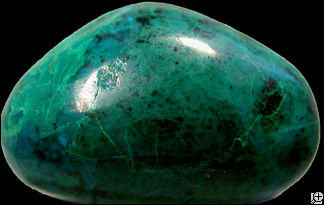
© Raffaella BianucciA bright green stone found inside a fossilized leather bag buried with an Egyptian toddler.
A rare mummified child from the early period of Egyptian history was discovered buried with a bright green amulet stone once believed to hold magical powers, according to a new study.

The finds help to explain why hieroglyphics and historical texts record that Egyptian children wore green eye makeup. It also adds to the growing body of evidence that ancient Egyptians thought color itself held sacred energy that could help or hurt individuals.