Madison, Wisc. - Eric Szatkowski is a Wisconsin Justice Department special agent, but on that Sunday afternoon he entered an online chat room as a 14-year-old boy.
He claimed he was into weightlifting, AC/DC and muscle magazines. Then he waited.
Within hours, screen name Paul2u sent a message: "Hi. u realy 14?"
Over the past decade, agents and computer experts have gone after hundreds of people like Paul2u who solicit sex from kids or trade child pornography online. Police efforts around the country were all the rage with the media in the early 2000s, reaching a crescendo with Dateline NBC's "To Catch A Predator" series.
Iris Monica Vargas Science News Mon, 23 Mar 2009 23:50 UTC
An overdose of the spooky connection can break down quantum computing systems, researchers find.
Physicists have long thought that quantum entanglement, a mysterious link between separated particles that Einstein called "spooky action at a distance," would allow quantum computers to solve certain hard math problems much faster than ordinary computers. But now it seems that entanglement can also be a nuisance.
Instead of speeding up the process, too much entanglement can break down the entire system, researchers report in a paper to appear in Physical Review Letters.
Excavation of a proposed park-and-ride site in Taunton has revealed one of the largest prehistoric roundhouses in Britain and a number of Roman burials.
The house dates from the Iron Age (400-100 BC) and was constructed from wooden posts with a thatched roof and had a diameter of 17m (56ft)
Colin Barras New Scientist Thu, 19 Jun 2008 20:27 UTC
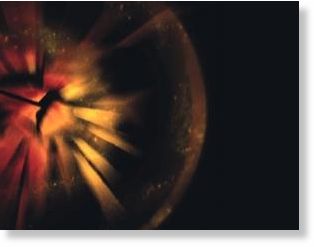
However hard you stare, you would still miss it. Researchers have found a way to generate the shortest-ever flash of light - 80 attoseconds (billionths of a billionth of a second) long.
Such flashes have already been used to capture an image of a laser pulse too short to be "photographed" before.
The light pulses are produced by firing longer, but still very short laser pulses into a cloud of neon gas. The laser gives a kick of energy to the neon atoms, which then release this energy in the form of brief pulses of extreme ultraviolet light.
The trigger pulses fired at the neon cloud are themselves only 2.5 femtoseconds, billionths of a millionth of a second, long, says team member Eleftherios Goulielmakis at the Max Planck Institute for Quantum Optics in Garching, Germany.
A massive young star seems to have exploded before its time, new Hubble Space Telescope images reveal. The star, the heftiest to have been linked to a supernova explosion, could challenge models of when stellar furnaces end their lives. Stars heavier than about eight times the mass of the Sun end their lives in dramatic explosions when the nuclear furnaces at their cores run out of fuel and collapse into neutron stars or black holes.
Hundreds of supernovae are seen each year, but astronomers have only identified a handful of the stars responsible for the dramatic blasts. To do so, they must dig through archived images to identify the doomed stars before the explosions, checking again years after the blasts to confirm their disappearance. Now a team led by Avishay Gal-Yam of the Weizmann Institute of Science in Israel has found one of these supernova 'progenitors' that seems to be a true outlier. The star, which once sat in the galaxy NGC 266, some 200 million light years away, briefly brightened the sky in a 2005 explosion before disappearing entirely.
A piece of space junk is approaching their orbit, so the shuttle powers the space station out of the way. Ten days ago, another piece of junk menaced the station.
Orlando, Florida -- With his ship still docked at the International Space Station, shuttle commander Lee Archambault fired up Discovery's steering jets Sunday to move the linked craft into a new position that will reduce their chances of colliding with a piece of space junk.
Peter Griffiths Reuters Mon, 23 Mar 2009 01:05 UTC
London - With someone to polish his shoes, make his bed and stoke the fire in his spacious rooms, Charles Darwin enjoyed the sort of pampered university life that today's debt-laden British students can only dream about.
Two hundred years after his birth, academics have uncovered new details of his comfortable existence at the University of Cambridge before he embarked on the grueling five-year voyage that would transform science's view of the world.
Two scientists are challenging the accepted theory that the Hippo is more closely related to the pig than it is to the whale. According to Jessica Theodor, an associate professor in the Department of Biological Sciences at the University of Calgary, and her colleague Jonathan Geisler, associate professor at Georgia Southern University the hippo's closest relatives are the whales. The scientists suggest that this may explain the hippopotamus's love of water.
Mystery creates wonder, and wonder is the basis for man's desire to understand. Who knows what mysteries will be solved in our lifetime, and what new riddles will become the challenge of the new generations.
- John Keel
”
Recent Comments
Good article. However, it isn't merely a case of one party vs the other. Someone above is still running the whole show.