Science & TechnologyS


Fire

Scientists offer evidence that Venus is volcanically active

surface of venus
© NASA/JPL
Venus appears to have volcanic activity, according to a new research paper that offers strong evidence to answer the lingering question about whether Earth's sister planet currently has eruptions and lava flows.

Venus, although similar to Earth in size and mass, differs markedly in that it does not have plate tectonics. The boundaries of Earth's moving surface plates are the primary locations of volcanic activity.

New research by University of Alaska Fairbanks Geophysical Institute research professor Robert Herrick revealed a nearly 1-square-mile volcanic vent that changed in shape and grew over eight months in 1991. Changes on such a scale on Earth are associated with volcanic activity, whether through an eruption at the vent or movement of magma beneath the vent that causes the vent walls to collapse and the vent to expand.

The research was published today (March 15) in the journal Science.

Info

New discovery could speed up burn healing

Therapies that build on the natural tissue clearance by fibroblasts may accelerate healing, especially in slow-to-heal burn wounds.
Dermal microtissues
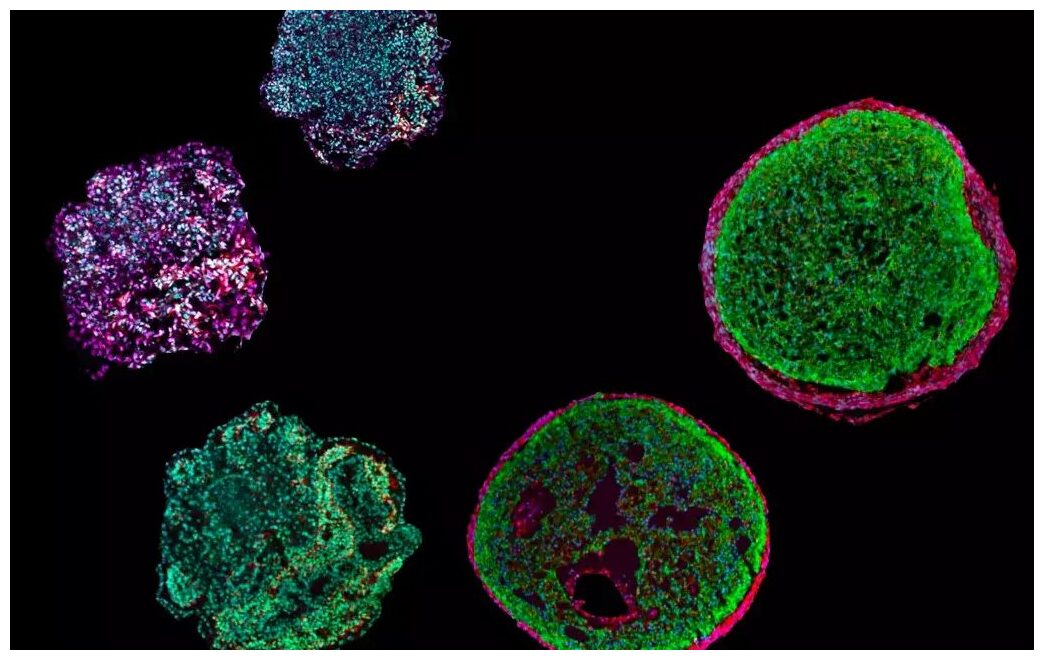
© Jeroen Eyckmans and Anish VasanDermal microtissues are ablated using a pulsed laser. Damaged extracellular matrix is cleared by dermal fibroblasts in the vicinity of the wound edge through phagocytosis. Created with BioRender.com.
WASHINGTON - Burn wounds are notoriously prone to bacterial infection and typically lead to a larger amount of scar tissue than laceration wounds.

In APL Bioengineering, by AIP publishing, researchers from Boston University and Harvard University created a biomimetic model to study wound healing in burn and laceration wounds. They discovered that fibroblasts - normally considered building cells that give shape and strength to tissues and organs - clear away damaged tissue before depositing new material. This part of the healing process is slower in burn wounds, where more tissue damage is present.

Cell biologists identify four phases of wound healing: bleeding stoppage, inflammation, new tissue formation, and tissue strengthening. During the inflammation and formation stages, immune cells are thought to clear bacteria and dead cells from the wound. They also activate fibroblasts and blood vessels to begin repairs.

Cassiopaea

Webb captures rarely seen prelude to a supernova

A Wolf-Rayet star is a rare prelude to the famous final act of a massive star: the supernova. As one of its first observations in 2022, the NASA/ESA/CSA James Webb Space Telescope captured the Wolf-Rayet star WR 124 in unprecedented detail.

A distinctive halo of gas and dust frames the star and glows in the infrared light detected by Webb, displaying knotty structure and a history of episodic ejections. Despite being the scene of an impending stellar 'death', astronomers also look to Wolf-Rayet stars for insight into new beginnings. Cosmic dust is forming in the turbulent nebulas surrounding these stars, dust that is composed of the heavy-element building blocks of the modern Universe, including life on Earth.
Wolf-Rayet 124 (composite image)
© ESAWolf-Rayet 124 (NIRCam and MIRI composite image)
The rare sight of a Wolf-Rayet star — among the most luminous, most massive, and most briefly-detectable stars known — was one of the first observations made by the NASA/ESA/CSA James Webb Space Telescope. Webb shows the star WR 124 in unprecedented detail with its powerful infrared instruments. The star is 15 000 light-years away in the constellation Sagittarius.

Info

Researcher solves nearly 60-year-old game theory dilemma

Dejan Milutinovic
© University of California Santa CruzProfessor of Electrical and Computer Engineering Dejan Milutinovic studies game theory and optimal control, with implications for autonomous systems such as driverless vehicles.
To understand how driverless vehicles can navigate the complexities of the road, researchers often use game theory — mathematical models representing the way rational agents behave strategically to meet their goals.

Dejan Milutinovic, professor of electrical and computer engineering at UC Santa Cruz, has long worked with colleagues on the complex subset of game theory called differential games, which have to do with game players in motion. One of these games is called the wall pursuit game, a relatively simple model for a situation in which a faster pursuer has the goal to catch a slower evader who is confined to moving along a wall.

Since this game was first described nearly 60 years ago, there has been a dilemma within the game — a set of positions where it was thought that no game optimal solution existed. But now, Milutinovic and his colleagues have proved in a new paper published in the journal IEEE Transactions on Automatic Control that this long-standing dilemma does not actually exist, and introduced a new method of analysis that proves there is always a deterministic solution to the wall pursuit game. This discovery opens the door to resolving other similar challenges that exist within the field of differential games, and enables better reasoning about autonomous systems such as driverless vehicles.

Game theory is used to reason about behavior across a wide range of fields, such as economics, political science, computer science and engineering. Within game theory, the Nash equilibrium is one of the most commonly recognized concepts. The concept was introduced by mathematician John Nash and it defines game optimal strategies for all players in the game to finish the game with the least regret. Any player who chooses not to play their game optimal strategy will end up with more regret, therefore, rational players are all motivated to play their equilibrium strategy.

Info

'Strange metals' operate outside normal rules of electricity

UC physicist explores mysteries of strange metals. International team finds unusual electrical behavior in experiments.

Yashar Komijani
© Andrew Higley/UC Marketing + BrandUC theoretical physicist Yashar Komijani is studying the properties of strange metals.
Physicists at the University of Cincinnati are learning more about the bizarre behavior of "strange metals," which operate outside the normal rules of electricity.

Theoretical physicist Yashar Komijani, an assistant professor in UC's College of Arts and Sciences, contributed to an international experiment using a strange metal made from an alloy of ytterbium, a rare earth metal. Physicists in a lab in Hyogo, Japan, fired radioactive gamma rays at the strange metal to observe its unusual electrical behavior.

Led by Hisao Kobayashi with the University of Hyogo and RIKEN, the study was published in the journal Science. The experiment revealed unusual fluctuations in the strange metal's electrical charge.

"The idea is that in a metal, you have a sea of electrons moving in the background on a lattice of ions," Komijani said. "But a marvelous thing happens with quantum mechanics. You can forget about the complications of the lattice of ions. Instead, they behave as if they are in a vacuum."

Eye 1

Hackers can turn Bing's AI chatbot into a convincing scammer, researchers say

Bing AI chatbot 1
© GitHub
Hackers can make Bing's AI chatbot ask for personal information from a user interacting with it, turning it into a convincing scammer without the user's knowledge, researchers say.

In a new study, researchers determined that AI chatbots are currently easily influenced by text prompts embedded in web pages. A hacker can thus plant a prompt on a web page in 0-point font, and when someone is asking the chatbot a question that causes it to ingest that page, it will unknowingly activate that prompt. The researchers call this attack "indirect prompt injection," and give the example of compromising the Wikipedia page for Albert Einstein. When a user asks the chatbot about Albert Einstein, it could ingest that page and then fall prey to the hackers' prompt, bending it to their whims — for example, to convince the user to hand over personal information.

The researchers demonstrated this attack using mocked-up apps integrating a language model, but they found that it works in the real world, too. Kai Greshake, one of the lead authors of the paper, told Motherboard that after the paper's preprint was released, they were able to gain access to Bing's AI chatbot and test the techniques that they determined in the paper. What they found was that Bing's chatbot can see what tabs the user has open, meaning that a prompt only has to be embedded on another webpage open in a tab.

"The new Bing has an opt-in feature that allows it to 'see' what is on current web pages. Microsoft isn't clear on what algorithm decides which content from which tab Bing can see at any one time. What we know right now is that Bing inserts some content from the current tab when the conversation in the sidebar begins," Greshake told Motherboard.

Microscope 2

Scientists discover enzyme that can turn air into energy, unlocking potential new energy source

Mycobacterium smegmatis energy hydrogen bacterium
© Science Photo Library/Alamy Stock PhotoA scanning electron microscope image of Mycobacterium smegmatis which uses atmospheric hydrogen to generate an electrical current.
Scientists studying a cousin of the bacteria responsible for tuberculosis and leprosy have discovered an enzyme that converts hydrogen into electricity, and they think it could be used to create a new, clean source of energy literally from thin air.

The enzyme, which has been named Huc, is used by the bacterium Mycobacterium smegmatis to draw energy from atmospheric hydrogen, enabling it to survive in extreme, nutrient-poor environments.

Now, by extracting and studying the enzyme, the researchers say they have found a new energy source that could be used to power a range of small portable electrical devices. They published their findings March 8 in the journal Nature.

Cassiopaea

Strange quantum event happens once every 10 billion chances

quantum tunnel
© Universität Innsbruck/Harald RitschAlthough there is no solid wall keeping deuterium anions and hydrogen molecules apart, physicists imagine the energy barrier as a physical wall, which quantum tunneling occasionally allows protons to penetrate.
Quantum tunneling is a rare event that should be impossible under classical physics, but it is only now we are learning just how rare real-world examples are.

The rate at which the rare but crucial quantum phenomenon known as tunneling occurs has been measured experimentally for the first time, and found to match theoretical calculations. The theoretical estimates in this area had been regarded as highly uncertain, so confirmation in one specific case allows for greater confidence in estimating the frequency of other tunneling events.

Quantum tunneling is one of the many phenomena where subatomic particles behave in ways classical physics would say is impossible. In this case, an object trapped in a way that classically requires a certain energy to escape leaves the trap, despite having less than that amount of energy. It's a consequence, and proof of, the dual wave/particle nature of objects like electrons - a pure particle could not escape, but a wave occasionally can. Phenomena like alpha decay of atomic nuclei depend on quantum tunneling to occur.

Microscope 2

Convergence? One-celled creature has an eye!

one-eyed
© unknown
They thought it was a joke. A century ago, biologists could not believe that a one-celled creature had an eye. But since the warnowiid dinoflagellate was difficult to find and grow in the lab, detailed research was rare, until now. A team from the University of British Columbia gathered specimens off the coast of BC and Japan for a closer look. They found that the structure, called an ocelloid, has structures that mimic the complex eye of higher animals. Phys.Org says:
In fact, the 'ocelloid' within the planktonic predator looks so much like a complex eye that it was originally mistaken for the eye of an animal that the plankton had eaten.

"It's an amazingly complex structure for a single-celled organism to have evolved," said lead author Greg Gavelis, a zoology PhD student at UBC. "It contains a collection of sub-cellular organelles that look very much like the lens, cornea, iris and retina of multicellular eyes found in humans and other larger animals." [Emphasis added.]
Astonishment to Share

New Scientist shares the astonishment:
It is perhaps the most extraordinary eye in the living world — so extraordinary that no one believed the biologist who first described it more than a century ago.

Now it appears that the tiny owner of this eye uses it to catch invisible prey by detecting polarised light. This suggestion is also likely to be greeted with disbelief, for the eye belongs to a single-celled organism called Erythropsidinium. It has no nerves, let alone a brain. So how could it "see" its prey?

Microscope 1

The mice with two dads: scientists create eggs from male cells

mice born of two males
© Ciobaniuc Adrian Eugen/AlamyOnly a few of the embryos derived from all-male cells went on to develop into healthy mouse pups.
Proof-of-concept mouse experiment will have a long road before use in humans is possible.

Researchers have made eggs from the cells of male mice — and showed that, once fertilized and implanted into female mice, the eggs can develop into seemingly healthy, fertile offspring.

The approach, announced on 8 March at the Third International Summit on Human Genome Editing in London, has not yet been published and is a long way from being used in humans. But it is an early proof-of-concept for a technique that raises the possibility of a way to treat some causes of infertility — or even allow for single-parent embryos. "This is a significant advance with significant potential applications," says Keith Latham, a developmental biologist at Michigan State University in East Lansing.

Comment: We're one step closer to the complete eradication of women.